Retirement CDC, a new development in the world of pensions, could transform how retirement income is managed. With growing industry focus on Retirement CDC, in this episode, host Sophie Tennison speaks with CDC specialist Simon Eagle and Independent Trustee Sam Burden to unpack how Retirement CDC works, why it may offer higher income than annuities and what it means for member decision making at retirement. They explore the merits, challenges and stakeholder views behind this emerging model and whether it’s poised to take off.
Retirement CDC, a new development in the world of pensions, could transform how retirement income is managed. With growing industry focus on Retirement CDC, in this episode, host Sophie Tennison speaks with CDC specialist Simon Eagle and Independent Trustee Sam Burden to unpack how Retirement CDC works, why it may offer higher income than annuities and what it means for member decision making at retirement. They explore the merits, challenges and stakeholder views behind this emerging model and whether it’s poised to take off
Podcast host
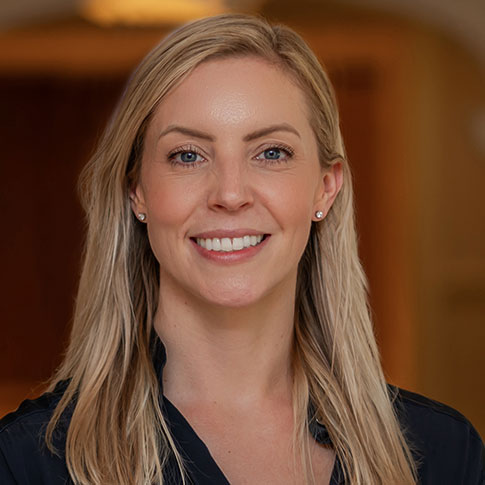
Sophie Tennison
Senior Director, Investments
Sophie Tennison
Senior Director, Investments
Podcast guests

Sam Burden
Director, Retirement

Simon Eagle
GB Head of CDC and Risk Sharing
Sam Burden
Director, Retirement
Simon Eagle
GB Head of CDC and Risk Sharing
Transcript for this episode
[MUSIC PLAYING]
SOPHIE TENNISON: Welcome to this episode of The Pensions Perspective podcast brought to you by WTW. I'm your host, Sophie Tennison. And today we're delving into retirement CDC, an exciting evolution in the pensions industry and one that could transform how retirement income is managed. Today I'm joined by two guests, Sam Burden, an independent trustee at ZEDRA, and Simon Eagle, an actuary and CDC specialist at WTW. Welcome to you both.
SIMON EAGLE: Thanks, Sophie.
SAM BURDEN: Thank you.
SOPHIE TENNISON: Thank you. I'm really looking forward to our conversation today. But first, would you like to introduce yourselves and provide an update on your CDC experience so far?
SAM BURDEN: Yeah. Well, thanks very much for having us in. Yeah. So I've been a professional trustee for-- coming up to four years now. And prior to that, I spent over 20 years doing pensions consulting, mainly in the DC space. So I spent a lot of time thinking about the decisions that sponsors and employers make to help their employees get through that retirement space.
So I don't think anybody's had lots of CDC experience yet, have they? But one of the things that we've done is we've had a little group at ZEDRA getting together, thinking through the issues, understanding what's going on, just really aware it's a great opportunity and a real-- feels like a big, significant step forward. So that would be-- so lots of thinking. Not as much doing yet, but no doubt that will come.
SOPHIE TENNISON: Brilliant.
SIMON EAGLE: Yeah, and I'm an actuary at WTW, have been for 24 years. But in terms of how I got into CDC, so I started working with Mail on that eight years ago. And then since then that role expanded. I became our head of CDC and lots of work with government and industry on different forms of CDC. So it's been a very interesting eight years, but there's still a lot more to do to develop CDC for the UK.
SOPHIE TENNISON: Brilliant. And I guess for those that are less familiar, at a high level a retirement CDC allows a DC saver an opportunity to purchase a pension within a collective fund using part or all of their part at retirement. And then that will give them an income for life that's trustee-managed, and also on an annual basis that will be reviewed on the back of investment returns and scheme sustainability. So as our expert in the field, I'm going to turn to you in the first instance. Would you mind outlining the origins of retirement CDC?
SIMON EAGLE: Yeah. So I guess it began with Royal Mail's pioneering work on CDC eight years ago. They wanted a form of CDC for their workforce. But their form-- the members gradually built up CDC pensions as they were working for Royal Mail. So that's a different kind of CDC. That's the first kind we've got in the UK.
The second one that's just coming in is a multi-employer version of that. Retirement CDC will be the third kind. As you said, Sophie, it's different. It's designed for members who are already in a DC scheme accumulating DC, but want a new option at retirement. It fits in very well with guided retirement, so stuff that's coming in from the pension schemes bill last year, where DC trusses are going to need to provide retirement options for their members.
Well, retirement CDC could be one of those options, or could even be a default chosen by the trustees under guided retirement. So it's absolutely the right time for the UK to be looking at this. And as you said, DW consulted on it just very recently, talked about some of the policy aspects, some of the challenges. So I think industry, it's still very new. Lots of people haven't engaged with it much.
But I think the consultation has helped raise awareness of it. And I think that will go further this year because we're due to have a consultation on the regulations in the middle of this year. So I think this year is going to be key for it. And we'll find a lot more awareness of it as we go through the year, a lot more engagement with it as well.
SAM BURDEN: And that-- sorry. I'm struck by the fact you said eight years. Were there ever points in there where you thought, we're never going to get there?
SIMON EAGLE: Well, at the start, I think none of us knew whether it would happen because it needed a fundamental change in the law. We had DB. We had DC. This was a third kind of pension, so hadn't seen a change as big as this ever in UK pensions. So we couldn't be sure it would happen.
But we all saw a lot of merit in it. And we thought, well let's do what we can to bring it in and see what happens. And fortunately, it gained traction. Government got more interested in it as we explained it and showed its robustness to them. And government then engaged with industry, and industry got more open-minded about it and more supportive of it. So it gradually built momentum.
And yes, it has taken time. Obviously, it needed a big change in the law when government was busy with Brexit. COVID caused a delay as well in getting the law changed. But yeah, it was brilliant that Royal Mail could open their scheme in 2024. So it's been open for over a year now. And as I said, the second kind of schemes are going to be able to come in soon as well. So it is gaining traction. It's gaining momentum as well.
SOPHIE TENNISON: You mentioned legislative change there. Is legislation needed for retirement CDC? Will this further change be required?
SIMON EAGLE: Yeah, because obviously the way UK pensions tax law works is you can only have the tax efficiencies if it's a certain kind of pension scheme. So we've got DB law. We've got DC law. We've now got CDC single employer law. And CDC whole of life multi-employer law has come in, but we will need a further law change to allow retirement CDC.
So you can't-- at the moment, you can't do it. But as I say, we're expecting to see draft regs to allow it. And we expect to see those at the middle of this year. So it's going to become a much, much more tangible option for the industry soon.
SOPHIE TENNISON: Perfect. So how do you see retirement CDC sitting alongside the options that DC members have at retirement?
SAM BURDEN: You always have to remember that retirement decision-making is the hardest piece of financial decision-making an individual ever makes in their whole life. Well, for most people anyway. It's far harder than perhaps buying a house and mortgage.
And most members, when they get to retirement, they don't know the difference between annuity, drawdown, UFPLS. It's foreign language to them. So we're now introducing this whole new concept of retirement CDC. So it's really challenging. It's really hard for-- it's going to be really hard for members.
And for me, what will be critical within that is that retirement CDC becomes the default option in a wide range of schemes because that's the only way I can see it receiving the take-up that, in my view, it deserves. And we know that because when we look at the decision-making that individuals take through their DC journeys, for example, the vast majority of members simply do go with the default because they really struggle to know what else they should do, or frankly, they're not interested. They step away from that decision-making process.
SIMON EAGLE: Yeah, I agree, Sam. I was really pleased to see the government's plans on guided retirement. I think having defaults will really help. I mean, members are looked after up to a time, [INAUDIBLE] there's a default investment strategy. And then at the moment it's kind of, right, over to you. Here's your pot. Best of luck.
Well, that's not enough for most members. I mean, imagine if it was one of your parents retiring. They haven't worked in finance. They're going to have to make these really difficult decisions. Which option am I going to go for? If it's drawdown, how much am I going to draw? How long am I going to live? What am I going to invest in?
And you with a son in the pensions industry, they will probably ask you. But what about people who don't have
SAM BURDEN: Well, you say that--
SIMON EAGLE: It's impossible.
SAM BURDEN: You say that. But even for somebody who's worked in the pensions industry, when it comes to your own arrangements, you're still going to have to do some pretty hard thinking. And the guide to retirement point is a really-- it is really key. But it's also a little bit frustrating because the timing isn't quite right, is it? So as it stands at the moment, the guide to retirement requirement will come in before we're expecting the retirement CDC option.
So I know-- I mean, I think you've been calling on government and various others to say, look, can we bring these together? Because there is a danger at the moment that trustees make their decisions on what an appropriate default option is, and retirement CDC isn't in that mix simply because it's not an option on the table. And the likelihood is these things will only get reviewed every few years. So I've got a slight concern that there could be a slow start to this. Whereas, if it was aligned, it would be a great option.
SIMON EAGLE: Yeah, I agree the timing is not great for CDC fans. I think it's great the government is looking to improve pensions in lots of ways. So guided retirement is an improvement in my view. Retirement CDC is an improvement. But they each they each have their own timeline. They need enough time to bring in in the right way. So I get it that the government want more time for retirement. CDC.
I'm hopeful, though, it won't miss the boat here because when we get the regs consultation middle of this year, as I say, that will bring a lot more clarity to what retirement CDC is. So I'm hoping that when trustees like you, Sam, are having these difficult conversations, which default are we going to choose, or which other options will we give members, that you'll be able to take account of retirement CDC in that. And even if it's not in in time to be your first default, you could have it in mind to introduce once it is available.
SAM BURDEN: Yes. Yeah. No, I think that's entirely fair. Yeah.
SOPHIE TENNISON: I think-- like you said, timing seems really key to this. But for our listeners that might be less familiar with retirement CDC, I guess one of the key questions is, how does it work?
SIMON EAGLE: Yeah, that's a good question. We ought to get to that. What is it exactly?
SOPHIE TENNISON: Yeah, exactly.
SIMON EAGLE: So I guess-- I mean, you've covered it from a member perspective, Sophie. So DC member reaches retirement. This either, as a default or as an option, gives them an income for their retired life. They can either spend all of their pot on it, or spend part of their pot on it and put the rest into drawdown or something else.
So it's got similarities to insured annuity purchase. But the big difference is it isn't guaranteed. It's a variable level of pension. So it's expected to give higher income than an annuity. And our latest figures are, on average, 40% higher income. So a lot higher income, which is the reason, a member would do it.
But on the other hand, it's variable. They can't be sure of the level that it will be. It could be higher than that 40% higher. It could be lower than that 40% higher than an annuity. But I think probably also in your question, you know to know how does it work underneath? So how is this provided to the member?
So it would be provided under trust. So it would be operated by trustees. When a member goes into it, their assets are pooled with other members' assets. And you have to do that in order to be able to pay everyone an income for their life. So the ones that live longer, you obviously-- you spend more of the pool on them because they need it. They live longer. For those who unfortunately live shorter, they only get income as long as they've lived. So you have that pooling.
Where does that 40% come from? Well, the trustees are investing to aim to outperform annuities. So they're investing in growth assets. The way in the design I've worked on, they invest largely in growth assets in the early years of retirement, more in low-risk assets later on in retirement. So that the variability isn't too high in the level of the pension.
And I guess the other thing is, how do you work out the level of pension? So under our design, when a member joins it, the aim is to give them CPI pension increases. But because it's variable, they won't get exactly that. It might be higher or lower. So the trustees do an assessment every year to look at how the pension increases need to change, so that the pensions are sustainable, so that the assets are enough to pay everyone's pension for the rest of their life.
So they look at latest life expectancy. What's the latest asset figure? What's the latest expectations for future asset returns? And do the actuarial maths to work out the sustainable level. And if the funding health of the scheme is lower than a year ago, the increase is lower than a year ago.
So maybe the member just joined, had a CPI increase, and the next year it's 1/2% below CPI, say. And if the funding health is very good, it's a higher increase. And because it's the increases that are being adjusted, the pensions paid are smooth.
So imagine a member's been in it for a year. The assets have underperformed targets by 10% in that year. Well, it's not a 10% reduction in the pension. It's perhaps a 1% lower increase in the pension. So maybe a member gets 2% increase rather than 3% this year. And it's a planned 1% lower increase in all future years.
But it's assessed again every year. So if markets bounce back again the year after, the increases are back up to CPI. So even though the markets are moving around in a volatile way, the pensions are fairly smooth.
SOPHIE TENNISON: And I guess from a strategy perspective, this is all very aligned to what the government's been saying around pooling and scale. And also, I guess, investments in productive finance because you've got that more predictability on payments than you do, say, under a DC scheme. Assets like private markets and productive finance fit more appropriately in the strategies. That's interesting.
I guess-- we've talked about a few merits there. It's complementary to DC accumulation. You've got a managed income for life, and it is a, like we said, trustee-managed there. So Sam, from your perspective, of the merits of retirement CDC, which do you think would be the most attractive to a member?
SAM BURDEN: What we've seen over the years in the surveys that have come out from members as to what do you want at retirement, most members, what they really want is a secure income in their retirement. And the challenge has been, of course, that over a long period of time, annuities, yes, they've provided that secure level of income. But it felt that they haven't provided value for money because the level of income provided is below that which members are looking for.
So that's driven members then to look on other options, like drawdown and other ways which they could raise their income up. So it does feel as though retirement CDC really does hit a lot of boxes. So it provides that ongoing secure income, or so you tell me, but at a level 40% higher than from an annuity.
And so I think if at that level, for me, that makes a really compelling case for both members, trustees, and potential employers as well. And I think-- so at that member level, if you can deliver that, then that's really going to work for a lot of members it seems to me.
SOPHIE TENNISON: We've both discussed our own personal experience of people asking for pension advice when they get to that age, that time in life, and the daunting nature of deciding what you want to do at retirement. Do you think, based on the merits of retirement CDC, that this could actually allow members to feel comfortable as they go through to retirement?
SAM BURDEN: Well, members are very-- members will really be relying on their trustees to do that, won't they? I mean, to one extent. So when I'm thinking about this from a trustee point of view, I know that members, they're not going to be looking under the bonnet to assess the security of the CDC offering. They'll assume that we've done that, either as trustees of the master trust that's overseeing it, or if I'm sitting as a trustee of a single employer trust, I'll be signposting my members off to a particular scheme.
And there will be that expectation we've done the due diligence, that it's solid. It's reliable. And that's what members will be looking to. There's a great deal of trust. And that's fair, because most members just aren't in a position to go away and do that sort of work, are they? They're looking to individuals, institutions who they trust to say, yes, this is OK.
SOPHIE TENNISON: And I imagine key to that will be the communication to members and what they receive to make sure they do feel comfortable with this as an option in retirement.
SAM BURDEN: Yes, I think communication will be key. But going back to the default point-- so if you put the options before most members, they will really struggle.
SOPHIE TENNISON: Yeah.
SAM BURDEN: If you just say right, which one? Individuals will need help when they get to that point. But if it is the default option, and we're signposting members off towards that or that's what's happening through the master trust, then there will be a far more natural evolution. And it will be members-- members will be thinking, well, this is where I'm being led to. And they'll have to almost think to step away if they want to do drawdown or take some other option.
SOPHIE TENNISON: Now, as an investment consultant, I know there's no free lunch in anything. So this can't be the silver bullet to solve the pensions problem. So what challenges do you see, Simon, in retirement CDC?
SIMON EAGLE: Yeah you're right. There's no silver bullet when you work in pension design. You know every design is a compromise and has pros and cons, and we've talked a lot about the pros of this one. I guess a lot of the challenges around it are around the variability. So that has to be well run. The governance has to be excellent. So that's part of the role of the trustees. And as you said, the member communications have to be good as well. The members need to understand what it is that they're getting.
I guess other challenges from a member perspective, and if I'm just comparing this with other options that members have, one that this-- because this gives them an income for life, it's designed to do that, what it doesn't give them is full flexibility. So if they want full flexibility of income, this isn't for them. They might want drawdown or flex and fix to give that flexibility.
Or they could have the best of both worlds. They could put some of their pot in this to give them their income for life, and put, say, 25% or something into drawdown for that flexibility as well.
SOPHIE TENNISON: You mentioned flex and fix there. Just for our listeners, can you just explain what you mean?
SIMON EAGLE: Yeah. So I guess that's another solution to DC retirement. And it's something we haven't had for a long time in the UK, but a few offerings have popped up recently, and I'm sure more will. And it's one of the other solutions to guided retirement.
So it's one where it's trying to give members more flexibility early in retirement by putting them into a drawdown pot, but give them more security later in retirement, so maybe from age 80 or so, by putting the rest of their pot into an insured annuity. So it's another way to try to get the best of both worlds-- flexibility early on, security later on.
But it's difficult to do. It kind of bolts together two different offerings. There's absolutely a place for it. There will be some members who want that, some trustees who choose it as a default for their members.
But if a member simply wants an income for life that's managed for them without decisions as they go along, without needing to have drawdown decisions, and do I buy the annuity or not when I'm in the middle of retirement? You're age 80, not well-placed to make decisions. If they want to avoid all of that, retirement CDC is probably the best one for them.
SOPHIE TENNISON: So from a trustee perspective, Sam, what challenges do you see on the horizon for retirement CDC?
SAM BURDEN: Well, there's a number of fundamental questions that we'll need to be thinking about. I mean, the first will simply be trustees weighing up, what is the appropriate default solution? Should it be drawdown? Should it be [INAUDIBLE] CDC?
And there'll be a weighing-up process. And then there'll be a practical point, as if you're a trustee of a master trust, can your master trust-- are they willing to do the investment to put in retirement CDC? Or will they look for a third-party solution? So there's quite a bit of thinking around, is it the right solution?
I think if you're a trustee and say, yes, x retirement CDC, that's where we want to go. The concept sounds great. But as trustees, we've got to get ourselves completely confident that this is secure. It's going to do what it says on the tin. And that confidence is critical, isn't it?
When you buy an annuity, the financial backing of those, and the capital reserving requirements around that as well, provide that security and that reassurance both to members and trustees and so forth. And that's something we look at and think about. And we'll want that same reassurance around CDC. If it was ever to fail, for whatever reason, that would be a disaster and would completely undermine it.
So from a trustee point of view-- and I've heard some lawyers-- there is a fiduciary responsibility on trustees, both obviously and within the master trust context, where you're putting that in place. But also, as a trustee of a single employer trust, that signposting element as well. If we're signposting off as our default solution, you've got to be pretty-- you've got to be, well, completely confident that that is going to deliver. And there'll be an ongoing review process around that. If that were to fail, you'd be expecting members to come back to you as well in that scenario. So we're finding our way on all of that.
So I'm not a lawyer, just to be clear on that either. But these are some of the things that we're trying to think around at the moment. So there's a lot of thinking for trustees in this space.
SOPHIE TENNISON: I'll put my legal questions away then.
[LAUGHTER]
Do you have a feel across, I guess, your colleagues, on other trustees, how they feel now about retirement CDC? Is there an excitement, or is there, I guess, nervousness, wanting to hear more? Is there a general sense in response?
SAM BURDEN: It's still quite early, really. So we're starting to think about it. But we're not really-- we're only just starting to think about what a guided retirement solution should look like. So it's one. And that's why, as a firm, we've started to do the thinking. But it still feels-- it's starting to come over the horizon and starting to come into view.
Possibly those who of us get more excited by these things, or spend more time thinking about it. Because I generally-- I think it is a potential solution both for individual members. But also, as-- the UK has got a major savings problem. How do we get people saving through time? Well, you promised me an extra 40%. You did promise, didn't you?
SIMON EAGLE: I said on average, but it varies. But yeah.
SAM BURDEN: But if-- even if we can generate an extra 40% of income based on DC accounts accrued to date, that's a huge step forward in solving that potential problem.
SIMON EAGLE: Yeah. Yeah. So is it fair to say 2026 is going to be a key year for trustees looking at this? And as you say, it's a massive task. And is it also fair to say a lot of DC trustees haven't had to spend a lot of time looking at post-retirement solutions before? So this is really new territory for a lot of DC schemes?
SAM BURDEN: Quite a number of trustees will have been thinking about this anyway, thinking, how do we look after our members if we don't have a-- so when you're thinking about members coming to retirement, you want to-- we've wanted to provide them with support and help them on those range of options. And often, there are things that we've been able to do without necessarily having a default solution, if you like, to make it more accessible and easier.
So certainly on some of the schemes that I've done, we've already got some of those components in place. But there will be a lot more to do on that, and making sure we've met the requirements of the legislation, which is all very well having a range of those options, but which will represent your true default?
SIMON EAGLE: So it's kind of an evolution of your work so far. You've spent time on it, but having to choose a default takes it to another level.
SAM BURDEN: And with this shiny new option front and center in our thoughts.
SOPHIE TENNISON: So I'm going to put you both on the spot now then. Do you think retirement CDC will take off? And I'll come to you first, Sam.
SAM BURDEN: I'm going to say yes, it will definitely take off. And I hope it will-- if we can really have that certainty around security, it could well become the, if you like, the solution that most members take. It won't happen overnight because nothing happens fast in pensions. It's taken eight years to get to this point. But I could see that becoming-- I think as a minimum, it will have-- it will become an option for some.
But what it really needs is for some of the big master trusts to adopt it and say, right, we're going to use this going forward. And if they do that, that is potentially a differentiator in a crowded market. And that will really help to accelerate it. And there's a bit of a sense if a couple of them do it, then there'll be pressure on others as well. So that's how I can see it. So I'm going to say yes, it will be a success.
SOPHIE TENNISON: Brilliant. Simon, what do you think?
SIMON EAGLE: Well, I'm really hopeful, too, that it will take off. As we've been saying, it's got a lot of merit. Governments wants to make it happen. Lots in the industry want to make it happen, including WTW.
But I agree with Sam. For it to take off, it will need master trust to provide it. It's quite an endeavor to launch one of these. I don't see a lot of single employer trusts wanting to invest to set it up for themselves. If a master trust sets it up and allows other trusts to use it, that's the easy way to bring it in. So it will need master trusts to spend time on it. But yeah, I'm optimistic.
But the next few years are key. They're really important. So for this to be a big part of the UK pension space in 10 years time, or even five years time, people to spend time on it now and the next couple of years.
SAM BURDEN: Yeah. Agree.
SOPHIE TENNISON: Well, thank you very much for this conversation. It's been really interesting. And for our regular listeners, they will know, we do a bit of fun at the end of our podcast with a "would you rather" question. So I've got a deck of questions here, which I'll ask you both to select one and ask each other, if that's OK.
SAM BURDEN: What? So I need to ask Simon this question, do I?
SOPHIE TENNISON: Yes, please.
SAM BURDEN: OK. Would you rather, Simon, be stuck on a deserted island with unlimited food, but no other people, or be stuck on a deserted island with scarce food and two other people?
SIMON EAGLE: It's got to be the latter for me. Maybe I'm unusual amongst that choose, but I'm more of an extrovert actually. I've got to spend time with people. So I'd hate being on my own on a deserted island. So I'd rather be with a couple of people, even if it's a lot of work to find that scarce food. That's the one I would choose. It's a good question, actually.
SOPHIE TENNISON: More hunter-gatherers if you've got more people. [LAUGHS]
SIMON EAGLE: Yeah, right. So one for you here, Sam. So would you rather be highly intelligent with terrible social skills, or have amazing people skills, but totally unacademic?
SAM BURDEN: I'd go for the latter. Yeah, I go for the people skills definitely. So I think I'm a bit like you, really. I don't like being-- I don't like working at home too many days without seeing people. So yeah, it's all about working and working and dealing with people, I think, isn't it, so in all contexts? So yeah. No, definitely.
SIMON EAGLE: Brilliant.
SOPHIE TENNISON: Thank you both so much. I've really enjoyed the conversation. So I really appreciate your time. And thank you to our listeners for joining us for this episode. And hopefully, we'll see you again soon on an upcoming episode. Thank you.
SIMON EAGLE: Thanks, Sophie.
SAM BURDEN: Thank you.
[AUDIO LOGO]
Disclaimer
This podcast by WTW is intended for general information purposes only and does not constitute financial, investment, legal or other professional advice. Listeners should not act on the information presented without first consulting a qualified professional and this podcast should not be relied upon for investment or other financial decisions.
This podcast takes into account information available to WTW at the date of recording and takes no account of developments after that date. WTW provides no guarantee as to the accuracy or completeness of any information contained in this podcast and WTW and its affiliates and their respective directors, officers and employees accept no responsibility for any of the content.
The views expressed by any hosts and guests are their own and may not reflect those of their employers or affiliated organizations.
All content, including audio, branding, and any associated materials, is protected under applicable copyright laws. Unauthorized use, reproduction, or distribution of this content is prohibited without prior written consent.
Copyright © 2026 WTW. All rights reserved.