What truly shaped markets last year and, what should we be watching next? In this episode we bring our Global Investment Outlook 2026 to life, unpacking the forces shaping markets as we move beyond a year of growth surprises, stubborn inflation, surging AI investment and relentless geopolitical noise. Alongside the release of our annual Global Investment Outlook, this conversation goes beyond the charts to explore what moved the needle in 2025, distilling it all into the key signals we should keep front of mind as 2026 unfolds.
What truly shaped markets last year and, what should we be watching next? In this episode we bring our Global Investment Outlook 2026 to life, unpacking the forces shaping markets as we move beyond a year of growth surprises, stubborn inflation, surging AI investment and relentless geopolitical noise. Alongside the release of our annual Global Investment Outlook, this conversation goes beyond the charts to explore what moved the needle in 2025, distilling it all into the key signals we should keep front of mind as 2026 unfolds.
Podcast host

Harsimar Atwal
Director
Harsimar Atwal
Director
Podcast guests

Rhys Simons
Senior Director, Macro Research and Portfolio Management
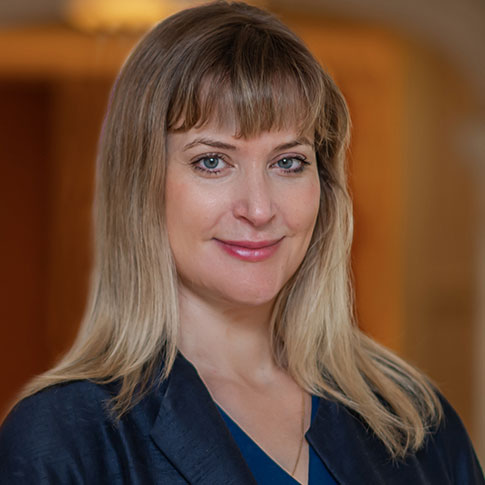
Tessa Mann
Head of Macro Strategy
Rhys Simons
Senior Director, Macro Research and Portfolio Management
Tessa Mann
Head of Macro Strategy
Transcript for this episode
[MUSIC PLAYING]
HARSIMAR ATWAL: Hello, and welcome back to this episode of The Pensions Perspectives Podcast brought to you by WTW. I'm your host, Harsimar Atwal. And today we're going to spend some time talking about one of our most anticipated research publications of the year, The Global Investment Outlook. I'm joined today by two of my colleagues who sit in the portfolio management and asset research team, Rhys Simons and Tessa Mann. Thank you for joining me.
RHYS SIMONS: Hello.
TESSA MANN: Thank you for having us.
HARSIMAR ATWAL: So before we get into the topic of conversation, the outlook for 2026, I think it would be helpful for our listeners if we take a step back, rewind, and look at 2025 and explain how we got to where we are today. So thinking about 2025, what were some of the key economic characteristics of last year?
TESSA MANN: Yeah, so I think, when we look back to 2025, there's a few things that stick out. So first of all, inflation-- that's been a very material point of discussion for the last few years. So 2025, if we put that in context, it's been another year of disinflation, which started in 2024. Inflation peaked around mid-2023 across developed markets. It's gradually been coming down as we enter this year. Inflation is running a lot less hot, still above target, but a lot less hot.
Related to that as well, we had four cuts to interest rates over here in the UK, the Bank of England, three over in the US. Similarly, we've had cuts across developed markets. So that gives us a bit of a backdrop where we know inflation is still above target, but it's come down materially.
Interest rates have been cut materially in Europe. For example, the ECB policy rate is now around 2%. So that's the typical macro backdrop. Obviously, inflation's been running very hot if we look back kind of mid-2023. So that's quite a defining characteristic.
Besides that, AI-- clearly a very big market theme over last year. Around 25% of the S&P 500, for example, now is the hyperscalers, so a continuation of that market performance, but also a consolidation over 2025 of those big AI names and AI as a theme being very pivotal and impactful for markets and also the economy.
HARSIMAR ATWAL: So if you had to think about the things that really moved the needle-- we spoke in there about inflation, about AI-- Rhys, is there anything else that you'd like to bring in if we're looking back to 2025?
RHYS SIMONS: Yeah, I think maybe going back to April time, Liberation Day, there was quite a lot of concern around what higher tariffs might mean for inflation and growth, both in the US, but also, obviously, in the rest of the world. And what ended up playing out throughout the year was actually pretty robust growth. And despite all the noise that went on throughout the year, equity markets performed really strongly throughout the year.
So yeah, I think that's kind of a key point to take away is that there can be a lot of noise that's going on out there. It doesn't necessarily translate into a big negative impact on fundamentals, which, obviously, is most important for equity market outcomes.
HARSIMAR ATWAL: Yeah. And you mentioned AI there. And it almost feels like we've got to a point where you can't talk about markets and the economic environment without mentioning AI had a really big role in markets over 2025. What role do you think AI will have on markets and performance going into 2026?
RHYS SIMONS: Yeah, so AI CapEx continues to grow really strongly. So in 2026, in the US, AI CapEx is expected to add around about a percentage point on its own to GDP. So that's a big number. Obviously, it made a big contribution last year, but that's kind of only continuing to grow.
HARSIMAR ATWAL: And thinking about where we are now and where we were 12 months ago, what feels the same, what feels familiar, and what is fundamentally different compared to 2025?
TESSA MANN: Well, I think yeah, as Rhys says, CapEx is the big thing that investors are looking at the start of this year. So if we look at last year, we had a big, obviously, market performance from AI, as you say. But as we look into this year, a lot of the capital expenditure, a lot of the new kind of expenditure on product development projects as well, that's going to come from debt issuance.
So that's something that we are looking at quite a lot this year in terms of the CapEx spend, relative to the potential revenues that that can bring in. And that's quite a new step forward as well.
HARSIMAR ATWAL: Can we spend some time talking about developed markets? More specifically, seeing a lot in the news at the moment about Japan. What are our views on Japan going forward?
RHYS SIMONS: Do you want to go?
TESSA MANN: Yeah. So, I mean, we've been positive on Japan, haven't we, for quite some time. And we're still positive. So obviously, Japanese, on the equity side, has performed really well.
If we look at the changes that we're seeing there in terms of the improvement in balance sheets-- and the government there has had a really big push to increase the efficiency of cash spent by big companies-- that's been underway, but we still see that as continuing over this year.
RHYS SIMONS: Yeah, and maybe to add, so that's-- talking about the corporate reforms that's going on in Japan. But the macro environment is also really supportive. So Japan elected a new-- well, the LDP elected a new leader of the party towards the end of last year, Sanae Takaichi.
And one of the first things she did as a leader as the LDP was to approve a fairly sizable fiscal package towards the end of last year. And we saw that very positively impact Japanese equities.
She's called for an election at the start of this year, which is happening on Sunday the 8th of Feb. And there's more talk about if the LDP have more control in the parliament in Japan, potentially, for more fiscal spending to come, partly through a consumption tax cut, so helping people to have more money to be able to go and spend in the economy. And that's also been taken, obviously, very positively by equities, because there's obviously an obvious path through to stronger earnings.
On the flip side, though, the interest rate market, the bond yield market, and the yen have been a bit less positive. So there's kind of been this theme of increased fiscal spending. Debt-to-GDP is already very high, leading to a bit more of a negative impact on both the shape of the yield curve-- so the shape of the yield curve has been steepening. The long end's been rising more than the front end. And the end also has been weakening.
But we think those moves are a bit overdone because, in reality, Japan's in a place where nominal GDP is growing pretty strongly. So provided there isn't a very material fiscal expansion, the debt-to-GDP ratio should come down over the next few years.
HARSIMAR ATWAL: And what about other major economies? What about America? What's our view on the US this year?
TESSA MANN: Yeah, so, I mean, one thing that strikes me when you talk other economies-- so at the start, I referenced the US and UK base rates are around the same level, 3.75%. If we look at the forward expectations of what investors in aggregate are pricing in, there's a lot more cuts priced in on the US side and far fewer on the UK side.
Partly, if we look at the aggregate inflation numbers, that could point to why, with inflation a little bit softer at the moment in the US, both are above target. But as we've outlined, and as we look at big CapEx expenditure in the US on AI and other productivity developments that come from around that large caps being very well prepared to adopt some of those new technologies, there's a very constructive, positive environment, and whereas in the UK, there's been a bit more weakness, really. So that's one area I think we talk about quite a bit.
RHYS SIMONS: Yeah, I might just add there, so just the broader picture-- Tessa talked quite well about what's going on in AI space. But thinking about GDP growth more broadly this year-- I mentioned before potentially getting a percentage point from AI CapEx on its own-- there's potentially a percentage point kind of estimates coming from fiscal policy this year.
So that's 2% growth, which is broadly at potential or at where consensus expectations are, before you bake in the fact that households and companies' balance sheets are in a pretty good place. So the capacity for people to spend money is in a pretty good place.
And on top of that, there's the midterm elections later this year. The general polling has had Democrats ahead of Republicans. So there's a potential chance that the Republicans decide to spend more fiscally as we get towards the middle of the year and moving towards the election later in the year. So that probably points to more upside risk to growth. So the chances that growth is going to be better than the 2.5% we've got in the outlook is higher than it perhaps being lower than that.
HARSIMAR ATWAL: And then thinking about bond market yields, what's our view on inflation this year? And what do we think that's going to mean for central bank policy over 2026?
TESSA MANN: So, yeah, inflation has come down, as I mentioned, very materially. So over here in the UK, August 2023 was when we saw peak inflation around 5.2, 5.3% That's come down gradually across the US, across the UK. And we do really expect that to continue, maybe not quite to central bank targets in all developed markets, but certainly moving towards target. So that's very, very material.
And that's really what we think is going to be impactful for the Bank of England this year. So where that growth hasn't been so strong in the UK, which kind of contrasts the points Rhys was making on the US, the Bank of England struggled to cut as far as they could because inflation has remained sticky.
But we can see that trend's come down. And obviously, that globally kind of imported inflation is coming down too. So yeah, a few more cuts here-- broadly, it's not going to be like 2025, 2024 of synchronous cuts down across developed markets, but a bit more softening, particularly in the UK.
RHYS SIMONS: Yes, maybe add to that, so we're expecting a number of cuts in the UK, whereas, in the US-- and I think Tessa touched on this earlier, that markets are expecting one or two cuts from the Fed. But we think it's more likely that there potentially is no cuts this year-- I mean, potentially one, but also potentially no cuts this year because, partly, of that inflation point.
So I think inflation is just below 3% now, but with growth, significantly above potential, and a labor market that doesn't look strong, doesn't look weak. It's kind of moving sideways. It's not obvious what the impetus is for the central bank to ease policy right now. It kind of looks like the economy is going pretty well.
So yeah, whereas in the UK, we can see some interest rate cuts, in the US, for example, things look stronger. It looks less likely. And the Fed had their meeting this week, I think, or maybe it was last week, where they were on hold. And a number of their comments in their communication shifted to be less concerned about the risk to the downside and more things look balanced and we're not really planning to make any changes in the immediate term.
HARSIMAR ATWAL: I'm conscious we've spoken about the US, the UK, Japan. But another market that's obviously very important for just global economies and interesting to our listeners as well is Eurozone. So any comments on equity markets and inflation and central bank policy in Europe?
TESSA MANN: Yeah, so Europe has got the lowest base rate out of those key developed markets that you mentioned. So we can see that ECB broadly holding now with the base rate at 2% is a lot lower than other central banks. Obviously, there is potentially a little bit more-- a bit of a lower neutral rate there, potentially. But broadly, they're at or near target as well. And that's certainly been the commentary out of the ECB.
Growth were kind of alongside consensus around 1% real GDP growth, so obviously not super stellar shooting the lights out. But we can see Germany and Europe having more fiscal stimulus, which we saw beginning last year as well, particularly on things like increased defense spending. So there is a little bit more support for the economy broadly as we enter 2026.
HARSIMAR ATWAL: Like many people, I have news alerts coming up on my phone constantly throughout the day. And whether it's talking about tariffs or something new in AI, the geopolitical backdrop at the moment, it's hard sometimes not to feel quite overwhelmed, sometimes, with the news reports. It feels like the world's on fire. What are some of the key risks that are emerging this year, and what might challenge the outlook that you've put forward?
RHYS SIMONS: Do you want to go?
TESSA MANN: Yeah. I'll take the start. So I suppose as the opposite of some of the key points, why we would see a bit more of a constructive outlook would be a good place to start as the key risks. So AI being one of them, obviously-- I mentioned that this year, there is a lot of capital expenditure, and new projects increasingly will be financed with debt and debt issuance.
So that does raise a couple of potential risks. Obviously, you've got the question that many of us will read about from those headlines around the profitability of CapEx outgoings. That can spook markets. Whether that's true over a structural horizon or not, I think that that's a risk.
And I mentioned also the one thing that we're looking at across research as well as our team is the impact of having a big flood of extra debt issuance on credit markets. So that's a couple on the AI side that I think could be material.
RHYS SIMONS: Yeah, maybe to go-- so I think part of your question you talked about, there's all these headlines about geopolitics.
HARSIMAR ATWAL: Yeah, is it noise, or should investors actually be concerned about some of this stuff?
RHYS SIMONS: So what's important is to have a framework or at least a lens to look through at the news that's coming in because like you said, if you're just following the headlines, you're going to think the world's on fire.
HARSIMAR ATWAL: You're going to be overwhelmed.
RHYS SIMONS: You're going to be overwhelmed. You're going to be worried. And the thing that's important is to think about, OK, taking a step back, how does this fit into a framework? And so, for example, thinking about the US, a number of things have happened including the US this year, whether it be what happened in Venezuela, obviously the talk around Greenland. There has been talks between the US and Iran. And all of that, obviously, can be quite concerning.
But there's quite a bit of information out there now about the US administration's shift to be more proactive from a foreign and trade policy perspective and what's kind of driving their decision-making, which basically is the US national interest at the center of the mind around focused on taking action in areas like ensuring access to critical minerals, ensuring access and some sort of control over global energy markets, having more of an influence in the Western Hemisphere.
So President Trump himself has kind of turned this term, the "Donroe Doctrine," which is a nod to something called the Monroe Doctrine, which is, like, from over 100 years ago, which is where basically the US said to the other major power at the time, which was Europe, kind of, hands off our backyard. This Western hemisphere is for us. It's where we're going to have influence. We want to have control.
And that quite obviously has also been a shift in US policy, to be a bit more proactive. And also, the last thing is that just broader geopolitical, geostrategic conflict with China that kind of runs through all of those things. So Venezuela, for example, has the largest oil reserves on the planet and also supplied a lot of oil to China.
With Greenland, there's a lot of critical mineral reserves kind of under the ice that potentially is accessible at some point in the future. Plus, if climate change leads to climates shifting around Greenland, that's also a potential kind of military route into the US for the likes of China and Russia. And so the US wants to try and shore up military presence there. So there is this growing information out there of what is driving decision-making, which is important to look through when the noise appears, to try and separate the noise from signal.
TESSA MANN: Yeah, I think on that one, that's a really good point. We hear a lot of big major powers talking about national security and talking about those critical minerals. So in terms of your question on geopolitics, it's not noise, but some of the questions around the headline-grabbing items and whether that's going to directly impact markets, that's not going to be the direct passthrough.
So that framework is really important for understanding where is the areas of strategic competition. And something we do talk about within WTW Investments is being in a new paradigm where we have a big geopolitical shift of three major powers. So that is material. The day-to-day, political discussions, that's less of a driver of markets, as we said. We did see that last year, to some extent, too.
HARSIMAR ATWAL: And something else that's obviously been massively important in the news is the conversation around AI. You've already spoken about the impact it had on markets in 2025 and the impact we think it's going to have in 2026. But what happens if companies start to question the payoff in relation to AI?
TESSA MANN: Yeah, I mean, I think that's definitely something we've spoken about. And that's something I touched upon in terms of-- there's two issues there. Obviously, there is one real risk, that companies could spend more than the kind of revenue-generating opportunities exist. That's not our expectation now as we look across, particularly on the hyperscalers, the capital projects relative to the really growing share of the economy and public markets that AI companies, particularly those picks and shovel companies, have.
But that is one risk. And then the other one, as I mentioned, is almost the kind of spook risk. We know that markets can fall down on a whisper or claims that haven't quite been substantiated yet. So for investors, as always, it's always important to consider what a pullback can mean for portfolios and ensuring there's obviously some diversification, which we're always advocating for.
HARSIMAR ATWAL: And then another key headline from last year was around trade and tariffs, and particularly coming out of the US. Do you have any views on-- is that a slow-burning, ongoing conversation? Or is there a chance for that to escalate again in the same way that it did last year?
RHYS SIMONS: I think the risk of escalation from a rhetoric perspective is 100% possible. I mean, we've already seen it this year. So with talks about the kind of Greenland situation, obviously, what happened towards the peak kind of rhetoric on that was the US said to the EU, if you don't let us acquire Greenland, we're going to slap more tariffs. And the EU said, oh, if you give us more tariffs, we might give you more tariffs. And there was this kind of back-and-forth from a rhetoric perspective.
So the tariff conversation is going to be present as we go throughout the year. The thing to be focused on is what I mentioned before about what is the framework, trying to take a step back and say, is it likely that this escalation is going to happen almost to the point where it looks like the world's almost burning in some way? Or is the more likely outcome that people and states are trying to build up a negotiating position in some scenarios, ready to then come to the table and find some form of agreement?
So, yeah, I mean, we've still got a tariff rate that's at the highest level for more than 100 or so years. But I think, as with what we've seen go on throughout the last three quarters of 2025 and probably will continue is that the US is trying to adjust tariff policy to try and ensure they can get some more manufacturing online domestically, but ultimately don't want to do something that's going to be detrimental to either markets or detrimental to the economy, because as they've kind of got towards the point where that looks like it might happen, they've typically pulled back a little bit from the brink.
So of course, the risk is there that that doesn't play out and they decide to escalate the situation. But at least what we've seen so far over the last 9, 12 months is that that's been the behavior.
HARSIMAR ATWAL: Rhys, something that you spoke about earlier was the resilience of the US labor market. But I was wondering, is there any signs, any signals that you might be watching out for that that's softening over 2026?
RHYS SIMONS: Yeah, so the US labor market is interesting. So the numbers that typically make the news are the nonfarm payrolls, the number of jobs added, net jobs added to the economy, which-- that number has trended down quite a lot in the second half of last year and is now at a level that looks quite low relative to the average of the last few years.
But if you look at the US labor market in the round, and a range of different indicators, some look really, really strong, and some look a little bit weaker. So it looks more like it's in a reasonably robust place and moving sideways as opposed to necessarily strengthening or weakening.
So a few of those indicators-- so the unemployment rate has ticked up a little bit. So it's now at 4.4%, I think. But that's still pretty low relative to this cycle and history. And if you look at the proportion of what's called prime-age population ratio-- so people between the ages of 25 and 54 and the percentage of them that are in a job-- that's a really high percentage. It's over 80%, which is virtually the highest level it's been in the last 20 years or so.
So they look really strong. And then on the higher side, which is the highest stat, which is just solely number of new jobs added-- so not the net change, but just new people, new jobs being found-- looks not necessarily alarmingly low, but on the low side.
So you've got this kind of range where some metrics look really strong. Some metrics look a little low. And another thing that's playing in there to the number of jobs being added being a bit lower is immigration. So in 2023, 2024, there was a lot of immigration into the US, which led to the jobs added numbers for the labor market looking quite strong. That's moved down quite a lot over the last six months.
And so the number of jobs added looking low is also partly a function of that, basically, that immigration is lower. So the headline message is-- range of different indicators, some looking really good, some looking more weak. In reality, it's looking in a more balanced, kind of sideways step place.
HARSIMAR ATWAL: OK, thank you. One market that we've not necessarily spent too much time talking about is China. And I was wondering, what are some of the green flags, red flags that we should be looking out for over the year?
TESSA MANN: Yeah, good question. So China has obviously had an extended period of economic challenges. And as we start this year, we can see that leading indicators are still a little bit on the weaker side, although there has been some improvement there relative to last year.
So over this year, in aggregate, we are around slightly above consensus on expectations for growth. Really, if we look at the 15th plenum that we saw last year, the 15th plenum on the five-year plan, we can see some more growth-friendly policies.
And I think in aggregate, we are expecting some of-- yeah, China to recover from some of the economic challenges that we've seen on the property sector.
HARSIMAR ATWAL: So we've spent some time talking about the opportunities, about the risks. If we want to bring this all together for our listeners and focus on what investors should really be thinking about this year, if you had to pick out just a couple of key themes to keep in mind, what would they be?
TESSA MANN: So I think headline, constructive backdrop-- we've spoken about the technological innovation that we're seeing, the big expenditures that's going on that front, and the productivity that that's going to bring, inflation coming down, and we think keeping an eye on that is something that's really important to look at.
And alongside that, we think there'll be maybe a couple more cuts interest rate-wise, but this year, we're likely to get to around neutral. So that's in contrast to the last two years, what we've seen.
HARSIMAR ATWAL: Rhys, do you agree, or do you think there's another key headline theme that we should be focused on?
RHYS SIMONS: I think the only other thing to maybe keep in mind throughout the year-- because there is going to be a lot more headlines, and there's going to be a lot more-- what seems like news and signals that the world's going in a particularly negative direction, is just ensure that you're taking a step back, not making any knee-jerk decisions, and thinking through, has anything actually happened yet, and what is that passthrough to fundamentals?
And also, if there's something that looks like it's a very material risk for you as an investor, perhaps doing scenario analysis and thinking, what's the range of impacts? What's the broad probability distribution that makes sense? Should I take some action here?
So it's that kind of point to just remember to take a step back, think about what's happening, think about feedthrough to fundamentals before making any decisions.
HARSIMAR ATWAL: Great. Thank you. And as you all know, by now, we like to finish our podcast with a "would you rather" question.
RHYS SIMONS: OK.
HARSIMAR ATWAL: So I'll let Tessa pick the question for the two of you to answer.
TESSA MANN: OK. Would you rather be highly intelligent with terrible social skills or have amazing people skills but totally unacademic?
RHYS SIMONS: I'm answering first?
TESSA MANN: I think so.
RHYS SIMONS: Yeah, the second one, definitely. Obviously, it's great to-- it would be great to be very intelligent, but I think human connection and relationships is the far more important part of life than being book-smart. So I'd go for the second one.
TESSA MANN: I was thinking the same. Plus I thought-- maybe this is a loophole, but says unacademic, not unintelligent. And also, we've just spoken a lot about artificial intelligence, but EQ is not something that's going to be taken anytime soon.
HARSIMAR ATWAL: Yeah, that's a very good point.
RHYS SIMONS: Good point.
TESSA MANN: What about you?
HARSIMAR ATWAL: I would probably say the same as well. But I guess it changes as you go through different phases of life. If you'd asked me this perhaps two decades ago, I'd have maybe said the first one.
TESSA MANN: Yeah, that's true.
HARSIMAR ATWAL: But I think yeah, definitely, right now, where I'm at, the second one, I'd rather be more emotionally intelligent, get on with people.
RHYS SIMONS: For sure.
HARSIMAR ATWAL: Thank you both for joining me today and for going through-- there's a lot, like we said, going on in the news and in headlines. And I think that's been really helpful to just make it a bit more digestible and picking out those key bits. So yeah, thank you very much.
RHYS SIMONS: Thank you for having us.
TESSA MANN: Thank you for having us.
HARSIMAR ATWAL: Our Global Investment Outlook will be made available on our website and in the description box of this episode. Thank you for joining us for this episode of The Pensions Perspectives Podcast, and stay tuned for another episode coming soon.
[MUSIC PLAYING]
Disclaimer
This podcast by WTW is intended for general information purposes only and does not constitute financial, investment, legal or other professional advice. Listeners should not act on the information presented without first consulting a qualified professional and this podcast should not be relied upon for investment or other financial decisions.
This podcast takes into account information available to WTW at the date of recording and takes no account of developments after that date. WTW provides no guarantee as to the accuracy or completeness of any information contained in this podcast and WTW and its affiliates and their respective directors, officers and employees accept no responsibility for any of the content.
The views expressed by any hosts and guests are their own and may not reflect those of their employers or affiliated organizations.
All content, including audio, branding, and any associated materials, is protected under applicable copyright laws. Unauthorized use, reproduction, or distribution of this content is prohibited without prior written consent.
Copyright © 2026 WTW. All rights reserved.
Listen to this episode on:
Learn more about the Pensions Perspectives Podcast series :
Related insight
Global Investment Outlook 2026