The DB pensions landscape has changed in recent years, with over 75% of schemes now in surplus on a low-dependency basis. As a result, boardroom conversations have moved on from plugging deficits to deciding endgame strategies and whether surplus should be refunded and also shared with members - a rare pensions story with genuinely better outcomes on the table. In this episode, Luna Fadayel speaks with Adam Boyes and Bina Mistry, to explore how proposed legislative changes could turn surplus into a win-win and what will be relevant when implementing these solutions.
The DB pensions landscape has changed in recent years, with over 75% of schemes now in surplus on a low-dependency basis. As a result, boardroom conversations have moved on from plugging deficits to deciding endgame strategies and whether surplus should be refunded and also shared with members - a rare pensions story with genuinely better outcomes on the table. In this episode, Luna Fadayel speaks with Adam Boyes and Bina Mistry, to explore how proposed legislative changes could turn surplus into a win-win and what will be relevant when implementing these solutions.
Podcast host
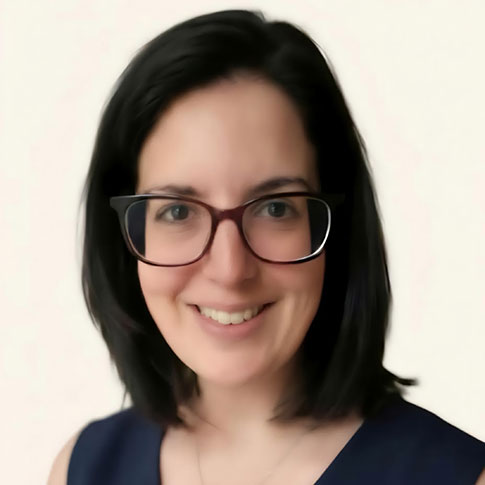
Luna Fadayel
Scheme Actuary and Relationship Manager
Luna Fadayel
Scheme Actuary and Relationship Manager
Podcast guests
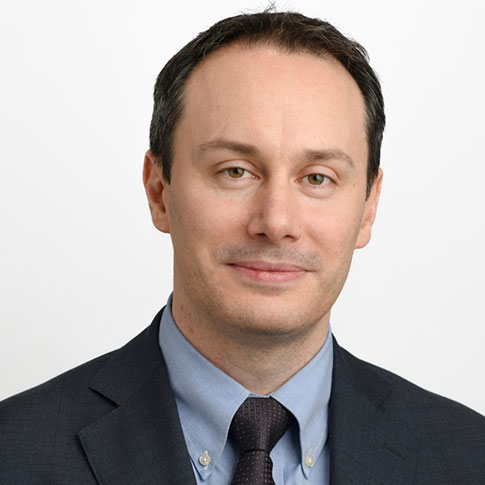
Adam Boyes
Head of Trustee Consulting
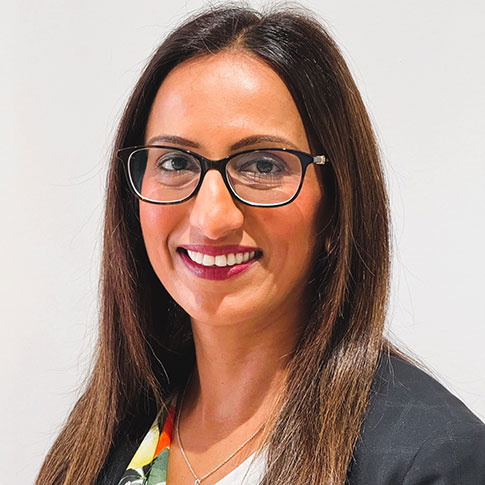
Bina Mistry
Head of Corporate Pensions Consulting
Adam Boyes
Head of Trustee Consulting
Bina Mistry
Head of Corporate Pensions Consulting
Transcript for this episode
[AUDIO LOGO]
LUNA FADAYEL: Hello, and welcome to this episode of the Pensions Perspectives podcast, brought to you by WTW. I'm your host, Luna Fadayel, a scheme actuary and relationship manager. Now, the DB pensions landscape has changed dramatically over the last few years. High gilt yields have made deficits a thing of the past for many schemes. Indeed, the annual funding statement that regulator published last year showed that over 75% of schemes are now fully funded on a low dependency basis. As such, the focus in the boardroom has shifted from negotiations around the deficit contributions to endgame strategies and discussions around surplus opportunities.
Now, joining me today to talk through this further are Bina Mistry and Adam Boyes. Welcome, both.
ADAM BOYES: Hiya.
BINA MISTRY: Thank you.
LUNA FADAYEL: So to start us off, can you let our listeners what it is that you do?
BINA MISTRY: OK, I'll go first. I'm Bina Mistry. I advise sponsors and trustees and company joint working groups on a wide range of pension issues, pretty much any pension issue, on a wide variety of scheme sizes. I'm also head of corporate consulting at WTW, and therefore sit on our UK leadership team with a wide range of responsibilities, covering all angles of how we consult with our clients and dealing with the evolving pensions landscape that we have.
LUNA FADAYEL: And Adam?
ADAM BOYES: Well, in some ways, I'm Bina's counterpart on the UK leadership team, so looking after a lot of the same things, but with my role as head of trustee consulting, much more of a trustee mindset. We're not adversaries. We do agree on quite a lot. So there's a lot of collaboration there. And then with the rest of my day job, I'm a scheme actuary to several large defined benefit schemes.
LUNA FADAYEL: Well, I'm glad I don't need to sit in your seat to split you two up, so let's try and--
BINA MISTRY: Well, we don't know.
LUNA FADAYEL: --keep this civil.
BINA MISTRY: We don't know. Let's see how--
ADAM BOYES: Let's see where it goes.
BINA MISTRY: --this conversation goes.
[LAUGHING]
LUNA FADAYEL: Now, for most of my career, we have been dealing with funding deficits. So what's changed in the landscape?
ADAM BOYES: Well, I think you look back at the Great Financial Crisis and beyond, it was a very polarized landscape. It was really the haves and the have nots. The have hedged, and the have not hedged. And we saw some schemes that were dealing with gilt yields as they sort of just went down and down and down, and others that were struggling. And so it was very difficult valuations through that period.
As we look the other side of COVID, the geopolitical stuff that happened afterwards-- we had the spike in inflation and, from 2022 onwards, gilt yields rising-- that really has changed the circumstances of schemes across the whole picture. So as you said in your introduction, 75% funded on a low dependency basis, something like around half fully funded on a buyout basis. And obviously, there's still schemes that have some funding challenges ahead, but for the majority, they're in just a vastly different place.
And I think the thing in the landscape that's really changed is that there's much more open-mindedness in thinking about strategy. I think when solvency was so far away, it just felt like a dream, kind of an irrelevance and an annoyance, sometimes, to have to disclose such a poor funding level on that kind of basis. But now it's within touching distance, or schemes have got the capital to be able to transact, there's actually much more open-mindedness in terms of, well, is it the right thing to do straightaway, or is there a different vision for the scheme that delivers more value for the stakeholders?
BINA MISTRY: There is a shift in mindset for sponsors, as well. They have been hurt in the past. But having piled millions, tens of millions of deficit contributions into pension schemes-- we talk about the 75%. I think that represents 160 billion of surpluses on a low dependency basis.
Looking at the PPF Purple Book, about 200 billion has been paid in DRCs over the last 20 years since the new funding regime back in 2005, and about 50 billion of that in the last four years. So it's right that sponsors also pause and think, what is the right endgame strategy for us? What should we be doing in our pension schemes?
And is there an opportunity to get some of this money back? You know, today's discussion here. And I think the changing regulations, as well as a real change in what we're hearing and seeing from the pensions regulator, both in striving for innovation, supporting growth, supporting running of schemes, keeping schemes open, it's all part and parcel of that shift in landscape.
LUNA FADAYEL: Yeah. And actually, on that particular point, so before the famous Mansion House speech, we'd published a white paper outlining six proposed changes to help seize the surplus opportunity. Could you remind our listeners what actual changes have been proposed in the last year or so, and the expected timescales for that?
BINA MISTRY: Yeah, so three main changes which are currently in the draft pensions bill. The first is a statutory resolution for trustees to override any existing restrictions in scheme rules to allow surplus to be paid on an ongoing basis. And that should be quite wide-ranging, as we understand, to cover all current restrictions in the rules.
Secondly, the threshold for which surpluses can be distributed is being lowered from the current buyout level to the low dependency level. That is just a minimum, but it does open up the size of the surplus that you're being considered here. And then thirdly, there is an additional requirement currently for surpluses to be released to be in the interests of members. That wording is being deleted. And so it just falls back to normal fiduciary duties of trustees, which, by its very definition, means you consider relevant factors. There's relevant factors to include the employer's interests, as well. So it makes the whole discussion a lot more-- enables surplus release more possible.
LUNA FADAYEL: And there was a further announcement in the budget, wasn't there, about refunding, or being able to pay lump sums to members. What do you think about that?
BINA MISTRY: Yeah, so that is happening from April 2027-- or I should say, the other changes we expect to happen in late 2027. So that is now enabling-- expected to enable-- surpluses to be paid directly to members as lump sum, which I think is really important to make this policy work, as well. Employers are very reluctant to want to add new liabilities to their pension scheme at a cost that isn't defined. Providing lump sums allows you to crystallize a benefit improvement at a fixed cost, without the uncertainty of what would happen if instead you were given pension increases. That isn't the case.
ADAM BOYES: Yeah, and I think from a trustee's perspective, thinking about the members as recipients of these lump sums, let's say a member has got a 5,000 pound pension and he can afford to uplift it by 1% as a pension increase. What's that, four pound a month? It doesn't feel like a huge benefit when maybe the overall communication is the employers had millions of pounds out of the scheme, and we've increased your pension by four pound a month.
So being able to actually pay the lump sum enables you to give that value a lot quicker. So instead of four pound a month, maybe you're giving them 5, 6, 700 pounds in one go. And it will feel like a much more tangible benefit.
LUNA FADAYEL: Yes.
ADAM BOYES: In that sense.
LUNA FADAYEL: Yeah, it would feel more of a win, then.
ADAM BOYES: More substantial.
LUNA FADAYEL: Yeah.
BINA MISTRY: But I think the point to add here, though, as well, this is currently only drafted to allow it to happen for members over normal pension age. So effectively, pensioners. It would be great if this could happen for members below normal pension age. Employers, as well, and probably trustees. They're not just focused at looking at what improvements you can give members. There's a generational point here, as well.
Employers are concerned about the current workforce. That's where the adequacy problem really is. And some of these members are deferred members. If there's things that you can do to the pension there, that would be quite powerful. And I think it's also well-known that, really, surplus sharing, what the government is trying to do here, is all about growth in the UK economy, increased productivity, and have more invested in the UK. And really, it's the non-pensioner group that you really need to focus on to really change the economics.
LUNA FADAYEL: Yes.
ADAM BOYES: Yeah. And you're left with a real conundrum. If you can award the lump sums to some and not others, then what do you do for those? And are you setting up little DC accounts? The whole thing becomes a bit of a mess.
LUNA FADAYEL: Yeah. And just taking a step back a little bit, so the opportunities and risks around surplus sharing are evidently linked to endgame strategies. So what would you say schemes should consider as their first step in deciding their endgame strategy?
ADAM BOYES: Well, so schemes, it's the sponsors and the trustees are going to have to come together in some fashion to collaborate over what this endgame strategy might be. And that collaboration can take many forms. It can be joint groups. It can be negotiations. We obviously see all different types of collaboration in practice.
But often, it's very helpful, before getting into that, I think to understand where you're coming from. So your own context, the powers you have, the responsibilities you have, any principles or aims. So I think understanding where you're coming from, what the art of the possible is, what you can achieve in theory, so that you're going into those debates and those processes with an open mind and an open pair of eyes.
LUNA FADAYEL: And how does that compare to looking at it from a corporate perspective?
BINA MISTRY: So totally agree in terms of you need to be really clear on your own objectives. And those objectives need to align. I mean, from a sponsor perspective, if there was a desire to remove off balance sheet for whatever reason, that's part of the corporate strategy, there's other bigger influences in play here, run-on is not going to be the answer. But there is innovation in the market in terms of, when those objectives don't align, you can find a possible solution that still fits.
There's also probably a requirement of us as actuaries has 300 now to explore all the credible alternatives and understand, both from trustees' and sponsors' perspective, what would work here. What is there for the members? What is there for the sponsor and the trustees? What are these alternatives, and do they fit your objectives?
And we also know the insurance market is very clear in terms of they want to be sure that schemes have challenged the alternatives, and they're not just coming here and deploying resources in a quote that might end up pivoting into a different direction. But you're clear that is what your strategy is going to be.
And I think there's innovation. Innovation is going to drive a lot of these things. As I said, if you want an off balance sheet and trustees want on balance sheet-- and we saw the Aberdeen-Stagecoach deal-- if the company is very clear on wanting to extract profits and not move to an insurance regime, but the trustees are very keen on wanting to do that, well, there's other solutions, like captives or potentially value share opportunities with insurers, as well.
So run-on is one answer. Buyout is an alternative. But there's other things on the table. And let's not forget superfunds. That is going to be, I think, a developing, growing market, and certainly one to keep a lot of interest in because it's going to open up the opportunity for potentially more schemes.
If changes in the gateway test happen, as we're seeing through the current pensions bill, there should be more schemes that could potentially use superfunds, and even those potentially above buyout, if you use surplus sharing and you end up below buyout. Some of these solutions might be combined to get to the eventual outcome.
LUNA FADAYEL: Yeah, I think it's a really exciting time, actually. An exciting time in pensions, you don't hear that very often.
BINA MISTRY: There is a lot to consider.
LUNA FADAYEL: There is a lot happening. And I think, as you say, combining a few things can really bring out some quite good solutions. You spoke around fully understanding what run-on can actually mean in terms of surplus release. So how do you actually go about doing that?
BINA MISTRY: So I think, first, context is really important. So size and covenant are really important when it comes to run-on and surplus sharing. So if the scheme is too small, net of expenses and running that scheme, the economics aren't going to work. So it's quite easy to dismiss that as a potential solution.
And the same if the covenant is very weak. The thresholds on which surplus release are going to be set by trustees are going to be quite high. There might be additional protections that come into play. And again, the finances and the economics don't work in that situation. And also the balance of powers in the rules.
So what potentially can happen on wind-up, who owns the surplus might influence what you do in a run-on situation, as well. And of course, running on isn't necessarily running on and necessarily extracting surplus on an ongoing basis. You can run on and just have a bigger surplus on wind-up, as well. So it is relevant in that discussion, as well.
But what do you go about doing? I think do the maths and do the homework. Understand what's the projections on the surplus with and without a surplus sharing policy. Understand what the downside risks are. There's always risks inherent in a pension scheme, but what's the incremental additional risk if you have a surplus sharing policy, and what are the protections that you can put in place? Employers do not want to be in the place to pay deficit contributions again.
And so how you set that mechanism can really influence those risks. You know, what bar you set the release thresholds for surplus, how you're potentially sharing it and what benefits you're improving, and also what contingencies are in place around it. So that all needs to be analyzed. And I think there's also ways to potentially reduce some of those risks. You know, how you do the investment strategy. How the funding and investment integrate is also really important in managing that risk. And things like longevity hedging, as well.
ADAM BOYES: This isn't going to be right for everybody. There are still going to be those schemes that probably should be looking to secure things and lock them down and head down the buyout route, rather than necessarily sharing surplus. And I also think that, like you said earlier, context is key.
That context really varies from scheme to scheme. We all think the scheme we're working with is unique. And they are. They've all got their own unique constitutions, trust deeds and rules, their own unique histories. They've reached agreement on funding and other matters forever. So I think as you approach some of this stuff, we also need to be alive to understanding that context properly.
I think legal advice is going to be very key. So understanding the powers that you actually have, the responsibilities you have. And like you said earlier, the government has brought this legislation to the table that looks very powerful and may become a lot of restrictions in schemes.
And so lawyers will be advising on the can you change things and the should you. And I think if the can you is a yes, which it may well be, in many cases, I think the should you, for some schemes, is going to be very hard. For others, maybe it's easier. But I think that whole package of circumstances is going to come into the mix.
LUNA FADAYEL: Yeah.
BINA MISTRY: There are also, unfortunately, as it stands, there are still accounting barriers for some schemes, some employers. That is a really big thing. The accounting point is very relevant, something to consider early, but unfortunately, there's no magic solutions to it.
A lot of that is about just informing the market around what you're doing, understanding what the pension scheme is delivering through surplus sharing if you were going to go down that road and have P&L impacts, and also potentially consider your management metrics. So does pensions need to be involved in some of the P&L measures that you have? Is that really demonstrating the right economics of your business? So there are things you can do to educate, I think, to manage that.
LUNA FADAYEL: Yeah. And of course, surplus sharing isn't new. It can be done under the current legislation. So what are the sorts of surplus sharing deals that we're seeing currently?
ADAM BOYES: So, well, in terms of actually refunding surplus to sponsors, that doesn't happen very much. I think it has happened. It's been pretty rare. And I think even now, where schemes are solvent and they've got the potential ability to do it under the current legislation, as Bina noted earlier, there's that in the members' interests piece that's been the barrier that some have been able to overcome, but not all that have thought about it would have been able to.
So one of the main, most vanilla areas has been things like the treatment of expenses. Maybe historically, the employer has paid towards the operational costs of the scheme. The surplus provides an opportunity for that to change. And so you're delivering some value to the sponsor economically by changing how those costs are met.
And similarly with things like DB and DC accrual, to the extent that that's still happening in the same trust. We've certainly seen that come through in, say, valuation discussions where there's been a surplus, and you're looking to the opportunities to use that surplus. Some of those accrual cost type things I think have been up there.
BINA MISTRY: And we're also seeing, again, more innovation in this space. So employers are bringing DC schemes back into trusts to help share the surplus from DB into DC. And obviously, there's an open willingness now for employers to share some of that surplus with members. But the regulations are a game-changer in that space. You can see why this is a win-win opportunity.
Members would never really get benefit augmentations in most circumstances. We've seen discretions on pre-97 increases, but beyond that, it's been quite limited, generally. We are now seeing with surplus sharing through DC contributions effectively increases to pensions, discretionary increases on an ongoing basis, funding discretions to remove pension increase caps. And that's quite an attractive thing to be doing to keep the real value of pensions.
And some of these sharing policies that are being developed so that you don't have to use the surplus each year. The trustees can build up that surplus and use it when it's meaningful in a particular way. So you could use it on pension increases or you could build it up to remove caps over time. So yeah, real changes in that. We've also seen some other, more nuanced uses of surplus, for example paying for guidance for members, which is an attractive thing for both parties, and also moving unfunded arrangements back into the trust.
LUNA FADAYEL: Yeah, so lots of different ways of using it. But when you've actually been speaking to our clients, what sort of appetite is there for surplus sharing deals?
BINA MISTRY: I'd say huge. But it's slow. We're waiting for those regulations to come in place. Unfortunately, some of it might be a little bit late. Some employers already have moved DC trusts away into master trusts and otherwise, and the ability to share surplus there is not easy.
Yes, there are tax changes now in surplus sharing such that, arguably, it's neutral if you refund when you can refund it, put it back into DC contributions. It should be tax neutral. But that's only going to happen when the new regs come in place through 2027.
So I think there's pause at the moment, but there is definite interest. So we did a recent survey. And the summary of that was about 50% of schemes of those surveyed were interested in running on, and about 30% of the schemes were deliberately doing that for surplus purposes.
Yes, those numbers actually change on scheme size. So it was much lower when it was less than 250 million. But when you look at over a billion, there's equivalent stats, with two thirds were looking to run-on, and 50% were deliberately doing that for surplus sharing and surplus use policies.
ADAM BOYES: And I think that was always the hypothesis, was if the incentives change and the behavior changes-- and for a long time, there's just been-- again, not universally, but for a lot of schemes, no upside. And so it's just been this drive towards de-risk, and that's it, because what's the benefit of running the risk? Whereas now, A, with the surplus acting as a bit of a buffer, a bit more thinking about it, and some upside incentives, it does look like there's some latent demand for behavior change. But I guess time will be the tell.
LUNA FADAYEL: So speaking of time, I'm going to ask you both to do a little bit of future gazing and think five years from now, if you were looking back, what would surplus sharing done right look like from a trustee perspective and from a corporate perspective?
ADAM BOYES: Gosh.
BINA MISTRY: Let's start with you, Adam.
ADAM BOYES: Well, I sort of think what would it look like if it was bad, because the opposite of that should be what we want. I think if we saw a lot of value leak out of schemes, that maybe none of it was shared with members, it goes to sponsors-- maybe not even UK sponsors, it gets dividended abroad-- and then we see benefit security issues start to come back to the fore after having just seen such an improvement in the landscape, yeah, that would be a terrible outcome from all of this. And we would have really failed to grasp the opportunity that was really there, which I think there are a lot of positive opportunities.
So the good version, what would good look like, well, I think if you take all those schemes that we've got today, seeing that they're in-- you know, rude Health in the future, so they might be secured and bought out with an insurer. And that's absolutely fine. Or they're still well-funded against something like a low dependency measure, so they're not reliant on the covenant.
Yes, the surplus might have been used, but let's see some of it having actually been shared with members. And the government was very clear that the policy is only really a success and it's vital to its success that value is shared with members. So I think good is robust risk management, value shared with members, rude Health.
LUNA FADAYEL: And from a corporate perspective?
BINA MISTRY: You've covered everything. That was really good there, Adam. I mean, I think actually having these surplus sharing agreements work out in practice, that's got to be what good looks like. We're seeing win-win situations. That's employers are getting their refunds, members are getting improvements on their benefits.
The protections are working at the thresholds that we're doing it, and employers don't need to put in more money into pension schemes because the run-on is in a very risk-managed way. And run-on is low-risk. We shouldn't forget it is a low-risk solution. So that would be what good, to me, would look like.
But I would also say it would also be-- I don't think five years is enough for this, but the whole point of surplus sharing policy was actually to keep pension schemes invested in the UK. We see more growth. Pension adequacy is improved. I don't think we're going to see that all in five years, with regulations only coming in at the end of 2027, but starting to see that would be good.
But I would also say, and I think right for sponsors, good should also look like that there are innovative solutions and there are other solutions that are still being used in the fullest. I'd like to see a more thriving superfund market. I think that is a good opportunity for a number of schemes, and it would become a bigger opportunity with potentially some of the changes we're seeing, and sponsors could evaluate whether that's the right thing for them.
But also we should be still seeing things move to the insurance market. To me, good is all of these options are considered widely and there's enough of the market considering all of these.
ADAM BOYES: Yeah, choice.
BINA MISTRY: Yeah.
ADAM BOYES: Yeah, absolutely.
LUNA FADAYEL: Brilliant. Well, thank you. That's been a very insightful discussion. Now, speaking of choices, one last thing before I let you go. This is something that we roll out to all of our guests.
ADAM BOYES: I've seen this.
BINA MISTRY: Now I'm nervous.
LUNA FADAYEL: It's probably the easiest question that you've had so far. So Adam, could you pick a card, please, and read it out to Bina?
ADAM BOYES: Oh, I hope this is the worst of the two.
OK.
Oh, would you rather have fingers for toes or have toes for fingers?
BINA MISTRY: That's a complex question. I think fingers for toes. Why is that? Because fingers are very powerful. You can do so many things with them. Far more useful than toes, in my mind. So if you had 20 of those versus 10, I'll go with that.
ADAM BOYES: Up on the deal.
LUNA FADAYEL: And Bina, can you do the same for Adam?
ADAM BOYES: This is mildly terrifying.
BINA MISTRY: Right. Would you, Adam, rather wear wet socks every day or be allowed to wash your hair only once per year?
ADAM BOYES: I'm not wearing wet socks every day. That is never happening. And the hair, it's going, right? I'll just get rid of it. That's fine. I can cope with that.
LUNA FADAYEL: I think also, if you leave it long enough, it just starts to wash itself.
[INTERPOSING VOICES]
ADAM BOYES: Just get through that six-week period, and then you'll be OK.
LUNA FADAYEL: Great. Well, thank you both very much for joining us today. And thank you also to our listeners for joining us on the Pensions Perspectives podcast, brought to you by WTW I'm your host, Luna Fadayel, and I look forward to joining you for another conversation that matters.
[AUDIO LOGO]
SPEAKER: Thanks for listening. This podcast is for informational purposes only and does not constitute financial advice. The views expressed by any hosts and guests are their own and may not reflect those of their employers or affiliated organizations. All content is protected by copyright.
Disclaimer
This podcast by WTW is intended for general information purposes only and does not constitute financial, investment, legal or other professional advice. Listeners should not act on the information presented without first consulting a qualified professional and this podcast should not be relied upon for investment or other financial decisions.
This podcast takes into account information available to WTW at the date of recording and takes no account of developments after that date. WTW provides no guarantee as to the accuracy or completeness of any information contained in this podcast and WTW and its affiliates and their respective directors, officers and employees accept no responsibility for any of the content.
The views expressed by any hosts and guests are their own and may not reflect those of their employers or affiliated organizations.
All content, including audio, branding, and any associated materials, is protected under applicable copyright laws. Unauthorized use, reproduction, or distribution of this content is prohibited without prior written consent.
Copyright © 2026 WTW. All rights reserved.