At WTW Investments, we believe we have reached a crucial point for defined benefit (DB) pension schemes and there are various catalysts challenging the traditional way of thinking. These include increasing maturity, evolving regulations and access to surplus. In this episode of the Pensions Perspectives Podcast, host Harsimar Atwal chats with Dave Aleppo Senior Managing Director, GB Investments, and Tina Kripps, Senior Managing Director, GB Retirement, to explore how we think this requires us all to change how we think, act and invest.
In this episode of the Pensions Perspectives Podcast, host Harsimar Atwal chats with Dave Aleppo, Senior Managing Director, GB Investments, and Tina Kripps, Senior Managing Director, GB Retirement, to explore how we think this requires us all to change how we 𝗧𝗵𝗶𝗻𝗸, 𝗔𝗰𝘁, 𝗮𝗻𝗱 𝗜𝗻𝘃𝗲𝘀𝘁.
Podcast host

Harsimar Atwal
Director
Harsimar Atwal
Director
Podcast guests
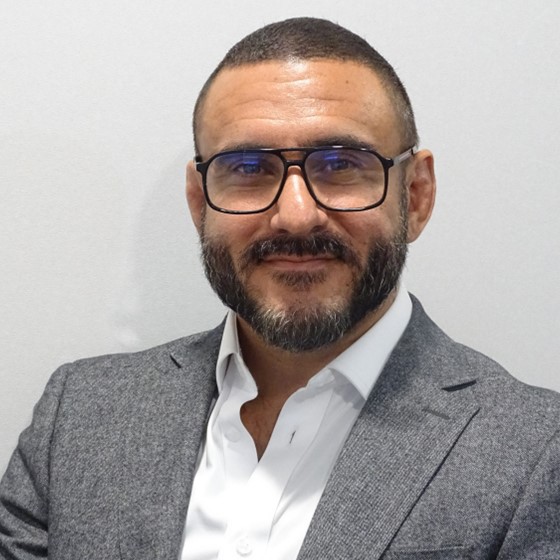
Dave Aleppo
Senior Managing Director, GB Investments
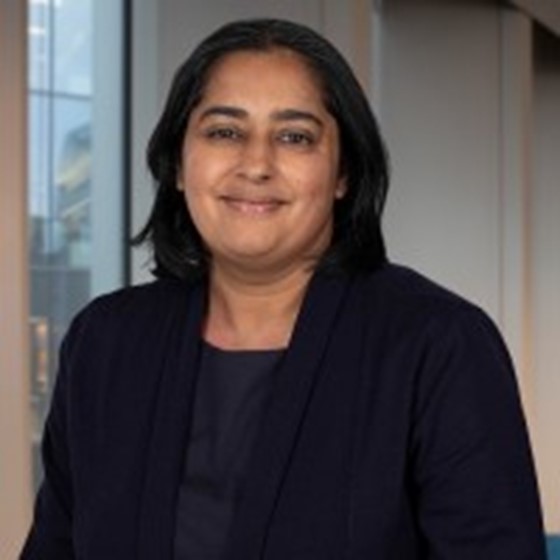
Tina Kripps
Senior Managing Director, GB Retirement
Dave Aleppo
Senior Managing Director, GB Investments
Tina Kripps
Senior Managing Director, GB Retirement
Transcript for this episode
HARSIMAR ATWAL: Hello and welcome back to this episode of the Pensions Perspectives Podcast brought to you by WTW I'm your host for today Harsimar Atwal. I'm joined today by two of my colleagues, Dave Aleppo and Tina Kripps. Tina is a scheme actuary in our retirement team, and Dave works as a consultant in our investment team. Welcome to you both. Thank you for joining me today.
DAVE ALEPPO: Thank you.
TINA KRIPPS: Thank you.
HARSIMAR ATWAL: So the topic that we're going to be discussing today is very much centered around future strategy and the ways in which pension schemes and trustees might evolve their thinking going forward. So here at WTW, we believe that we've reached almost a turning point in pension schemes. And there's a few things, underlying catalysts, for example, that are driving some of this change. The first is just a general improvement in scheme funding levels. Schemes are maturing at a rate that they perhaps weren't anticipating post gilts crisis, and that's pushing the discussion around endgame further up agendas.
We've also had some regulatory changes. So for example, the DB funding code and then changes to surplus access rules. And that's all happened against the backdrop of just heightened geopolitical risk. So we believe that now is a good time to evolve how we think, how we act, and how we invest. So something that's come up under the conversation around think is a mission impairment mindset. And what do you think that means? How should trustees be interpreting that from an investment perspective and from an actuarial perspective?
TINA KRIPPS: I'll go first. Harsimar, It's really interesting because I think the points you're making are absolutely very relevant for where we are today. I think from an actuarial perspective, I mean, schemes have been trying to get to 100% funded for a long time and in a carefully managed way. So there's been this tendency to de-risk heavily and aggressively in the run up to that 100% journey to make sure that you can be confident you'll get there, but you'll get there in a reasonable and a non-volatile way.
And I think some of that has led to more de-risking than perhaps has been necessary to be certain and increase that confidence. But I think what has potentially happened along the way is that it hasn't considered potential other risks that might be out there in terms of whether they be demographic risks or other risks that exist in pension schemes. So you do reduce your buffer for tolerating other risks that you might not have been aware of.
And whilst trustees and schemes have always had the ability to reassess, they typically haven't. There's always a bit of a certainty about confidence about being done. And therefore, you've always had those options to de-risk. But schemes haven't typically done that in the past because they've always felt it's not in their members interest if you're dumb.
DAVE ALEPPO: And I think a key aspect of this mission focus, and as you say, mission impairment is that we're at a point now in particular where it's really important to define success, what are we trying to achieve. And in doing so, you define risk namely, what's going to stop me meeting my mission. And I think if we cast our mind back 10, 20 years ago, things like generating the expected return was a good proxy for being on target or being successful. It's now probably no longer the case because the de-risking that's taking place, as Tina said, and the emergence of non-investment factors such that the investment return you've generated alone is not the be all and all, as much as it pains me to say.
And we also now just need to be much more specific about what it is we're trying to achieve. Again, we were targeting a notional 100% funded target. And that's a measure. That's not a mission. So we need to be a bit more specific.
HARSIMAR ATWAL: Yeah. And with that, what we're trying to achieve, previously we very much thought in quite a binary lens, buyout versus run on. But some of the conversations more recently seem to be thinking about, is there slightly different way to approach this? And something that we've discussed is phases and timescales. How do you think that plays out for trustees?
DAVE ALEPPO: Yeah, and I mean, in truth, it was never the case that the ultimate destination was going to be either buyout or run on. Again, a lot of what we're doing now is just to some extent, finessing some of the proxies and shorthand as an industry we used when actually we were still quite a way away from that point. So we didn't need to be as focused and nuanced. But as you say, we now have to be. So we think and recognise three phases to a pension schemes journey and life.
Phase 1 being the more traditional journey planning phase that most of the industry had been in over the last 20 odd years, so progressively increasing funding levels, reducing deficits. Phase 2 we could describe as the low risk or run on phase. And then Phase 3 ultimately will be that of settlement or some form of risk transfer. As I mentioned, I think the key here is to recognise that every scheme will move through every phase, even if in phase 2, for example, for only a very short period of time.
So if a scheme is absolutely focused on some form of settlement or risk transfer, they will still be in phase 2 even if that's just a construct, and then transition the price lock portfolio. But nonetheless you will be in there. And I think the benefit of that framework means that we can have perhaps much more productive strategic discussion. It's not all ILMs projections, risk analysis. And to some extent that strategic discussion, if we think in terms of those three phases, can reduce further to a question of well, how long do I want to spend in phase 2, then becomes a key strategic discussion for schemes.
HARSIMAR ATWAL: One of-- I'm sorry, go head.
TINA KRIPPS: I was just going to say I really the concept of the time scales and the analogy because I think it also takes some of the emotion out of the conversation as well when you have the discussion with them, trustees and sponsors, about buying buyout or run off and you can actually focus is what is the purpose of this phase of the scheme and actually broaden the conversation. So I think it is a much better analogy to use.
DAVE ALEPPO: And actually one of our common clients at the moment, the discussion we are having is very much we don't how long we're going to spend in phase 2. And although we haven't worked through that answer yet, it's a very specific exam question that at least everybody's working through the pros and cons, what if it's five years? What if it's seven years? What might that mean for either a funding strategy or the investment portfolio? Although it's a difficult question to answer, it's a very specific question, which then allows us to explore the different avenues.
HARSIMAR ATWAL: And how do you think surplus access rules change the answer to that question of how long you spend in phase 2?
TINA KRIPPS: I mean, it does. And I think in the surplus-- I mean, I think any scheme that's thinking about its mission at the moment probably needs to think about that as a potential option in terms of when you think about what is the purpose of the scheme. It's to serve the interests of the stakeholders, and that includes all stakeholders. So it is the members, but it is also the company. So I think the surplus conversation is something that trustees and companies should be doing.
But I also think that you can have a much more collaborative and more useful conversation. If, I guess, both parties are benefiting, people will get around the table because it's the same question for trustees and sponsors that, why would you take on potential additional risk if there's no benefit to be gained? And if members potentially benefit and sponsors potentially benefit, then yeah, you can have a really good conversation around the table. It doesn't mean it has to be an equal share. It just means that you need to go into these discussions eyes wide open.
The other thing I was just going to say on the phases and you think about surplus, is that the other thing we're seeing is sponsors attitudes change quite frequently. So being flexible in how you do these things, it is really, really important in terms of what you can write down in a coherent, cohesive, coherent way is really, really key, because sponsors we know, people change, personnel, change, objectives changes sponsors. But it's really important that you've got something that you can work from as a blueprint, but at least have some flexibility in it.
And again, as Dave mentioned on one of our clients, that is one of the key things of they have a good view of where they're getting to but they need to keep some flexibility so that any of the potential options are on the table.
DAVE ALEPPO: And I think this recognition and almost definition of fiduciary duties is probably tying a number of trustees in knots a little bit. And I think we really need the legal profession to step up and help us out here, because I think there's perhaps a viewpoint that fiduciary duty means you have to focus solely on paying the contractual benefits, whereas in practice, a number of these benefits will be capped in nature. And we've got a number of thought pieces, had a number of discussions about the potential for very high inflationary environments.
And that's essentially going to erode the purchasing power of pensions. And surely targeting a suitable level of retirement for our members so that they can retire with dignity, with enough real purchasing power, has to fall under the definition of fiduciary duty at some point. There are a number of reasons why schemes and sponsors may not want to run on, but I don't think this one definition of fiduciary duty is really an appropriate reason.
HARSIMAR ATWAL: So beyond evolving how we think, there's also the act portion. So something that's driven some of the change that I mentioned at the beginning, there was the DB funding code that came into practice at the end of 2024. It set out a very clear framework of what we must do in regards to thinking about investment strategy and objectives, and something that jumps out as part of that is schemes needing to be highly resilient to short term adverse market conditions. How do you think schemes should interpret this phrase, highly resilient?
TINA KRIPPS: So in my mind I think it is about-- there's an aspect of risk there, but it's highly resilient and it's what could take you off course, but it is not there to mitigate every single risk. So I think it is important that trustees and sponsors look at the risks that they're running, look at what can be tolerated, but don't necessarily have to close down every risk. They just need to understand what their ability is, if things take them off course, how they can reset that course.
So that's how I think about highly resilient. Now, it doesn't say that in any of the statement of strategy things you have to fill in. But I think that is how trustees are looking at it. You need to look at it in a holistic way, but be clear that you're not trying to mitigate every single risk. And also you just need to look beyond the traditional metrics that you might do. I think sometimes, when we look at VaR, it kind of almost hides what the real risks that you're running are and what things you want to manage against and what things you're comfortable not having full kind of backing up for.
DAVE ALEPPO: And I think it is a different and useful change in perception and definition of risk. Again, following on from Tina's point, if you take the example of traditionally, if people just de-risk into UK government bonds, well, I think you can challenge as to whether that is a resilient investment strategy because actually if there's a UK government credit crisis, you are not going to bounce back from that. Your portfolio will not be resilient to that if it's more diversified in terms of its exposure. Well, actually schemes can weather credit spreads widening or an anticipated proportion of defaults in a portfolio. You can bounce back from that. It will be resilient across the piece.
HARSIMAR ATWAL: And some of those more traditional low risk strategies like you mentioned, they're investing into government bonds, you see quite a substantial impact on return as a result. How does return come into the idea of resilience?
DAVE ALEPPO: And again, I think this is probably an idea that has evolved. And, as an industry, we need to recognise that some of the rules of thumb 20 years ago no longer apply. We are in a different place now and different relationships hold. And 20 years ago, when schemes across the industry were maybe targeting closer to 3% above gilts in order to plug deficits, then there was a very strong correlation for reducing investment risk and reducing total funding risk, if you like.
But as we have, as an industry, reduced investment risk over various periods of time beyond a certain point that tight relationship no longer holds and actually, we've got some analysis that has appeared in various publications that we can circulate that beyond a certain point you see investment risk continuing to reduce, but actually that total funding risk will flatten out. It ceases to have a material impact on the funding risk, and you end up just de-returning rather than de-risking. And in fact, you can increase the probability of falling short of liability growth. And that's because of the existence of a whole bunch of non-investment factors that aren't being reduced as you just de-return a portfolio.
HARSIMAR ATWAL: And in this kind of new world of thinking changing the way that we're acting, how does market to market risk, how does that measure up against impairment risk?
I think particularly in a run on strategy, we are essentially adopting the mindset of we're not planning to sell these assets. We want to generate cash flows. And therefore I'm not worried as to what price you will pay me to buy these assets, because I'm not planning on selling them to you. What I am worried about is that I don't receive the income, so default risk. And that essentially, if we've set a cash flow driven strategy during that phase 2 run on stage, that's my mission. And therefore my mission impairment is I don't receive the cash flows. It's not the credit spreads widen. And that the price attached to these securities has fallen and changed.
So again, it's just linking back to mission. If we define properly and if we're all in agreement as to what success is, why are we doing something, it then identifies what's the risk. So in this example, it's default not credit spreads widening or price volatility. And then we should reflect that. And that's where close working relationships scheme actually is important, because if we properly identified these risks, why would you then set a discount rate and a funding structure with only reference to a gilts flats proxy, which then all of a sudden bakes in a lot of volatility on the funding side of things.
TINA KRIPPS: And I think that's really important in terms of with the cash flow matching strategies reflecting that in the discount rate. And I think there is a bit of an element of if you can define your cash flows and you can define the assets that match those cash flows, then your discount rate can be driven off of those assets. They still need to allow for appropriate buffers, so whether it be haircuts for default downgrades, things that could go wrong, and also in the shape of your cash flows, reflecting what your demographic assumptions are going to be. But you can always layer a buffer on them to make sure your cash flow shape doesn't change.
But actually you've got the protection. And the whole point is that you don't get that funding volatility because your assets and liabilities are moving in line with each other. And I think it works well for schemes that are actually going to invest in the assets that they're cash flow driven strategy and funding strategy based on-- where I've seen it might not work as well, is if you haven't secured those assets or if you're a long way from securing those assets, that's where you tend to get more volatility because your assets and liabilities aren't moving in line with each other.
And I think, as Dave says, that I think sometimes schemes can be a bit concerned about, their discount rate might appear to be something much higher than the gilts plus 50 that the regulator has said. But it doesn't matter, because if you invest in the assets that are going to deliver your cash flows, your benefit cash flows in a highly resilient way, it shouldn't matter what your discount rate then comes to.
DAVE ALEPPO: Often the actuarial profession is unfairly criticised for resisting change changed. How prevalent are you seeing that the adoption of that framework being?
TINA KRIPPS: So I think it's probably more prevalent than people realise, but I think it's just got-- it's just articulated in slightly different ways as you go from scheme to scheme. So a lot of schemes will probably say, oh yeah, our discount rates well integrated. But I think what we're talking about is actually building from the exact cash flows that you're holding. I think that's probably more in the smaller schemes, so smaller smaller number of schemes doing it. But it does also tend to be the bigger schemes because some of the assets that we're talking about also, the resources of schemes, to be able to have that sophisticated strategy, they do tend to be in the larger schemes as well.
But the number of times I've been asked by clients of the discount rates above-- and particularly when you get these credit widening, when your gilt discount rate goes above gilts plus 1% and you're saying they're still prudence in it. It's an interesting conversation. But I think people get comfortable because they can see what the building blocks are to get you there. And they've got high confidence in your assets. And I think it comes back to your point, Harsimar about we need to have confidence in the asset. So that's what gives us the resilience.
HARSIMAR ATWAL: That's really helpful. It's good to hear about some of the more tangible, practical things that trustees can be thinking about in order to change the way that they are acting. If we move on now to talk about the invest section and how trustees and advisors might evolve, some of the thinking that they have here, Something that you were talking about earlier, Dave, about investing in UK government bonds, it feels like that portfolio design is overlooking a lot of key risks. What are some of the other issues associated with just investing in credit and in gilts?
DAVE ALEPPO: So I think a key thing is just to recognise that if we take the phase 2 example and if a scheme is looking to run on and build a more flow aware or flow matching portfolio, this isn't of a spurious accounting exercise of cash flow at year x must equal cash flow at year y. The fundamental investment principles we've always talked about still apply. This is a risk management exercise, so principles around diversification recognising and integrating reinvestment risk looking at tail risks and extreme risk hedging.
So a lot of the themes that we've always talked to clients about and implemented still need to apply. It's just that how they apply then how you mitigate them will change a bit. So diversification is a key principle, and again, linking back to mission. Depending on what you're trying to achieve will dictate what the ask is of the portfolio and therefore the correct mix of assets. And that's a key point in terms of thinking about target level of funding or surplus. And equally on the risk side, well, what are schemes specific pain points below what level of funding or what fall in surplus can you still do what you want to do with that surplus be that company or trustee missions?
And then we can work backwards from that pain point to understand risk tolerance framed slightly differently, what level of yield requirement we need now to build up to that tolerance. And then that will inform of the universe of appropriate assets we've got and market conditions at the moment. How do we build a resilient portfolio that can meet that yield requirement and be mindful of those pain points as well?
TINA KRIPPS: And also, David, I always find it's an interesting conversation because sometimes when you look at the risks, I think longevity risk is often a feature that's kind of almost falls between the two in terms of it's a monetary risk from an investment VaR as well as a funding race. So if a scheme is hedged to longevity, do you think about the strategy slightly differently because you've got I suppose, less of a buffer for some of those things that could take you off course?
DAVE ALEPPO: Yeah, I think-- once you're hedging longevity, then, again, thinking about the mix of risks you then face, in particular, at moment, thinking about the collateral implications of longevity hedging, if we're utilising some of that collateral to hedge what is probably for a lower investment risk portfolio, the largest contributor to total risk, well, then that will start to dictate what we do with the residual assets. We'll need a degree of collateral efficiency.
And that's where, again, timescales allowing that illiquid assets, long dated secure income assets, can be incredibly powerful because they do offer a very attractive yield over the liquid investment linked gilts. But they also contribute to PV01 I01 so interest rates and inflation hedging. It's a very collateral efficient way of achieving a proportion of our hedging if we need to earmark some collateral to longevity hedging in order to manage that outsized risk. So we say integrated risk management, and I'm sure everybody says that. But in practice, that's key to understand that if our colleagues-- and Tina's talking to our common client about things like longevity hedging as part of the assumptions, as part of the valuation process.
Practically we have an understanding that this is an exercise in competition for capital. We have a finite asset pot that can be used to mitigate different risks, and there will be intersections and correlations between them. And that's often where some of the brainstorming we do before taking any ideas to clients.
HARSIMAR ATWAL: You started talking there about the role of illiquid assets and still having some secure income in the portfolios to hedge some of those risks. What role, if any, do other illiquid assets and things like equities have in these portfolios going forward?
DAVE ALEPPO: I mean, illiquid assets in particular have got a bad rep of late. And it's worth recognising that the haircuts we're seeing on assets are just a product of supply and demand dynamics, which is really just a product of post September 22 liquid asset portfolios shrunk, and the clients ended up with outsized positions in illiquid assets, so needed to right size those allocations and top slice and sell some, which has proved difficult to do without perhaps accepting some large discounts to NAV.
But there's nothing wrong fundamentally with those assets. They are good quality assets. It's more of a portfolio construction exercise of looking to right size, the exposure rather than anything being wrong with these assets. So I do think they have a role to play. But again, comes back to that question of time scale and if actually you have the time scale to invest and try and access that illiquidity premium. If not, there are a number of very interesting, more liquid opportunities we have. But I'm just keen that we don't vilify illiquid assets because I think in some circumstances, for some missions, they have an incredibly valuable part to play.
And actually now if that is your mission, if your timescale is consistent with holding these things, you can pick them up at a bargain. You are potentially going to acquire some very high quality assets at a 20% discount to NAV.
TINA KRIPPS: And I think, yeah, that flexibility point I think has really impacted some schemes views of those illiquid assets, because if they wanted to change course from where they were perhaps expecting to be, I think that's what held them back. But I absolutely agree. They're very good assets for actually matching benefit cash flows and give you the long term nature which many assets don't. That said, I mean I've certainly when we've been discussing investment strategy across client bases because they're often chasing credit, they've got heavily credit based strategies, and it's very hard to get a reasonable level of return in the current environment.
So I've been encouraging-- I know Dave has had these conversations and our mutual clients as well in terms of what is the role for equities these days Because, as much as illiquid assets, I feel like everyone's very wary about equities. And whilst returns have been very high, everyone's kind of almost worried that there's going to be a fall coming down the line. But I suppose what I would be saying to clients is we're only talking about small allocations. So it's not like we're talking about half your portfolio. It's the 5%, 10% to get you that extra return.
And, there's undoubtedly-- and Dave would be interesting to get your view in terms of also synthetic equity exposure. It doesn't have to be direct. You can have some protection on the equities as well. So it'd be interested to know whether we think we're going to see more of that type of exposure going forward.
DAVE ALEPPO: Yeah, and I think certainly protection strategies. And as you say, there are multiple different ways you can access equities. Again, one of the themes, I guess, that's coming out of this discussion is we're at a point where you have to be more nuanced about things, a lot of the big picture ideas target. We covered those when it comes to total levels of hedge ratio types of exposures. We're now into the detail, which you have to be in a portfolio that's targeting a low degree of return. Every basis point matters.
So when thinking about equity exposure, do I want equity exposure? Is now the right time to have equity exposure? We just need to distinguish between what do you mean market cap equity exposure, because a lot of those valuations we've seen have been driven by particular sectors, US tech, Mag 7. That's not the only way to achieve equity exposure. So you're quite right. We need to be more specific when we're having that discussion.
But I think, in addition to diversification, I also think that downside risk hedging and more structured solutions to tail risk management is going to be key because almost by definition, that's where resiliency will be dictated. If there are certain events due to omission pain points, you cannot fall below. You need to take more of a structured approach to hedging that risk, of which diversification is great, but has limitations.
HARSIMAR ATWAL: You've spoken a lot about that about longevity hedging and different types of assets diversification. Something else that we're speaking to clients about under this umbrella invest term is investing a bit like an insurer. In what ways can we borrow from that insurance playbook?
TINA KRIPPS: So I think there's a couple of ways. And I think it's important. When scheme thinking about investing like an insurer, they think about what their mission is, because sometimes schemes say they want to invest like an insurer because if they are on that journey towards a buy in and buy out, they think it's almost then easier to then pass those assets onto an insurer. And that's not necessarily always the case because the assets that the scheme might hold might not always be the ones that the insurer wants to hold.
But the concept of investing like an insurer in terms of-- it's very similar to the cash flow driven approach that we've talked about. You define a set of assets, asset cash flows that match the benefit cash flows. So that theme is very, very relevant. I think the question is the buffers that the insurers have. They've got wider access, wider pools, and the scheme needs to be able to tolerate the scheme within the resources of its own scheme and its own assets. So I think there are some assets that potentially schemes wouldn't be looking to invest in. But the concepts of that highly resilient that cash flow match would apply.
But there is more flexibility in the scheme environment as well because they don't also have to hold other reserves against some of the assets that a pension scheme might hold that an insurer wouldn't want to hold because of the capital impact.
DAVE ALEPPO: I mean, we do-- I guess a word of caution that I think investing like an insurer is a nice thought process as to how strategically you might look to approach this challenge and problem, but practically there comes with some limitations as well. Insurers are enormous, have big teams, lots of expertise, and huge economies of scale. Again, net returns and net yield is the game we're in now. If we're in phase 2 for a long period of time, cost leakage and managing that is incredibly important. The size of insurers mean they have a very low cost base to their portfolios.
So again, I would urge schemes away from thinking about, well, I'm not going to buy out because I don't want to pay the premium and the profit margin to an insurer. I'll do this myself. If you've not got the economies of scale, it's almost just like death by 1,000 cuts. You'll end up just leaking that same cost, probably more over a period of time.
Now, with fiduciary management solutions, they're a way of maybe introducing more economies of scale for smaller schemes and portfolios so you can get manager fees down and more tightly managed costs. But it's a really important consideration. The theory and the way to approach the risk management, I think there's a lot we can learn, but just challenging ourselves on whether the scale and the governance aspect stacks up is a key loop to go through.
HARSIMAR ATWAL: Well, thank you both. It was really interesting to hear your thoughts on how we should be changing, how we think, how we act, and how we invest. And can I ask you for a-- if there was one key takeaway, a summary based on all of the various interesting things that we've discussed that you wanted our listeners to go away with, what would that be?
TINA KRIPPS: I think for me, it is getting schemes to just have a rethink about what their mission is and where they're heading towards, noting whether they need to have flexibility in that journey or whether they got a very defined journey. And having that conversation, trustees and sponsors together and just seeing, can they do something that benefits the members and the company in that conversation. So I'd say that would probably be my key takeaway, that it's a good time to just relook at the strategy.
HARSIMAR ATWAL: Thank you.
DAVE ALEPPO: Again, I've mentioned it a few times, but come back to this importance of mission. And I guess both of us have worked in the industry now for a number of decades, and it feels like we are finally at this point where schemes can really get ahead. And there's a great opportunity here. So just keen that we all try and maximise that opportunity, a focus on the right things and our interactions with clients. And a lot of that is strategy and mission. So yes, one of your managers might have underperformed, but hey, guess what? A manager is always going to be underperforming if it's a diverse portfolio of managers. That's what diversity means. It's the aggregate that matters. It's the mission that matters.
HARSIMAR ATWAL: Before I let you go, and I will let you go soon, I promise, we like to end our podcasts with a would you rather question. So what I'll do is I'll-- if I hand these, two you-- if Dave, you choose a question, Tina and vice versa, and just answer what's on the other side.
DAVE ALEPPO: OK.
HARSIMAR ATWAL: Don't scared. I filtered out the bad ones.
TINA KRIPPS: Go on then.
DAVE ALEPPO: You asked me to take the middle one as Tina would have predicted. Probably stitched me up.
HARSIMAR ATWAL: Yeah.
DAVE ALEPPO: Would you rather give up chocolate or give up cheese?
TINA KRIPPS: Oh, I think-- is that a question for Dave?
DAVE ALEPPO: Yeah, that's a good point, actually. Am I asking Tina?
HARSIMAR ATWAL: I think that's a question for Dave.
TINA KRIPPS: OK, good.
HARSIMAR ATWAL: I'd be interested to hear your answer as well.
DAVE ALEPPO: I don't eat much of either.
TINA KRIPPS: So healthy.
DAVE ALEPPO: I would probably give up cheese.
TINA KRIPPS: See, I would have given up chocolate.
DAVE ALEPPO: Well, then that works perfectly. We should lunch more.
TINA KRIPPS: Because I just feel that, yeah, cheese is just-- you can use it more things, more--
DAVE ALEPPO: See, I'm being very narrow in my thinking there. I was thinking of all the dishes that involve cheese. Literally just thinking, I don't want a cheese board.
HARSIMAR ATWAL: You'd be giving up pizza.
DAVE ALEPPO: Yeah.
TINA KRIPPS: up pizza. cheesecake dessert. I mean, cheese is--
DAVE ALEPPO: I'm changing my answer, and I can do that. I'm giving up chocolate.
HARSIMAR ATWAL: Well, I'm lactose intolerant, so I've had to give up both. So the fact that you only have to give up one, you should consider yourselves very lucky. We go the other way around. Makes it a bit easier because then you only have two to chose from
DAVE ALEPPO: I'll just keep.
TINA KRIPPS: Oh, yeah, I'll keep this one. Would you rather be 10 minutes late or always be 20 minutes early? I'm definitely the early bird. I need to be there on time. I do not like getting there even a minute late, forget about 10 minutes late. So I'll be the one that the check in for the airport is three hours, I will be there three hours ahead of time.
DAVE ALEPPO: Does that differ if it's a client meeting or a social event?
TINA KRIPPS: No.
DAVE ALEPPO: So would you prefer to be a bit fashionably late for some of drinks
TINA KRIPPS: No. Just always be on my own time. So if I get an invite for 7 o'clock, it means get there for 7 o'clock, not 10 past 7..
DAVE ALEPPO: Yeah, no OK.
HARSIMAR ATWAL: And we know that's true because you were on time perfectly for the podcast. If anything, you were early today. Well, thank you both for joining me for being on the podcast today. It's been yeah, a really great discussion. I've really enjoyed it. Thank you.
DAVE ALEPPO: Thanks.
TINA KRIPPS: Thanks.
SPEAKER: Thanks for listening. This podcast is for information purposes only and does not constitute financial advice. The views expressed by any hosts and guests are their own and may not reflect those of their employers or affiliated organisations. All content is protected by copyright.
Disclaimer
This podcast by WTW is intended for general information purposes only and does not constitute financial, investment, legal or other professional advice. Listeners should not act on the information presented without first consulting a qualified professional and this podcast should not be relied upon for investment or other financial decisions.
This podcast takes into account information available to WTW at the date of recording and takes no account of developments after that date. WTW provides no guarantee as to the accuracy or completeness of any information contained in this podcast and WTW and its affiliates and their respective directors, officers and employees accept no responsibility for any of the content.
The views expressed by any hosts and guests are their own and may not reflect those of their employers or affiliated organizations.
All content, including audio, branding, and any associated materials, is protected under applicable copyright laws. Unauthorized use, reproduction, or distribution of this content is prohibited without prior written consent.
Copyright © 2026 WTW. All rights reserved.