In this episode of the WTW Pensions Perspectives Podcast, host Sophie Tennison is joined by Helen Perrin, Head of Financial Planning at WTW, to discuss why pensions should be viewed as just one part of a member’s wider financial wellbeing journey. Together, they explore how trustees and employers can better support members through financial education, guidance and access to advice, while helping individuals navigate increasingly complex financial decisions throughout their lives. The conversation also looks ahead to developments such as guided retirement, pension dashboards and AI-enabled support, and considers how a more personalised and joined-up approach could improve member outcomes.
In this episode of the WTW Pensions Perspectives Podcast, host Sophie Tennison is joined by Helen Perrin, Head of Financial Planning at WTW, to discuss why pensions should be viewed as just one part of a member’s wider financial wellbeing journey. Together, they explore how trustees and employers can better support members through financial education, guidance and access to advice, while helping individuals navigate increasingly complex financial decisions throughout their lives. The conversation also looks ahead to developments such as guided retirement, pension dashboards and AI-enabled support, and considers how a more personalised and joined-up approach could improve member outcomes.
Podcast host
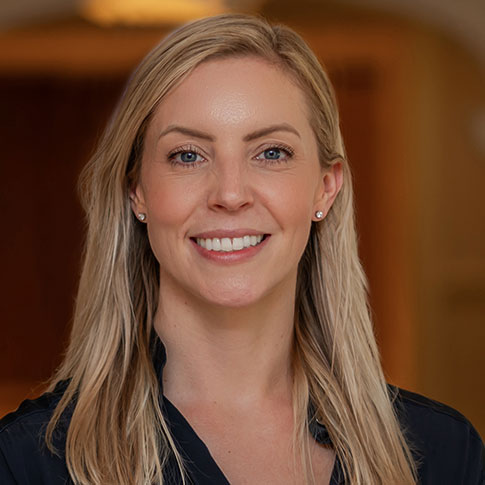
Sophie Tennison
Senior Director, Investments
Sophie Tennison
Senior Director, Investments
Podcast guest
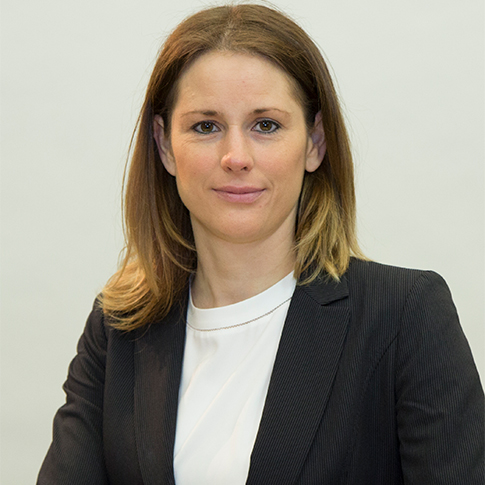
Helen Perrin
Head of Financial Planning
Helen is a Chartered Financial Planner and a Chartered Tax Adviser.
Helen Perrin
Head of Financial Planning
Helen is a Chartered Financial Planner and a Chartered Tax Adviser.
Transcript for this episode
SOPHIE TENNISON: Hello and welcome to this episode of the Pensions Perspective Podcast, brought to you by WTW. I'm your host, Sophie Tennison, an Investment Consultant here. And today, I'm joined by Helen Perrin, Head of Financial Planning at WTW. And we're going to be discussing pensions, but in the context of broader financial wellbeing. As the podcast title suggests, pensions is just part of the puzzle that members are trying to solve for. So welcome, Helen. Would you like to introduce yourself?
HELEN PERRIN: Hi. Yes. Yes. So I head up our financial planning group here at WTW. We're a team of regulated financial planners who provide education, and guidance, and advice to individuals. So we basically get involved whenever there is a need to directly support individuals. So, from a pension scheme perspective, that might be helping them understand their pension provision, any changes to that. So de-linking exercises are a popular topic at the moment. And then in the DC world, those decisions around contributions, investments, how to access pension benefits at the point of retirement.
SOPHIE TENNISON: Thank you for joining me today.
HELEN PERRIN: Thanks for having me.
SOPHIE TENNISON: If I had to put you on the spot, what would be your favorite part of your role?
HELEN PERRIN: So that's quite an easy one, actually. I think just being on the ground, talking to people, helping them understand their personal finance decisions-- when you see that light bulb go on and they get it or you've helped someone achieve a financial goal, it's just the best part of the job.
SOPHIE TENNISON: It must be really rewarding seeing those real life impacts on people. And today, we're going to be discussing how trustees and sponsors can support an evolving workforce So, when they go through different stages of life, how they can support them through their financial wellness.
Think about what the wealth market and the DC institutional market can learn from each other, and also how trustees and sponsors can support overall members. So, to kick us off with quite a large question, what can the DC institutional market learn from the wealth market given you've got the knowledge of both?
HELEN PERRIN: So I think in the wealth market, we're very focused on the individual-- so what is the individual's objective? What are they trying to achieve? Understanding their circumstances and objectives in order to help them build a financial plan. And I guess that's probably something we can lean on in the pensions industry in terms of looking at that individual and what they are trying to achieve-- rather than talking about product and features, bringing it back to what are your goals and how do we help you achieve those?
SOPHIE TENNISON: I think that's really interesting because we had a podcast when we had a Paul Davies, a behavioural psychologist on, and he was saying how that personalisation, feeling like an individual, being seen can really make a difference to how a member feels. It'd be quite a powerful persuasion technique as well.
HELEN PERRIN: Yeah. And I think we are seeing that more and more in communications with members where it'll have your name, Dear Helen, or it will have a topic that's relevant to you in a targeted communication as opposed to some general newsletter coming out.
SOPHIE TENNISON: So I'll ask the flip of that question, then. What do you think the wealth market could learn from the DC institutional space?
HELEN PERRIN: I think that's probably quite a lot. I think we've made such good progress in the pensions industry over the last 10 years with things like really good quality, default investments, auto enrolment, taking that inertia and that decision making away from individuals. And then we've got guided retirement coming where we're going to support people with defaults to access their pension benefits. So I think, in the wealth market, we can definitely learn from the power of taking some of that complication and decision making away from people and just having nice, easy solutions that people can default into without having to know all of the ins, and outs, and detail of that investment or that plan.
SOPHIE TENNISON: And I think investment is that topic that does just feel overwhelming to certain people.
HELEN PERRIN: Yeah. It can feel a scary topic, investment. And it doesn't need to be. So, yeah.
SOPHIE TENNISON: And then thinking about the membership more broadly and where pensions fit into that, I'm mindful that there are always competing pressures on finances, whether that's paying off debt, or saving for your first home, or even care costs for elderly parents-- where do you see pensions sitting in that equation for members when you have those discussions with them?
HELEN PERRIN: Yes. So you can't really talk about pensions in isolation-- or members don't think about pensions in isolation. So they're going to think about their short and long term financial needs. Our Global Benefits Attitude Survey this year again has shown an increase in people stressed about money. So if you're talking to somebody who is stressed about their money and you say to them, you need to put more into your pension, you're not on track for retirement, that's just going to make them more stressed.
Whereas if you can have a conversation around their broader financial position and you can help them build a plan that takes into account their short and long term goals, repayment of debt, and mortgages, and so on, and potentially save money through budgeting and cost management, perhaps even using employee discounts, that's going to be a much more helpful conversation for that individual than just talking about you need to increase your pension contributions.
SOPHIE TENNISON: I'll link the Global Benefits Survey in the notes for the podcast, because it is really interesting to see how attitudes have changed over time, and especially post-pandemic as well.
HELEN PERRIN: Yeah. We've seen a real increase, yeah, since pandemic. And it hasn't come down because we've had inflationary pressures and all sorts since then as well.
SOPHIE TENNISON: Yeah. Cost of living crisis, you can really see that impact play out. But I imagine members' needs don't stay static either. So a younger member might have different priorities-- paying off debt, saving for a first deposit, meeting rent-- compared to a member in the middle of their life where they might be thinking more about childcare or investments, to a member approaching retirement, where they're thinking, how can I transform this pension and savings into an income for life? So does the approach to pensions change at different points as well?
HELEN PERRIN: I think so, yeah. And it's difficult to completely generalise across different demographics. But I think what we find is when we are trying to engage younger members, we might talk about saving and investing for your future rather than we're going to run a pensions education session or financial coaching as opposed to pensions guidance. Whereas when you get to my age, I'm in my late 40s, suddenly, pensions becomes a really key topic. And I'm suddenly really popular with everyone wanting to talk to me about their pension.
Then, actually, you do want to do more targeted pensions guidance or countdown to retirement session, for example, on the education piece. And, like I say, I think we're seeing that in the way that we communicate with members to reach out to particular demographics with more targeted messaging that's going to resonate with them better.
SOPHIE TENNISON: I think that's a really interesting point, and probably a quite a simple one. Just the language that's been used in communications to attract members, just making sure that it is broad enough that it would be interesting to different members at different stages of life.
HELEN PERRIN: Yeah. And you really see that in the engagement levels and who's actually engaging with that material the way that you position it.
SOPHIE TENNISON: One of the challenges that trustees face is supporting members sufficiently without crossing the line of providing regulated advice. So I'd be interested to know how you feel that's landed. Are members getting sufficient support? Or is that nervousness around crossing the line leaving members not as supported as they should be?
HELEN PERRIN: Yeah. So I guess trustees and employers are, understandably, nervous of helping too helpful or too directional in the support that they give. I think the FCA's targeted support initiative should help with that. It sets the boundaries around what you can say. And you can be quite definitive with groups of individuals around you need to be paying more into your pension or you need to be investing in a different way at a younger age and, perhaps, take more risk.
So I think that should help trustees and employers feel more comfortable with how far they can go through those group type messages. I think the FCA have also been quite clear on that boundary between guidance and advice. And, actually, there's quite a high threshold to cross into regulated advice. You basically have to be giving a personal recommendation for a regulated product. So I think we are seeing more creativity in providing individual support through coaching and guidance as well, which allows trustees and employers to give access to large numbers of people that individual support that they need.
SOPHIE TENNISON: I think, in your response, you referred to trustees and employers there in terms of both having responsibility here. I guess where do you see that split forming between trustees and sponsors in terms of how they can support members throughout their whole working life?
HELEN PERRIN: Yeah, and there is a focus within the industry on what's a trustee and what's an employer responsibility. But from members on the ground, they don't really distinguish between the two. They just see it as a company pension scheme. And so I think there is a need for trustees and employers to work together to build comprehensive financial wellbeing programs that cover pensions and wider finances. And I think trustees and employers do work together to do that.
SOPHIE TENNISON: And I guess one of the criticisms often leveled at the wealth market is around the cost. It's seen, maybe, as expensive, or maybe only appropriate for the more wealthy members within the plan. I guess, what would your response be to that? Because I think it is difficult of where that value lies for some.
HELEN PERRIN: Yeah. So I guess the first point there is that it does make it cheaper if an employer or trustee facilitate that advice. In the advice industry, a lot of the time that we spend is truly understanding the scheme details for a member and, potentially, their employee benefit options as well to make sure that we've taken all that into account and have got the right plan for that individual. So, actually, by facilitating advice, employers and trustees can make that more accessible to individuals. And we see that in the US, it's much more common to have workplace financial advice. And we see around 30% of people in the US take advice versus less than 10% in the UK. So you can see that that makes a difference.
And I think in terms of that value add, if you get the right advice around tax planning, and investment allocation, and things like that, it can easily pay for itself for the right groups of individuals. But there are also individual support options that don't have to cost as much as regulated financial advice. It is a highly regulated area, so providing financial coaching and guidance to individuals can get that individual support that people need without the high costs of financial advice, in some cases.
SOPHIE TENNISON: And I guess of the free services as well-- pensions wise, money helper-- that trustees and sponsors can direct members to to get some free guidance as well.
HELEN PERRIN: Yeah. And there's not enough awareness around those services being out there. So I think that's something the trustees and employees can easily signpost to get people some support as well.
SOPHIE TENNISON: It's so interesting that it's less than 10% in the UK. I wouldn't have thought it would be so low.
HELEN PERRIN: Yeah. And the very low end scale of taking advice and also on investing. The UK are known for sticking their money in cash and not taking that longer term view on investing.
SOPHIE TENNISON: I guess all the conversations we've had in the investment team about productive finance and trying to invest in the UK that I was aware of-- but the individual support, yeah, it's really low. And we talked about supporting needs of memberships and how that can flex as members go through different points in their life. And I guess the obvious one is members approaching retirement.
It's one of the biggest, most complex decisions for a lot of members to tackle. We've got the new guided retirement support and discussions around decumulation. Do you think guided retirement has solved a lot of the complexities around decumulation for members? Or is there more to be done there?
HELEN PERRIN: Yes. So guided retirement is, obviously, a very positive step. At the moment, we're seeing far too many people cash their pensions out because they just don't what to do with it. And there's too much choice. And so I think guided retirement in terms of having a default decumulation strategy is very positive.
I think we also need to make sure that the education comes around that. So as well as having a default for people, that they understand how that default works and how that links into their retirement planning. Most people now will have two or three potential pensions at the point of retirement. So they're also going to be dealing with different defaults and different schemes. And they need to have an overall plan around how they bring that together to meet their retirement needs.
SOPHIE TENNISON: And I guess pensions dashboards would be one tool to help members see their pots in different places. But I think what you've touched on there is really interesting of guided retirement, I guess, helps, hopefully, members taking action, like you referred to before, of just cashing out because they don't what to do with it. There is something there available. And then there's just that education piece as to what that looks like compared to others out there.
HELEN PERRIN: Yeah. And I think dashboards, again, it's a great step forward. It helps people collate all that information. And it also gives us a great platform to, then, signpost the right education tools for people to use that money in the best way for them.
SOPHIE TENNISON: It's a good example of how technology is kind of improving things. And I couldn't not ask you about AI, Helen. It is the topic at the moment. And I guess AI, just anecdotally, from conversations I'm having with friends and family, are using these tools to talk about really complex decision making in lives. Do you think members are trusting these tools enough when it comes to looking for financial advice or support when it comes to making big financial decisions?
HELEN PERRIN: Yes. I think we're definitely seeing an increase in people using AI for financial decisions. I think we're still at the stage at the moment for the really big ones-- so the advertisement piece, for example, where people do want a bit more reassurance that the information is accurate and takes into account their personal circumstances and their scheme information. But it's constantly evolving, the AI technology. And I'm sure we will get to a point where everybody can get that individual support through AI tools. And we just need to make sure that we're using that in a responsible way for now and putting the controls in place for that.
SOPHIE TENNISON: Yeah. And it's really hard to even think about what this could look like in a decade's time in terms of the use of AI. And it feels like a real generational change.The same, I guess, how social media is-- the younger generations are really interacting in a way that has never been interacted with before. And I guess that leads to benefits and negatives, really, when it comes to the information that's out there. I guess what are your thoughts on social media raising the conversation around finance in those kinds of forums?
HELEN PERRIN: Yeah. Social media has definitely driven engagement with personal finances, which should be a good thing. But I think if you think about the original influencers, or finfluencers, as we call them in the financial world, you're talking about Martin Lewis, the nation's money saving expert, and he's done great things for people engaging with their personal finances. And so there's lots of positive information and impartial information out there.
We do also see, unfortunately, people who aren't quite so interested in getting the right information to people or impartial information to people. And we did a bit of an exercise where we Googled "pensions" on TikTok, and you get all sorts of messages back around workplace pensions being terrible value, don't go near your workplace pension, come and put all your money in crypto or exchange currency changing, trading.
So I think social media can be a very positive thing in driving that engagement. But we also need to make sure that we are engaging with members and employees to get them the positive information about their workplace pension and the employee benefits available to them as well. And perhaps we can learn from social media in the way that we engage and having that really short, engaging, bite size information, but make sure they know where they can go for reliable information as well.
SOPHIE TENNISON: I'm glad you mentioned Martin Lewis. I remember being a student, my dad postingme newspaper articles. I read about him.
But I think the misinformation piece is the most scary. I remember it was, like you said, I think we did it at a conference where we posted some examples of some of the misinformation that is out there. And it is really concerning.
HELEN PERRIN: Yeah. And, the FCA are focused on that as well. I think it's back in April that they did a bit of searching through various social media accounts. And the stats were, I think, some of those misinformation adverts that they'd asked to be taken down had reached like 2.3 million social media accounts. So misinformation can quickly spread, and we do need to tackle that as well.
SOPHIE TENNISON: Yeah it's huge numbers. So final question then, Helen-- if there was one thing that you would change when it comes to supporting members throughout their whole journey, accumulation, their work life, and looking to retirement, what would that be?
HELEN PERRIN: So I guess it's been a bit of a theme throughout this session, but I think it's just that personalisation of support. And I think it doesn't have to be everyone has regulated financial advice. It's just more those targeted messages, getting individual support in a lower cost environment. And AI is going to definitely play a part of that in the future as well to make sure that people can get the support they need.
SOPHIE TENNISON: I think even just from our conversation the bit, I've kind of taken away is the importance of the language used. Some certain terms will just turn certain members off., whereas if you broaden that language, it can really improve engagement.
HELEN PERRIN: Yeah.
SOPHIE TENNISON: So really interesting. Thank you so much for your time, Helen. It's been lovely to chat to you today.
HELEN PERRIN: Thank you for having me.
SOPHIE TENNISON: It's been great. And thank you to our listeners for joining us again for an episode of the Pensions Perspective Podcast brought to you by WTW. We hope you'll join us again soon. Thank you.
[AUDIO LOGO]
SPEAKER 1: Thanks for listening. This podcast is for informational purposes only and does not constitute financial advice. The views expressed by any hosts and guests are their own and may not reflect those of their employers or affiliated organisations. All content is protected by copyright.
Disclaimer
This podcast by WTW is intended for general information purposes only and does not constitute financial, investment, legal or other professional advice. Listeners should not act on the information presented without first consulting a qualified professional and this podcast should not be relied upon for investment or other financial decisions.
This podcast takes into account information available to WTW at the date of recording and takes no account of developments after that date. WTW provides no guarantee as to the accuracy or completeness of any information contained in this podcast and WTW and its affiliates and their respective directors, officers and employees accept no responsibility for any of the content.
The views expressed by any hosts and guests are their own and may not reflect those of their employers or affiliated organizations.
All content, including audio, branding, and any associated materials, is protected under applicable copyright laws. Unauthorized use, reproduction, or distribution of this content is prohibited without prior written consent.
Copyright © 2026 WTW. All rights reserved.