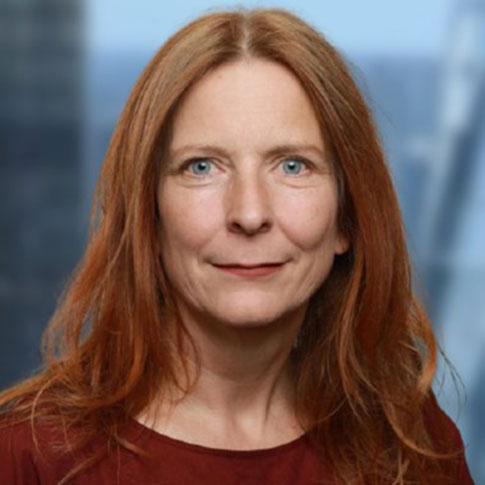
JENNY GIBBONS: I am delighted to be joined here today by Natalie Winterfrost, who is Head of Pensions at Law Debenture. So thank you very much, Natalie, for being here.
NATALIE WINTERFROST: My pleasure.
JENNY GIBBONS: We're going to talk today about the intersection between governance and game strategy. So -- really pleased to have your broad experience to be able to get into that topic. And the way that we're going to do it is we're going to look at three different scenarios -- so first of all, a scheme that is moving towards buyout and what the governance implications of that might be. Then we bring in the question of whether there's surplus to be distributed. And then finally, we'll look at a scheme that is planning to run on and what the governance implications there might be.
So Natalie, let's start with scenario number one -- so with a scheme that's moving towards buyout. And I suppose the first open question is, what might change in that scenario from a governance perspective compared to a less mature scheme?
NATALIE WINTERFROST: Well, the nature of the decisions that a trustee has to face are going to shift quite fundamentally from business as usual and potentially quite slow decision-making being absolutely fine to something that's much more transactional and that need for potentially quite tight decision-making to timetables and quite irreversible decisions. Once you have transacted, that is a decision that you don't remake.
JENNY GIBBONS: Yes. So that changes the mindset in terms of the nature of the decisions that you're making. And then from a more practical perspective, does it mean you have generally changed the size of your trustee board or the way that it's structured or your meeting cadence, your subcommittees? Are there any more practical changes?
NATALIE WINTERFROST: Absolutely, there's lots. So the first thing, obviously, to do is to think about whether or not you've got the right skill set on the board because of that transaction. There's a lot of things that you won't have done before.
So if you haven't got those skills, you need to think about how to get those skills. And that might in itself drive a change of your board composition. You might want to bring on a professional trustee for the first time, or even possibly move to a corporate sole trustee model, or just address your gaps with training.
But bearing in mind that you might need to meet very regularly and you might need to meet at quite short notice, then the idea of having a subcommittee to particularly address the transaction is a good idea. And personally, I quite like that to be a joint working group with the company. You want to make sure all stakeholders are on the same page as you're going into a transaction.
So there is a new governance structure to decide upon as a first step. And with that, of course, your subcommittees or your working group need a -- clear terms of reference. And you need to think about what delegations should be given to that subgroup so that nothing is held up in the process.
JENNY GIBBONS: And we'll come back to that idea of a joint working group, perhaps when we're looking at the scenario where we're dealing with distribution of a surplus. We'll put a pin in that and perhaps come back to that. Is there anything about the resources that the sponsor has available to the trustees over the course of a scheme getting more mature and then buying in, buying out, that is a bit of a "watch out" for trustees?
NATALIE WINTERFROST: No, absolutely. So if, as a trustee board, you're quite heavily supported by an in-house executive function, of course, that team, their they will know that their resources -- the need for them is going to be finite. So they might be looking around for alternative employment. And the last thing you really want to do is lose your project management or team -- your trustee secretary right in the middle of this. So potentially thinking about that as a risk and how to address that risk, which could be some kind of retention employment package.
JENNY GIBBONS: So succession at the least, but potentially actually something more formal that helps you have that continuity? So we've talked about potentially a governance change in the areas where governance might change as we're getting towards a from a scheme that is bought into a scheme, that is bought out. As we push out even further towards wind-up, is there a further change? And what does that look like?
NATALIE WINTERFROST: Quite potentially. So certainly, we find that we are often approached because the scheme is looking to do a transaction to bring on our expertise. But at some point in that journey, the sponsor might be thinking about whether it makes sense for it to move to a corporate sole trustee. When that is appropriate I think is a discussion that, hopefully, the sponsor can have with the existing trustee board.
I do think it's useful to, if you've had a joint working group or a subcommittee -- to keep that structure in place post the full buy-in to keep pushing towards buyout. You do see an awful lot of buyouts just being pushed out and out.
JENNY GIBBONS: Where you've lost the momentum.
NATALIE WINTERFROST: Where you lose the momentum. So having regular meetings to keep that momentum going, I think, is really quite important.
JENNY GIBBONS: And is it necessarily the case that there is better outcomes or better value to move to a professional corporate sole trustee as you're entering that wind-up stage? Is that always the best model, or are there situations where
NATALIE WINTERFROST: I don't think it's always the best model. It might be right in some circumstances. But there is, of course the wind-up can actually be some of the trickiest discussions between the trustee and the company because that is when you'll be clear what your surplus is. And you might start having those discussions about who's got the interests in that surplus and how should it be spent.
Ideally, that is a discussion that you would have much earlier in the process, have that understanding. And it might be quite clear in the deed. And that might make it simple. But it certainly isn't always.
JENNY GIBBONS: So just in those cases where it's perhaps not completely clear in the deed-- so there is a discussion and agreement to reach. And let's say also that we are undertaking to have that discussion quite early in the process about the use of surplus. So we're into our second scenario now. We talked about joint working groups. Does that persist, even when we're talking about surplus distribution? How does that work?
NATALIE WINTERFROST: I think this comes back to what's in the terms of reference for the joint working group. And be careful to make sure that some things aren't because there are things that the trustee side will need time to consider. And therefore, if it's not a power of the joint working group, it can't be made at those decisions. Then the trustees won't come under such intense pressure to make a decision under the watchful eye of the sponsor.
JENNY GIBBONS: And they're allowed. They've got permission to be in their own space and discussing things with their own advice
NATALIE WINTERFROST: With their own advice. But I think it's also quite important that the company has good advice, too. I have seen a situation where company-side, all of these discussions were had in good time. There was a contraction, a legally binding contractual agreement between the parties as to how surplus would be spent.
What emerged, of course, was more surplus than anticipated. And the company wanted to go back on that, perhaps because they weren't well enough advised. So I think it's in the trustees' interests, as well as the company's, that both sides have good advice.
Generally, it's the trustee advisor, I find, advising the working group, although sometimes, the company might want their advisors to lead on that working group, but with the safe space that there are certain things that they take away.
JENNY GIBBONS: And interestingly, there's some echoes from the sorts of disciplines we use in good risk management here because in your example of the situation where the company wanted to go back on a deal, what they needed to have been invited to do was look at scenarios for the future and scan the horizon and think about, how would we feel if.
NATALIE WINTERFROST: Absolutely. Absolutely.
JENNY GIBBONS: So let's perhaps just lean into that point on conflicts of interests. What else helps in the situation where you've got that clear conflict of interests?
NATALIE WINTERFROST: So everybody has a conflict in these situations, really, because you've got the potentially, if you've only got a corporate sole trustee, have they been chosen because of what they might do for the company? That's a challenge, certainly, that corporate sole trustee firms come under.
If there are company-appointed trustees, they, of course, might be having pressure on them to be company-friendly. And then the member-nominated trustees might be the ones that actually personally would financially gain from spending surpluses on augmentation.
JENNY GIBBONS: We've got conflicts everywhere.
NATALIE WINTERFROST: They are conflicts absolutely everywhere. So I think it's about understanding them, deciding who it's appropriate to be in the room to make decisions. And I'd probably rather not exclude the member-nominateds because otherwise, then it feels too unbalanced the other way. But if they are personally benefiting, perhaps they have a particular tranche that we're talking about augmenting-- then they might want to contribute to the discussion, but maybe not vote on it.
JENNY GIBBONS: And there's also something about cohesion and culture amongst a group so that we can talk about and call out conflicts where they might arise. So you still get the best of people's contributions. But everyone is completely open and aware of where these conflicts, speed bumps, begin.
NATALIE WINTERFROST: And a good board will go into this with a discipline that they've always looked at that. So they start every meeting with their discussion on conflicts and on overdeclaring conflicts so that everybody is clear.
JENNY GIBBONS: You set the tone.
NATALIE WINTERFROST: And at the end of a meeting, all of these good governance practices have that wash-up of how the meeting went. These are the sort of things that it's good to instill in a board before they do a transaction.
JENNY GIBBONS: Yes.
NATALIE WINTERFROST: But if they're not instilled in the board, absolutely, this is the time to pick those up.
JENNY GIBBONS: Great tip. Any other examples of -- we've still got these -- this scenario of a scheme that is moving towards a transaction, moving through a transaction. Any more examples from a governance perspective of things done really, really well or really badly?
NATALIE WINTERFROST: Yeah, horror stories. I have seen a transaction where the project plan wasn't in place. It seemed like there was a bit of a miscommunication between the trustee board and the risk broker, who was really just asked to give indicative pricing to see whether or not a transaction might be feasible to then engage the company. But the company hadn't been engaged.
And the risk transfer advisor just found a great deal-- so kind of agreed a transaction date, leaving everybody scurrying around that a deed amendment was required because the deed didn't actually allow insurance policies. The company had to be convinced that it should do it, despite settlement accounting for GAAP-style accounting. We got through that. But it was rather unpleasant.
JENNY GIBBONS: Yes.
NATALIE WINTERFROST: So you want really good communications between all your parties. You want all parties on standby to understand that a transaction is coming. And you want early engagement from the sponsor.
JENNY GIBBONS: And a proper line of sight for everyone about what steps are because it's not just that it feels uncomfortable when something like that happens, but it's also-- you have to think-- you may end up with the right outcome, or you may not have had enough space to think about what the other decision determinants were other than the price that's been.
NATALIE WINTERFROST: Indeed. There is a lot to think about. It's not always just price. Sometimes, and particularly if there's a surplus, there might be other decision factors that one can take into account. So it's really important upfront to set objectives and know what it is you're trying to get out of the transaction. But I've seen plenty of brilliantly managed processes. I wouldn't want people to think that I've just been involved in disasters.
JENNY GIBBONS: No, absolutely. They're just the really interesting ones that we all want to dive into. So our final scenario then was for a scheme that is running on, and perhaps they're considering distributing surplus in the future or over a period of time. What sort of skills are we looking for from a trustee board to be able to navigate that situation?
NATALIE WINTERFROST: Yeah, the run-on. I guess in some ways, it's a bit more like the traditional board. It's business as usual, setting a long-term strategy with long-term investment objectives. But I do think there is a different mindset required where surplus distribution is coming into this because many trustees will have been used to operating in a more black and white environment that what they're there to do is secure the accrued benefits.
JENNY GIBBONS: One job, one job.
NATALIE WINTERFROST: Close the funding gab. Get there, get to buyout or the last man standing, and just pay the benefits. Whereas here, you've got that-- you're weighing up -- if you've entered into a surplus-sharing agreement or you're planning to enter into surplus-sharing agreement, you're weighing up what extra benefits that you can get for your members against the possibility that you could have secured those accrued benefits with an insurance company. And I think that that does require trustees willing and open-minded to operate outside of those strict black-and-white scenarios.
JENNY GIBBONS: And so any words or experiences on drawing up a surplus policy to help establish a framework and then navigate that framework, or are we too early?
NATALIE WINTERFROST: We're not too early because I think it's a really good idea to do it before you've got a surplus. At that point, everybody is, I think, able to walk in each other's shoes a bit more. You can understand that to get to surplus, the company is supporting and underwriting the risk. And the company, hopefully, can understand some of the trustee objectives. And there's not the pressure and the presumption that there's a surplus there, we're going to do something with it.
So early is good. I think even TPR is now telling us that we really ought to have these surplus plans in place. And you've got the time then to thrash it out with the sponsor.
JENNY GIBBONS: And think properly broadly about what should go into a surplus policy. We're thinking about how that can benefit the member experience as well as outcomes. And we're thinking about the level of risk that's involved. So we're getting properly broad in drawing out.
NATALIE WINTERFROST: Absolutely. And it would be lovely to have it all in black and white. But that also can be a little bit difficult because documenting some of these things can cause some accounting issues for the sponsor. But you don't document them-- what if the people change and what was understood gets lost in time?
JENNY GIBBONS: So we're developing an understanding as opposed to a rule book.
NATALIE WINTERFROST: Some written down, ideally, but an understanding, and then making sure that that understanding isn't lost over time as the people around the table change.
JENNY GIBBONS: Brilliant. Thank you so much, Natalie. It's been really interesting to delve into a specific area of applied governance. And it's brilliant to have your experiences, positive and negative. So thank you very much. We appreciate it.
NATALIE WINTERFROST: Thank you. Thank you for having me.
LUNA FADAYEL: That brings us to the end of this episode of the Pensions Perspectives Podcast, brought to you by WTW. Thank you, once again, to Jenny and Natalie for sharing their insights.
If you'd like to learn more about any of what they discussed, please reach out to me or your usual WTW contact. In the meantime, thank you for joining us. And I look forward to joining you next time for another conversation that matters.
[AUDIO LOGO]
Thanks for listening. This podcast is for informational purposes only and does not constitute financial advice. The views expressed by any hosts and guests are their own and may not reflect those of their employers or affiliated organisations. All content is protected by copyright.