Would you like fast, practical insight on how to approach valuations under the new funding regime? Howard speaks to WTW valuation and covenant specialists Billy Weir and Helena Mules about the key features of the framework and the lessons emerging from early cases, to help trustees and sponsors prepare for their next valuation.
Would you like fast, practical insight on how to approach valuations under the new funding regime? Howard speaks to WTW valuation and covenant specialists Billy Weir and Helena Mules about the key features of the framework and the lessons emerging from early cases, to help trustees and sponsors prepare for their next valuation.
Transcript for this episode
[MUSIC PLAYING]
HOWARD JOHNSON: Welcome to the Pensions Perspectives podcast brought to you by WTW. I'm your host, Howard Johnson and today, I'm with Billy Weir, a valuation expert, and Helena Mules, a covenant expert, to talk about the new defined benefit funding code. The funding code has been in place for around a year and a half now, but lots of pension schemes will be going through their first valuations under the code. So today we're going to talk you through some of the key features of the code, along with experiences of those schemes that have been through it first. Billy, Helena, welcome to the podcast.
HELENA MULES: Thank you.
HOWARD JOHNSON: OK, Helena, could you firstly talk us through your role in the covenant team at WTW?
HELENA MULES: Yeah, so I am a co-chair of our covenant offering at WTW. I work across both corporate and trustee clients, providing support through valuations, but also looking at corporate activity and have a particular regulatory focus. I'm also chair of the Employer Covenant Practitioners Association as well.
HOWARD JOHNSON: And that was a recent appointment, wasn't it? So congratulations in order.
HELENA MULES: Thank you very much. Yeah, since April. So yeah, looking forward to getting my teeth into that role.
HOWARD JOHNSON: And what does that body get involved in, just out of interest?
HELENA MULES: Yeah, so we're there to just raise standards across the industry, engage with industry bodies, and also just to promote covenant more broadly. It's been a good role.
HOWARD JOHNSON: Super. And Billy, what's your role involve at WTW please?
BILLY WEIR: Yeah, I'm a scheme actuary. I'm also one of the leads in the valuation specialist team. So my role is basically to help consultants advise their clients on the best way to get through the funding code and valuations and so on, along with all the other things that these artuaries do.
HOWARD JOHNSON: And I hear that this isn't your first rodeo. You've done a bit of podcasting before. Do you want to--
BILLY WEIR: Yeah, in my private life. So for those of you who are interested, you can do subterfuge, try and find it online. I won't advertise it here, but basically me and a group of friends get together, we record a Dungeons and Dragons session. So I like to refer to it as interactive storytelling. We bounce off each other. It's great fun. We do it once a week.
HOWARD JOHNSON: Lots of strategising and one in six probabilities. So quite--
BILLY WEIR: I mean, you'd be surprised about the number of actuaries who like rolling dice and adding up numbers.
HOWARD JOHNSON: We like to embrace our inner nerd in the actuarial profession. OK. So what we're going to do, we're going to step through some of the key features of the new funding regime and in particular the funding code. Once we've done that, we'll then talk a bit about the new compliance regime, the fast track versus bespoke versus low risk regulatory model. So that's outside the funding code, but it's obviously really important for trustees and sponsors to be aware of that. First of all, do you want to start us off with a bit of context and background as to why has there been a change to the funding regime?
BILLY WEIR: Yeah, so I think it might feel like it's new to a lot of people, but really it's just an evolution of the way the pensions landscape has been changing. I mean, if you think when the legislation was being pulled together, that was back in a time when schemes were in deficit. A lot of them were closed to accrual. And so a lot of the focus back then was on getting contributions into the scheme, getting to a better funded position and so on. But maybe what was lost was thinking about what was the purpose of that and where you were trying to get to. So the way I characterised the legislation is really it's kind of getting away from the what and starting to think about the broader questions about how, the why, the whens, and all those kind of things.
And there's a lot of jargon attached to it. I mean, it wouldn't be legislation without a whole load of new terms and so on. But if you scrape away that technical layer, really what the pensions regulator and the government were trying to do is basically say your goal as trustees and your sponsor is to get to a point where you can pay the benefits to members over the long-term. And so the way I like to think about it is that it was kind of not just thinking about the funding and the cash, but also what happens if things go wrong. And so a lot of the focus of the new legislation is where are you trying to get to and what's the risk to you being blown off course towards getting there. And part of that is the covenant aspect.
HELENA MULES: Yeah, absolutely. I mean, I think if we look back to 2018, when the kind of white paper came out, we were still in the worlds of BHS and Carillion. There had been these really high profile distressed scenarios. And the regulator was also really concerned about the kind of level of dividends that were flowing out of businesses and not being put towards funding of schemes. So that was the kind of context for a lot of what's then come into the code. Now things have moved on. But you can see a lot of that, I think, in the code as we get into the detail of it.
HOWARD JOHNSON: Yeah. And I guess a question that if I was a trustee or a sponsor, I would have in my mind is, well, actually everything's changed since then. Many schemes are really well funded. I think the annual statement that was recently released by a regulator refers to about 90% of schemes being fully funded on a technical provisions basis. Do we think this stuff's still relevant?
BILLY WEIR: Personally, I think it's absolutely relevant. I mean, the focus might have changed, whereas when the legislation was first drafted, it was, how do you get to that position where you're in your long-term state and then make sure you stay there, potentially transferring your liabilities by a provider through an insurance contract. But the conversation's evolved. I mean, now I'm increasingly getting asked about is, well, actually, if you're in a position of surplus and that is deriving economic benefit, do we just run on the scheme?
HELENA MULES: Yeah, I think the principles are just really important there. And the regulator's view is you can be proportionate in the way that you approach these things, but quite often I'd say, if you don't look, you don't find. So actually if you don't go through the process, you won't be aware of the kind of risks that you're running. So that's where I think it's still really adds a lot of value to the trustee process.
BILLY WEIR: And if I take a step back, it wasn't a radical change. I mean, a lot of trustees were already having the conversations. It was just that then when you're going through a valuation, it was almost a secondary consideration because the overwhelming focus was always around recovery plans and deficit contributions rather than, well, what happens if things go wrong? Because the idea is that prudence dealt with that and the spirit of the covenant.
And it's I suppose one of the big changes that came about in the funding code was introducing concepts, well, think about what happens if the employer's support isn't there. So quite a fundamental concept in it is this idea of resilience. And don't automatically assume that you're going to get contributions from your employer. Of course, the reality is that for many sponsors, they will still be there. But the regulator's just saying, take a step back, think about the risks you're running. Is it still appropriate in those circumstances?
HOWARD JOHNSON: And this is the first time where trustees and sponsors will have to formally agree to their funding and investment strategy. And a key element of that which you just alluded to there is this endgame point. Whether that's run-on, obviously most schemes that previously would have been buyout, but actually run-on has now become a far more realistic opportunity for some schemes as well. So we'll now unpack some of the more detailed elements of what the requirements are. I don't know if Billy, if you want to start us off by stepping through some of the key features, and there are quite a lot of definitions here, which some of those you might need to go through as well. So you want to start us off?
BILLY WEIR: Yeah, I'll try my best. So, I mean, the legislation is quite long, but at its heart it's basically saying to trustees, think about your long-term strategy. Do you want to be in a position where you expect just to buyout, or do you expect to run-on the scheme. The closer you get to being mainly pensioners, the more real it will become. But in reality for most pension schemes, they'll already have done that thinking. Because if you're mainly pensioners, you probably already had a conversation around are you going to buyout the liabilities or are you just going to run them on. And that would be very scheme-specific and there's no right or wrong answer. It's just what feels right for the sponsor and the trustee as to how they're going to manage their responsibility to pay benefits to members.
So as part of that, as part and package of that you need to then think about how it's going to be funded. So you would think about things like the liability measure that you're going to use. There's a very technical name, the "low dependency funding basis", but effectively it's just where your technical provisions are expected to converge to over the long-term. But you can't have liabilities without thinking of the assets as well. So that means that you need to think about your asset allocation. And again, the closer you are to being in that more mature state, the more precise you will need to be about what those assets will be.
And, when I say the mature thing, again, it's horrible jargon. The regulator speaks about relevant date. It speaks about significant maturity. But a lot of that is just focused around when do you want to be in that long-term strategy. And the government is saying you can't leave it forever and a day. You have to put a definite line in the sand about where you're targeting to get to that status.
HELENA MULES: Yeah, absolutely. And I think the aim to get to low risk is obviously a really beneficial one because it just means that if the sponsor isn't there, you're better protected. But the regulator is quite keen to focus and say low risk is not no risk. Because often there is a significant gap between low risk and actually the wind up position. And so you are still reliant on your sponsor being there to support. And, let's look around. The kind of current macroeconomic environment is not that stable.
HOWARD JOHNSON: Lot of volatility.
HELENA MULES: Things do happen. So you do still want your sponsor to be there to support it. But obviously, you're in that beneficial position where you have locked down that risk to both the scheme and the sponsor of having to put more money in is much more managed.
And so you can take a more proportionate and a pragmatic approach to the support that's needed in that situation, but not a no reliance basis.
HOWARD JOHNSON: Yeah, I guess, so to summarise those two points then, so we've got this idea that the less mature your scheme is, the more you can rely on investment return, because that scheme effectively has a longer time horizon to invest. And therefore, they can take a bit more risk. As they become more mature, that ability to take risk actually reduces.
And the regulator, I guess, wants schemes to therefore reach this really secure, low dependency state by the time they've reached that scheme actuary's definition of mature. And then, as you say, low dependency still-- there is still some level of dependency on the employer there. So that covenant is still really important.
HELENA MULES: Yeah, absolutely. And I think the point is that the covenant is what gets you there in the first place to allow you to take that risk. And that's a lot of how the kind of changes from the new regime are coming in because they're saying, well, look at the covenant, and compare it to the risks that are being specifically run on that journey plan.
So that funding before you get to that low dependency basis, but beyond. And so we talked about a lot of the new jargon, but there's a lot in the kind of covenant regime as well of these concepts of the reliability period. So how long you can rely on the cash flows of your employer to be there, to support the potential downside scenarios, and longevity of the covenant, to say, will that sponsor even be there? Is a risk of them becoming insolvent?
And so you really need to factor these considerations into your journey plan, and make sure that the covenant can support the strategy that trustees are trying to put in place.
BILLY WEIR: Yeah, it's just a much more integrated approach, it's been a word that's been kicking around the industry for a long time. This is to me what integration looks like. It's thinking about covenant and investment and funding in tandem with each other. I think it's really healthy.
HELENA MULES: It's a lot more interactive, the processes now, aren't they? I find there's conversations that you have early on, and then the kind of covenant outputs impact on the kind of actuarial, funding and investment strategy. And then, that impacts back on the covenant as well.
So I think, as you say, it does feel that we've reached that integration point that has been talked about for so long.
BILLY WEIR: Yeah, I mean, if I think about, too, valuations and how they were being done three, four years ago, the interaction with the covenant advisor in many cases was just is your covenant tending to strong, or is it strong, or is it weak? And trying to interpret that.
I mean, again, it might be me speaking as an actuary, but there's a lot more deep thinking, that goes behind it now, and thinking about, well, what contributions are available? Let's document them. What's available on top of that?
HELENA MULES: Yeah, because specifically, the new regime looks at those cash flows over the reliability period, and considers that in line with a VAR. So a metric that is used to assess the risk that's run in the scheme. So that comparison is just a really good way of helping the trustees understand, well, what does a strong covenant look like?
Well, it looks like a sponsor that has plenty of cash to underpin downside scenarios. And here are these metrics that evidence that, so.
HOWARD JOHNSON: And they're particularly relevant during-- I think, what they call the journey plan, which we refer to-- what we mean by that is that's from getting to a fully funded position on technical provisions basis, or where your current funding position is on technical provisions basis, to where you're fully funded on a low dependency basis. Is that right?
BILLY WEIR: Yeah.
HELENA MULES: Yeah.
HOWARD JOHNSON: And it's managing the risk that you have to take in order to bridge that gap, isn't it?
HELENA MULES: Yeah. There has been some changes in the way contingent assets are looked at as well under the covenant regime. That's perhaps one of the more material ones. The regulator wants those contingent assets to be shown to have a specific value in the scenario in which they're called.
And that means that those, kind of, what were the gold plate standard evergreen section 75 guarantees are a little bit harder now to recognise under the new funding regime. So there has been a bit of a change. And you may have heard around the concept of look through guarantees which the regulator's kind of very strong on, because these replicate an employer's obligations.
So if additional affordability is needed, those guarantors can step in to support those recovery plans in a downside scenario too. So they're kind of where a lot of the changes are. But the other changes around the level of disclosure now that you have to make around covenants.
So actually, a lot of these metrics that will be analysed, they are required to be disclosed in the statement of strategy, at least for some schemes. So that is a difference, to, obviously, previous kind of funding code before it came in, yeah.
BILLY WEIR: I mean there are quite a lot of changes. And I think when I hear that, it just reminds me the successful schemes that are going through the new-- we say it's new, it's 18 months now-- through the funding regime that everybody needs to adhere to when they're doing a valuation now.
There will be things where they will need to change. There will be things that made sense in the past, but need to be tweaked under the new regime. I think the ones that I've seen approach this successfully are the ones that identify those things up front, and have the time and cadence to be able to consider them properly, and continue making the right decisions under the new regime.
HOWARD JOHNSON: Yeah, I mean, as I've been reading through this, I've actually not been through one yet, so this is really useful for me. But I've been reading through all the detail of it. And one thing that struck me was this, I think there's a lot of work to get through this actually. Even though-- and it will really help schemes that they're better funded than they were previously, and that will ease some of those changes. But there's still a lot to get through.
The statement of strategy, which needs to be submitted at the end of the process is quite lengthy document. So I totally agree. I think, trustees and sponsors should avail them-- make themselves aware of all the details around this up front with a bit of training. And that will just equip them really well to avoid any of nasty surprises, and make sure they make the most of this process.
HELENA MULES: Yeah, I think as well. I think training up front is really important, but actually, engagement with the sponsor, because it's not just the trustees who this is a new regime for, it is that the corporates as well. And especially, where there's some areas of difference.
You know, I've talked about contingent assets. So a lot of corporates are finding it hard to understand why there are changes to the regime that impact on the way that guarantees can be relied upon. So actually, get those sponsors involved with that training up front. It is a learning process
And I think a collaborative approach between trustee and corporate is definitely delivering better outcomes under the new regime.
BILLY WEIR: I agree entirely. And it's one of those ones where, I mean, we're speaking a lot about strategy. To think about your strategy, you don't need to do that as part of your valuation. You can do that at any time.
HOWARD JOHNSON: So you've got some really good practices there where things have gone really well. As you said, we've had almost about a year and a half of this new regime being in place. What have been some of the difficult areas that trustees or sponsors have found they've had to really struggle to get their heads around?
BILLY WEIR: You go first or shall I?
HELENA MULES: Yeah. Well, I think, as I said, that the contingent asset bit has been, I think, a challenge for both trustees and corporates. I think, we're lucky to the extent that the reliance on contingent assets is now a lot lower because schemes are much better funded.
But the regime allows a certain amount of flexibility. And so where you've got two different perspectives that can cause a little bit of difficulty between the company and the trustee to align on a position. And the other area is just what's proportionate.
We've talked about the fact that we have a lower level of covenant reliance, and for schemes that are very well funded, it's not no reliance, but it is low reliance. So what is needed in that circumstance?
And I think, you know, the industry is still trying to work its way to a position about what's sensible and proportionate for schemes that kind of at the better funded end of the scale. And I think that's only going to develop over time to come up with a kind of standard, not really, but.
HOWARD JOHNSON: Yeah, Billy?
BILLY WEIR: I mean, I agree with that. I think a lot of the challenges I've seen are people getting lost in the technical detail. And getting lost in the definitions of resilience and how do you prove that? My own personal philosophy when I'm advising clients is, OK, what do you feel is the right thing to be doing? What's your strategy, and the kind of risk that you'd be willing to take? And then, building the way it's described in the funding code around that.
HELENA MULES: We do see scenarios where that expense reserve being built into the low dependency requirement, as you get nearer, your relevant date is causing a few trustees some headaches. They are giving rise to deficits that are above the solvency level.
And trustees are naturally kind of not looked beyond solvency before, and nor had the corporate. And now, you've got this kind of issue about what do we do where low dependency funding bases are at that level, as you get near, and what do the regulations require. And we've had to look at some more innovative solutions about putting in place kind of contingent assets and stuff to support that, rather than perhaps drawing additional funding into a scheme that maybe isn't actually needed. So yeah.
HOWARD JOHNSON: Yeah well, to mitigate that risk of overfunding.
BILLY WEIR: But then, I mean, I think that's a really great thing that people having that conversation. It's quite painful, potentially, trying to think through all the technical details, but you can't get away from the fact that you're going to be running the scheme on for a little while and you're going to incur expenses.
So having a conversation about how much those expenses might be, and how do we ensure that the funding is in place to meet them, that's exactly the kind of conversations that sponsors and trustees should be having.
HOWARD JOHNSON: Yeah, I mean, it's a reality if you're going to run the scheme on for any meaningful period of time, it's best that everyone's aware up front that that's going to come with a cost.
HELENA MULES: Yeah, but I think it's your comment there about having those conversations early because I think a lot of the time it's we'll run on because that's the default, because we don't want to commit to the buyout, because there might be an accounting impact or something.
The reality is they probably still are going to buy out, but they haven't quite developed that strategy, and aligned on it yet. And so, when you're in that in-between situation, I think that's when you sometimes find yourself more in these-- having these issues.
HOWARD JOHNSON: It's probably a good point to talk about the regulator's approach to how it will regulate compliance with the funding code and the regulations. Billy, could you talk us through the fast track versus bespoke versus low risk approaches that the regulator is taking?
BILLY WEIR: Sure, I'm happy to. So these are just approaches that the regulator has kind of has suggested schemes can follow. They're just regulatory routes for the valuation. They're all trying to achieve the same thing.
The fast track and bespoke. It's just that the fast track is one that the regulator has said, that if your valuation meets the conditions that it's laid out, then it's less likely to enter-- less likely to look into the detail of that valuation. It's not saying that they won't look into it, it's just saying that it's almost like a pre-packed valuation. If it meets those criteria, it's probably going to be OK by them.
And the bespoke one, it's not that it's kind of better or worse than fast track, it's just that you don't meet the conditions of the fast track. What that means is that things like your discount rate might not be gilts plus a half, it might be higher, or there might be a different shaped journey plan to get you to the low dependency funding basis.
So the other thing as well is that people might think, why would you want to go down one or the other. And the idea is that by going fast track, the regulator said that this is all fine by us, essentially. That would then reduce the amount of governance and paperwork for the trustees. I think what people are finding is it's maybe not as much less involvement than might have originally been thought.
And the real gain is if you're able to demonstrate that you're lower risk. And all that means is that you're so well funded and you've got so low risk that even if there was to be a risk event, you'd still be more than 100% funded on the low dependency funding basis.
HOWARD JOHNSON: OK, so quite a lot of upside there if you can demonstrate that, and less to fill out in that statement of strategy. Helena, anything to add to that.
HELENA MULES: Yeah, so the different pathways you take impact the level of disclosure of the covenant information in the statement of strategy.
So necessarily, there's a lot more information you need to disclose for bespoke schemes to support why that kind of different approach is supportable from the covenant. With fast track, there's a bit of a misunderstanding that that's a kind of a covenant agnostic approach.
You do still have to provide covenant disclosures, such as your reliability period and your maximum affordable contributions. So it's necessary to go through that process and understand them. And even with low risk, you only have to actually disclose that your covenant is adequate. But the regulator's quite keen on making sure that trustees understand that they still have to go through the process of understanding what the covenant is in line with the new code.
So all levels have to undertake a certain amount of work. You can just take a more proportionate approach as you move from bespoke, fast track, to low risk.
HOWARD JOHNSON: Yeah. And we mentioned the statement of strategy. This is the document that needs submitting at the end of the valuation process within a 15-month overall time frame that you have to complete the valuation in. Any couple of comments in relation to that document, what's needed?
BILLY WEIR: I mean, the simple one for me is it's a new document. It will take time to put together. What you find is that you'll be involving different parties. So to me, the main difference in the statement of strategy is it just needs a little bit of pre-planning, and it needs a little bit of coordination between advisors and between the sponsor and the company.
HOWARD JOHNSON: Sound sensible. OK, I think that draws us to a close. So thank you, Billy. Thank you, Helena, for talking us through those details. And also thank you to our listeners for joining us today. If you enjoyed today's episode, please, subscribe to The Pensions Perspectives Podcast, and look out for future episodes dropping every other Wednesday. Thank you.
HELENA MULES: Thank you.
BILLY WEIR: Thanks.
[AUDIO LOGO]
HOWARD JOHNSON: Thank you for listening. This podcast is for informational purposes only, and does not constitute financial advice. The views expressed by hosts and guests are their own and may not reflect those of their employers or affiliated organisations. All content is protected by copyright.
Podcast host

Howard Johnson
Senior Director, Retirement
Howard Johnson
Senior Director, Retirement
Podcast guests

William Weir
Senior Director
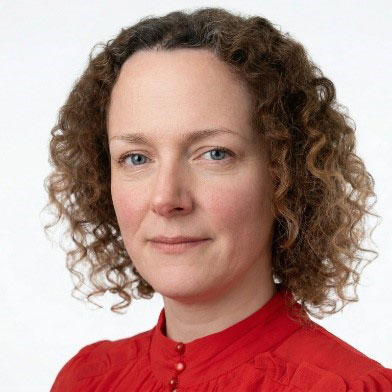
Helena Mules
Senior Director, Retirement
William Weir
Senior Director
Helena Mules
Senior Director, Retirement
Disclaimer
This podcast by WTW is intended for general information purposes only and does not constitute financial, investment, legal or other professional advice. Listeners should not act on the information presented without first consulting a qualified professional and this podcast should not be relied upon for investment or other financial decisions.
This podcast takes into account information available to WTW at the date of recording and takes no account of developments after that date. WTW provides no guarantee as to the accuracy or completeness of any information contained in this podcast and WTW and its affiliates and their respective directors, officers and employees accept no responsibility for any of the content.
The views expressed by any hosts and guests are their own and may not reflect those of their employers or affiliated organizations.
All content, including audio, branding, and any associated materials, is protected under applicable copyright laws. Unauthorized use, reproduction, or distribution of this content is prohibited without prior written consent.
Copyright © 2026 WTW. All rights reserved.