What happens when you revisit your market forecasts after six months of relentless headlines? In this episode, Tessa Mann and Rhys Simons look back at the views they shared in the Global Investment Outlook 2026 podcast and assess how those predictions have held up. Together, they discuss what played out as expected, what caught them off guard and how everything from geopolitical developments to the rise of AI-driven markets has influenced the investment landscape so far this year. Guided by listener questions, the discussion looks beyond the headlines to examine what really matters for long-term investors and what trustees should be watching as the rest of 2026 unfolds.
What happens when you revisit your market forecasts after six months of relentless headlines? In this episode, Tessa Mann and Rhys Simons look back at the views they shared in the Global Investment Outlook 2026 podcast and assess how those predictions have held up. Together, they discuss what played out as expected, what caught them off guard and how everything from geopolitical developments to the rise of AI-driven markets has influenced the investment landscape so far this year. Guided by listener questions, the discussion looks beyond the headlines to examine what really matters for long-term investors and what trustees should be watching as the rest of 2026 unfolds.
Podcast host

Harsimar Atwal
Director
Harsimar Atwal
Director
Podcast guests
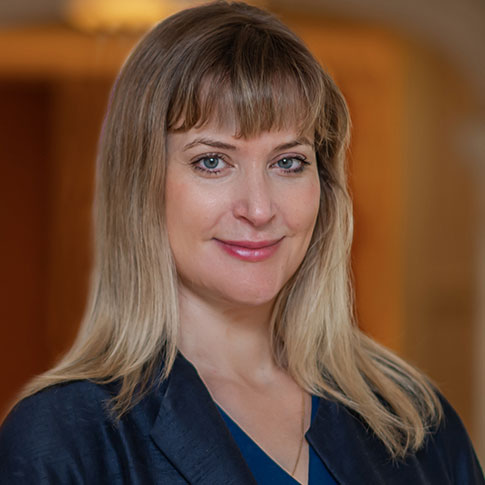
Tessa Mann
Head of Macro Strategy

Rhys Simons
Senior Director, Macro Research and Portfolio Management
Tessa Mann
Head of Macro Strategy
Rhys Simons
Senior Director, Macro Research and Portfolio Management
Transcript for this episode
HARSIMAR ATWAL: Hello, and welcome back to this episode of the Pensions Perspectives podcast, brought to you by WTW. I'm your host for today, Harsimar Atwal, and I'm joined today by two of my favourite colleagues, Tessa and Rhys from our asset research team. Hi, guys.
TESSA MANN: Hello.
RHYS SIMONS: Hello.
HARSIMAR ATWAL: And welcome back to the podcast. This is not your first time here. It's not your first rodeo.
So don't worry, listeners. If you think you're getting deja vu, you've not clicked into an old episode. And, Tessa and Rhys, you guys both joined me at the start of the year so that we could talk about markets and our outlook for 2026.
And given everything that's happened in markets, we thought it's a good time to get you back in and touch base on where we're at. And when we say everything that happened in markets, we really do mean everything. I feel like there's been so many twists, so many turns in markets this year, and it's made it even harder for investors to figure out what's just noise and what's signal.
So yeah, we've got you both back in and we're going to get your expertise on the matter. There is a lot to discuss. There's a lot to touch on. So to try and focus our conversation a little bit, we have reached out to our lovely listeners to get some questions in. So I'll test you with some of those listener questions.
Something that stood out from the last time we sat down to speak was the conversation that we had around cutting through the noise and cutting through the headlines and trying to understand what really matters for investors. And that's hard enough to do at the best of times. But over the last few months, it feels like we've had six months worth of headlines in a single week at times.
And with each new headline comes a new change in sentiment. So yeah, it'd be really good to get your views on what all that means and what investors should really be focusing on. So if we look back to when we last sat down six months ago, what feels the same? And what feels different?
RHYS SIMONS: Should I go first?
TESSA MANN: Yeah.
RHYS SIMONS: So going back to the start of the year, summarizing the outlook into a few sentences, it was supportive monetary and fiscal policy and healthy household and corporate balance sheets. People are in a good position to be able to spend money in the economy.
And obviously, very large amounts of AI CapEx were looked quite likely to deliver pretty strong growth across a number of developed regions, so most notably the US but also the Eurozone and Japan. Like you said, it's not been a quiet first six months of the year. So thinking of a few things that have happened, obviously, the US-Iran situation and the impact on oil prices is one thing.
That oil price impact has led to a big shift in market expectations of central bank policy. So a lot of central banks were expected to ease policy throughout this year, if we go back to the start of the year. And now we've already had a hike from the ECB, and a number of other central banks have priced in markets to increase interest rates.
The third point I was going to make was, in the US, that the labour market we noted at the start of the year as something like a key risk to watch. We saw a material weakening in the labour market that potentially could lead to growth slowing down potentially. And actually we've seen the labour market stabilise and strengthen so far.
So we had some data in the last week, which was a little bit weaker in the last few months. But the few months before that, the number of jobs added to the economy and the unemployment rate had kind of both-- so the number of jobs have been very strong, and that brought the unemployment rate down in the first six months of the year. So that's probably something which has surprised a bit to the upside.
TESSA MANN: Yeah, actually preparing for this podcast made me realise just how eventful the last six months has been. So yeah, it's a useful time to navel gaze and think about what's gone directionally the same as we were expecting and what's maybe surprised us. So agree with everything Rhys is saying there.
I suppose if we apply a different lens in terms of themes, which is a big thing we were talking about at the start of this year, geopolitics, AI, the technological revolution, two really big things that we were talking about at the start of the year. So geopolitics in particular, we spoke about our Manager Ideas Exchange (MiX) conference this year and last year in terms of the new paradigm that we're in.
So both of those, we expected them to be meaningful. I'd say obviously the surprise is the US-Iran conflict, the supply shock that that led to as well. But yeah, I suppose if we take a step back, we know that we're in a new era geopolitically, and a point that we made last time, that Rhys made, was around having a framework and not reacting to the news. And that has played out well for us over this year, particularly with the AI, which I've mentioned a bit less, but we've just had stellar earnings. So it really shows the importance of not being headline driven and being more driven by a framework.
HARSIMAR ATWAL: You're absolutely right because I remember, when we sat down, we were talking about geopolitics a lot and the fact that that's going to be such a driver of markets. And that's definitely played out. What lessons should investors take from what we saw happening in markets towards the end of February into March?
TESSA MANN: Yeah, I think that main one around not being driven by headlines is really important. So I'd underscore that one again. Having that framework is super duper important.
If we're looking now, I suppose the one thing that has changed relative to our expectation, as Rhys mentioned, is that hawkish pivot. So surprises can always happen. We always advise clients to be diversified for a variety of different outcomes for that reason. And then staying invested, sticking to your plan has been really, really important with all of these developments
HARSIMAR ATWAL: Yeah, that last point there about sticking to your plan, I feel like the conflict and the reaction of markets is a reminder to think about investment over the long term and not be reactive to short-term volatility in the markets. Would you agree with that? Is that definitely something that we're doing internally as well?
RHYS SIMONS: Yeah, exactly. And just to reiterate Tessa's point there, it's about having a framework to be able to take in the new information, assess how it sits within that framework, and then be able to make decisions. So thinking about something that obviously added a lot of uncertainty to the broader environment is the onset of the US-Iran conflict.
And so using scenarios in that situation can be very helpful to think, OK, for this to be really impactful that I need to adjust portfolio strategy, the starting point is inflation and growth needs to be meaningfully impacted over, say, the next year. And really trying to work back from that, OK, what kind of oil price at the end of this year might lead to that outcome happening? And then trying to assess the likelihood of those things.
So yeah, absolutely. You need to have that framework and a way to take in the new information, process it, and then know whether any decisions need to be made or not.
HARSIMAR ATWAL: So based on what you've just said there, taking in new information, over the last few days, we have seen the rhetoric coming out of the US and Iran heating up. And markets have reacted somewhat. Oil prices have increased slightly. What's the current state of play? Where are we at?
TESSA MANN: Well, yeah, I was reflecting on this point as well recently. So there is a reason that oil didn't shoot up to $200 per barrel that some experts were expecting in this recent crisis. So we have seen a degree of rebalancing on both the supply side and the demand side.
So actually the supply that was withdrawn from the Strait closure and the disruption there, which was, as we know, 20% of oil flows through there, 70% of that has actually been balanced by half of that being by China's demand decreasing and also supply coming online more. So that is also, I'd say, quite a hot feature of debate that we have right now, which is how structural is the war and the disruption impact.
And that's very difficult to call. But also we can look at how supply chains have historically re-engineered to give us a picture for how structural this could be in nature.
RHYS SIMONS: Yeah. So maybe to add, so Tessa mentioned there how China demand's been a lot lower than what it historically typically has been. And China have got a lot of reserves of oil that obviously they've been using in this intervening period, as of a number of other regions. So Japan is another one that's had materially lower importing material, lower oil and using reserves.
But on the supply side, so there's a number of pipelines that get oil out of the Gulf that don't need to pass through ships through the Strait. Flow through those pipelines has been higher. Oil producers in the Atlantic basin, so that's like North, Central, and South America, So US, Canada, Venezuela, Brazil, Guyana, they've all been producing quite a bit more oil.
And also the thing to remember is we came into the conflict in an oil market that was in excess supply. So Gulf producers and the Strait wasn't actually experiencing maximum capacity flows. So we don't need to go back to maximum capacity flows for oil prices to behave themselves.
And also another thing is, the flows out the Strait haven't been zero since, I think, May time. The US and other areas have been moving ships out through the quite close to the Oman Coast, so trying to avoid the part of the Coast that's closer to Iran. So there's a number of things which have meant that oil prices since May time have behaved themselves a bit more and paint a picture that prices are likely to be contained outside of a very extreme escalation in war situation. That means a number of those things could be impacted for a number of months from here.
HARSIMAR ATWAL: Before we move on, what are some of the longer-term impacts of this conflict from what we've seen happening in markets?
RHYS SIMONS: Yeah, so thinking about oil prices and the risk to oil prices, so really what we're talking about here, these supply and demand balances and how quickly will flows come back online through the Strait is more like a one- to three-year issue because, really, three to five years from now, I think Iran has played their card on restricting flows through the Strait. And whether it's pipelines through Gulf countries-- Dubai has announced this week they're looking at building a new port that basically is past the Strait, so it's able to get goods and oil out of that region without having to pass through the Strait of Hormuz.
And reporting has said that that potentially could be online in 18 months time. So this higher volatility thing is more of a nearer-term thing. Over the longer term, it's likely that the reliance on the Strait for these flows is going to be much more limited.
HARSIMAR ATWAL: I appreciate-- we could probably do a whole episode just talking about the conflict and the impact that that's had on markets. But there are a number of other topics that I'd like to touch on while we've got you in the studio today.
And so if we turn to our listener questions, something that I noticed when I was reading through the questions that we had in is that a lot of them are focusing on the same topics that we were talking about six months ago, inflation rates, AI. So the world's not really moved on too far, although some of the nature of the underlying exposures there might have changed. So let's talk through that lens, go through the first question.
So the first one I have is, what's been the biggest surprise from central banks this year? And do you think we're heading towards a higher-for-longer interest rate world? Or do we expect that rates will ultimately come down?
RHYS SIMONS: Yeah, I can say that one. So the biggest surprise or at least change has been the Fed in the US, previous chair of the Fed Jerome Powell was going out. There was a selection process, and Kevin Warsh has been selected and come in.
HARSIMAR ATWAL: And that will happen in the crisis. That felt like those two things were happening. So I know we said we stopped talking about the crisis, but did we see any heating up or anything happening as a response to that?
RHYS SIMONS: Not necessarily. The conversation through that whole period of being selected was lots talk about, what's the direction of policy? Obviously, earlier in the year, markets are expecting rates to come down.
The things that Kevin Warsh had spoken about pointed towards the likelihood that rates were going to come down, talking about these big productivity gains coming from AI CapEx, and that leading to a situation where rates could be moved lower for a given level of growth. And obviously, like you just said, while all that was happening, the US-Iran situation escalated.
And since then, obviously, higher oil prices have fed through to inflation, although, on their own, oil is included in headline inflation. For it to flow through to core inflation, which is typically the thing that central banks focus on, it really needs to flow through to a wide range of prices of things within economy and start to lead to wages increasing because higher wages means people have more money in their pocket. They go and spend more money, and it can create this cycle of inflation being a bit sticky.
And that's been the big shift in that markets are expecting the new chair to really push for rates to be cut. And the message at this first meeting wasn't that. It was a we're waiting and seeing to look at the data but, if anything, a slightly more hawkish message rather than one that was likely to lead to interest rates falling.
But markets do feel a bit stuck between a world where they hike and a world where they don't. The Fed doesn't typically hike rates like 1 and 1/2 times, which is what markets are currently expecting over the next six to nine months or through into next year. So markets are really pricing this one world where maybe half, 50%, and one world where inflation becomes stickier, growth continues to be strong-- maybe wages start to reaccelerate, and the Fed needs to hike a number of times-- and also a world where the Fed can ride out this little bump in inflation that's come from oil prices and that the labour market leads to wages continuing to cool.
And really, it doesn't present an inflation problem that they need to lean into and then hold rates where they are. That's restrictive enough and eventually start cutting rates in 2027.
HARSIMAR ATWAL: And is that the same story for the Bank of England? Or is it slightly different on this side of the Atlantic?
TESSA MANN: Similar drivers. We know that the UK is the most exposed, particularly to gas and, well, broader energy prices as well. So if we did get that risk scenario that Rhys was outlining and that we're talking about with more elevated energy prices and inflation, clearly that's more consistent with higher near-term rates.
I suppose the other key difference is there are weaker fundamentals in the UK. So it's worth mentioning we are taking less directional duration positions relative to the start of the year. The UK, we can see that gilt yields are still high relative to that two-, three-year-plus environment, particularly with that fundamental weakening that we've seen so far, so relatively similar. But yeah, some growth differences.
RHYS SIMONS: Yeah, exactly. So the big difference, like Tessa said, there in the UK, the Bank of England stuck between growth is weakening, so you don't want to increase interest rates. But you've got this bump in inflation. But also there's this overhang that wages are slowing, but they're still a little bit high, whereas, in the US, it's much more demand is strong.
And there's also this bump in inflation from oil prices. How is this kind of AI CapEx and slightly strengthening in the labour market going to end up leading to wages and services inflation and that kind of thing? So yeah, in slightly different places and slightly different drivers of inflation, such that, in the UK, it's much more of a supply-side issue thing, whereas, in the US, it's much more of a demand kind of thing.
TESSA MANN: It's a bit both, yeah.
HARSIMAR ATWAL: That's really helpful. Thank you. We also had a bunch of questions on everyone's favourite topic, AI.
It feels like it's impossible to escape the conversation on AI. Not that I'm trying to, but yeah, it's just coming up everywhere. And from the questions, it does feel like there is still real debate on whether or not all of this excitement and all of the sentiment is actually going to translate into real investment outcomes. So the first question we've had through is, has the investment case strengthened or weakened since January?
TESSA MANN: That's a really good question. And actually, we've been talking about the US-Iran situation a lot, but earnings has been another really meaningful surprise in data this year.
So we're expecting a strong year, strong fundamentals so far. Actually Q1 we saw 28% nearly of earnings growth on a year-on-year basis. Over the long term, you'd expect earnings to track with GDP growth, so 2-3%. So when you put it in that perspective and the size of the company, that's very stellar.
We've also seen survey data that indicates companies that are adopting AI are increasing productivity by 11.5%. Again, that number on its own may not mean much, but you might expect over the long run that to be more like 2%. And productivity over the long run is everything in growth.
So we're seeing real, tangible, economic and market gains so far. And yeah, we've also noticed that there's a lot of discussion around prior comparable regimes, like the late '90s. Actually, if you look in 1999, the P/E ratio of the seven biggest companies was 66 on a forward earnings basis, whereas right now that's 28.
So we can see that, yes, valuations under some guys can look expensive. But actually, when you look at how fundamentally driven this rally has been, we're already seeing evidence that it's very much a productive increase so far.
HARSIMAR ATWAL: The next AI-related question we've had is that, at the start of the year, AI felt like a very large investment story. Are we're now starting to see the real evidence of productivity benefits?
TESSA MANN: Yes, I feel like I covered that a bit, but I've, as always, got more to say around AI as well. So yeah, actually we were discussing this earlier about historical analogies and we were saying how-- actually I think you were making the point that the market, in general, there's no such thing as just AI.
We do look at the hyperscalers, the chip makers, and the picks and shovels companies as a bit of a proxy. But if we take a step back under the bonnet of portfolios and markets, there already is this big pivot towards AI in every kind of corner.
And I suppose if we look back to prior examples, maybe internet or electricity, the advent of those, you might talk about an internet company or an electric company. Now every company is an internet company or an electric company. Every company is using these new technologies.
So the next phase of productivity is very much going to be on the adoption of new technologies. And I suppose that's something we're examining. It's quite hard to get to the bottom of where those gains are going to be. We're still so early stage. But economics wise and markets wise, I think that's probably the main reason that we are still very much overweight on our risk positioning as well.
RHYS SIMONS: And one other thing to add in there-- and hopefully Tessa knows the number I'm thinking of because I've not got it in my head-- but at the start of the year, we're expecting broader AI CapEx to grow 2026 on 2025 something like 40% which is already a very big number. And in the US, it's going to add a percentage point on its own to GDP.
And there's been a number of revisions in the first six months of this year. And now that number's higher than 40%.
TESSA MANN: The 77 we saw in Q1 year over year.
RHYS SIMONS: So a large number that's driving real growth in the economy. And yeah, I think to the point Tessa made, there's real comparables to say historic transformations. And you've got those particularly at the base layer or the core infrastructure businesses, so basically the ones producing semiconductors, which have significantly outperformed just because there's just so much growing demand and increasingly growing demand for their products.
And those products are quite hard to just suddenly bring new production online. It's quite difficult to build a semiconductor factory. It takes years.
TESSA MANN: Yeah, and maybe just one more analogy while are on the topic--
HARSIMAR ATWAL: We love an analogy.
TESSA MANN: Yeah. A bit of a story, bring it to life. So yeah, railroads, along that line of what Rhys is saying, along the infrastructure that we're at now of that base layer, if we think back to it was in the 1800s, the mid-1800s, there's actually a lot of excitement about railroads initially. And the share within markets grew very rapidly.
But then at that time, the real beneficiaries were the companies that were then able to transport goods and services much quicker. And yeah, I think that's where the narrative is going to shift going forward as well.
HARSIMAR ATWAL: Yeah, I had your colleague David [INAUDIBLE] recently for an episode, focused specifically on AI. And he was talking about the next stage from software-based AI into physical AI and starting to put building infrastructure to one side and starting to see some of the real winners and losers of AI coming out. So yeah, it'd be interesting to see how that all plays out, not just over the next six months but over the next few years.
We touched on it very briefly earlier, but I just wanted to go back to Japan. Something that comes out of the weekly outlooks that you guys very kindly share amongst the team is there's a lot in there often about Japan. What is it about the Japanese economy that gets you guys so excited?
RHYS SIMONS: So there's been a number of government-- so there's been both an underlying economy macro story plus some actual policy changes which point towards outcomes in the future that look quite strong from an equity perspective and potentially from a yen perspective, albeit a bit more uncertainty on that one.
So there's been growth. And so Japan had a nearly two decades of very low growth in inflation. Post COVID, that has changed. Wages have been increasing at a higher rate. Economic growth has been stronger. And inflation has been higher.
And that has all allowed the central bank in Japan to gradually what's called normalize policy. So their interest rate policy has been super supportive to try and get inflation and growth going for a long period of time. It didn't really work. And post COVID, central banks have been able to gradually increase interest rates, so the interest rate in Japan is now at 1%.
And that's still the case. So growth still looks pretty strong. Wages are still increasing at a strong rate. And the Bank of Japan's stance is to still gradually normalize policy.
So that's the economic backdrop. On top of that, going all the way back to Shinzo Abe as prime minister in the mid-2010s, there's been a number of what have been termed "corporate reforms" introduced, which, in a nutshell-- this is kind of Tessa's area of expertise in going into detail.
But in a nutshell, a bunch of policies to try and get companies which typically have hoarded a lot of cash on the balance sheet and spend that cash, either through investing or through buying share buybacks, to increase return on equity on equities and ultimately to drive stronger returns from a forward looking basis. So we've had an overweight in Japanese equities for a couple of years now that's performed very well and still think that themes got space to run. I don't know if there's bits that I might have missed.
TESSA MANN: Yeah, that ticks the key points I was thinking as well. I suppose the other thing to add in terms of why the equity market's a bit more dynamic is those incentives you were talking about for corporates also on the household side as well. So there's been a big shake up, both in terms of getting companies to spend the cash on balance sheets productively. That's underway.
On the household side as well, there's a lot of encouragement for households to invest domestically in equities. And those levels on household balance sheets are still roughly half of European counterparts, so there's definitely more upside to come, in our view, on both the fundamental side as well as those broader reforms that make it more of dynamic and exciting.
HARSIMAR ATWAL: Thank you. That's great. Thank you so much.
And if the first six months of this year have taught us anything, it's that forecasting markets is a very humbling experience. But I'm going to ask you to do it again. So what are we looking for over the next six months as we move into the end of the year and then into 2027?
TESSA MANN: I don't know if it's cheating to use today's data. But if we see the early-stage news from earnings season that we're getting out today, we're still getting headlines around trouncing of very high expectations.
So there's a real momentum there in terms of the underlying fundamentals, particularly on the US market. Rhys pointed to the reasons why in terms of the strength there. So that can give us a bit of an indication that we've still got more positivity to come. I suppose the flip side, obviously, is that we know that expectations are high enough that a downward shock can surprise the downside.
But yeah, we can see that that productivity's there. The labour market strength is there. The policy environment is good.
So that's one thing that really springs to mind. I feel like the riskier side of the book is easier for us at the moment. Or I suppose our debate's more come on that duration side, given everything that we're seeing in the oil market as well.
RHYS SIMONS: Yeah, so like Tessa said, AI CapEx earnings's key thing that we'll be watching. US-Iran situation, another key thing, obviously, is adding a bit more uncertainty currently. And another thing, which kind of downstream from that, is what ends up happening to US policy, so US Central Bank interest rates.
The flow through to government bonds and equities across the world is strong. And so whether the US economy delivers an environment where the Fed feels the need to hike rates a few times, I think that would present quite a risk to equity markets. We've seen that, as a few weeks ago-- it was a month ago now-- post the first meeting. A bit more hawkishness was priced into markets and it drove quite a bit of inequity in equity markets.
So that's another key thing to watch. And then, obviously, a lot of our listeners are UK based, so maybe talking about the UK for a couple of minutes. So obviously, we're getting a change in prime minister.
So a key thing there, particularly for currency and gilt markets, will be how his talk and the qualitative conversation on fiscal policy translates into actual policy over the next few months. So yeah, two things, so it obviously already committed to the fiscal rules, which is important.
But a couple of things markets will be watching for is, one, if there's any shenanigans with let's spend more at the start of the forecast and tax more at the end of the forecast because that spending is certain to happen. The taxes to rebalance the budget is a bit more uncertain. And so markets that are already quite sensitive to fiscal policy news in the UK might be a bit more sensitive to that.
And also PM Keir Starmer, back in July or summer 2025, tried to bring in quite a few spending reforms, welfare spending reforms, which failed to pass because there's a bunch of-- despite the fact that there's a very large majority by Labour in parliament, a number of MPs didn't support those policies. So if the new PM is able to get the broader party on side of his policy agenda, that'll be another key thing to watch in the UK. Sorry, Tessa.
TESSA MANN: Oh no, I was just going to say I really relate to that point in terms of the fiscal spending rules. And gilts is something we do debate quite a lot, especially on that tactical horizon. And what we have seen is quite a big sensitivity of markets to any murmuring around fiscal spending and fiscal rules. So I think that's going to be very tightly watched by markets.
HARSIMAR ATWAL: We'll have to get you both back in another six months to sit you down, test if you're right. So the last time we had our conversation, we finished up by asking you for your key messages. And I'm going to do the same again this time because we've covered a lot of ground there. But what are some of the key things that investors should be looking out for, key messages, either based on what's happened over the last six months, any learnings or things to look out for as we close out the year?
TESSA MANN: I think, yeah, the one that comes to mind the most for me is stick to your plan. Don't stick to the headlines. Don't overindex, too, when there's so much going on. And there's a lot of stuff. Some of it's noise. Some of it's fundamental. But sticking to a plan, I think that's really the main one that we've learned.
RHYS SIMONS: Yeah, not being reactive.
HARSIMAR ATWAL: Perfect. Thank you. That's been a really helpful conversation. It's really good to be able to just cut through some of that noise and pick out the key details and what we should be focusing on. So thank you again for your time for coming in for a second time. We really enjoyed having you.
And you never know. I might ask you back for a third time.
RHYS SIMONS: Thanks for having us.
TESSA MANN: Yeah, thanks for having us back.
RHYS SIMONS: It's been good.
HARSIMAR ATWAL: Thank you as well to our listeners for sending in their questions, and join us again for another episode of The Pensions Perspectives podcast.
[AUDIO LOGO]
Thanks for listening. This podcast is for information purposes only and does not constitute financial advice. The views expressed by any hosts and guests are their own and may not reflect those of their employers or affiliated organizations. All content is protected by copyright.
Disclaimer
This podcast by WTW is intended for general information purposes only and does not constitute financial, investment, legal or other professional advice. Listeners should not act on the information presented without first consulting a qualified professional and this podcast should not be relied upon for investment or other financial decisions.
This podcast takes into account information available to WTW at the date of recording and takes no account of developments after that date. WTW provides no guarantee as to the accuracy or completeness of any information contained in this podcast and WTW and its affiliates and their respective directors, officers and employees accept no responsibility for any of the content.
The views expressed by any hosts and guests are their own and may not reflect those of their employers or affiliated organizations.
All content, including audio, branding, and any associated materials, is protected under applicable copyright laws. Unauthorized use, reproduction, or distribution of this content is prohibited without prior written consent.
Copyright © 2026 WTW. All rights reserved.