What do investors really need to know about AI? In this debate-style episode of the Pensions Perspectives Podcast, Harsimar Atwal is joined by David Hoile, Head of Asset Research at WTW, and Marisa Hall, Head of the Thinking Ahead Institute, to explore whether AI represents a transformational investment opportunity or a growing source of systemic risk. From productivity and investment returns to governance, jobs and trustee decision-making, they debate one of the most important themes shaping markets today.
What do investors really need to know about AI? In this debate-style episode of the Pensions Perspectives Podcast, Harsimar Atwal is joined by David Hoile, Head of Asset Research at WTW, and Marisa Hall, Head of the Thinking Ahead Institute, to explore whether AI represents a transformational investment opportunity or a growing source of systemic risk. From productivity and investment returns to governance, jobs and trustee decision-making, they debate one of the most important themes shaping markets today.
Podcast host

Harsimar Atwal
Director
Harsimar Atwal
Director
Podcast guests

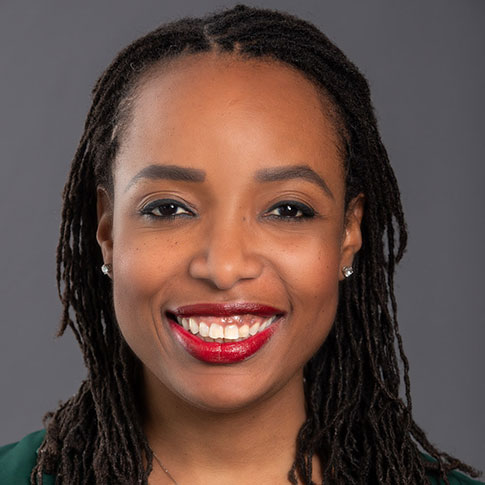
Marisa Hall
Head of the Thinking Ahead Institute
Marisa Hall
Head of the Thinking Ahead Institute
Transcript for this episode
[MUSIC PLAYING]
HARSIMAR ATWAL: Hello, and welcome back to this episode of the Pensions Perspectives podcast brought to you by WTW. I'm your host, Harsimar Atwal. And I have to say, this is an episode that I've been really excited to record because today we're going to be talking about artificial intelligence and the impact it might have on the investments industry and on the wider pensions industry. I'm joined today by two guests, David Hoile, who heads up the asset research team here at WTW, and head of the Thinking Ahead Institute, Marisa Hall. Welcome to the podcast.
MARISA HALL: Thank you.
DAVID HOILE: Thank you very much.
HARSIMAR ATWAL: It's lovely to have you both. For our listeners, do you mind just summarising your role, what it is that you do here at WTW?
DAVID HOILE: Of course, it's a pleasure to be here. I run the asset research team, which is the economics and capital markets research effort for the investments business of WTW.
So it's our job to think about and analyse the economic industry, capital markets trends that matter for our investments clients and to integrate those views into portfolio strategy, whether that's to try and enhance return or to build more risk managed, more resilient portfolios.
MARISA HALL: And Marisa Hall, so head of the Thinking Ahead Institute. And the Thinking Ahead Institute is WTW's network of asset owners and asset managers around the world. Our job is to help investors navigate the future. So I have the privilege of working with lots of great asset owners and asset managers, basically understanding what their key issues are.
We spend a lot of time in Thinking Ahead doing exactly what it says on the tin, basically thinking about how ideas develop into the future, coming up with innovations, and really understanding how that can be applicable to clients' portfolios. So it's a great job, lots of travel, lots of great opportunities to connect, and coming up with new research projects and new ideas is what keeps me excited to keep on working here at WTW.
HARSIMAR ATWAL: Lovely. Thank you both. Like I said, I'm really excited for this episode. And that's not just because I've got fantastic guests with me, but because I think I'm noticing more and more AI is coming up in almost every conversation I'm having. Whether that's professional or personal, there's always a way to link it back to AI, whether we're talking about the risks and opportunities involved, which I'm finding more often is just learning from one another in real time, sharing tips, tricks, how can we make AI work well for us.
But we are also at the beginning of the AI journey, and with that comes a lot of uncertainty. And I am noticing people be on the fence still deciding whether or not over the long term AI is going to be a help or a hindrance to how we as a society function.
So what we've done with this episode is we've set it up as a debate so that we can try and cover the full range of arguments and ideas that there are around AI. So as you've prepared for David, you'll be taking a more pro AI, optimistic approach. And Marisa, you'll be arguing for the slightly more cautious, risk-focused approach.
It's worth saying to our listeners upfront that these views are not necessarily your own personal views. They are for the purpose of the debate. And I've asked you in some places to be somewhat deliberately provocative so that we can really cover the full spectrum of views here.
So with that, the rounds that we'll be going through are-- so we've got four rounds in our debate. And we'll be starting quite high level. And then with each round, we'll be narrowing our focus into more specific ideas. So we'll start in round one with the certainties and the uncertainties around AI, move into round two, where we'll talk about systemic risks and opportunities.
And then I would like us to pivot slightly away from the investment market for round three and talk a bit more about how AI is showing up in our personal lives and in more broader society. And then we'll bring it back in round 4 to trustee perspectives and actionable things that trustees can be thinking about in relation to AI. Sound good?
DAVID HOILE: Sounds great.
HARSIMAR ATWAL: Lovely.
[INTERPOSING VOICES]
HARSIMAR ATWAL: Let's get started.
MARISA HALL: I love how this is styled as a boxing match, so It might get a bit bloody here.
HARSIMAR ATWAL: I might have to come and sit in between you at one point.
MARISA HALL: I know.
HARSIMAR ATWAL: But let's see. Let's see how we go. So round one, like I said, I would like to start big picture at the top and talk about what we know about AI and what remains uncertain. So my opening question for you is, is AI a genuine investable theme, or are we in a hype before the returns situation?
DAVID HOILE: So it's great to be the optimist. And I wanted to make three points in answer to your question. And I want to start with CapEx. So CapEx is the spending by technology companies on providing AI.
So that's things like chips, and cables, and cooling systems, and land, all of the things that make up an AI-related data center. And that CapEx at the moment is enormous. And we can project that to a pretty reasonable degree, both for this year and in future years.
So for context, AI data center spending in the US alone is going to be around $900 billion USD this year. And over trillion in 2027 and beyond that. So to put that in an economic context, that's about 3% of US GDP, which is an enormous number. So we start with that.
The second point then is demand, which is, well, we've got all of that investment spending. Is it too much? Is there going to be a big oversupply of AI compute availability? I should say that forecasting demand is a lot harder. Essentially, you're trying to forecast the future demand of businesses in terms of their use of AI, AI demand from consumers, and AI demand from the model developers themselves.
But nevertheless, when we look across each of those areas at the moment, we can see that in aggregate demand is still outstripping that enormous supply that we have at the moment and that's coming through in future years.
And we're still very early on in terms of the adoption of AI by businesses, in terms of them fully integrating it into a great amount of their operations. And so I think there's very good reasons to be positive on demand continuing to outstrip supply over at least the next few years, so say between now and '28, 2029.
We can also look at things like the profits of companies that are delivering AI, whether it's the chip manufacturers themselves or more directly the profits that the cloud computing companies like Alphabet or Amazon are making. And those are accelerating very rapidly. And again, another indication that demand is flowing through and accelerating very rapidly and more than matching the supply available.
And so the third and final point I wanted to make was around, OK, so we've got the supply, and we've got the demand. So we've got all of this dollar spending, and we've got the revenues that come from this demand. How do those match up? And so we can start to think about the returns that might be created on investment and the economic conditions, the productivity or economic growth conditions that might be needed to generate those revenues and make that CapEx spending positive.
And lots of assumptions. And so without being overly precise, but we think you're going to need something like around 3% growth per annum, real growth per annum, in the US over the next five or more years to generate the economic returns on that investment that will be needed. And 3% is a high number.
The long-term average growth rate for the US has been about 2%. So it's a bit above that. But it certainly looks achievable. So if you look back at history, whether it's the US post-World War II period or the 1990s internet innovation-driven period, the US was achieving real growth rates, real productivity growth rates of well above 3%.
So in our view, that's more than achievable. And if we start looking at surveys of the productivity gains that companies using AI are starting to achieve, again, that looks well ahead of that required 3% type growth rate. So for me, it's real. It is a multi-year, as in here for the next decade, and will be transformative in terms of productivity growth and company profits.
HARSIMAR ATWAL: Thank you.
MARISA HALL: Well, I think there's no doubt that AI is transformational. There's no doubt that it is economically useful. And there's no doubt that it is investable. But the question is is it investable well? And by your own admission, David, you talk about this 3% growth that is needed, which is quite a high number to make this make sense. And so let's maybe deal with your last point on productivity. And we'll come back to the CapEx point.
So yes, AI has shown to drive productivity, and we often see that in the adoption of agentic AI, generative AI. Classic economics, however, shows that often with productivity, that tends to get whittled away due to competition.
And so we've seen it in the Industrial Revolution. We've seen it with agriculture and mechanization. We've seen it all throughout history where something that produces this big, potentially societal good actually all that happens is it drives costs down, and the benefits flow to the end user, not so much so to the investors.
And it was Solow's paradox-- you're an economist, David-- where he talks about when he looked at computers, he said computers age everywhere except in the productivity statistics. And so therefore, we have that tension involved. And I think the only way that you're able to capture those gains is if you have a very differentiated product, if you're able to capture IP.
So I think the productivity point is a tenuous point, so to speak, because what we've seen in the past, all throughout history, whether it be electricity, whether it be cars and so forth, ultimately, it's less so much so a matter of supernormal investment returns as opposed to just broader society benefiting.
I just want to pick up on the CapEx point. So, yes, you talked about 900 billion, and that has very much powered the broader economy. We've seen that CapEx spend. But remember, AI is a combination of a lot of things. You've got the suppliers, you've got the services, you've got the models itself. And so AI is too broad a theme to just group into one bucket.
What we're seeing is that the real winners are those that pretty much are the picks and shovels, so NVIDIA, for instance, those organisations, those firms that are providing the supply chain to these AI hyperscalers. So that's where we're really seeing a lot of the benefits and a lot of the-- that's where we're seeing it accrue. And we also that the market punishes overspend.
And so we've seen that with Wall Street. It was just in-- was it April this year? I think it was Meta where they upped their CapEx spend announcement. It was something like 145 billion. And in that single day, it wiped off 10% of their stock price because what the market determined is that they were overspending compared to the revenue that they thought would accrue to the company.
So this isn't a free for all. You can't just CapEx spend your way out of this. You need to actually have business plans and models that actually show that you're generating revenue. And so CapEx spend I don't think is a great, great argument for it. But what we do know is yes, AI is transformational, but we're not all going to win. So we should keep that in mind.
HARSIMAR ATWAL: That's great. Thank you. There's a real tension here. On the one hand, you've got that conviction in the potential of AI, but that's balanced with so much uncertainty around where the real outcome and the real profit is going to be.
MARISA HALL: Precisely.
HARSIMAR ATWAL: So in round two, I would like us to talk about the bigger system questions, so whether AI is creating systemic risk or systemic opportunities. So Marisa, is AI making markets more efficient or more fragile?
MARISA HALL: It's a good question. So I think just picking up your point about risk, so people often think about risk just from the downside perspective. But with systemic risk, there's also systemic opportunities. So we need to be sure that we remember that we are able to argue both sides of things.
I think the thing about AI is it's not just about that single point of failure. It's not even just about the widening range of potential outcomes, so uncertainty that's rising. Actually, what it's doing is very much changing the nature of risk itself. And that's where we see-- I would argue that we're more looking at the systemic risk side of things, the more downside effects of AI, than we are on the opportunity side of things.
I mean, David, I know we've had lots of conversations before, and you made an excellent argument around AI being that sequence of accelerating technology. So you talked about the software-led AI leading into physical AI, so we're talking about robotics and machinery and so forth to quantum AI, which is where you're able to break the barriers of what we previously know as limits. So you're able to scale a bit better and so forth.
And I think what you're seeing with all of that is that all of that provides a faster, more violent transmission of risk. So the issue that we're-- the issue that I'm having on the systemic risk side is that basically you've got model convergence. So everybody's being trained on the same data. Everybody's using the same optimization logic. Behaviours converge. And obviously, therefore, that leads to blind spots.
I think the second thing is that the decision cycles are often faster than we humans can even intervene. And we had an example of that. It was last October when we had the AWS, US East Coast outage, which brought down Snapchat, and Coinbase, and Slack.
And that was pretty much because that's tiny localized bug was not able to be picked up, and it was able to spread and pretty much it happened across 60 countries and shut down a lot of the useful things that people find in their day-to-day lives.
So that fast speed of transmission, that interconnected infrastructure, and I think probably finally this idea that all we're seeing is that the concentration and the wealth is being powered in the hands of the few. You only have to look at MSCI ACWI and look at the fact that 30% of that mega cap US stocks.
So all in all, that makes me believe that systemic risk is rising under AI, and therefore, it is difficult to ignore that as a point.
HARSIMAR ATWAL: Is that a bit too pessimistic, David?
DAVID HOILE: I think it is, particularly in terms of the framing of systemic risk. So by definition, we're talking about things that are a shock to the full economic and financial market system. And so I think that I'm certainly not going to argue that given the pervasiveness, the transformational nature, and the fact that AI and its applications are still in development, it's not going to be the cure for everything.
And it's not going to make financial markets suddenly uber efficient overnight. So there are still risks, but can it help to improve areas of systemic risk that have been in evidence in recent years?
And so I start thinking about it from a use case perspective. So can it enable government and central bank policy setters to make better decisions? So if you have fundamentally better, larger data sets and quicker and superior ways of analysing that data set through large language AI models, can it be used to help with identification of the build up of systemic risks, like we saw in the global financial crisis of 2008, 2009?
To me, it can. And so policymakers can start to build better macro-prudential responses. A second use case-- I mean, I'm going to take issue with Marisa's suggestion that historically you haven't seen these decade or longer sustained productivity upshifts in economies. You have multiple times.
What if we were to see that productivity uplift again in the US, in Europe, in Japan, in the major economies? Then suddenly, you've got these economies outgrowing their interest rates and concerns around levels of government debt and government deficits and the sustainability of government debt markets in advanced economies suddenly becomes much less of an issue as these countries are effectively outgrowing their debts. That lowers one portion of systemic risk.
And then taking a slightly broader, more holistic societal view on systemic risk, we're already seeing enormous advances in the importance of the R&D chain through the application of AI in drug discovery. And so what if we can move to a world where it's not multiple years for R&D and progression of a drug through its various processes. But it's much quicker than that.
Again, a very different categorisation of systemic risk, but fundamentally important to society if we can build superior, better health care solutions and responses. So I start to knit together multiple examples where AI could actually reduce systemic risk and systemic risks that have been prevalent in the last decade or two.
HARSIMAR ATWAL: Thank you. It's really interesting to hear on the one side about markets becoming more efficient and improving what we've already seen happen over a number of years already and then balancing that with your view that it's perhaps amplifying behaviours we've already seen.
And actually, it might be-- the profit there might be quite concentrated. Thank you for that. That's all quite abstract, and I think it might be helpful for our listeners if we bring this back to something a bit more tangible in the next round.
As we move into round three, I would like us to just momentarily take the conversation slightly away from markets and into something that our listeners might be able to find a bit more directly relatable. So it'd be good to talk about how AI is showing up in our day-to-day lives throughout society and whether it's genuinely changing outcomes for us. So my first question, David, is if AI were to disappear overnight, would we notice in a meaningful way?
DAVID HOILE: I think we'd notice in multiple material ways. And so maybe I can tackle three very different areas of economies and society, so heavily played on productivity growth, leading to profit growth, leading to growth in wealth. And one of my previous points was around the scope for that productivity growth to help improve government finances.
But the wealth point is much wider than that. So we've seen, and certainly, I expect to continue to see, that flow through of productivity enhancements coming through in terms broad-based company profits.
So I very much agree with Marisa, which is that it's very difficult to identify who the winners or losers will be. But actually, I think this is still an example of a rising tide lifting all boats, which is that you simply get this productivity, profit uplift. So that's going to benefit shareholders and boost their wealth.
And then similarly, an increased government tax take is going to provide wider benefits again. And so start to see redistribution supporting other parts of society. Government investment in health and education and infrastructure are also providing wider benefits.
Second, one of the questions I get asked the most is what should my child be studying at university these days? And so in economic jargon, what's the impact on the labor market?
And I think that here it's really important to distinguish between AI augmenting or supporting people's work and AI simply replacing or automating people's work. That's the big debate, which is how many jobs is AI actually just going to directly replace. Are we going to see mass unemployment from AI?
So if I look back at history, to me, that actually looks pretty good news. So whether it's factories or railways or electrification, assembly lines, electronics, aviation, the internet, all of those things saw temporary job losses and a need for the reallocation and shifting and skill sets of workers. But ultimately, no permanent job losses.
So this notion of the creation of mass unemployment historically has been a bit of a false concern. And so I don't want to underestimate the importance of businesses in terms of worker reskilling and the importance of government policy in terms of actions to support certain parts of the jobs market that get more quickly displaced and to provide support for them to get back into work.
But I think ultimately, it's the type of work that's changing. But work itself persists. And that's very much what we've seen in labor markets so far. So we're still early in adoption, I get that.
But what we are seeing is that actually in the US, who are furthest ahead in adoption by businesses, we've actually seen net job increases from the use of AI simply because of an increase in required expertise around the application of AI. So it's in and of itself is creating new jobs in multiple ways. And that's been the dominant factor so far in terms of hiring.
And then just being much more speculative, stepping into the institute's domain of trying to forecast out and think genuinely a long time ahead, what if the better data from AI, the better data analytic capability that, the quicker analytic capability underpins a whole set of innovations in areas that we need urgent development in?
And so whether that's health care and a whole host of health care-related issues-- I talked about drug discovery earlier-- or even things like climate resilience. So the use of AI to build more innovative, more scalable carbon capture solutions, predict extreme weather, optimise agricultural yields. All of those things are within the purview of AI-related solutions.
HARSIMAR ATWAL: Marisa, what do you think? Is that reflective, or do you think that's a very best case scenario that Dave has laid out for us there?
MARISA HALL: Well, definitively, on the optimist side, I want to go back to your original question about if it disappeared, would we notice it? Absolutely, we'd notice it. I've got a 13-year-old daughter. If there was no AI, and no Snapchat, and no whatever, she would absolutely notice it.
And so that just goes to show how pervasive this technology has become. And therefore, that makes me worried because the dependency that we have on this technology to the point where we can't live without it should make us as a society stop and question whether or not we have the right guardrails.
A lot of David's arguments are incredibly sensible-- productivity uplift and economic benefits, etcetera. But I do worry about the trickle-down economics effect that if we make the companies, the hyperscalers, if we make the wealthy even wealthier, somehow, that will get to the little man.
And I think that's where you have a lot of angst around AI. We talk about jobs and displacement, but it's not even just the number of jobs. It's also about the quality of jobs. It's also about the purpose and the satisfaction that you get from your jobs.
And so I personally don't want to work in an organisation where I don't feel as if I have a role and it's all being done by AI. I want AI to complement the skills that I have. I still want to have a meaningful relationship with my clients, with the work that I'm doing. And that gives me purpose and drive.
And so I think when we think about AI in Thinking Ahead, we often juxtapose it against HI, Human Intelligence. So we talk about HI times AI. And so that's that combinatorial quality where you're talking about human intelligence, artificial intelligence.
Remember, AI is a system. And we would describe it as a sociotechnical and emotional system. So, "socio," it matters. People matter. They're at the very heart of this. Why are we doing this? We're doing this for the benefit of humanity and mankind. "Technical" - all the models, the data, the tools, and so forth.
But "emotional"-- and this is why when you often have a discussion around AI, you find yourselves often at odds with each other. Everybody's talking about something from a different lens. So whether it be talking about it from the environmental energy lens, whether it be talking about the labor market lens, disruption, diffusion of AI, everybody sees it from a different angle. And what we need is a measure of cohesion around that.
So I think we've got to be very clear when we talk about the societal benefit of AI, we make sure that we understand how humans fit in this loop. And our belief is that humans should govern, they should frame, they should lead to some extent. And AI should execute, it should implement, it should scale, it should augment. And it needs to be explainable.
We don't want to create these black boxes in society that we don't how things work and we're relying on the output that supports our broader lives. So I just want to add a little bit of caution to the AI is everything. Let's be careful about this machine and technology that we are so heavily connected to.
HARSIMAR ATWAL: Thank you. It's really interesting to look at it from that perspective because I suspect people's personal experience with AI will inform and shape how they think about it in a professional context as well. So it's interesting to go through the motions of the societal impacts as well.
So the themes that we discussed in that round there, they all feel quite relevant to how decisions get made in a pensions industry and across investments. So let's bring it back to that in this final round, in round four. Let's make this as practical as possible for trustees, for our listeners, and how they should be thinking about AI. So what should trustees be doing differently to respond to AI today, if anything?
MARISA HALL: I think it's a very good question. And as I said in the intro, one of the jobs that Thinking Ahead is to work with asset owners, to work with trustee boards in their day-to-day environments, and projects, and so forth. And this question comes up quite a lot. And I think the first thing we'll do-- and it's all a lot about governance, so actually making sure that you have beliefs explicit to AI.
We've pioneered quite a lot of work on investment beliefs. And many of our clients at WTW do a lot of work in investment beliefs. What we're finding is that actually having broader organisational beliefs, so understanding the alpha that your organisation generates through its cultures, people, its processes, technology is equally as important because that is what drives the decisions that you're able to make.
And so I think one of the beliefs really around AI is just understanding that this is a systems-level intervention. This isn't just a standalone technology. This is something that can shape outcomes at scale. And so when we talk to trustee boards, we say, yes, you're talking about the upsides, the productivity, the access, and so forth. But you've got to equally think about the downsides, so things like inequality, things like fragility, things like systemic risk, like what we talked about.
And so that means you've got to amplify the benefits intentionally because it's a systems-level intervention. You've got to think about the downsides and make sure that things that cause harm, you deal with that early. But you've also got to think about second and third order and fourth order effects. So you can't just think about the impact today. You've also got to think about what's related down the supply chain.
I think the other thing that we talk about to trustee boards is just recognising this idea that this is part of fiduciary duty, and therefore, the AI that you use has to be interpretable. It has to be auditable. And so we talk about explainable AI. And when we have these conversations like how can I trust the outputs, how can I trust what it's saying, that's important because you've got to account for your decisions. That's what good governance looks like.
The other thing is that data strategy. We're seeing that quite a lot. So organisations thinking about how they can clean up their data around members, around participants of a fund, so making sure that that data, they're able to throw a net over that particular pool of data and make sure, therefore, that the decisions that they're making because of the AI tools that they used are grounded in something that we can explain and something that we can hold on to.
And probably the final point is really just around decision making as a board. So we often say, if you're sitting at a table, you should have an empty seat for AI. You should probably also have another empty seat for collective intelligence. But what that means is that AI is another expert in the room. It is able to gather all this information really quickly, but it is just one person. Out of a board of six, it is one. And so therefore, you've got to scale your level of dependency appropriately.
And so all of these points around good governance, organisational alpha, thinking about data strategy, thinking about your AI beliefs, all of these we believe are the conversations. And we know these are the conversations that are happening right now with trustees, how to build their intelligence ecosystem around AI and make sure, again, that humans are in the loop.
HARSIMAR ATWAL: David, what might you say to a trustee who hears Marisa's argument there and decides, well, actually, maybe this just isn't investable.
DAVID HOILE: Yeah. So I actually having taken an opposing stance to Marisa on most of the issues, I think that what I was going to say to that question is largely complementary.
And so if Marissa set out the governance and beliefs type aspects of the way trustees should think about AI, I was going to speak a bit more directly to the portfolio strategic type of thinking and decisions that they could make. So I think it fits quite well.
And so starting from the return aspect, as we look across the different components of the AI supply chain, parts of that in terms of stock market valuations have become more fairly priced in recent months. So year to date, we've seen a big run up in the stock prices of various companies, whether it's chips or other parts of the AI supply chain.
But in aggregate, our view for aggregate indices, whether the S&P 500 or a European equity index, we still think that there is still material upside on, say, a five-year type view, where AI productivity enhancements, profits can still flow through to rewards to shareholders.
So I think, equally, there's lots of talk that you read in the press around whether AI is in a bubble in terms of the way that the financial markets are pricing it. As I say, that's not our read. We still think that an economic return on AI investment is most likely. And stock markets in aggregate aren't overextrapolating or overvaluing that.
Talked a little bit about winner-takes-all dynamics. I think there'll be a part of that that will be really important for portfolio decision-making. And there is real uncertainty over who the winners or the losers might be within different sectors. And so I think that improves or enhances the importance of alpha and diversifying your bets by geography and across public and private markets.
I think on the governance side, one of the things that is going to be very difficult for trustees is the fact that this is so fast moving, the technology, the application of the technology, its impacts, all of that is moving at a pace that is typically quite difficult for a trustee decision-making horizon to deal with. So trying to think medium term and set a diversified, balanced, resilient portfolio strategic course, I think, feels the right approach.
And then on the risk management side of things, it's important to recognise that, yes, it's very much my view that AI is going to be the dominant theme. So in two or three or four years time, it's the thing that will be looked back on in terms of the theme that's had most impact on economy, industry, and financial markets. But there are other very important themes out there, most notably geopolitics.
And so that intersection of technology, and national security, and self-sufficiency, not just in relation to AI but in relation to energy and other natural resources, in relation to self-sufficiency in supply chains and building more resilient, less complex supply chains, all of those things intersect. All of them are going to matter for growth and inflation, interest rates, and equity market dynamics.
And so thinking about those themes in the round and preparing for those, building balance, building scenarios to help understand them are all part of an appropriate risk management response to them.
HARSIMAR ATWAL: Thank you. It feels that trustees should be engaging with AI, but that engagement should be measured. It should be well thought out, and AI should be enhancing decision-making and enhancing the trustee experience that's already happening.
I think given the range of views around AI and how broad the spectrum is, it's been really helpful to have that set out as a debate. But just before we wrap up, if I can ask you to step away from the perspectives that you've had throughout the podcast so far and maybe just share your own personal view on AI, perhaps with a trustee hat on, are you personally more excited or more cautious about AI?
MARISA HALL: So I think taking the argumentative hat off, I think that honestly it goes in cycles. So it was Gartner that talked about the hype cycle, and it talked about the peak of inflated expectations and the trough of disillusionment.
And I think that happens to me probably every single day where AI, you find it really useful in doing something, and you're like, this is great. This is helping me prepare. It's aligned with my thinking, but recognising the fact that I've had years of training without AI that allows me to be able to critically analyze and assess what I'm looking at.
And I think that's where the disillusionment comes in because we've got stats around, I think, 60% of CIOs say, we're going to use AI. We're really going to get into it. And only 17% of that actually works. And so the disappointment is real. I do worry a bit about the future.
I do worry, to that point that David made, about skill sets. I mentioned I have a 13-year-old daughter. I don't want to see her taking a picture of her math homework and getting the answers. I want her to go through the fundamentals. That does worry me, but that's natural.
And I think the benefits of AI on balance outweigh the negatives. But you've got to keep your head on. You've got to keep it in check and make sure that you are constantly testing and challenging the output that you're receiving.
DAVID HOILE: That's a really well summarised set of points. I mean, I think that I'm still optimistic. A lot of the economic and financial market benefits that I set out earlier actually are my view. But I think that time horizon is really important here.
And so I am optimistic about the economic, industrial, financial market and even potential for societal gains that can accrue from AI over the next, let's say, 5 to max 10 years. But there was one thing that Marisa mentioned earlier, which is after software-based AI comes physical AI. And after physical AI comes the potential for quantum computing.
That creates such a radically wide range of potential outcomes across all aspects of trustee concern over a 20 or 30-year horizon. I mean, I simply don't know what the world looks like given those compounding technologies. And each of them are as transformational, if not more transformational, and coming on top of each other.
And so I think that it feels easy to be-- well, I feel it's easy to be optimistic about the world over a five-plus type horizon. Over 20 or 30 years, the uncertainty feels enormous, and we'll simply have to work out how we deal with that as we move towards it.
HARSIMAR ATWAL: Yeah, I have to say, I agree with all of that. I think it's been exciting, and it is exciting. But like you said, beyond the five-year outlook, that uncertainty because I wouldn't even how to start picturing a world with some of those technologies, let alone navigating through them. I think that's been a really interesting and thought provoking discussion.
But as with all debates, we do have to have a winner, and I'm not going to be the decider of this debate. So instead, what we're going to do is we're going to put the transcript for our episode into AI, and we're going to let AI decide who has won. So please stay tuned to hear the results of AI's conclusion on the winner of our debate. Thank you both for joining us. And thank you to our listeners for joining us for this episode of the Pensions Perspectives podcast.
Well, as promised, at the end of our episode, we've done something potentially unwise, and we've asked AI to decide the winner of our debate. Now, before I reveal the result, I should acknowledge the obvious issue here, which is we've effectively asked AI to mark its own homework. If you're already suspicious about the result, I completely understand. What's surprising is that AI did not, in fact, side with the pro argument. The winner, according to the AI judge, was Marisa.
Now, before David starts drafting an appeal, it's important to explain why because this wasn't a verdict on whether AI is good or bad or whether the future that David described is wrong. In fact, AI thought David made the stronger economic case. The reason Marisa edged it was more about the nature of the debate itself.
Firstly, she spent a lot of time challenging the assumptions underneath David's arguments rather than simply disagreeing with them. David made a really compelling case for AI driving productivity and long-term investment opportunities. But Marisa kept bringing it back to the discussion around uncomfortable questions like who captures the benefits and who bears the risks.
Secondly, her position was surprisingly balanced. She wasn't really arguing that AI is bad. In fact, she repeatedly acknowledged that AI is really powerful. Her argument was more that the opportunities are real, but so are the challenges. And the AI judge felt that her position made it harder to knock down.
And finally, her arguments landed really directly within the trustee territory. She talked about governance. She talked about explainability, data quality, fiduciary oversight, and all the things around keeping humans in the loop. Those are the things that trustee boards can actually act on today.
Now, I should say, in David's defense, that he may well have had the harder job in this debate. There's a famous saying that optimism sounds like prediction, whereas caution sounds like prudence. The person arguing for a positive future often has to persuade people that a number of things are going to go right, whereas the person arguing for caution has to show that there are important risks worth thinking about.
I suspect many listeners came away with the same conclusion that I did, which is that both arguments can be true at the same time. AI can be transformational and create enormous opportunities, and it can require thoughtful governance and healthy skepticism. A huge thank you once again to Marisa and David for joining me on this episode. And thank you to our listeners for tuning in.
[AUDIO LOGO]
Thanks for listening. This podcast is for information purposes only and does not constitute financial advice. The views expressed by any hosts and guests are their own and may not reflect those of their employers or affiliated organisations. All content is protected by copyright.
Disclaimer
This podcast takes into account information available to WTW at the date of recording and takes no account of developments after that date. WTW provides no guarantee as to the accuracy or completeness of any information contained in this podcast and WTW and its affiliates and their respective directors, officers and employees accept no responsibility for any of the content.
The views expressed by any hosts and guests are their own and may not reflect those of their employers or affiliated organizations.
All content, including audio, branding, and any associated materials, is protected under applicable copyright laws. Unauthorized use, reproduction, or distribution of this content is prohibited without prior written consent.
Copyright © 2026 WTW. All rights reserved.
Listen to this episode on:
Learn more about the Pensions Perspectives Podcast series:
Thinking Ahead Institute
The Thinking Ahead Institute helps investors navigate the future.
Topic
Artificial Intelligence