

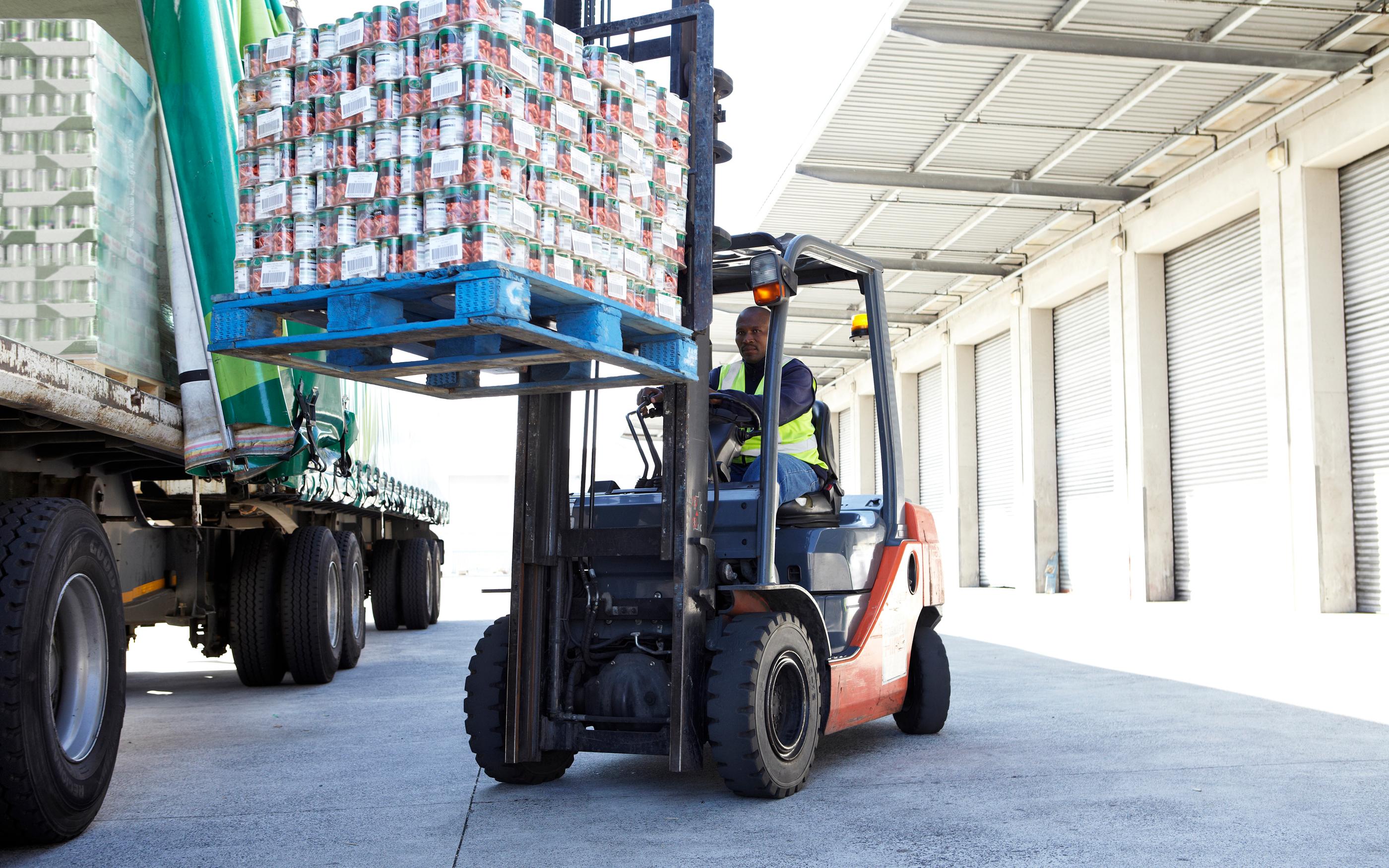
According to the latest data from the Health and Safety Executive (HSE)[1], 124 workers lost their lives in work-related accidents in 2024/25. Significantly, three types of accidents accounted for 60% of the fatal injuries: falls from a height, being struck by moving objects, and being struck by moving vehicles.
In 2024, the HSE fined a food manufacturer[2] £1.28 million after an employee was killed by a lorry delivering supplies. The HSE found that the business had not adequately risk-assessed the situation and also lacked a sufficiently safe system of work. The regulator reprimanded the company for its failure to provide appropriate training or instructions. As a result, the food manufacturer faced a significant fine.
Every year in the UK, there are over 5,000 accidents involving transport in the workplace and around 50 of these result in people being killed
To help protect your people and operations from workplace transport risks, we explore both the drivers of transport-related risks and how your organisation can manage these risks more effectively.
What drives transport risks in the food and beverage industry?
Some of the most common drivers of transport risks include poor site design, such as inadequate lighting and uneven surfaces. Risks are also increased where pedestrian walkways are not segregated from vehicles like forklift trucks.
Unsafe driver behaviour, such as distracted driving and speeding, often fuelled by inadequate training, is another key cause of transport-related risks and incidents.
Vehicle maintenance issues, such as faulty brakes and worn tyres, can lead to severe consequences for your organisation, including injuries, property damage and operational disruptions.
How can your food and beverage business minimise transport risks?
Regular site-specific risk assessments can identify and address potential hazards, enhancing overall site safety.
Effective design is crucial to minimising transport-related risks. This involves ensuring all areas are well-lit to improve visibility, maintaining smooth and even floor surfaces to prevent accidents, and clearly marking out and segregating pedestrian and vehicle routes in manufacturing and warehousing sites.
Maintaining vehicles is essential for preventing transport-related accidents. Faulty or poorly maintained vehicles can significantly increase the risks of injuries, property damage and operational downtime. Schedule routine inspections and maintenance to ensure all vehicles are in good working condition. Equipping vehicles with safety features such as backup cameras and sensors can further enhance safety.
Conducting specific risk assessments for each type of vehicle used in your facilities can also help reduce transport-related risks. The HSE emphasises the need for specific risk assessments and tailored controls for each business and site.
How can your food and beverage business mitigate unsafe driver behaviour?
There are three key steps you can take to reduce the risks related to driver behaviour:
By taking these steps, your food and beverage business can significantly reduce the risks associated with unsafe driver behaviour, ensuring the safety of your employees and the smooth operation of your facilities.
To discuss how you can manage and mitigate the transport risks your food and beverage business faces, get in touch.
Footnotes
Author
Risk-ready recipies
Specialised insurance and risk management solutions for the food and beverage industry