A buy-in may feel like the finish line, but in reality it is the start of a complex, multi-year journey to buyout. Host Luna Fadayel speaks to Tom Muir and Amber Docteur about what can help that journey run smoothly. With plenty of practical experience to draw on, they consider how good preparation can help avoid too many "are we there yet?" moments along the way.
Podcast host

Luna Fadayel
Scheme Actuary and Relationship Manager
Podcast guests
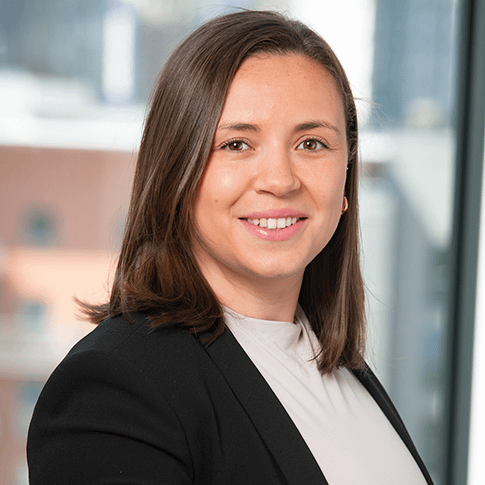
Amber Docteur
Senior Director, Retirement

Tom Muir
Managing Director, Head of Buyout Transition
Disclaimer
This podcast by WTW is intended for general information purposes only and does not constitute financial, investment, legal or other professional advice. Listeners should not act on the information presented without first consulting a qualified professional and this podcast should not be relied upon for investment or other financial decisions.
This podcast takes into account information available to WTW at the date of recording and takes no account of developments after that date. WTW provides no guarantee as to the accuracy or completeness of any information contained in this podcast and WTW and its affiliates and their respective directors, officers and employees accept no responsibility for any of the content.
The views expressed by any hosts and guests are their own and may not reflect those of their employers or affiliated organizations.
All content, including audio, branding, and any associated materials, is protected under applicable copyright laws. Unauthorized use, reproduction, or distribution of this content is prohibited without prior written consent.
Copyright © 2026 WTW. All rights reserved.
Transcript for this episode
LUNA FADAYEL: Hello, and welcome to this episode of Pensions Perspectives podcast, brought to you by WTW. I'm your host, Luna Fadayel, a scheme actuary and relationship manager. Now, today, we're going to be talking about a journey that a lot of schemes are making. More and more schemes are making the journey from buy-in to buy-out. Indeed, insurers are expecting to transition about 350 schemes to buy-out over 2026.
LUNA FADAYEL: Now, completing a buy-in can feel like crossing a finishing line. And to be fair, it is a pretty big milestone in a scheme's journey. But the reality is that it's only the start of a long, multiyear, complex project involving multiple stakeholders. And as with any long, complex journey, a little bit of preparation before you set off can make it smoother, limiting the "are we there yet?" moments along the way.
Now, joining me today to talk through the things the trustees and sponsors should be thinking about are my colleagues, Amber Docteur and Tom Muir, who head up our buy-out transition team. Welcome both. Now, before we get into the journey itself, could you tell us a little bit about what you do?
AMBER DOCTEUR: Absolutely, yes. So I'm Amber, I'm one of our senior program managers here at WTW with 10 years experience in this business. I specialise in taking schemes through that complex de-risking journey from buy-out, sorry-- from buy-in to buy-out and wind-up. And that's every stage of the way. We could be talking about data rectifications and complex cleanse work. We can be talking the member communication journey, meeting your statutory legal requirements, all of the steps needed to get you through to the finish line. So my focus really is taking trustees and companies from the strategy phase through to the having an actionable plan that they can drive against phase.
TOM MUIR: Thanks, Luna, and good to be here. My name is Tom Muir. I lead our buy-out transition team of 30 or so specialists in this area. And our role is to support schemes through the journey from buy-in to buy-out, navigating all of the challenges and issues that come up along the way. My particular focus is supporting schemes, develop the strategy as part of that journey, and making sure we bring the best of WTW's expertise and experience of hundreds of transactions in this area to hopefully make the journey a little bit smoother for people, share those war stories, and understandings, and experience, and hopefully deliver the best outcome for all parties involved.
LUNA FADAYEL: Yeah. And both of you have talked about at the beginning of the journey, so that buy-in. So that over 900 transactions have occurred in the last three years. So there are clearly a lot of schemes either making the journey to buy out or about to do so in the next few years. So you've completed the buy-in, everyone's probably breathed a fairly large sigh of relief. But what's next? What actually stands between you and buy-out?
TOM MUIR: I think a lot of work, actually. And actually, I think that the best prepared schemes are already thinking about that phase before they've even got to buy-in. I mean, we've seen funding levels improve massively over the last few years for various reasons. But 60-plus percent of schemes now being able to afford buy-out and buy-in.
And I think that actually sort of financial readiness has come a little bit earlier than some of the operational readiness. So actually, thinking about it before you're entering the buy-in stage is really critical because there's just as much, if not more, work to do post-buying at that point in time. So I think it's really going in with eyes open, understanding the specifics for your scheme, your circumstances, the stakeholders involved, and trying to have that mindset of no-regret risks.
There are certain points along the journey where you can't go back. You're not going to undo a buy-in. Technically, you can but you're not going to. You can't undo a buy-out and you can't undo a wind-up. So as you're making those decisions, be really deliberate about it, understand what the consequences are, and have a plan for the next stage of that journey.
LUNA FADAYEL: Yeah, so those points of no return, if you like, what are they? Other than obviously doing the buy-in.
TOM MUIR: Yeah, I mean, I think there are three, really. There's the buy-in, the buy-out, and the wind-up. Those three points where you're not going to go back along the way. Now, as you go through that sequentially, there are lots of interdependencies in terms of how different parties and different work streams interact, but they're fundamentally the points of no return. If you think as a trustee board, as a sponsor signing off on things, they are the lines in the sand, I think, that dictate the timing and the process you go through.
LUNA FADAYEL: And Amber, does that chime with your experience?
AMBER DOCTEUR: Absolutely. I mean, there are decisions to be made throughout the process on some of the arguably smaller or more detailed elements of the journey, but it is those go/no-go decisions on actually moving your scheme to the buy-out, triggering your wind-up. Obviously, that creates a notification to TPR and things like that. So making that decision to take that step and take that action and do so is a point of no return, really. So it's key to make sure you've had plenty of advice, consideration about whether or it's the right time for you to do to take that step before you make the decision to do so.
LUNA FADAYEL: Yeah. And I mean, one of the key relationships throughout the journey is the relationship with your insurer. So what should schemes understand about working with their insurer? And how much does this approach differ between insurers?
TOM MUIR: I think the second part of your question is the answer to the first, almost, that in simple terms, each insurer is different. Now, there's some commonalities in terms of the process you're going to have to go through. Ultimately, you're going to have to effectively implement an admin transition to an insurer. That's a large part of what the buy-out process is, is transitioning your data and administration across.
And all insurers are set up to do that. And all insurers in the market are capable of doing that, which is demonstrated by the fact that they've all moved schemes to buy out. The different insurers do that in different ways. They have different processes along the way. They have different checks and balances that they need to go through along the way to make that all work.
So I think you hit the nail on the head if the insurer is one of the key partners in the journey that you go through. You need to understand their fundamental proposition and operations in this space. And we do a lot of research in that area, the fundamentals of what actually happens as you go through the process. But there's also the more commercial factors in terms of what does your scheme look like, what is the size of the scheme look like, where insurers in the middle of other processes, which will also dictate the resourcing capacity we have at different stages along the way.
So it's kind of balancing those two things with your needs and your objectives as a scheme to come up with a plan with the insurer. But fundamentally, you have to be working with the insurer and working on the same page with them throughout. And that starts again, I think, the pre buy-in phase of going in eyes open with how they operate post buy-out.
LUNA FADAYEL: Yeah, so it's not as simple as choosing the one who's offering the most competitive price, really.
TOM MUIR: No, it's not.
LUNA FADAYEL: There's so many other factors to consider.
TOM MUIR: Yeah, and I've had no-scheme who's just about to go through buy-out actually now, didn't go with the cheapest insurer. Now, it wasn't massive, massive difference. Price is always going to be a key factor. But they actually went with a particular insurer because of some of the support that they could give in the post buy-in phase and getting them through that journey.
LUNA FADAYEL: Yeah, but as well as understanding how your insurer works and what each side needs before you embark on the journey, there's actually quite a bit of homework that this scheme can do beforehand. And I imagine this is where the amount of work involved can be underestimated. I mean, you both referred to it in your introduction, so there is actually quite a lot that stands once you've done the buy-in. So what are the operational things that most often get in the way of a smooth transition?
TOM MUIR: There's a couple of real key points in terms of making that decision and being operationally ready. Fundamentally, you need to understand the data you're insuring, so that comes data for pricing purposes is different to data for buy-out purposes. So you don't need every single bit of data, but you need to understand where you are on that journey.
And I guess more importantly, the benefits you ensuring, you need to be understood and clear on what those are. And I think it's the benefits that typically cause more of the operational issues as you go through the process. And that could be known issues, things like a salary link continuing to be maintained for certain members. It could be underpinned to benefits.
Or unfortunately, in some cases, it can be unknown issues that unearth at the point of buy-in. You find out that the administration practice hasn't been aligned with quite what's happening in the rules, and you've got a decision to make as to where you go there. So I think from an operational perspective, it's just key to have those two fundamental pieces clear as you go into the buy-in piece.
That also gives you the, one, confidence to transact buy-in. But two, start you on that journey, as we both talked about, of what does the buy-in to buy-out journey look like. Because you will no doubt find some operational issues and things that need to be resolved in that period. So I think it's those type of operational aspects that typically come into play there.
And then I think the third piece as part of all of that is just the governance around all of this. And it's stating the obvious, but just having some really clear objectives, both trustee and sponsor side of what you're trying to achieve and when. Because that will dictate, again, your timeline and how you process things along the way. But that's really key.
LUNA FADAYEL: Yeah. And Amber, are there things that you often wish schemes had started earlier in the journey?
AMBER DOCTEUR: That's the age-old question. I think, absolutely, it's really attractive at the minute to approach the market for a buyer to think, we'll do it right now because we are financially ready and the pricing is pretty good. And I think some schemes have been known to rush into that and not take the time, as Tom mentioned, to talk about your benefit structure, your data, really understand how you are.
And upfront, they'll commit with an insurer to quite a tight contractual data cleanse window, thinking we can get this done. We want to move very fast, without knowing the true state of the nation and really the detail of the benefits. And that can lead to some really complex discussions whereby you realise you cannot get the things you need done within, say, 24-month data cleanse period that you've committed to with your insurer.
You might find out too late because you find things out along the way. You might find out straight away, but it proves a really difficult conversation with your insurer that we've entered into a contract with you that ultimately we now know we're not going to meet. Having those conversations upfront and really understanding the depth of your benefits, what's going on with the data, means you don't have to enter into those awkward discussions. You can really commit to something that you know you can achieve.
So I think from a, specifically, project management perspective, not doing the prep and the planning and really taking the time to understand, is it right for me to approach the market, am I operationally ready to do so, really can have some detrimental effects on the whole journey, which as a project manager, we try to avoid.
LUNA FADAYEL: Yeah. But how do you get that balance of being operationally ready but also not missing the opportunity of really good pricing in the market?
AMBER DOCTEUR: I think that comes down to something Tom mentioned about, setting those objectives upfront. I think if you're considering 100% of being operationally ready, you could almost never be ready to enter the market. There will always be something that either changes within the wider industry or within your scheme that you think you should address. So you shouldn't ever be targeting being 100% ready on your data and benefits before you go.
Getting that point aligned early on between the trustee, the company, about why you want to enter the market, what you think those key boundaries are to enter it is going to make a huge difference and know when you're ready. If you don't take the time to have those strategy sessions upfront, you're both maybe fighting on different planes. You're looking for different objectives, you're trying to achieve different goals. So you won't agree when is the right time to go.
LUNA FADAYEL: And that must be particularly important, given the time scale between buy-in and buy-out, typically, what, two to four years. So even with all that preparation and agreed objectives, things could change around you. The market could change or something could happen. So what does a good project, what does good project management look like over that period?
AMBER DOCTEUR: So good project management in this area is not just being reactive, but it's always being proactive as well. You need to work on your life project, understand the needs of your scheme, but you also need to be looking ahead, what things can be brought forward? What discussions can we have now to make things down the line smoother? What's going on with the wider industry?
It's about keeping in tap with hearing about the news and things that affect pension schemes. That means they might have to take a step back or take an additional step in their journey just to make sure they're meeting legislative requirements. Good project management is about being a more of an overarching role, as opposed to just a here and now, making sure we tick something off the list and get it done in time with when we said it was.
And that can make a huge difference for trustees and companies when they are trying to get there within a certain timeframe, when they've got commitments they have to hit, someone that is acting in the overarching role, taking steps for them to bring things to the trustee at the right time, rather than waiting for the trustee to raise it with them makes a huge difference along the way.
TOM MUIR: I think that's the key bit, you finished on there. It's all of the governance piece, but a lot of this is about managing expectations along the way. Because I think you recognise, as you say, it is going to take months, years to get through this process even if you are really, really well-prepared. Things are going to change and move along the way. We've already talked on you've got insurers involved, you've got third-party administrators involved, you've got trustees involved, you've got sponsors involved, you've got members involved, importantly along the way, as well as other advisors.
There is going to be some kind of change or friction, or something will happen where it doesn't quite go to plan there. I think if you're proactive in that space, as you say, people are aware of what's coming down the line, of where the challenges are, then you can work together a little bit more to find solutions to some of those problems. And you can be a bit more pragmatic along the way where you need to be. And the challenges come where you go in slightly siloed or isolated with perhaps misaligned expectation of how long this is going to take. And that's when you get into the challenging pieces, because you get that breakdown of communication almost along the way as well.
LUNA FADAYEL: I mean, that brings us right back to "are we there yet?" moment. It's all about managing those expectations.
TOM MUIR: Yeah, exactly. And that 24-month period that Amber talked to as well is clearly a key point contractually from an insurer perspective. Sometimes you don't see schemes, bonds, understanding what that actually means. I think, again, there's a piece of you've gone through the buy-in. That's a lot of work to get to that point. You almost want to take a pause there.
We've got two years. That's a really long time to do all of this. And then you get into the detail. And actually some of these projects can take 6, 12, 18 months to actually run through. Some of the communication requirements can take certain periods of time. And back to that point, different insurers have different time scales within there. So 24 months feels like a long time, but actually it can burn pretty quickly through the process.
LUNA FADAYEL: OK, so having said all that, I'm going to ask you a question that I suspect a lot of our listeners would be quite keen to find out, which is, what is the fastest that you've seen a scheme move from buy-in to buy-out? And more importantly, is what is it that scheme had done that ensured they could move so quickly?
TOM MUIR: Yeah, so I think this is the, well, it's the textbook answer. So we've seen a scheme move from buy-in to buy-out within one month.
LUNA FADAYEL: Wow.
TOM MUIR: Now, that is not typical. I guess back to that point of why did they do that, there were wider corporate and trustee objectives to make that happen in a specific time period. So they wanted a very short buy-in to buy-out window. And the reality of what that meant is they actually did, we said, you don't need to be fully operationally ready to go to buy-in. That scheme was and effectively they'd completed the buy-out journey, apart from signing on the dotted line from the buy-in and buy-out. So technically, a month.
I think we're seeing, traditionally, it's been something like two to four years to move from buy-in to buy-out. And we are seeing that come down, I think, in terms of timescales. A few reasons for that, one, insurers and ourselves and advisors have been through this process more and more times. We've done it hundreds of times now for schemes and, therefore, it's more well-trodden, the teams are resourced for it. Importantly, insurers are resource for it. It is a different team that does your buy-in pricing, that does your buy-out transition, and more resources going into there. So just the capacity pieces is there.
And I think we're also seeing improvements in technology and those types of things come through. And then also, more practically, some of the data issues and things we've mentioned around GMP. A lot of schemes have actually addressed those in the readiness period rather than just getting to that point. So I think we're seeing that come down. I mean, I've got a scheme who will move to buy-out just before the end of this year. And they're doing it in just under 18 months, including doing GMP equalisation in that period.
Now, they went in with the mindset that's what they were going to do. They were work the project along the way. So I don't think there's an answer of how quick can you do it, but I think we will see those two- to four-year windows come down a little bit. It would be my personal view on that.
LUNA FADAYEL: Yeah. And there is another perspective that you touched on. We've talked about transactions, data, project plans, but at the heart of this is securing member benefits. So how do you make sure that the member experience doesn't get lost amongst everything else that's going on?
AMBER DOCTEUR: That's a really good question, and one I think that often when we are in that project planning phase isn't maybe talked about enough. Sometimes it's thought about a little bit too late. As you mentioned there, it is a strand of the entire project. We talked about the complex calc work that might need to be done, and the decisions that trustee and the company need to make.
But as you said, members are at the heart. And for them, it can be quite unnerving not knowing what's happening with their benefits. One minute, they're used to these benefits coming from the trustee and their current administrator, and the next, they may get a letter telling them that after a certain date, you can't contact this person anymore. And this new business will be providing your benefits going forward.
So I always think it's really key to not just map out your journey between the complex cleanse and achieving that buy-out, but also your member communication journey along the way. And that needs to also dovetail in with what you're experiencing from a BAE perspective. Members already get letters. They already have access to online forums or online systems where they can see their benefits request quotes.
It's about communicating with them about what's happening at the right time. If you start to talk about a buy-out, for example, with members immediately after you've secured your buy-in, and then you're telling them it could take us two to four years to get here, that could ring quite a lot of alarm bells. We don't want to do that.
Ultimately, trustees and companies are opting to do this to provide more security in those benefits going forward. So it's about telling them things at the right time, reassuring them that their benefits are being looked after. The intention here is not to put them in a worse-off situation, but to make sure they still get their benefits going forward. And we want to do that with you.
Ideally, we want to see minimal change to the services they're seeing right now. So again, as part of that member communication journey, working with your insurer about, well, what will that post buy-out experience look like for them? Will they see a material change in what they can access and what they can request? Or can we make this switch look almost as smooth as possible that there's, maybe it's the same looking website with just a new insurer name in the corner rather than WTW, for example, as a third-party administrator. It's about making them feel comforted.
And I think one of the reasons that there is such a focus on this at the minute is that members do have a lot more access just in the world to things like AI, where they can search up what this looks like. What does this mean for me? What kind of questions should I be asking? So again, the planning and making sure that those communications are really clear, really effective, say exactly what you want to say and don't provide any uncertainty or concern about their benefits is really important, so that members don't go away and try and find their own investigation and get really concerned about the process as it's going through.
LUNA FADAYEL: Yeah.
TOM MUIR: I think we're seeing insurers develop quite a lot in this area as well. Recognising that it is vitally important trustees and sponsor schemes would have been supporting these members for 50, 60, 70 years. You don't want them to fall off a cliff edge at that point you transition to buy-out which doesn't happen now, but that is a big concern, the emotional side of this transition for trustees and sponsors who have been involved for a long time. So I think that's quite an interesting space in terms of where insurers are going. And we are seeing different insurers at different stages of that member journey. I think it's fair to say it's a focus for all of them. But in terms of, again, the insurer you're working with, it will look slightly different at this stage, what that piece looks like.
LUNA FADAYEL: OK, so we've covered quite a lot there from the decision schemes, make around the transaction, right through to data, insurers, and the member experience. And the one thing that seems to come through all of that is that a little bit of preparation or a lot of preparation can make the journey so much smoother. So to finish, if you could leave our listeners with just one piece of advice for making the journey from buy-in to buy-out as smooth as possible, what would it be?
AMBER DOCTEUR: I'll happily go first. I am a project manager, so maybe it's a bit cliche, but it is planning and preparation. I think anything that maybe in the past you've thought that's quite complicated, we'll leave that till later, I would not recommend that approach. Now is the time to bring it forward and consider what it might mean for your journey and your scheme itself. And the earlier you can go through those phases and really figure out everything you need to do in that process, the smoother your process is going to be and the less risk you have of surprises along the way that might hinder you hitting those major milestones we talked about. So for me, it is planning, preparation, and a good project management to take you through in that proactive approach that I talked about earlier.
TOM MUIR: Yeah, and from my perspective, I think planning is very key to this. I think the other piece that I'd say is just having that clarity and alignment on your objectives between both trustee and sponsor. You have to go through that journey together. Being clear on what you're trying to achieve and when will help plan, because you'll then be able to put a plan in place, which allows you to take into account those objectives. So it's really upfront, before you go into the buying process, knowing what stands between you and buy-out to actually get that scheme to that point.
LUNA FADAYEL: Yeah, OK. So understand what lies ahead and hopefully you'll have fewer of those "are we there yet?" moments on the way. So thank you both very much for joining me. I've quite enjoyed that conversation. And to our listeners, thank you very much for tuning in to this episode of the Pensions Perspectives podcast brought to you by WTW. I'm your host, Luna Fadayel, and I look forward to joining you for another conversation that matters.
[AUDIO LOGO]
ANNOUNCER: Thanks for listening. This podcast is for informational purposes only and does not constitute financial advice. The views expressed by any hosts and guests are their own, and may not reflect those of their employers or affiliated organisations. All content is protected by copyright