

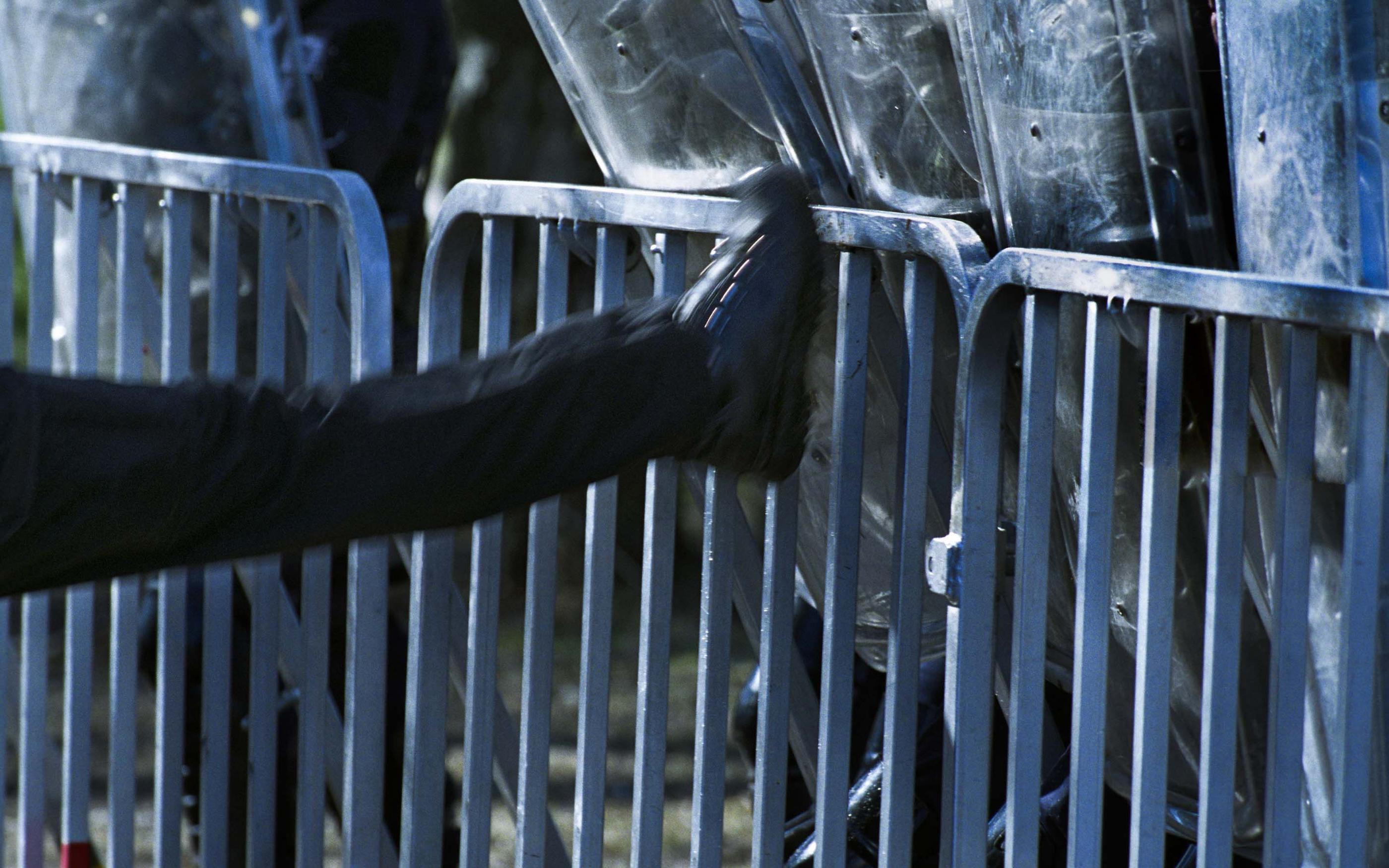
Civil disorder is often associated with revolutions or countries with volatile governments rather than stable settings such as the UK and Europe.
However, WTW’s Crisis Management Annual Review points to a more unpredictable risk environment, shaped by geopolitical tensions, economic pressure and social mobilisation. Against this backdrop, the UK ranks as the 7th most exposed country out of 31 in Europe.
For many organisations, the issue is no longer whether unrest may occur, but how quickly it can affect people, operations and decision-making, and crucially how effectively they can respond.
What is changing in the nature of civil unrest?
Civil unrest is taking new forms, making it harder for organisations to anticipate and respond.
Recent events in the UK show how socially or politically driven incidents can cause disruption, damage and fear, both locally and more widely. Our Annual Review highlights the growing influence of youth-led movements amongst other factors, which are reshaping how protests emerge and spread across cities and regions.
These events are becoming more frequent, more dispersed and less predictable, often fuelled by economic pressure, political polarisation and social division, amplified by media attention.
Ongoing inflation, inequality and wider societal tension are likely to sustain this trend, increasing the likelihood of further disruption and creating scenarios you should be prepared for.
How could civil unrest affect your organisation?
You may face restricted access to offices or operational sites, disruption to transport networks, or difficulty maintaining normal business activity. For customer-facing businesses, this can quickly lead to reduced footfall or temporary closures, even where there is no physical damage.
At the same time, pressure on leadership teams can build quickly. Employees, clients and external stakeholders may seek reassurance, often before the full situation is clear. Questions around safety, continuity and your organisation’s position can emerge early, requiring a considered and timely response.
What begins as a localised issue can escalate into a wider organisational challenge within hours...
What begins as a localised issue can escalate into a wider organisational challenge within hours, with decisions needing to be made under pressure.
Over time, the impact can extend further. This may include pressure on revenues and profits, supply chain disruption, tighter lending conditions, delays or disputes in claims settlement and increased concern among employees.
How will your current insurance arrangements respond?
While some elements of risk mitigation take time, reviewing your insurance position is something you can do immediately.
Civil unrest can trigger a range of scenarios, from restricted access to premises through to full closure or loss of revenue. Understanding how your policies respond in these situations can help you make more informed decisions during an incident.
It’s important to understand how events are defined within your policy, whether disruption without physical damage is covered and what notification requirements apply. You may want to consider:
- You may be entitled to compensation under the Riot Compensation Act 2016, but government guidance notes not all civil disturbance qualifies as a riot. The 2011 England riots are the clearest recent example, while 2024 disorder in Stockport generated claims in some police areas. Formal riots, as defined by the Riot Compensation Act 2016, remain rare. Many policies carry short notification or submission periods for riot claims, sometimes as little as seven days or up to 43 days.
- Monitor whether incidents are being considered for certification as terrorism and what this means for the relevant policy coverage. Review the extent of cover for civil commotion and riots under your existing wordings.
- Review the extent of cover under your business interruption policy for early or temporary closure, whether enforced by a public authority or police, or taken as a business decision to protect assets. The time excess will usually be a key focus, as will whether events are treated as separate incidents or as a single incident over several days.
- Be ready to notify insurers about your risk management approach and seek agreement on what would satisfy reasonable precautions conditions under your existing policies.
- Check whether your policy includes 72-hour clauses or occurrence definitions covering riot, civil commotion or malicious persons, as multiple incidents may be combined into one occurrence, with one limit, excess or deductible applying.
Preparation for civil unrest depends on how well your plans work when they are needed.
Are your crisis management plans ready to perform under pressure?
Most organisations have crisis management and business continuity plans in place. The real test comes when those plans are used in a fast-moving situation.
Civil unrest rarely develops in a predictable way. Events can escalate quickly, information may be incomplete and different parts of the organisation may be affected at the same time. In these conditions, gaps often appear in how plans are applied.
Plans that appear robust on paper can behave differently under pressure.
Your crisis management framework should guide the full lifecycle of an incident, from initial response through to recovery. Early actions should focus on protecting your people and limiting immediate impact. As the situation develops, priorities shift to managing stakeholders and maintaining clear communication. Recovery then focuses on restoring operations and capturing lessons learned.
For this to work in practice, plans need to provide clear direction. Teams should understand when to escalate, who is responsible for decisions and how communication will be managed across employees, customers, media and insurers. Without this clarity, response can slow at the point it matters most.
Testing is where many organisations identify real weaknesses. Plans that appear robust on paper can behave differently under pressure. Scenario-based exercises help bring these plans to life, highlight gaps and build confidence across leadership teams.
In a more volatile environment, organisations are placing greater emphasis on testing their response through realistic simulations, including dynamic crisis exercises that reflect how events unfold in real time.
How can you better support your people during disruption?
Civil unrest can have a wider impact on employees than is often recognised.
Even where individuals are not directly affected, events can create uncertainty, concern about travel and broader anxiety around personal safety. For those closer to affected areas, the impact can be immediate.
Organisations that respond well take a people-first approach. This includes providing clear guidance on avoiding high-risk areas, offering flexibility when travel is disrupted and making support visible and easy to access.
It also means recognising that the impact goes beyond operations. Clear communication, reassurance and a visible awareness of the situation can make a meaningful difference to how supported employees feel.
How do you turn planning into real preparedness?
Preparation for civil unrest depends on how well your plans work when they are needed.
Organisations that are better prepared focus on clarity and coordination. Decision-making structures are understood, escalation points are defined and teams know how to operate together. This helps reduce hesitation when time matters most.
Alongside planning, there are practical steps that can limit the immediate impact of disruption. For physical locations, this may include access to materials to secure premises, ensuring alarm systems are fully operational and confirming employees understand evacuation procedures. In higher-risk environments, additional security measures may be appropriate, supported by a clear list of trusted suppliers and emergency contacts who can be mobilised quickly.
Preparation also relies on how well civil unrest is reflected in your existing frameworks. Your risk register, business continuity planning and crisis response structure should all account for this type of scenario and be ready to activate at short notice.
Testing is a critical part of this process. Running realistic scenarios helps identify where plans may not translate into action and strengthens your ability to respond in a coordinated way.
Finally, alignment matters. Crisis response, business continuity and insurance should work together so that response and recovery are structured and effective when disruption occurs.
What should you do now?
Civil unrest is difficult to predict, but preparedness can be improved now. Organisations should review how their crisis management, business continuity and insurance arrangements would respond if disruption occurred at short notice.
As a priority, consider whether you have:
- Tested your crisis response arrangements against a realistic civil unrest scenario
- Confirmed who makes decisions and how issues are escalated
- Reviewed how your insurance policies respond to riot, civil commotion, denial of access, closure and business interruption
- Checked notification requirements and evidence expectations
- Aligned communications for employees, customers, insurers and other stakeholders.
Review your policies to understand how they will respond in a civil unrest scenario, including any notification requirements or limitations. If you are unsure how your current arrangements would perform, speak to your WTW account team or sector specialists. We can help you assess your exposure, understand how your coverage may respond and test the effectiveness of your crisis management and business continuity plans.
Author

Dynamic Crisis Exercise
Build confidence in your crisis management