
As AI adoption accelerates, many organisations are experiencing that traditional compensation structures are struggling to keep pace with new workforce dynamics. Demand for critical skills is growing faster than supply. Jobs and productivity demands are evolving rapidly. And employers are under increasing pressure to ensure that rewards programmes support both immediate business needs and long-term AI-driven workforce transformation.
The result is a fundamental shift in how companies think about rewards. Instead of relying primarily on job titles, hierarchy and tenure, employers are placing greater emphasis on skills, scarcity and business impact. This evolution is being shaped by four major forces – AI-enabled work transformation, growing shortages of critical talent, rising expectations around performance and value creation and increasing pressure on conventional reward structures.
For decades, compensation frameworks have been built around job structures, with pay determined by factors such as scope, responsibility and organisational level. Today, however, skills are emerging as a critical differentiator.
In the technology industry, companies are competing intensely for talent with expertise in artificial intelligence, cybersecurity, cloud engineering, data engineering, etc. Meanwhile, high-value capabilities such as Python programming, software testing, cloud computing and automation continue to command significant market premiums (Figure 1).
| Top 10 jobs in demand, technology specific | Top 10 skills in demand, technology specific | |
|---|---|---|
| 1 | Software Engineer | Software Testing |
| 2 | Application Developer | Python |
| 3 | Cyber Security Engineer | Java |
| 4 | Test Engineer | Automation |
| 5 | Solution Architect | Agile Methodologies |
| 6 | DevOps Engineer | Technology Deployment |
| 7 | AI Engineer | Cloud Computing |
| 8 | Cloud Engineer | Innovation Management |
| 9 | Technology Consultant | SQL |
| 10 | UI/UX Designer | JavaScript |
Source: WTW Talent Intelligence Report 1Q 2026
This shift does not necessarily mean that organisations are abandoning established job frameworks. Many are augmenting them with a stronger focus on skills intelligence, workforce planning and differentiated rewards strategies. The goal is to create reward programmes that better reflect the capabilities required to drive business growth in an increasingly digital economy.
Talent scarcity is driving greater rewards differentiation
Despite the growing interest in skills-based organisations, relatively few employers have fully transitioned to skills-based pay models. Instead, many are adapting their existing compensation structures to respond to market realities.
Common approaches include positioning employees at the higher end of salary ranges, benchmarking key roles against more competitive market percentiles and using hiring or retention bonuses to secure critical talent. These mechanisms allow companies to respond quickly to market pressures while maintaining consistency across broader reward programmes.
However, each approach comes with trade-offs. Raising salary ranges can improve competitiveness but may increase long-term fixed costs. Hiring bonuses can help attract talent but do not always support retention. Variable pay programmes can drive performance but require careful design to ensure they reinforce desired outcomes.
As a result, many organisations are combining fixed and variable rewards elements to focus resources on strategically important talent segments. This reflects a growing recognition that not all skills create equal business value, and not all talent challenges require the same reward solutions.
The AI talent scarcity is stretching pay gaps
Across industries and geographies, the competition for advanced digital and AI talent intensifies, but many struggle with securing the skills needed for those ambitions. As a result, compensation premiums for highly sought-after AI professionals are growing, creating increasingly significant gaps between average market rates and top-tier talent.
Organisations are also placing greater importance on employees who can directly support broader digital transformation initiatives, including automation, data-driven decision making and innovation programmes. Capabilities that enable AI adoption are becoming critical inputs into workforce planning, career progression and compensation decisions.
This trend suggests that skills will play an increasingly influential role in rewards decisions. Rather than replacing traditional job architectures, many companies are integrating skills as an additional lens through which talent value is assessed and rewarded.
AI is reshaping work and creating new workforce priorities
As they face increasing pressure to build AI-ready workforces, employers are also trying to answer critical workforce questions. Which tasks can be automated? What skills will employees need in the future? How to measure returns on AI investments? And how can leaders ensure that workforce transformation occurs in a structured and sustainable way?
The challenge is managing AI transformation effectively. Successful organisations recognise that workforce change cannot be left to evolve organically. Instead, they intentionally redesign work to balance technology adoption with human capability development. Long-term success depends on understanding how AI changes work activities and how companies can redistribute effort to create greater value.
Work redesign is becoming a strategic imperative
One of the most important developments emerging from AI adoption is the growing focus on work redesign. Organisations are increasingly using workforce analytics and diagnostic tools such as WorkVue to understand current work activities, identify automation opportunities and redesign roles to maximise productivity. This process goes beyond job descriptions and involves a structured approach to ensure effective implementation. It examines tasks, workflows and capabilities to determine where technology and human expertise can be combined most effectively (Figure 2).
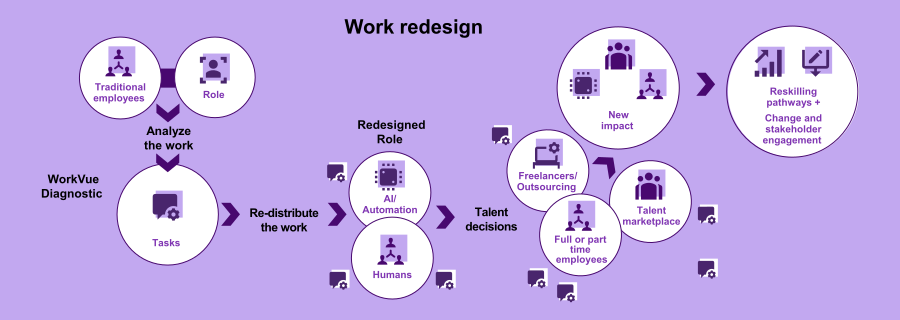
Figure 2. Work redesign for a technical post-sales customer support role
The potential impact can be significant. In one technical post-sales customer support example, analysis identified opportunities to automate 15% of weekly tasks and augment a third of weekly tasks, generating 27% total time savings, while also highlighting six high-impact skills and two new native AI skills within the technical post-sales customer support role. Rather than eliminating jobs, the redesign process created new opportunities to reallocate work, enhance productivity and support employee development.
Because AI affects different functions and career levels in different ways, workforce strategies must remain highly customised, as a uniform approach will rarely deliver optimal results. By using tasks and roles as basis for work redesign, organisations will be able to effectively integrate AI into their workforce and be strategic in competing in a tight market for digital talent.
Tight talent market in Asia Pacific’s semiconductor calls for differentiated rewards strategy
Across Asia Pacific, demand for specialised semiconductor talent is expected to remain strong, driven by growth in AI, advanced manufacturing and digital infrastructure. Scarcity is increasingly concentrated in areas such as semiconductor design, AI expertise, equipment engineering, automation, process optimisation and advanced packaging technologies.
In response, employers are shifting their focus from simply increasing headcount to developing and securing critical capabilities. Many are adopting "build-buy-borrow" talent models that combine recruitment, internal development and external partnerships to address capability gaps.
At the same time, rewards strategies (such as short-term incentive alignment) are becoming more targeted toward roles with the greatest strategic impact and replacement risk. Employers are using differentiated incentives, role-based pay positioning, profit-sharing arrangements and selective long-term incentive plans to retain strategically important talent.
How organisations can leverage the emergence of AI in the workplace
As AI transforms work, employers must rethink how they identify, develop and reward talent. They can start by identifying the skills that matter most to their business strategy and aligning rewards accordingly.
Companies should consider investing in workforce diagnostics to understand how technology will affect different roles and where reskilling can create the greatest value. They also need to regularly assess their full rewards portfolio to ensure it remains relevant to the employees and skills they most need to attract and retain.
The future of rewards will not be defined solely by jobs or organisational hierarchies. It will be shaped by the skills that drive innovation, the talent that enables transformation and the work redesign strategies that help organisations unlock value from both people and technology.
Those who embrace this shift quickly will be better positioned to compete for scarce talent, accelerate AI adoption and build a future-ready workforce.
Authors



Webinar replay
2026 TMG Industry forum: Navigating disruption in the AI era — Work, rewards & talent strategies