

A catastrophe model may estimate a $20 billion loss, but what does that event look like for insurers managing claims on the ground? In this episode of (Re)thinking Insurance, Alena Kharkavets is joined by Scott St. George, Head of Weather and Climate Research at the Willis Research Network, and Andrew Leeds, Chief Claims Officer at Plymouth Rock, to explore the disconnect between modeled losses and operational reality. They discuss where models fall short, how different types of catastrophes impact claims teams, the increasing use of AI in claims processing and the wider industry challenges of affordability, resilience and risk mitigation.
“I think about cats all the time. I think about cats when I'm awake. I think about cats when I'm asleep. And the way I think about it is in terms of almost like concentric circles, in terms of what my operation or claims operations can take.”Andrew LeedsChief Claims Officer, Plymouth Rock
Transcript for this episode
SCOTT ST. GEORGE: Every model that we have in our toolbox offers a simplified view of reality. And it tells us about some risks and some consequences of those risks. But there's always things that are not included or they don't count. They're not modeled. They're too complicated. They're too unique.
ANDREW LEEDS: I think it’ll be very interesting in terms of how far will we let agentic architecture go, and what does that look like in the face of a huge event.
ANNOUNCER: You're listening to Rethinking Insurance, a podcast series from WTW, where we discuss the issues facing P&C, life and composite insurers around the globe, as well as exploring the latest tools, techniques, and innovations that will help you rethink insurance.
ALENA KHARKAVETS: Welcome to (Re)thinking Insurance, and thank you for joining us. Today, we're exploring the hidden gap between Cat models and what we see in claims. How big will the loss be is the answer the Cat model usually answers. But a $20 billion loss event is experienced very differently when you look at claims operations.
I am thrilled to welcome two speakers who bring very unique perspective on this topic. Scott St George is head of weather and climate research at the Willis Research Network at WTW. In that capacity, he leads research projects on the physical transition and legal risks caused or made worse by climate change and natural catastrophes known to produce substantial financial losses. Scott, welcome to (Re)thinking Insurance.
SCOTT ST. GEORGE: Hi, Elena, it's very nice to talk with you.
ALENA KHARAVETS: And Andrew Leeds. Andrew is the chief claims officer at Plymouth Rock. Andrew brings the claims perspective, focusing on what actually happens when those events occur and what it takes for insurers to respond effectively at scale. Andrew, thanks very much for joining us.
ANDREW LEEDS: Thank you, Elena, happy to be here.
ALENA KHARAVETS: Well, let's dive straight into it. And Scott, I'd like to start with you. So insurers over the past few decades have invested heavily in Cat models. In the 90s, Andrew happened. We didn't really pay as much attention to Cat models or maybe we didn't even had sophisticated ones. And then all of a sudden, there was this big desire to have more Cat models. And we became much more sophisticated. I really want to ask you, why do we invest in Cat models? What do insurers look for? And why there has been such a big shift and interest in Cat modeling in the industry?
SCOTT ST. GEORGE: I think that insurers invest in Cat models and pay attention to their results for two reasons. The first reason is natural catastrophes are very expensive and disruptive. Natural catastrophe losses globally are routinely over $100 billion. And that translates into a lot of lost homes, lost property, a lot of very difficult situations for insurance clients.
So natural catastrophes are expensive. And the second reason why insurance companies pay attention to Cat models is because the models give us a tool or a set of tools that allow us to imagine something in the future that might be a little bit different than what we've experienced in the past. So catastrophe models offer us a way to supplement what we know from claims history and get prepared for future risks, either for an average year or something that's really outstanding or exceptional.
ALENA KHARKAVETS: And Scott, maybe one more quick follow-up. When you look at how the cat modeling has evolved, where do you see the biggest changes over the past few decades, where there has been more sophistication?
SCOTT ST. GEORGE: I think, like you mentioned, 30, 40 years ago, it was common for insurers to rely almost exclusively on claims history to understand what was possible or what was likely in terms of insured losses from natural catastrophes. Unfortunately, to paraphrase Shakespeare, there's a lot more between heaven and Earth that's included in your claims history. There's a lot of things that we haven't experienced in terms of more severe floods, more damaging hurricanes that are outside of our recent experience.
And so initially, catastrophe models were just intended to help us imagine what was possible and see a little bit further into the future. I think 30 years later, Cat models are pretty much routine. We rely on them across the industry to understand how natural catastrophes could behave next year either for a single insurer or for a worldwide concern.
I think what's changed is that there are more perils and more places being modeled in this way. And I think the industry is more sophisticated in using the output from natural catastrophes, not as a way to make decisions about insurance and catastrophe risk, but to supplement what we know from our experience and what we about the business to be a little bit more prepared for things that are something we haven't seen before.
ALENA KHARKAVETS: Andrew, I want to turn to you now. When we met for the first time, I remember one of the conversations we had, you talked about building the muscle in the claims operation. When you have a first two week surge, no one notices. Then four week surge, no one notices when you take volume off for a week's worth in terms of claims and so on and so on.
Andrew, how do you think about Cats? How do you think about the size of Cats specifically? And can you talk a little bit about the different among water versus hail or different perils, fire? Because they mean very different things in the claim separation.
ANDREW LEEDS: Yeah, I think about Cats all the time. I think about Cats when I'm awake. I think about Cats when I'm asleep. And the way I think about it is in terms of almost like concentric circles, in terms of what my operation or claims operations can take. And you think about a small Cat that's something small and localized, and that's a pretty tight little circle. And you say, oh, I can flex the operation to contain that within what we have.
And then you take another bigger event and that circle gets a little bit bigger in my mind. And you say, well, I can flex the operation a little bit further on this one. And I may not need to bring in resources from somewhere else. But there's some point where the event starts to get bigger than the capacity, the organic capacity that you have as an operation.
And that's when you start to pull on those emergency levers to say, OK, well, this is bigger than my operation in the Northeast. And now, I need to bring in resources from the West Coast or I need to bring resources in from somewhere else. Oh, I need to go to my TPA partners, and I need to get them to flex their local resources.
And then there are those types of events where, again, you're still within your, call it, organic and expanded capacity to say, hey, this event is big enough that everybody in the region has enough resources to adjust intake and adjust the claims. But then once you get to, call it, a national size event, where now you have multiple states, multiple carriers, that goes beyond the capacity of the system. And so those mega type events, those are the ones that really keep me up at night because the system gets stressed beyond what it can contain. And that's when you start to have to get creative.
To what you're saying, they're different perils. The size of those circles in my mind very much change with the type of perils or what the storms are made up of. Where you have flooding event and a water backup event, well, that's really, really different. And you're going to handle that from a strategy perspective and tactics perspective very differently than you would handle, say, a mixed wind and water event that happens on the coast-- much more complex claims, many more coverage issues.
And so as claims operations, we have to be thinking about where can we flex the operation? What type of perils are coming in? What kind of tactics do we want to apply? What kind of resources are the best fit to answer these claims to be with those customers? And then on top of it, you just have to be ready and have thought through every one of those scenarios so that when the day does come, you know the right tactics, the right resources to apply so that you minimize the impact to your customers.
ALENA KHARKAVETS: And I think there is that angle also of the $20 billion event, depending on the peril, means a very different thing in the claims operation in terms of how many people you need. For example, if it's fire, you have to have probably fewer people. They tend to be more tragic claims because people might have lost their entire home.
But you sometimes don't have access to the communities for a period of time. You have more time to plan sometimes. While some others, there is immediate response that's required. And the events themselves are smaller per claim, if you look at a claim level, but more complex and more intense for both communities and operations. Is that what you see?
ANDREW LEEDS: It's absolutely what we see. And I just take what you said and put it in a slightly different way. To get to $100 million or $1 billion in a fire event, it doesn't take that many houses. And so that's a relatively small number of claims. But if you have a flooding event that's $1 billion, a flooding and rain event, that's $1 billion and wind event, that might be 10 times or 100 times as many claims or 1,000 times as many claims. Because half of them are going to be denials.
And the big difference there is just because it's a denial or just because it's a small dollar claim, it still has to be handled by the carrier. And we still have to meet the compliance and regulatory guidelines that the state set for us, which can become really, really challenging. So yeah, the approaches to those two things are very, very different.
ALENA KHARKAVETS: I want to pick up on this theme a little bit and ask you both. One of the things we've talked about is reinsurers. Reinsurers is where the world of Cat models and Cat operations, they overlap. One of the things, Scott, we have talked about, what is a good way to make sense of the outputs of Cat models and the whole notion of ranges, averages versus extremes, and how to make sense of that information?
I was wondering if you could talk a little bit-- because models, a model is a model. And models get updated. And so a few years ago, models for the industry could project one level of industry level events. And then now, models might be updated, and it's a very different number.
Scott, could you help shape the discussion? I'm curious about how to think about the averages and how to think about the model changing from one period to another? The models are still useful, but their predictions can drastically be different. So when you sit around the tables, whether it's reinsurers or other stakeholders, how do those conversations play out when there are major updates to the models? And Andrew, I'll have a follow-up question for you on the reinsurance space as well.
SCOTT ST. GEORGE: I'll try and break that down into smaller pieces. And I think one of the advantages and disadvantages of models is that they offer us a more complete and more complicated view of the future than you can get from claims history. Now, claims history has a real advantage, in that it is real. It happened. Now, last year's claims are last year's claims. And that provides a very concrete foundation for understanding what's possible in the future.
A model is like a tool that you can turn on and turn off. You can run it backwards and forwards in time. You can estimate how many claims or how much losses you will have from hailstorms in the United States next year. You can do that thousands and thousands of times with many, many simulated storms in many, many different places.
And from those many, many simulations used from the model, we tend to pull out the average. We say, well, we've ran this model 50,000 times. And on average, the amount of insured losses is somewhere around, let's say, $20 billion. And that gives us some view of how our real history should compare against what's possible in the future.
But the model didn't just give us one view of the future. It gave us thousands of views of the future. And so we can also use the model to say, well, on average, it's at $20 billion, but it could be as low as 10 billion. And it could be possibly quite higher than that. And I think one of the things that we struggle with from the NatCat modeling side is to communicate that range to people in insurance that need to make decisions and can't make 50,000 different decisions, need to make a decision based on their own best estimate of what's reasonable and what's possible.
But on average, that comes out of a model, often has a lot of wiggle room associated with it. Yeah, and I think we also have to communicate the fact that when a model says you should expect $20 billion of losses. That might be plus or minus $20 or $30 billion, depending on what happens next year.
ALENA KHARKAVETS: And going back to Andrew's discussion of circles, maybe $20 billion is one circle. But $40 billion, that means completely different because everything is exhausted. It's a really mega event in the area. It's a big range that leaders have to work with.
SCOTT ST. GEORGE: And that also is difficult, I think, to communicate and for us to understand, too. Because many times, the simulations that we get from the models tell us about things that are very different from our claims history or very different from what happened. And so then we, sometimes, are not sure. Is the model to be trusted if it's forecasting the possibility of such very high claims?
If we take that number to somebody who's making decisions about insured losses next year, are they going to be convinced that the model is reliable in predicting something that has never happened before? It becomes a very difficult decision strategy to take the model seriously but also understand that it is a tool, and it is a simplification. And so it's not going to make the decision for you.
ALENA KHARKAVETS: And I think that's the key, that it's a tool, the output and understanding the range of the output. But it's a tool. And so Andrew, when you sit down at the reinsurance tables, what is the perspective you bring? And how do those conversations go? And how are they evolving?
ANDREW LEEDS: Yeah, so the reinsurance team at Plymouth Rock, we work very, very closely together. And I think Scott's right on the money. Which is, we work really closely together with them. And as they're building out their models and they're looking at claims history and saying, all right, well, here's the model, and here's the claims history. And are these things close or are they not close? And then it becomes my job and the job of my team to add the color to, why isn't a model performing the way we think it would? Or why did an event happen, develop very differently than what the model said it was going to do?
ALENA KHARKAVETS: Can you give an example?
ANDREW LEEDS: A really good one would be looking at the ice dam claims. Because winter storms have very, very different flavors to them. And in the Northeast, you can have a winter storm that's a nor'easter that is extremely windy, has a lot of precipitation with it, a lot of snow, and you can get a lot of wind claims. And so if they're modeling wind and snow, you would expect a certain result. You'd expect high-frequency, low severity type event.
But if that winter storm happens on a day or days, where it's not as windy, you still get the precipitation, and then you have two weeks of subfreezing temperatures, well, now, you have a massive ice dam event. And the models aren't going to pick that up on the first part of it. But you're going to pick it up on the backend, where you start to get all these ice dam claims, weeks after the fact, after you start to warm back up.
And so for us, it's like it's for the claims team. It's about bringing that real-world experience into that discussion to say, hey, this is what we're seeing. The other piece, I think, that the claims teams do a really, really good job is that local knowledge and really understanding your book of business. Because we're the ones that are going out and seeing the losses firsthand. And you develop a really good understanding of the quality of your book of business.
To give you another example, I can remember a time in my career where, very consistently, I kept hearing about row houses. We're having a lot of losses in row houses. And we kept looking at that. And it became a conversation around, wow, we really are having losses in row houses. Let's talk about this and have that discussion.
Now, there's no model in the world that will tell you, ok, you are about to have a row house issue. But the boots on the ground adjusters are bringing that color and that flavor to the conversation to say, hey, we're seeing something that's of interest or of note and then bringing that to the table to the conversation, as you model out your reinsurance and you think about your retention and where you want to be in those implications. That's what we bring to that table.
SCOTT ST. GEORGE: I really agree with that point, Andrew. I think every model that we have in our toolbox offers a simplified view of reality. And it tells us about some risks and some consequences of those risks. But there's always things that are not included or they don't count. They are not modeled. They're too complicated. They're too unique. And so being able to draw on that kind of local expertise with real places and real problems is really important.
And I think when people are asking us our view of different kind of Cat models, one of our favorite questions to ask the vendors and ourselves sometimes is, what's not in your model? What kind of risks do you know about? Because somebody, like Andrew, has mentioned it before in a particular place, but it's just not included because there's probably a good reason why it can't be included in the model. But it's still real. And so being able to ask that question, what does your model cover, what doesn't it cover can also help sometimes identify some of these gaps that will eventually become important to you.
ALENA KHARKAVETS: That's a really great point. That's a really great point. Because there is this angle. And you know, does the water come from the river? Does it come because there is aging infrastructure in the city and it's a different databases? And then the granularity of data is different, as an example, just one example in some areas. And what's included? What's not included? That's a really very useful check just so that you know what you're working with basically.
I want to turn to one more topic. Actually, Andrew, AI is everywhere. How do you think about organizational preparedness now? What are the possibilities? And if you think about where you are today versus where you want to be three years from now, five years from now, I already know you absorb a number of circles. You built that muscle. But I know you have great confidence that things are moving in the right direction in the industry. And just, I'm really curious to hear your perspective on this, if you could share it with our listeners.
ANDREW LEEDS: Yeah, preparedness is how you win the game. As we prepare for Cats, we do that every single year. And actually, this year, we had really been focused on preparing for summer Cats, convective storms, hurricanes. And we've built our Cat preparedness calendar in the order in which we do things and prepare for things around that.
Coming off the winter storms of 2026, we're actually updating our calendar to say we actually need to run two different type of planning cycles-- one in the early spring and then one in the late fall, one to prepare us for the summer storms and one to prepare us for the winter storms because the approaches are wildly different. In terms of how we prepare and how I think what best in class preparedness looks like, first off, it's a really critical analysis and testing of your core systems.
Are your systems hardened enough to handle 10, 20, 100 times the volume that they're normally going to take? Can you actually ingest all of those first notices of loss? Can you actually move claims around in your systems, as you need them to? Testing and simulating and making sure that those just table stakes functionality is available to you at volume is super important.
Then outside of that, then it becomes the human piece of it. What are you doing with your people to prepare them to handle that kind of volume? How does your management structure change? How does your third-party adjuster relationships change? How do your vendor relationships change? How do you have vendor oversight where you're used to overseeing 100 claims or 1,000 claims and now it's 10,000 and having the right plans in place to deal with that?
Where this is going today, we finished one of our Cat preparation cycles just recently. And we've trained over 1,000 people to take first notice of loss in case of an emergency. We want to make sure that we have 1,000 people ready to take calls to ingest every single one of our customer's first notices over the first five to seven days of an event.
A year from now, that training will be obsolete because I'll be doing it at infinite scale with artificial intelligence voice. AI is going to be a massive game changer for claims operations in the industry. This year, we have, what I would say-- we've deployed a number of point solutions that solve small problems within the claims flow, claims process.
A year from now, we'll have implemented agenetic architecture that is literally doing the work of adjusters to gather and curate information for them to settle claims. Three years from now, I think it'll be very interesting in terms of, how far will we let agentic architecture go? And what does that look like in the face of a huge event?
Are we able to straight through process successfully? And giving our customers a high level of confidence in the decisions and the outputs and the payments that they're getting, how far can we take that. We're going to learn where you inject humans into that process, as opposed to today, we're thinking about where do we inject AI into the process. It's going to be an exciting evolution over the next several years.
ALENA KHARKAVETS: You're flipping it on its head in a way, where things can be automated, and it works for the customer, and it works for the process. Why shouldn't they be automated? Because the capabilities of agentic systems now enable it. And the voice AI, sometimes, you even don't know for very simple conversations. And when do you need that human touch, building the culture in the organization that's very comfortable with this continuous evolution, the human side of operations?
Scott, I want to touch on last one topic-- concurrent events. That's something that is being discussed. It's more on the radar now than before. I was wondering if you can share, how is it coming out in conversations you are having? And what are the key concerns that people are discussing there?
SCOTT ST. GEORGE: So I think on the NatCat side, we worry about the possibility of concurrent or correlated events-- hurricane happening in the same year as a major wildfire or two storms hitting the same place in the same year. Those scenarios, they don't really fit with the standard toolbox that we have. Because right now, almost everybody uses individual catastrophe models that simulate one peril at a time and, sometimes, one peril in a particular place at a time.
So you have one model that simulates hurricanes in the North Atlantic. And then you have another separate model, totally not connected, that simulates typhoons in the West Pacific. And then you have a third model that simulates severe convective storms in the Midwest. You maybe have a few different models that simulate wildfire in the Western part of the US.
And all of those models are separate. And none of them talk to each other. And so you can't use those tools to ask questions like, what's the odds of a hurricane hitting Miami at the same time as a major wildfire in the Western U.S.? You can't consider those scenarios.
And so I think on our side, we're having a challenge to change our toolbox a little bit to be able to answer some questions about, what are the odds of some of these things happening? And understand how would we know if they are concurrent or if they are correlated? Because we're talking about things that-- these events don't happen very often. They happen in different places. And it's hard to understand whether or not they're more lined up than they used to be or whether sometimes you just get unlucky.
ALENA KHARKAVETS: It sounds like the approach that Andrew, you've described, which is modularity. For simplicity, I'll call it, you're able to scale, but also, you're able to modulate and adjust depending on what's going on. This is the concept that will come to the Cat modeling as well because Cat modeling, I think, Scott, you said what was very key, it's a tool.
And we need to know the question. What is in the tool, what is not in the tool, how it works so that we use it to make safe decisions? Which is another concept that I know you are very passionate about, safe decisions. It's probably something that will come to the Cat modeling world as well. That's where the focus is.
SCOTT ST. GEORGE: Yeah. And again, I think from our side, we need to be clear about the kind of possibilities that we can consider using our tools and make it clear the kind of situations or specific kinds of catastrophes that are harder for us to imagine, harder for us to simulate and make that clear to the people that are depending on us to provide information about these possibilities.
ALENA KHARKAVETS: Last question for today. Looking into the future, one insight for our listeners, whether it's something about how things will change, or also the flip side, what are the things that worry you? That if you look at your dial of things that you are watching, how things will evolve, what is that one thing, ok, I'm really watching how it will evolve? So one insight for our listeners. Andrew, maybe I'll start with you.
ANDREW LEEDS: I think about capabilities for the future. And I think insurance carriers, the insurance industry, I think that our capabilities will continue to get better and better and better in dealing with these types of events. I think that we'll be able to scale our first notice of loss. We'll be able to scale our systems. We'll be able to write estimates faster. We'll be able to make payments faster. And I think there are a lot of things in there that are really going to benefit our customers in terms of helping them get back to normal after a major catastrophe.
The space that I worry about is beyond the technology, beyond the money, there is still the process of doing the work. Doing the work to put on a new roof, doing the work to clean up your basement after your sump pump has failed, there's still that. And in the industry today, I think we're starting to see more and more confidence in, call it, reconstruction programs, vendor programs, contractor programs.
Where, in the past, I think that's been a really small part of what insurance carriers have used to help our customers get back on their feet because it was hard to quantify. It was hard to quality control. It was really hard to guarantee a good customer experience. But now with technology, with vendor platforms, with better supply chains, I really hope, I'm hopeful that, that reconstruction piece begins to evolve, as quickly as we've come on the front end of it. And I would hope that in the next 5 or 10 years, the reconstruction part of catastrophe becomes that much better for our customers than just the claim handling process.
ALENA KHARKAVETS: We live in a tangible world. And bringing customers back on track involves tangible services. And that's the area of focus in the next decade. Scott, what about you?
SCOTT ST. GEORGE: Yeah, I think I might say something a little bit similar, actually, or at least connected. Most of the time in our part of the industry, we're trying to use Cat models and all the tools we have in order to accurately estimate the risks of hurricanes, tornadoes, all these other catastrophes. And we want to do that because that's necessary to help insurance companies understand their potential losses at their premiums, understand what they need to do in order to stay viable despite the spectra of those catastrophes.
But I think one of the problems the industry is wrestling with is that the risk of those things is going up. And as long as the risk goes up, the cost of this service that we provide to customers will continue to go up. And I think a lot of people are already struggling with the cost of insurance. Insurance today is probably two or three times as expensive as what it was a generation ago or maybe 30 years ago.
And I think the industry needs to think through not just our role in understanding what the risk is and pricing insurance accordingly, but understanding what we can do to help our clients or our partners really in this industry, help them find a way to bring the risks down, and to have insurance be a more affordable product. Because I think that's something that is good for everybody. And if things continue going on in the direction of higher and higher premiums, I wonder if that's a good signal for the overall viability of the industry.
ALENA KHARKAVETS: If the risk goes up, how do we collective as a society mitigate it? Whether it's adaptation, what do we do with our homes? How do we think about our communities?
SCOTT ST. GEORGE: Yeah. And I think just raising our prices, I mean, it makes financial sense. But it doesn't get at the service that Andrew was talking about and helping people rebuild their lives after their suffering a catastrophic loss.
ALENA KHARKAVETS: Thank you very much for the conversation. I must say I was smiling at the end because bringing the Cat modeling world and the Cat operations world was one of the objectives and seeing how it overlaps. But Scott, at the end, said I would not say something too different. So I think checkmark there. I find it sometimes very useful to look at the same problem from different angles. And I'm really thrilled that, Andrew, you were able to join us for this conversation today. Thank you very much.
ANDREW LEEDS: Thank you, appreciate it.
ALENA KHARKAVETS: And Scott, thank you for your insights.
SCOTT ST. GEORGE: You're welcome, thank you.
ALENA KHARKAVETS: Thank you all listeners for joining. And we'll see you next time at (Re)thinking Insurance.
ANNOUNCER: Thank you for joining us for this WTW podcast featuring the latest perspectives on the intersection of people, capital, and risk. For more information, visit the Insights section of wtwco.com. This podcast is for general discussion and/or information only, is not intended to be relied upon. And action based on or in connection with anything contained herein should not be taken without first obtaining specific advice from a suitably qualified professional.
Podcast host
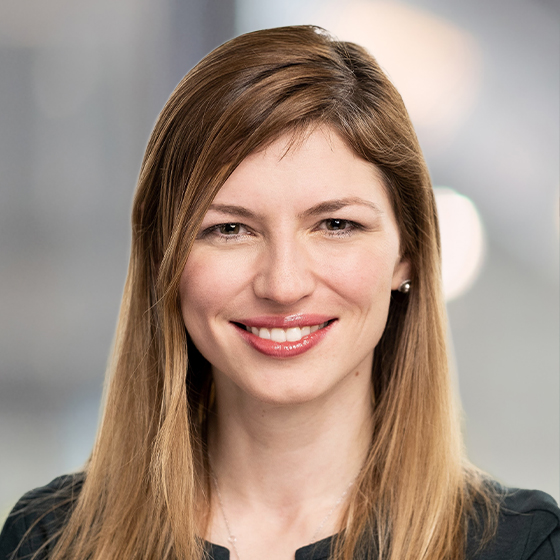
Alena Kharkavets
Head of Claims, North America | P&C Insurance Leader
Insurance Consulting & Technology
She brings 18 years of executive and hands on insurance experience from Intact Financial (TSX: IFC), where she worked across pricing, claims, underwriting, M&A, digital transformation and strategy.
Alena is a Fellow of the Casualty Actuarial Society and the Canadian Institute of Actuaries, and serves as a Board Director with the CIA. She holds an H.B.Sc. (Computer Science and Actuarial Science) and a Global Professional Master of Laws from the University of Toronto
Alena Kharkavets
Head of Claims, North America | P&C Insurance Leader
Insurance Consulting & Technology
She brings 18 years of executive and hands on insurance experience from Intact Financial (TSX: IFC), where she worked across pricing, claims, underwriting, M&A, digital transformation and strategy.
Alena is a Fellow of the Casualty Actuarial Society and the Canadian Institute of Actuaries, and serves as a Board Director with the CIA. She holds an H.B.Sc. (Computer Science and Actuarial Science) and a Global Professional Master of Laws from the University of Toronto
Podcast guests
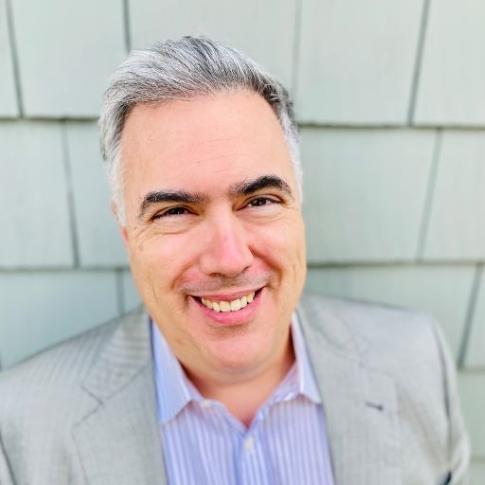
Scott St. George
Head of Weather and Climate Research
Willis Research Network
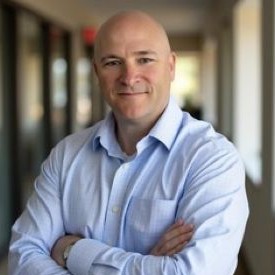
Andrew Leeds
Chief Claims Officer, Plymouth Rock Assurance
Andrew Leeds is the Vice President and Chief Claims Officer at Plymouth Rock Assurance. He joined Plymouth Rock in February of 2021. Andrew draws most of his experience serving in a variety of roles within Liberty Mutual where he began his insurance career in 2004 in the Corporate Development Program (CDP). As a Senior Business Consultant he completed rotations in National Market Loss Prevention, Corporate Financial, Group Benefit Sales and Commercial Property Underwriting. In 2006, he joined the Commercial Property Underwriting team where he worked as both a line underwriter and underwriting manager. In 2008 Andrew joined the Personal Market Claims operation and led the LEAN implementation for the Homeowners line of coverage. Since 2008 he has served in a variety of claims leadership positions in both Auto and Property Process Improvement teams. Andrew’s last role was as AVP and field manager for over 425 property claim adjusters and managers across the United States.
Andrew holds a B.A. and MBA from Boston College. Prior to joining Liberty Mutual Andrew was a Captain in the United States Army where he served as an Infantry officer in the 10th Mountain Division at Fort Drum, NY. Andrew has also earned his CPCU, AIC, Ranger, Air Assault and Airborne designations. Personally, Andrew lives in Massachusetts with his wife of 21 years and his 11 year old twins.
Scott St. George
Head of Weather and Climate Research
Willis Research Network
Andrew Leeds
Chief Claims Officer, Plymouth Rock Assurance
Andrew Leeds is the Vice President and Chief Claims Officer at Plymouth Rock Assurance. He joined Plymouth Rock in February of 2021. Andrew draws most of his experience serving in a variety of roles within Liberty Mutual where he began his insurance career in 2004 in the Corporate Development Program (CDP). As a Senior Business Consultant he completed rotations in National Market Loss Prevention, Corporate Financial, Group Benefit Sales and Commercial Property Underwriting. In 2006, he joined the Commercial Property Underwriting team where he worked as both a line underwriter and underwriting manager. In 2008 Andrew joined the Personal Market Claims operation and led the LEAN implementation for the Homeowners line of coverage. Since 2008 he has served in a variety of claims leadership positions in both Auto and Property Process Improvement teams. Andrew’s last role was as AVP and field manager for over 425 property claim adjusters and managers across the United States.
Andrew holds a B.A. and MBA from Boston College. Prior to joining Liberty Mutual Andrew was a Captain in the United States Army where he served as an Infantry officer in the 10th Mountain Division at Fort Drum, NY. Andrew has also earned his CPCU, AIC, Ranger, Air Assault and Airborne designations. Personally, Andrew lives in Massachusetts with his wife of 21 years and his 11 year old twins.