


The life sciences sector sits at the intersection of science, public policy and human need. The sector depends on global research networks, complex supply chains, cross-border investment and access to international markets. At the same time, governments regulate what companies can develop and sell, shape research and manufacturing priorities, and in many cases are among the largest purchasers of medicines and medical technology.
That balance, however, is becoming harder to maintain. Geopolitical competition is influencing supply chain decisions and market access; pressure on healthcare budgets is rising; and changes to trade and pricing policy are redefining long-term strategy. These challenges are increasingly overlapping and affecting decisions across the life sciences value chain.
To explore how companies view these challenges, Oxford Analytica and Willis, a WTW business, convened a panel of senior executives and risk professionals from life sciences companies across North America, Europe and Asia. Their insights form the basis of this report and its economic risk radar, which identifies the top economic risks for 2026–27.
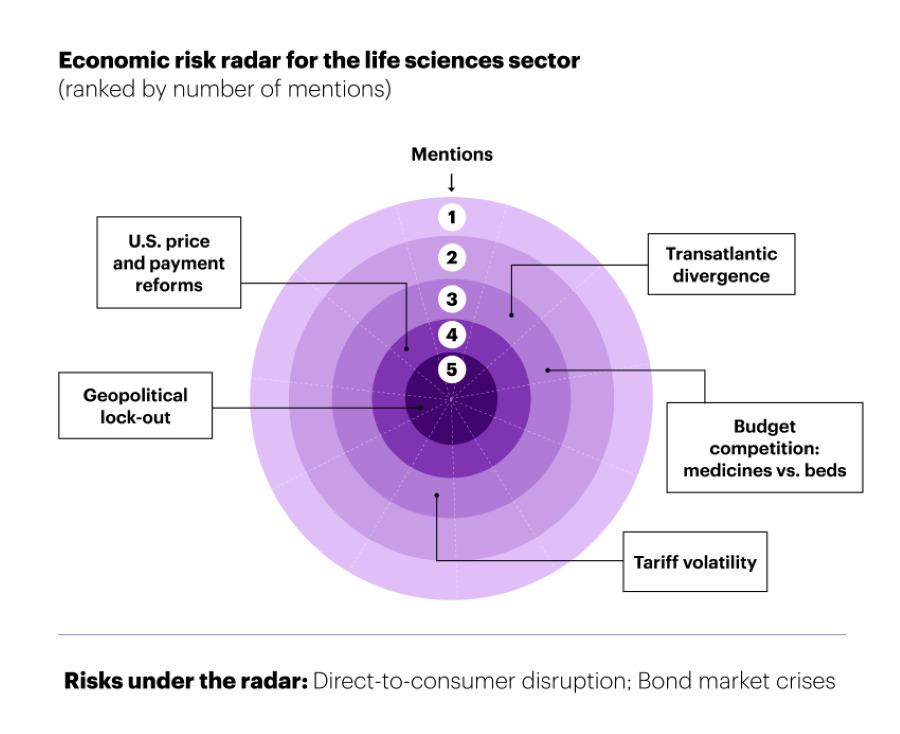
Economic risk radar for life sciences
'Mentions' count the number of panelists who mentioned each risk topic
While international research partnerships, specialized supply networks and global markets remain essential to medical innovation, governments are reshaping how they operate through tariffs, procurement rules, industrial policy and regulation.
For life sciences leaders, the challenge will be not only to respond to individual risks but to anticipate how geopolitical, economic and policy developments could shape future decision-making across the business.
Read the full report to explore the five leading risks in depth and what they could mean for your long-term planning, from R&D and market access to investment strategy. Gain further insight from Oxford Analytica and Willis specialists on how geopolitical competition and policy pressures are reshaping the global life sciences landscape.
Online document