

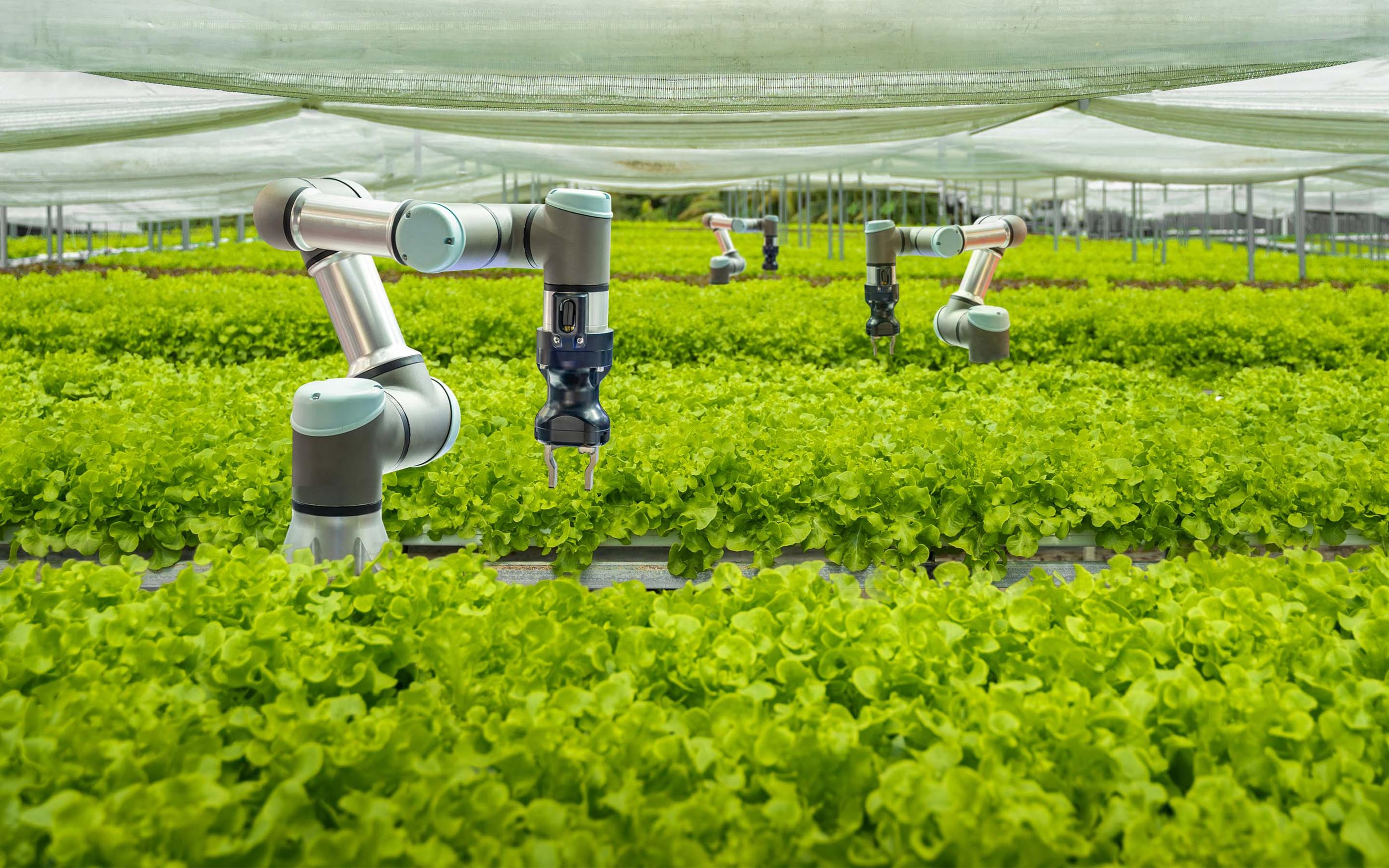
Increasingly, artificial intelligence (AI) is now embedded across the food and beverage value chain, from demand forecasting to product line quality checks and from new product development to consumer engagement. When it works, it can deliver speed, precision and increased margin. But when governance and control fail to keep pace, it introduces fragility, over-reliance, potential for error and a range of operational, data privacy, people and reputational risks.
Is your food and beverage organisation getting AI value or building hidden supply chain fragility?
AI is widely used in food and beverage supply chains, especially for demand forecasting and optimisation. When it performs well, it can improve speed, precision and margins by reducing waste, smoothing inventories and supporting better stock positioning. But supply chains don’t often fail because a model is “wrong” in theory. They fail when teams trust the model past the point where its assumptions still hold and don’t notice in time.
This matters because forecasting errors don’t stay on a dashboard. They show up as stockouts, overproduction, write-offs, service-level failures and expensive course corrections across procurement, production and logistics.
Operational fragility: Can your food and beverage organisation trust AI to deliver when patterns break?
Many leadership conversations about AI risk focus on data privacy and bias. Those are important, but supply chain AI often fails in a different way: operational fragility under change.
Below is the most common risk pattern we see in forecasting and planning use cases, and what you can do now to reduce it:

Where is AI creating value in forecasting and planning?
If your organisation has access to large, relevant datasets, historic sales, input-cost movements, supplier delivery and quality performance, weather patterns and other operational signals, AI can improve forecast accuracy and timeliness. That can reduce waste, smooth inventory swings and support better availability.
On the execution side, AI-enabled optimisation can help you reroute shipments around bottlenecks and rebalance stock across distribution centres and stores. For manufacturers, this can translate into fewer stockouts, lower safety stock and better freshness outcomes.

What is the risk that turns ‘smart’ forecasts into disruption?
AI forecasting models learn from historical patterns. They implicitly assume that the future will resemble the past closely enough for those patterns to remain valid.
When reality shifts and the 'now' no longer aligns with the 'then' model confidence can collapse, a challenge commonly described as model drift. COVID-19 provided a clear example of this: consumer behaviour, shipping availability and price volatility moved in ways that surpassed many model assumptions, resulting in stockouts, overcorrections and write-offs.
Most teams have the people and the tech. What they’re missing is the routine: noticing when the model is drifting, and knowing who steps in, when and how.

What does model drift look like in practice for food and beverage manufacturers?
It often follows a familiar arc:
- A model performs well at launch, so confidence grows
- Teams start using model outputs as default truth, planning and procurement decisions increasingly follow the forecast
- Conditions shift (promotions, supplier disruption, extreme weather, price shocks), but the model doesn’t adapt
- The organisation notices late, when KPIs already show the impact (service level, waste, write-offs, expedited freight).
If you want to avoid that arc, you need to treat forecasting reliability as an operational governance issue, not a one-off ‘data science’ deliverable.
Practical controls to help improve your food and beverage forecast resilience
Below are the controls that most directly reduce fragility, while still allowing you to capture the upside of AI-enabled planning.
- Monitor drift and anomalies
- Set clear confidence thresholds and escalation triggers
- Document when and how human override is expected
- Require challenge during known ‘pattern breakers’.
What are the steps your food and beverage organisation can take?
Start by mapping where AI is used in forecasting and planning, including the models and tools influencing demand planning, inventory positioning and replenishment decisions. Then name a clear business owner for each model, so accountability for outcomes sits with the business, not only with technical teams. Agree in advance what 'good' looks like when conditions change by defining drift thresholds and escalation routes, including what triggers review, who reviews, and what 'override' means in practice. Finally, embed drift monitoring and reporting into business-as-usual performance conversations, so your organisation can spot degradation early rather than discovering it through service-level failure, waste or write-offs.
These steps require clarity on who owns the outcome and how you detect when conditions shift.
To explore how you can strengthen AI governance in your food and beverage business, get in touch with our specialists.
Author