
Pension scheme risk management is a key part of the General Code. Whilst it is something that Trustee Boards will have been doing for many years, some of the new requirements around the risk management function (RMF) and controls assurance reporting may require some additional thought. In this article we share some insights from an ongoing project, led by our colleague Josh Ford, to help those that are starting down this path.
Case Study
The catalyst for change
The client’s risk management process, while functional, was somewhat reactive. The introduction of the new General Code, which emphasises the importance of robust risk management, served as a catalyst for the client to undertake a comprehensive review, with the intention of introducing a greater degree of dynamism. Recognising the need for improvement, the trustees formed a dedicated working group, including trustees with corporate risk management experience, a member of the pensions team, an investment and funding specialist, and Josh as their governance and risk management adviser.
Mapping out the review
The first step for the working group was to outline the scope of the review and agree on the process. The primary objective was to create a risk framework that was not only efficient and effective but also compliant with the new Code. The review was structured into three main parts:
- Assessing the existing risk framework
- Re-testing individual risks
- Implementing a new framework, including appointing a RMF - a specific requirement of the Code.
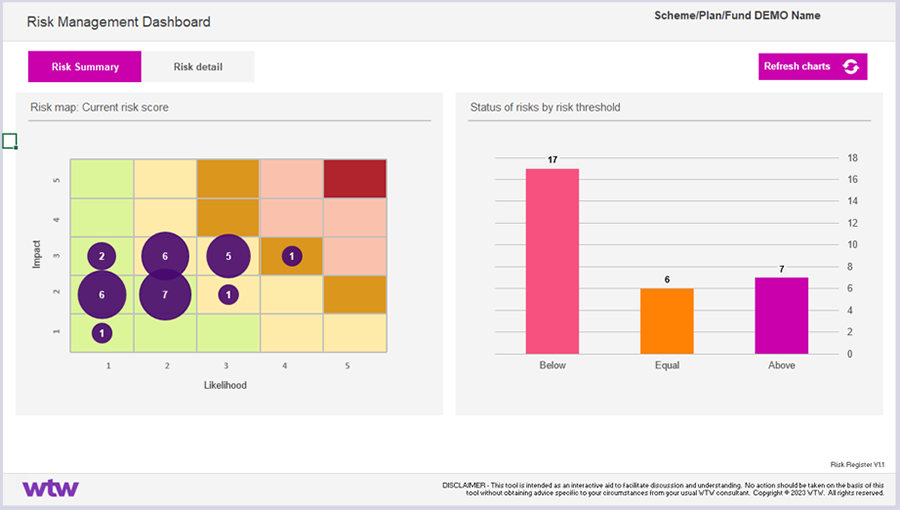
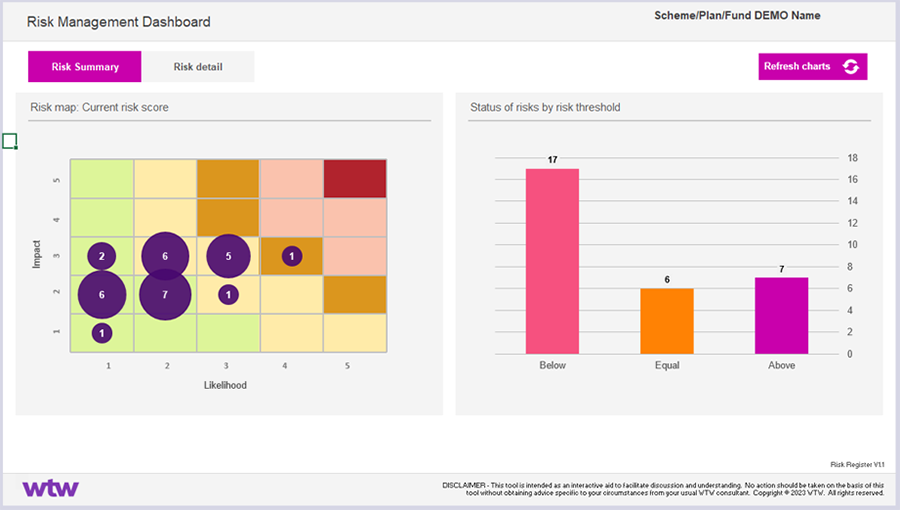
Our ERICA framework includes five best practice elements for any pension scheme risk framework:
- Engagement - The framework should be designed to encourage the trustees to stay appropriately engaged on an ongoing basis.
- Real-time - The framework should be able to operate on a real-time (or at least quarterly) basis, including continually updating existing risks and considering new and emerging risks.
- Interdependencies - The extent to which trustees are prompted to consider risks that are likely to move together, because of overlap, common cause, or ‘accidental’ co-occurrence.
- Codified - The extent to which the system permits easy, consistent and quantitative comparison, ranking, prioritising and analysing risks, including between categories and over time.
- Action-focused - The job of a risk register is to prompt activity (whether that’s notification, escalation, improving of controls, introducing new controls, seeking further information etc.) – making the connection to action a key part of any risk framework.
Looking ahead: The Own Risk Assessment
Throughout the process, the working group has been mindful of the new Own Risk Assessment (ORA) requirements, ensuring their approach aligns with these expectations, even though the first ORA report will not be due for another two years. This forward-thinking strategy not only saves time in the long run, but also ensures efficiency, allowing for the relevant elements to be ‘appended’ within the ORA, without reworking the entire framework. The ultimate goal is a streamlined, compliant, and effective risk management system.
Conclusion
Josh Ford’s insights provide a comprehensive look into the meticulous process of enhancing pension risk management. Through structured reviews, dynamic engagement, and continuous improvement, the client is well on the way to successfully navigating the complexities of risk management, setting a robust framework for the future.
Contacts



Get the latest pensions news
Join the conversation on LinkedIn and keep up to date on industry trends, insights and thought leadership.