

In this episode of The Anatomy of Risk, Rachel Phillips, GB Health & Social Care Leader at WTW, is joined by Will Marshall, Head of Altea, to explore the contractual, regulatory and insurance considerations surrounding medical implants and devices. Together, they examine the importance of clearly defined responsibilities, supplier due diligence and aligning contractual commitments with insurance cover.
The discussion considers the growing exposure to group actions, the risks associated with unregulated or incorrectly used products and potential gaps between medical malpractice and products liability cover. It also looks ahead to tighter regulation and AI-enabled devices, highlighting why effective governance, clear documentation and regular conversations with brokers and insurers are essential to managing risk.
Transcript for this episode
The Anatomy of Risk — Episode 7: Risk, responsibility and resilience: Legal and insurance insights for medical implants and devices (Part 2)
WILL MARSHALL: I think the key thing is to make sure that you know your contractual position. And, again, we're going back to the risk management, the due diligence side of things. Make sure you know what that is. And also, make sure that your insurers know what you are contractually signing up to because that, as we both know, is also a relevant consideration in the terms of your insurance cover as well.
RACHEL PHILLIPS: Welcome to The Anatomy of Risk, a podcast series dedicated to exploring the critical intersections of risk management, insurance in the ever-evolving health and social care sector. Our goal is to arm you with the knowledge and tools you need to mitigate risk effectively, ensuring you can focus on what you do best, providing excellent care.
Today's podcast picks up from where we left the last, talking to Will Marshall of AlteaPlus about the legal liability and insurance considerations of implants and devices. In last month's podcast, we discussed the multilayer exposures for health care providers when procuring, selecting, implanting, and monitoring surgical implants and medical devices; the strict liability relating to products in UK law; the importance of supply chain due diligence; clinical negligence issues around informed consent; types of clinical negligence allegations faced by providers; and how documentation can help or hinder defense of claims and product recall.
In this podcast, we will move to contractual liability, regulatory and compliance exposures, class actions in this space, and some insurance considerations. Will, welcome back.
WILL MARSHALL: Thanks very much, Rachel. It's an absolute pleasure to be on the podcast.
RACHEL PHILLIPS: Turning to contractual liability where risks arise both downstream with patients and upstream with suppliers, can you bring some color to that for us, what sort of risks that you've seen.
WILL MARSHALL: Yeah, sure. I mean, contractual liability, I think, you find-- I think this is in the-- we're obviously talking about the independent sector in this instance. And I think where we see contractual liability to-- contracts are so hugely important for people who are using medical devices and implants. And as you said in your question, Rachel, that goes both ways.
I think if you start with going downstream to the patient, obviously, as a clinic or an entity, you can't contractually exclude liability for injury or death. But you can protect yourself, particularly if, let's say, you're an entity, and you are engaging surgeons and consultants on a practicing privileges basis, it's very important to have a contract with the patient that makes it very clear where those responsibilities are delineated and who is responsible for what.
There was a case earlier this year, high court case, where those issues were explored as a preliminary issue in the case. And the private hospital in that case was able to establish that it was not the correct defendant because the responsibility for the surgery-- and that was wasn't an implant case, but it was a case involving surgery. And the responsibility for the surgery lay with the independent contractor surgeon and the independent contractor anaesthetist, and the contract clearly delineated that. So I think--
RACHEL PHILLIPS: I recall that. Yeah.
WILL MARSHALL: So I think it's really important. And then I build on that and say, well, also the contract with the consultant as well. So what you're really looking for in any contractual indemnity type scenario is to have those indemnities mirrored where required.
And so I think to make it clear in your contracts with the patient, but then also to mirror that in your contract with the consultant in your practicing privileges agreement or whatever it is, so that the contracts make it clear that surgeons using the facility are properly credentialed. They're licensed, they're insured, they're competent to carry out the surgery.
And I think also the contract can provide clarity around the issue. We were talking earlier around the selection of implants and the use of implants. So I think all of those things going downstream are really important when you're working with implants.
And then going upstream with the-- whether it's the importer or the manufacturer, the gold standard, really, if you can, is to negotiate an indemnity clause in that contract, so that the next person above you in the chain is taking full responsibility for the efficacy and appropriateness and so on of the device or implant.
The reality for many providers is that economies of scale don't permit that. The likelihood is is that if you are importing a device or implant from a large manufacturer, the supplier will hold the cards in terms of limiting liability, and you may have to accept the supplier's terms and conditions.
But I think the key thing is to make sure that you know your contractual position. And again, we're going back to the risk management, the due diligence side of things. Make sure you know what that is. And also, make sure that your insurers know what you are contractually signing up to. Because that, as we both know, is also a relevant consideration in the terms of your insurance cover as well.
RACHEL PHILLIPS: Yes, I was going to bring that point in. I completely agree. And sadly, too often that gets missed, that contractual liability management process. And as part of that, making sure that if you have taken on because of a lack of leverage, as you've alluded to, certain contractual conditions that your insurer sees those in plenty of time. And your broker can actually advise you on where the cover lies or not. And therefore, you understand your position.
Again, another area, going back to where we started, you talked about regulatory and compliance exposures. So what exposures in that area should providers be aware of when using medical devices, especially I'm thinking unregulated products here as well.
WILL MARSHALL: Yeah. Yeah, I mean, well, I think first thing is to check that it's a regulated product. So it should have a CE or UKCA Mark. CE is still accepted in the UK until at least, I think, 2028. And so I think it's important to verify that certification via the awarding body's website as well.
So don't just take the word of the manufacturer. Double-check it against the relevant awarding body's website. And always be on the lookout for counterfeit products and fake certification. And that, unfortunately-- I mean, particularly in things like the aesthetic sphere-- I know it's going slightly off point here, but we are seeing a proliferation really of fake Botox or fake products that are not certified and are not properly regulated, so that you need to be very alert to that.
And I think in terms of unregulated products, I think, again, it requires extra due diligence. I think you need to make sure that you are demanding safety documentation from vendors. The product or the implant may lack any reliable safety data. And I think it's really important just to have a very high bar for what you use, and avoid products with missing or suspicious safety information. And again, the point that we both made a couple of times now, check your insurance covers the use of those products.
And then I think more widely, make sure that you are always using the products within the intended purpose and within the manufacturer specifications. And noncompliance does risk enforcement action, whether that is CQC scrutiny and sanctions, and also potential insurance coverage issues. I think we'll come on to that.
But I think I would be urging people using unregulated products to be very, very diligent really in really getting all of the safety information they can from the supplier or the manufacturer if they are going to use them, and then making sure that they're using them within the manufacturer's specifications and intended use.
RACHEL PHILLIPS: Thank you. I'm going to change tack again actually slightly just to talk about why-- or ask you why is implant surgery so vulnerable to group actions? You mentioned a number of those. And I know there's a nervousness amongst insurers about implants and devices given these high-profile legal cases. And actually, sometimes coverage challenges when you're trying to place cover for implants and devices. So why are they so vulnerable?
WILL MARSHALL: Well, I mean, I think probably simple answer to that is because of the numbers of patients who are being treated with these specific products and implants and devices. And I think where there is an issue with it, there is usually a common cause or common causes and a similarity between the cases. Not always, but there is quite often that, which lends itself to group litigation.
So I think-- I mean, as we've touched on, we've seen some really very significant group litigation or class actions, although I don't think that they were actually formally under a GLO. Well, certainly there was the breast implant litigation involving the French manufacturer who was found to have filled implants with nonmedical grade industrial silicone.
And then that company went into liquidation in 2010, and it triggered a worldwide safety concern and mass litigation. And in the UK, the implants had been very widely used in private independent health care and in the cosmetic surgery sector. And so that's really quite a good example of the way that these things can mushroom. And the other big ones were, as I said, the metal on metal, the MMR vaccine, and the ongoing one really at the moment is the vaginal mesh litigation, which I think is subject to a group litigation order. So that is a formal class action.
Generally, the UK is moving towards more class actions, and I think that is the direction of travel in litigation involving medical devices. And I think that comes from the US, where it's much more prevalent.
And as I touched on earlier from the EU, with the new product liability directive, they're encouraging or allowing opt-out class actions. I think there's a big one going on in the Netherlands at the moment, which is an opt-out class action. Now, that's not directly applicable to the UK. But, of course, many UK providers also work within the EU and have exposure to the EU.
I think it is also a deep pockets thing. And so we find that where somebody in the chain becomes insolvent, like in the breast implant case that I was mentioning, that then exposes other people further down the chain to get drawn into it. And certainly, that was why liability in that particular case shifted towards the UK clinics, and ultimately, the UK surgeons. Because once the manufacturer is out of the picture, it doesn't really leave any realistic route for damages recovery against that party.
The distributors in that case, I think, had limited financial exposure. And so as a result, the claimants here targeted private clinics surgeons and their insurers as the solvent defendants. So I think there's a number of reasons why there is that vulnerability.
And, as you say, I think we'll go on and mention this, there are also insurance implications around that, around the aggregation of claims and so on that can lead to insurance-related issues as well. So they really are-- the financial implications of getting this wrong and being drawn into something like that can be devastating.
RACHEL PHILLIPS: I agree. And the defence costs alone. Even if ultimately you can pull yourself out of these class actions, there's still significant costs. And both of us have referenced many times insurance. So let's deal with that. What are some of the key insurance considerations in your view for both the insured entities who work with surgical implants, but also for us brokers and insurers?
WILL MARSHALL: Yeah, I mean, I'll start with the entities on that. And I think we've covered quite a bit of it as we've gone through. But I think the starting point really is this blurred line between medical malpractice and products liability. And as we've spoken before, Rachel, there is the-- or there can be an issue where you have a siloed cover which only provides medical malpractice cover. And there is an exposure to a products liability claim which may not be covered or may be actively excluded under that policy.
So I think for the entity, it's really part of this increased-- this ongoing evolution of insurance products that are multiclass that are able to really holistically cover the risks of the entity. And it's particularly prevalent here because as we've seen and as we've discussed, there are cases where it's a med mal issue around implanting technique or surgical technique or failure to recognise complications or whatever it is. But there are others which are product liability. And so I think there is that blurred line. And I would say that's the first consideration really that I would think of.
The second one is the aggregation risk that I've talked about, and really making sure that with your insurance, are you covered for numerous claims arising from a single cause, or potentially arising from a single cause? And so I think it's an important conversation with your broker and with your insurer about making sure that the policy is going to respond to provide you with that cover in the worst case scenario.
There's also the contractual indemnity exposure, which I've talked about. If you are signing up to a contract with a big manufacturer, which has a broad indemnity in favour of the supplier or the manufacturer, that can create an uninsured liability if that's excluded from cover under your policy. So again, I think it's really important to do your due diligence on the contractual situation, but also really bring your insurers and your brokers with you as you do that.
And I think if you are introducing new treatments and new implants that you're going to be working with, again, it's important during the course of the policy to bring that information to the attention of your brokers because that could be material information that could impact on your insurance. So I think I would emphasise that.
And then the second part of the contractual exposure is around the vicarious liability risk, if you like, or the, I guess, more nondelegable duty of care. But either way, it's whether you as a private hospital or clinic are acquiring a liability for the acts and omissions of your independent contractors. And does your insurance provide you, if only with the reassurance that it's going to meet your defence costs whilst you seek to pass the claim on to the individual or individuals that are properly responsible for it. So I think that's important.
And then the final part that I'd say on it is the exclusions under the policy that apply to claims arising out of a product or a device. And these can include exclusions for where the product doesn't have the appropriate regulatory approval, or license exclusions for where the product is not used for the purpose, or the nature or the function for which it was supplied, exclusions where the product isn't supplied in full accordance with the manufacturer's recommendations, and really, exclusions around the provenance of the product.
And so I think, again, it's really important. Knowledge is power. You need to what your policy is. Well, firstly, what you're working with, what your policy says. And if the two don't match, then there's conversation to be had, and you need to make sure that they align.
So I think those would be my answers for the insured entity. And I think it's quite similar really on the other side of the coin for the brokers and insurers. And it's really recognising that there is this-- I say blurred liability, but this quite complex, multilayered liability that we spoke about at the top of the podcast, and making sure that your product is properly-- is sufficiently broad to meet those needs and to provide that cover.
And likewise, I think really it's just the mirror of what I was just saying about the entities, but it's really having that upfront conversation with the client, knowing what the client is going to be doing with devices and implants, making them fully aware of how the wording fits around that, where they need to comply with it, and they can comply with it-- things like only using it in accordance with manufacturers' instructions and things like that, then that's a conversation to have with the client, but where the wording needs to be adapted to reflect what is an evolving technological and demographic picture, having those grownup conversations with the underwriters and the insurers.
And I think that that-- we live in a world, as we both know, where there are new and innovative implant technologies. And the dreaded AI word has to come out there that mean that this is an evolving picture. And I think we've spoken before about the need for insurers to be nimble and to be adaptable to meet the needs of modern health care providers.
RACHEL PHILLIPS: Yes, I completely concur. And I think that's an important part that the broker role plays in terms of helping educate the insurers and helping bring that knowledge to them, and also where we can, as we have-- we have colleagues with lived experience of the sector. That also helps with that.
And I think you brought up several points there, and I'd like to affirm or double down on those messages. I think making sure that your limit of indemnity is set at the right level, and that's an art form in and of itself, and looking where you can to have those policies that speak to each other with the same insurer, so that the issues around which insurer is going to pay what claim go away. There's no gaps or even duplications-- absolutely critical.
But I think it's really important for periodically, and particularly when anything changes in terms of supply of implants or use of different implants and devices, that those-- you run through, the broker runs through scenarios with you and the insurer, you as the provider and the insurer to see how would the policy respond should this happen. I think they're invaluable for clients, certainly in our experience, to really understand and manage their expectations about how that policy is going to respond when they most need it. As a wrap-up question, what's the future for implants and devices in terms of legal insurance considerations, do you think?
WILL MARSHALL: Well, I had slightly anticipated that this might be a question. So I'm going to limit it to a couple of observations because I'll go back to what I said at the beginning about this being an evolving and a growing trend in health care. And I think that as technologies evolve, there's an inevitability about that.
And so this isn't anything that is going to go away. It's something that's going to increase, and we need to embrace that really. And I think from of liabilities perspective, there are two things really, one of which I've touched on previously, which is the tighter EU regulation. And I think that is going to drive more group actions involving legacy implants.
So I think we are going to see inevitably, I think in the UK, more group actions along the lines of the ones that we've been discussing. Because it does seem that that is the direction of travel, both in the US and in the EU. And although we only have opt-in at the moment, I still think that that's the way it's going to go. And so we need to be alive to that. And we've talked through some of the issues around group actions.
A lot of products-related group litigation started with health care, thinking of course, about the thalidomide litigation in the 1960s. And it's something that has continued since. So I think we are going to see a continuation of that and an increasing prevalence of group actions, unfortunately.
And then the second observation I'd make is really around AI and AI-enabled devices, and how-- and as you said earlier, Rachel, this is a whole podcast in itself, but how AI-driven diagnostics and implantable sensors and adaptive devices, as those become mainstream, how that's going to impact on liability and claims. And are disputes going to shift from these traditional product defect claims to questions around algorithmic transparency, training data, software updates.
And so I think we can expect to see litigation around that. What that is going to look like, I don't know. But I think-- so I would say those are the two things.
And just to wrap it up, I really do think knowledge is key here. And so it's really important, in my view and in my experience, to be as informed as you can be as a provider or a health care provider using implants, to be as informed as you can be about the provenance and the safety and the general MHRA position on implants, and to make sure that you do your due diligence on that effectively.
RACHEL PHILLIPS: Completely agree. And I guess the key takeaway-- there's many, actually, having listened to you, Will. It's been fascinating, but is that this extended duty of care just reminds me that the effective management of implants and devices is a critical, almost a foundational, but certainly an important part of providers' clinical governance and patient safety system-- so that effective risk assessment, due diligence, incident reporting, but also those future learnings.
Will, it's been a pleasure chatting with you today on The Anatomy of Risk. Thank you.
WILL MARSHALL: Well, thank you so much for inviting me on, Rachel. I've really enjoyed it, and it's been a pleasure to talk to you as always.
RACHEL PHILLIPS: Likewise. Thank you for listening to this podcast from Willis, a WTW business. The information in this podcast is believed to be accurate at the date of publication. This information may have subsequently changed or have been superseded and should not be relied upon to be accurate or suitable after this date.
This podcast offers a general overview of its subject matter. It does not necessarily address every aspect of its subject or every product available in the market. It is not intended to be, and should not be used to replace specific advice relating to individual situations. We do not offer, and this should not be seen as, legal, accounting, or tax advice. If you intend to take action or make any decision on the basis of the content of this publication, you should first seek specific advice from an appropriate professional.
Some of the information in this publication may be compiled from third-party sources that we consider to be reliable. However, we do not guarantee and are not responsible for the accuracy of such. The views expressed are not necessarily those of Willis Towers Watson or Altea. For further authorisation and regulatory details about our Willis Towers Watson legal entities operating in your country, please refer to our Willis Towers Watson website. It is a regulatory requirement for us to consider our local licensing requirements.
Podcast host

Podcast guest
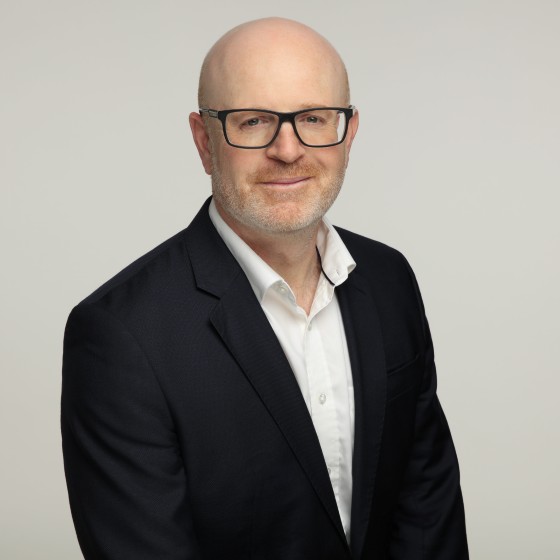
Will Marshall
Head of legal and risk management at Altea
Listen to this episode on:
Learn more about this podcast series:
Service