

In this episode of The Anatomy of Risk, Rachel Phillips, GB Health & Social Care Leader at WTW, is joined by Will Marshall, Head of Legal and Risk Management at Altea, to explore the legal liability and insurance considerations surrounding medical implants and devices. Together, they examine the multi‑layered risks facing healthcare providers, including product liability, clinical negligence and supply‑chain exposure.
This discussion, part one of a two episodes podcast on the subject, highlights the implications of strict liability, the importance of informed consent, robust record‑keeping and implant traceability and the growing risk of group actions. We will return to this subject in part two where Will and I discuss contractual liability, regulatory & compliance exposures, class actions in this space and some insurance considerations.
Transcript for this episode
WILL MARSHALL: If a product or an implant is defective and causes a patient harm, the healthcare provider can be held liable even when they have done nothing wrong in the usual negligence sense of that, and even if they didn't know that it was defective.
RACHEL PHILLIPS: Welcome to The Anatomy of Risk, a podcast series dedicated to exploring the critical intersections of risk management, insurance, and the ever evolving health and social care sector. Our goal is to arm you with the knowledge and tools you need to mitigate risk effectively, ensuring you can focus on what you do best, providing excellent care.
Welcome to The Anatomy of Risk podcast. I am your host, Rachel Phillips, health and social care leader at Willis, a global risk and insurance consultancy providing data-driven, insight-led solutions for health and social care providers in the areas of people, risk, and capital that make your organization more resilient, motivate your workforce, and maximize performance.
I have with me today, Will Marshall, to discuss the legal liability and insurance considerations of implants and devices in what will form part 1 of a two-part podcast on this subject. Will heads up AlteaPlus, the risk management arm of Altea, the leading provider of insurance solutions to the UK Health and Care sector.
As well as providing risk management and governance services to Altea's clients, Will hosts AlteaTalks, Altea's dynamic podcast series. Will helped to establish Altea in 2023 after working as a leading lawyer specialising in UK Healthcare litigation at some of the major global insurance law firms, including DWF, RPC and Clyde & Co.
Over the course of his legal career, Will represented numerous health and care sector clients in complex, sensitive, and high profile cases where he gained a reputation for applying a rigorously forensic approach to evidence allied to a deep understanding of the law.
Will has always held a particular interest in medicolegal risk management and has worked with many leading national figures in clinical governance and patient safety. AlteaPlus risk management programme has been developed off the back of this experience, and is designed to focus on the most common and avoidable causes of complaints and claims in health and care.
Will's firm belief is that by tackling these areas head on and by giving clients the tools and support to act early and proactively, the programme can help Altea's clients take practical steps to prevent problems before they turn into a complaint or a claim. Will, welcome. It's really good to have you here.
WILL MARSHALL: Thanks very much, Rachel. It's an absolute pleasure to be on the podcast.
RACHEL PHILLIPS: Let's go straight in then because this is a fascinating subject and I know you have significant experience and ideas to share. So the use of medical implants is expected to continue its growth, I believe, driven by multiple factors, including NHS modernisation, our aging population and of course, the rising demand for orthopedic, cardiovascular and even dental implants.
UK independent healthcare providers face multi-layered liability exposures when procuring, selecting, implanting and monitoring surgical implants and medical devices. So can you help us understand why this is? And specifically, in what respects?
WILL MARSHALL: Yeah, sure. I think that's a good way of putting it, actually, that it is a multi-layered liability exposure for those professionals and entities who are working with implants and devices. And I also agree with your observation that this is something that is on the rise. It's here to stay, and we're going to see more of it as the demographic picture continues to evolve.
I think the reason that I would describe it as multi-layered is because you see this combination of liability issues quite commonly featuring in legal claims involving medical devices. And so what you see usually is a combination of products liability where say, for example, it's alleged that the implant was in some way defective or not fit for purpose.
We saw that recently in the metal-on-metal litigation, which we'll come on to talk about. We also saw it in the recent breast implant class action that we'll also come on to talk about. So you've got the product liability feature. You've also got a clinical negligence element, whether that could be poor surgical technique or poor infection control or a failure to manage post-operative complications.
So more traditional clinic liability aspect. And these cases can also involve a contractual liability element. And again, we've seen that, for example, in the breast implant litigation where cosmetic clinics were drawn into that litigation because of their contractual position.
And in some cases even the individual surgeons as well were exposed to that. And then I think there's also the regulatory exposure piece, whether that's an exposure to sanctions by MHRA or by the Care Quality Commission, CQC. And then finally, really, I suppose the nuclear option and the worst case is the exposure to the class or group actions.
And we've seen that in a healthcare context repeatedly. So things like the MMR vaccinations, metal-on-metal, which I mentioned, which was about the hip replacement surgery, the breast implant surgery, about the defective content of the breast implants where thousands and thousands of these things had been implanted, most recently the vaginal mesh cases in the UK.
We're seeing some very, very expensive claims. Those are ongoing, although I would caveat this by saying that the UK is not, at least not currently, like the EU where there is, now I understand, an opt-out provision for class actions and the UK is opt-in.
And just to explain that, opt-in means that still in the UK claimants have to physically sign up to take part in a class action or a group action. In the EU, it's the other way around and they have to physically opt out. And also in the EU, it can now be cross member states as well. But nevertheless, I think this is a growing trend here.
And it's certainly a feature of this litigation, seeing hundreds, if not thousands of patients pursuing claims together, often backed by a major claimant law firm with relatively deep pockets. Sometimes we see litigation funders getting in on the piece as well. So I think when you look at the picture in the round, it is, as you said, a multi-layered liability exposure and one with significant financial and reputational implications for healthcare providers.
RACHEL PHILLIPS: Thanks, Will. And you mentioned a few things there, which I think we'll pick up and go into a bit more depth as we go through. First thing to come back to is the product's liability piece. And I understand the UK products liability law includes what's called strict liability. What does this mean in practice for healthcare providers working with implants and devices?
WILL MARSHALL: Strict liability means that a claimant doesn't need to prove negligence. They just have to show that the product was defective, that the defect caused them to suffer damage and that they suffered loss as a result of that.
So the implications of that, if a product or an implant is defective and causes a patient harm, the healthcare provider can be held liable, even when they have done nothing wrong in the usual negligence sense of that, and even if they didn't know that it was defective. And I think the important thing to say in that regard is that this applies to anyone who's really involved in the process.
So more commonly, it would apply to the manufacturers or maybe the distributors. But healthcare professionals get involved in the chain as suppliers if they're involved in the procurement, the selection, the implantation, the monitoring, the governance of surgical implants. So I think it's important to recognise that there is that exposure and it is on a strict liability basis, as I've explained.
RACHEL PHILLIPS: OK. And I've heard people talk around supply chain and product liability, why is supply chain due diligence so critical to help manage product liability risk?
WILL MARSHALL: Well, I think it is absolutely critical to understand and know your supply chain responsibilities and where you sit in the chain and what you can reasonably expect from the others involved. So if you break that down, at the beginning of the chain, if you like, you've got the manufacturers.
And they will design, test, produce, hopefully, safe products. They will also provide clear instructions and warnings. And they will also monitor post-market safety. And they will report adverse effects. So I think your due diligence really starts there with the manufacturers. I think next you'd be looking at the distributors.
And again, that's similar obligations and responsibilities to ensure the product is safe and compliant, particularly within the UK, but also to ensure that it's properly stored, it's safely transported, it's subject to the right temperature controls, et cetera, et cetera. They are also under a responsibility to stay alert to recalls and to safety alerts.
And then for the healthcare providers at the end of the chain, I think really, the due diligence is about vetting those above them in the chain to verify the authenticity, the safety and the compliance. But also, it's proactive as well because they have to pass on all relevant instructions and warnings to their patients and their service users and the person who's receiving the treatment and monitor those patients for adverse effects and act on recalls.
So it's almost extending the duty of care a bit. So there is this continuing duty after the patient has been treated that you, as a supplier, will have in your part in the chain and to report adverse events to the regulators, probably the MHRA (Medicines & Healthcare products Regulatory Agency). So I think in practice this means that providers should always carry out due diligence when sourcing and selecting products.
And some general tips, I'd say, is only buy from reputable authorised suppliers, always confirm provenance, especially for overseas items. And then I think we'll come on to record-keeping, but always keep purchase records, supplier, batch numbers, expiry dates, that sort of thing.
And we'll also emphasise this in due course as well I think, but they should also be very clear about what their insurers require them to do when they are using imported products.
RACHEL PHILLIPS: Yes, I completely agree. I was going to touch upon the insurance side. Insurers are really keen to understand the level of due diligence and risk assessment, maybe as another way of putting that, that's done around use of anything, implants, devices or anything.
So really critical to keep them in the picture to make sure they're fully aware because what you don't want is that the insurance fails at the time when you most need it in any way. So I completely agree with that point. Can we just turn for a moment to clinical negligence, which you touched upon, and issues pertaining to that?
What are the key informed consent challenges for clinicians and entities using implants, particularly I'm thinking when explaining material risks and reasonable alternatives?
WILL MARSHALL: Yeah. That's a great question, Rachel, because consent does frequently form a very significant part of litigation involving implants and devices. And whenever you're looking at the question of informed consent, there's really two constituent parts to it and they're based on our two favorite cases that everyone knows probably by now.
But the first is, and without teaching anyone to suck eggs, is that providers and clinicians must ensure that patients understand the material risks of the specific device or implant, and the second is that there is a responsibility on the healthcare professional to explain reasonable alternatives, including non-surgical options.
And I think if you just take those two in turn, the material risks element is the case of Montgomery, as we all know. And that case says that a risk is material if the patient would attach significant importance to it. And I think examples in an implant context of that, perhaps the most obvious one is where there are known safety concerns, where there have been recalls, or there is an alert history about a device.
And I remember in, for example, in the metal-on-metal hip litigation, one of the key considerations of really liability in this context was the date on which you would look at the date on which the procedure in question in front of you took place, and you would then look at the state of the literature at that date.
And I think I'm saying in that case that over the course of time and as these cases proliferated, there was an established date, which was the date where this particular problem with this particular weight-bearing component was deemed to be sufficiently well publicised in the clinical literature to trigger this materiality requirement.
And so if your treatment took place before then, you were able to, as a healthcare provider, say, well, it wasn't something that was material. But once you got beyond that, it was something that would be important to any patient having that particular treatment. And so consent, in this regard, I think really translates into giving full, accurate information on the risks and side effects of the treatment, of the device, of the implant.
And really documenting all of the warnings that you've given as part of that consent process because as we all know, with consent, it is a process. It's not just a form, but it does have to be documented to give the lawyers the ammunition they need to defend the claim. So I think that would be the first element of it.
And then the second part of consent around reasonable alternatives, this is based on the more recent lead consent case of McCulloch. And this is quite nuanced and I think less, I think there's scope for quite a lot of satellite litigation around this when it comes to devices and implants because what that case said was that the test for establishing what is a reasonable alternative treatment is the professional practice test, what the lawyers call the Bolam test.
So in other words, it's a matter for the clinician to determine whether a responsible body of clinicians would consider that alternative to be a reasonable one or not. I think it leaves a lot of unanswered questions about the nature and extent of a healthcare professional's duty to advise a patient of reasonable alternative treatments.
And it begs the question really as to, how detailed should that discussion about alternatives be? And there's obviously practical issues as well, how long is available for that discussion? Would headline points be sufficient and so on? And this hasn't really been tested to a great degree in the courts yet.
And I think when you come to implants, it's particularly relevant really because is a surgeon, for example, a hip surgeon expected to advise on the risks and benefits associated with different implants or different bearing surfaces? And what is the extent of that? And we don't really know yet. And that's still something that I think is going to come through the courts and we'll see more about that as those cases evolve.
RACHEL PHILLIPS: Yes, as you say, we're going to start to see more cases, I guess. And as new methods for implants and devices are created and come into play, I imagine we're going to see that tested in the courts too. You touched upon, a couple of times in there, documentation.
So thinking about record-keeping, how do gaps in record-keeping and implant traceability as well increase exposure for healthcare providers, or does it? And what specific records are vital for defending claims or handling recalls?
WILL MARSHALL: Well, I think record-keeping is always an absolutely essential part of medicolegal risk management. And documentation is always necessary to protect yourself against a legal claim and hopefully to prevent that claim from happening in the first place. And that obviously includes the clinical records.
And as we've discussed, the record of the consent process that has been carried out in that instance. But I think with regards to implants, the exposure for healthcare entities, as we touched on earlier, the due diligence that they need to evidence that they've carried out, it goes a bit further. So I think taking the second part of your question, really, what records are we talking about?
I think providers who are supplying implants or using implants, they need to maintain detailed records of purchases and suppliers, product batch numbers, expiry date checks, usage logs, patient outcomes, adverse event reports. And these sorts of records, which really go beyond just the clinical record are absolutely essential to defend against claims and to assist in the event of a product recall.
RACHEL PHILLIPS: Thank you, Will. That's quite some depth as you say. And it linked to that traceability so that they can potentially subrogate or look further down that supply chain, I guess, for anybody that's potentially a guilty party in any action. What types of clinical negligence allegations commonly arise in litigation from implant surgery?
WILL MARSHALL: Well, obviously, there's the consent allegation, which we've touched on. But I think beyond that, there's allegations regarding the selection of the implant and potential errors around that. And that would include selecting an implant that isn't suitable for a particular patient's anatomy or they have comorbidities or they have a specific activity level.
So quite often you will see the use of claims involving allegations regarding an implant that is allegedly contraindicated by the specific circumstances of the patient. We see a similar thing, poor size selection. Prosthesis is too small or too big. And increasingly, I think around the use of experimental or new devices where there hasn't perhaps been a sufficient investigation or there's not an adequate evidence base for their use.
And that's quite an important issue really around the device, the selection process because as we both know the independent sector model will have usually the entity and the surgeon engaged on a practicing privileges basis as an independent contractor. And the question that we've seen quite regularly really is where the responsibility lies for the selection of the implants.
And whether that's a responsibility that lies with the hospital that would ordinarily supply those devices and implants or whether it lies with the surgeon for not recognising that they are inappropriate. And so you can and do see a multi-defendant angle when those sorts of allegations are involved and it can be a bit untidy to litigate that.
More straightforward is where there is an allegation about poor surgical technique, malalignment or malposition of the prosthesis. A failure to secure fixation leading to loosening and instability is something that we see very frequently really in things like orthopedic claims, hip replacement at surgery litigation.
The other issues around surgical errors, for want of a better word, would be things like nerve damage or damaging another vessel or organ during the implant insertion. And you retain foreign bodies, it still happens where there can be screws or fragments or swabs or whatever it is leading to infection.
So those are some of the surgical errors that you would see around this that would be your classic clinical negligence. And then following on from that, I think there's always a risk here when you're introducing a device or a foreign body into a sterile environment in a surgical context of infection and aseptic protocol failures.
So implant infection, as we know, it does happen and it can be catastrophic. And you can see some pretty big claims from that. So again, the sorts of issues in that regard would be things like failure to follow the appropriate protocols, a poor pre-operative antibiotic prophylaxis, which again, is something that unfortunately can and does arise.
And that can also bring in different disciplines, different departments. And again, give rise to a wider exposure involving other elements of the care or the treatment. And then I think delays in recognising post-operative infection and delays in removing implants, leading to more severe infection and in the worst cases, things like sepsis, when you're looking at the higher end of the claim spectrum.
And that again, is a wider issue, I think, in clinic terms around implants, delayed diagnosis of complications. And it goes back to what I was saying earlier about the scope of the duty of care. When you are inserting something into someone, that duty of care is extended to make sure that the implant is not causing damage after the surgery.
And so we see, when I was in private practice, I saw quite a lot of claims alleging that a deterioration was taking place. It wasn't recognised in time. And that has caused usually something, usually it's along the lines of the implant loosening or failing mechanically as a result of that infection.
Sometimes you have claims around things like, back-causing neurovascular injury or DVT (Deep Vein Thrombosis) or in some cases even pulmonary embolism. So that is a common feature of this. And I think just generally, it's defective or recalled implants. I think there's also a clinical negligence angle around that. And going back to the extended duty of care and really being proactive and acting on MHRA alerts or recall notices.
And I think it's really important as part of the risk management and governance program in a healthcare provider that there is regular contact with the MHRA website, that people do keep in touch with that, that they stay really informed because that can be another source of a claim, if you are late in recognising that an implant has received a warning because it's defective in dealing with that.
And then I guess that goes into the whole being vigilant after treatment part of things, monitoring outcomes, keeping up with, as I say, MHRA alerts. And then the last area I think we see things is in revision surgery, where again, it can be a delay to carrying out revision surgery, a delay in referring on to a more specialist center, or a poorly planned or technically flawed revision surgery itself.
So I think those are probably the main areas of clinical negligence related to implants that we used to see commonly in claims. There's probably others, it's not an exhaustive list.
RACHEL PHILLIPS: No. But it does highlight, as you said, not just the extended duty of care, but also the continuing or continuous duty of care post-op. That's been quite insightful, and it's broad in its scope, as you say, in the different issues that can arise. This is a complex subject.
And now seems an appropriate place to conclude part 1 of this two-part podcast. We will return to this subject in our next podcast where Will and I discuss contractual liability, regulatory and compliance exposures, class actions in this space and some insurance considerations. Meantime, this has been incredibly informative, Will. It's been a pleasure chatting with you today on The Anatomy of Risk.
Thank you for listening to this podcast from Willis, a WTW business. The information in this podcast is believed to be accurate at the date of publication. This information may have subsequently changed or have been superseded, and should not be relied upon to be accurate or suitable after this date.
This podcast offers a general overview of its subject matter. It does not necessarily address every aspect of its subject or every product available in the market. It is not intended to be and should not be used to replace specific advice relating to individual situations. We do not offer and this should not be seen as legal, accounting, or tax advice.
If you intend to take action or make any decision on the basis of the content of this publication, you should first seek specific advice from an appropriate professional. Some of the information in this publication may be compiled from third-party sources that we consider to be reliable. However, we do not guarantee and are not responsible for the accuracy of such.
The views expressed are not necessarily those of Willis Towers Watson or Altea. For further authorization and regulatory details about our Willis Towers Watson legal entities operating in your country, please refer to our Willis Towers Watson website. It is a regulatory requirement for us to consider our local licensing requirements.
Podcast host

Podcast guest
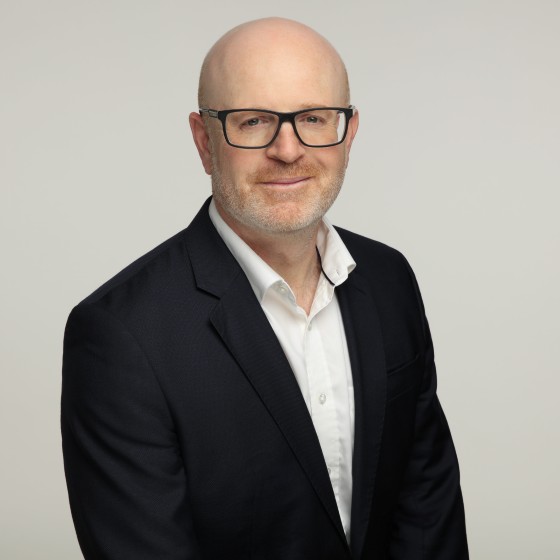
Will Marshall
Head of legal and risk management at Altea
Will Marshall
Head of legal and risk management at Altea