Decumulation, often described as the “nastiest, hardest problem in finance”, sits at the heart of how members turn their pension pots into a sustainable income for life. In this episode, and the first in a two part series, host Sophie Tennison speaks with pensions lawyer Wendy Hunter and WTW adviser Andrew Doyle to unpack why decumulation is so complex, what’s changing under the Government’s new Guided Retirement framework, and how schemes can better support members at retirement. They explore the trade offs between drawdown, flex and fix solutions and lifelong income options like Retirement CDC, and the legal and governance considerations trustees must navigate. The conversation brings together market developments, regulatory shifts and practical steps trustees can take as the industry moves towards more structured, supportive retirement pathways.
Decumulation, often described as the “nastiest, hardest problem in finance”, sits at the heart of how members turn their pension pots into a sustainable income for life. In this episode, and the first in a two part series, host Sophie Tennison speaks with pensions lawyer Wendy Hunter and WTW adviser Andrew Doyle to unpack why decumulation is so complex, what’s changing under the Government’s new Guided Retirement framework, and how schemes can better support members at retirement. They explore the trade offs between drawdown, flex and fix solutions and lifelong income options like Retirement CDC, and the legal and governance considerations trustees must navigate. The conversation brings together market developments, regulatory shifts and practical steps trustees can take as the industry moves towards more structured, supportive retirement pathways.
Podcast host
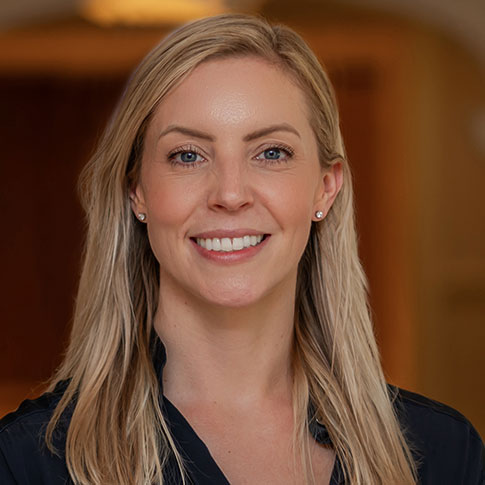
Sophie Tennison
Senior Director, Investments
Sophie Tennison
Senior Director, Investments
Podcast guests
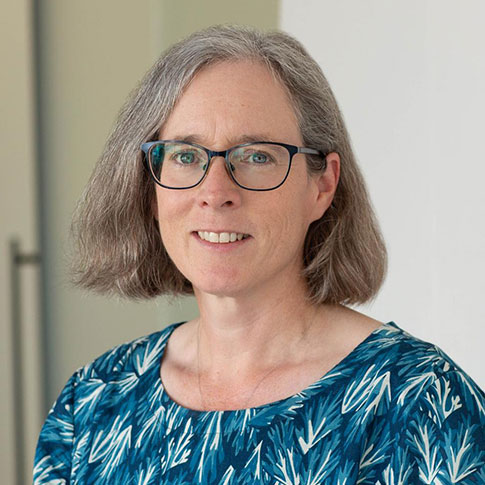
Wendy Hunter
Partner, Squire Patton Boggs

Andrew Doyle
Senior Director, Investments
Wendy Hunter
Partner, Squire Patton Boggs
Andrew Doyle
Senior Director, Investments
Transcript for this episode
[AUDIO LOGO]
SOPHIE TENNISON: Hello, and welcome to this episode of the Pensions Perspectives Podcast brought to you by WTW. I'm your host, Sophie Tennison. And I'm an investment consultant for our DB and DC investment clients. Today, we are going to tackle what is termed the nastiest, hardest problem in finance, so decumulation, that phase in a member's retirement journey where they look to transfer their pension saving pot into a income for life. It's one of the most important and complex decisions a member can make. And equally, it is tricky for both policymakers and trustees alike.
So to give this justice, we are going to do two episodes on the topic. Today, we're going to focus on the legal and regulatory requirements. And then our second episode on decumulation will really focus on supported members in their guided retirement process.
So I'm really pleased to announce I'm here with two brilliant guests. I've got Wendy Hunter from Squire Patton Boggs, who is a partner and pensions law specialist, and Andrew Doyle, an investment consultant for some of our DC clients here at WTW. Welcome to you both. Thank you very much for coming today. Would you just like to introduce yourselves and tell our listeners a bit about your experience?
WENDY HUNTER: Yeah, well, you're right, I'm a partner with Squire Patton Boggs. And I've been a pensions lawyer for 30 years. The first decade or so, DC wasn't a big story in what I did. And it has become increasingly so. The challenge of accumulation is something that we've all seen being addressed through charge capping, governance, etcetera. But decumulation is the big problem still, absolutely.
ANDREW DOYLE: Well, great to be here today. So Andrew Doyle, work in WTW's investment business. And I spend most of my time advising large DC pension schemes on how they should invest their assets. And over the last few months and years, we've spent an awful lot of time, in particular, focusing on decumulation and how we should evolve the solutions that my clients are offering. And in particular, that's looking to provide longevity protection, so that we're paying pensions for as long as our members live.
SOPHIE TENNISON: I'm really looking forward to our discussion today. But just to give a background for our listeners, I think it's fair to say that the pensions bill is bringing in a major shift to how DC members are supported as they approach retirement. And a lot of the discussion has been around the guided retirement requirements.
And so rather than letting members make this huge and consequential decision at the end of retirement, do they want to purchase an annuity, take cash, or drawdown, or maybe even a combination of those options, DC schemes will need to provide a ready made retirement pathway for members for those that don't make an active choice and that are suitable for their broader membership.
And trustees have got flexibility in how they implement that. It might be an in-house solution or using third party specialists to implement, but ultimately, there needs to be a default that is suitable for the broader membership, and that provides something that is sensible, and stable, and appropriate across the board.
So Andrew, I'm going to come to you first. Bring it back to the title of our podcast today. And I just want to get your thoughts on why you think decumulation is the nastiest problem in finance.
ANDREW DOYLE: So at the minute, Sophie, most people who are going into retirement are going into what we call flexible access drawdown, where the member has to determine how much they want to withdraw each year as their income.
And they have to, as part of that, decide what they think is a sustainable and safe withdrawal rate. And that's a really hard decision to make because there are so many unknowns. So first of all, life expectancy, if I think about a male at the age of 65 at the minute, their life expectancy is 20 years. So they could say, well, I'll withdraw 1/20 of my pot each year, very crudely and simply.
However, there's a 10% chance that they live 30 years, so 50% longer. So what should they do? Should they base their withdrawal on their expectancy? 20 years? Should they base it on this prudent 30 years? But even if they do the latter, they could still live longer than that and still run out of money. So it's just really, really difficult.
And that's just one unknown. They don't what investment returns are going to be. They don't what inflation is going to be. There is sequencing risk which makes it even harder because if markets fall and then you crystallize a lot of that, that makes it harder to recover.
And we compound this because when members are in the saving phase, a lot of the decisions are made on their behalf. Often employers or the government determine how much individuals should be saving. The provider often determines how that will be invested through the default.
And then we get members to the point of retirement, and suddenly, we're asking them to start making all of these decisions themselves. So it's just a big contrast. I think there's probably an even bigger contrast, which is during people's working lives, they're very used to having a salary come in and managing their expenditure to meet that.
However, when people get to retirement, we're now giving them this pot of money and asking them to change the way they think and to think, OK, how much should I withdraw each month? How much is safe? Which is just a completely new skill that they haven't spent 40 years training themselves to do.
SOPHIE TENNISON: Yeah, and I'm sure with us all working with pensions in our job title somewhere, we've had those conversations with family members or friends, where they're getting to that point in their life. And it's what do I do? Where do I start and engage with this? So it is a really big decision and shift, like you said, in mindset up until that point.
But I think I guess, Wendy, I'm going to come to you next, just asking a bit more about the guided retirement requirements. And from a trustee perspective, could you just outline the requirements for what is needed?
WENDY HUNTER: Well, when the law comes into force, because it's not in the law yet, trustees will be required to design and implement default pension solutions. And the default is important because it's something members can choose to opt out of.
It's got to have something which is designed around what the legislation says is the needs and interests of the membership or subsets of the membership. And it also has to be, and this is the most important bit, provide a regular income, an income in retirement.
And that I think is a significant pointer in the legislation. You won't have to do that exclusively, but that's what they'll be required to do. And it's not a once and done. It's got to be written down in a policy and reviewed regularly.
SOPHIE TENNISON: I think it's clear that the government is really trying to create some support around members at this point. But we've also got to remember that goes alongside the drive for getting more investment in the UK.
These options do leave more invested assets over a long period of time, and obviously, the requirements around productive finance. So you mentioned already, it's not law yet, but how aggressive are these timescales to be looking at this for trustees?
WENDY HUNTER: Well, I think for some schemes, particularly master trusts, it's going to come down the track pretty quickly. We're expecting, I think, royal assent on the current pension schemes bill, which will become the Pension Schemes Act this summer.
Regulations will follow, but there's an awful lot of detail got to go into those regulations. When the minister was talking about this, or when he launched the pension schemes bill last year, he said regulations towards the end of this year, such as master trust will need to comply start of next -- that's 2027.
All other schemes that are in the zone, which is pretty much every other DC scheme, we're expecting, 2028. So it's not long. It isn't long at all.
SOPHIE TENNISON: And at the Pensions UK Conference last week now, Torsten Bell did make a comment around the timelines around Retirement CDC. And for our regular listeners, hopefully you caught our podcast on Retirement CDC. But it sounds like those timescales are coming in. So there is real momentum behind this. And so Andrew, I'll come to you. We mentioned master trusts, but other broader DC markets, what are the options you're seeing now and thoughts on those that are coming to market?
ANDREW DOYLE: Yeah, so I guess I'm kind of seeing three different types of solutions that I'll bucket them into. The first is do it yourself. The second is help me do it. And the third is do it for me. So if I just dive into those a bit further, do it yourself is largely flexible access drawdown that we've known to date, where members have to make those decisions around how much they withdraw.
Help me do it is the most prevalent one of these that I'm seeing is something called flex and fix. And this is where over the initial years of somebody's retirement, they are in flexi access drawdown. So they still have the flexibility. They can decide how much they want to take, but there will probably be some kind of tool or overlay which suggests to the member what a stable withdrawal rate may be that they can afford to sustain for the rest of their life.
That's the flex period. And then as those people get further into retirement, those people savings will likely be pooled with others, perhaps by buying an annuity to give an income for as long as that person lives. That's the fixed bit of flex and fix.
And then I guess the final bit, which is, do it for me, that's just where the member doesn't have to make any decisions once they've moved into that solution. And that could be something like purchasing an annuity or Retirement CDC, which just gives an income for as long as that person lives.
When I compare those last two, not many people are annuitizing at the minute, only about 10%, 15% of retirees. I suspect that's because people A, might want a bit more flexibility, or B, might be concerned that they don't think annuities give great value.
The aims of Retirement CDC are to give similar stability to an annuity. And that will be paid as long as someone lives, but with a much higher initial income. However, I've kind of described it as three buckets there.
I actually think that's probably a bit of an oversimplification. And it's more of a range. Because in particular, I think about that flex and fix option in the middle, the help me do it, I think we're going to see lots of different variants of that.
I think we're going to see some fairly simple ones, where a lot of decisions and complexity still sits with the members. And I think we're going to see much more sophisticated versions, which actually get much closer to the do it for me world. And I think trustees are going to have to really understand all of these different options and work out which they think is right for their members.
SOPHIE TENNISON: I think it's really helpful thinking of it in those three buckets, because from a member perspective, you can really pull out what kind of level of support they get along the way. But I've got to ask, what are LifeSight planning to do in this space?
ANDREW DOYLE: So what LifeSight offers at the minute is flexible access drawdown, but with a tool to help guide members into what we think is a sensible withdrawal rate for them. But we are looking to evolve that, so that members can be much more confident that their pot will last them as long as they live, regardless of how long that is.
And we're looking to do that in two ways. So the first is by launching a flex and fix solution. And the second is to meet the needs of those people who just want a default, who want somebody to do it for them, is to launch Retirement CDC. So both of those solutions, which I think will give us the ability to meet all members' needs.
SOPHIE TENNISON: Great, thank you. I guess as well, these changes, it's the first time, from a fiduciary perspective, that trustees are now having to think about what members are doing in decumulation. And so Wendy, what do you see as the biggest legal and governance challenges for trustees when putting in place a decumulation option for members?
WENDY HUNTER: It's how far to go. It's how do you do something which is reasonable and proportionate, but gets to the objective which you're trying to get to. So I think when we're thinking about the guided retirement, the law is talking about putting in place something which has been designed with the needs and interests of the membership involved.
How far do you go in identifying the needs and interests? How far do you go in identifying the subsets? I think some of it's going to be in the regulations. But a lot of it is going to be down to trustees deciding what's right for their membership.
And frankly, the smaller schemes won't be able to do anything as sophisticated as Andrew's just explained. And so there, the choice between doing something within your own scheme or finding a third party, and which third party, and how that whole mechanism is going to work is all going to be pretty challenging.
I think the other thing that struck me when you were both talking earlier was Retirement CDC sounds like a great option. But at the moment, we're not at all sure how the timetable for the two things fit together, which isn't great because trustees have got to start making plans. They can't wait until Retirement CDC's there. So I think a lot of trustees will be looking at possibly Twin Track or something like that to try and manage the challenges.
SOPHIE TENNISON: And I guess there'll be natural challenges as well around supporting members and how they select between the decumulation options.
WENDY HUNTER: Yeah, I mean, I've got quite a lot to say about communication challenges. So yes, absolutely.
SOPHIE TENNISON: Yeah, and I guess that becomes the communication to this day on DC. There's nothing new there in terms of that piece. But with these particular changes, communications will be key in making sure members understand the options available.
WENDY HUNTER: Yeah, and I think traditionally, there's been a lot of one-way communication from the scheme and the trustees to the member. But here, if we're looking at designing a true default that actually fits the membership, we need two-way communication. We need to understand more about the individuals and what they want. And in fact, that's something that's in the legislation, anticipating that.
But really, the devil will be in the detail, as usual. It'll be in the regulations. But how do trustees find out what people need, what they actually want? So Andrew gave two very good examples. But which one would a member choose? You don't know until you know about how they think about things.
And I think it's going to be an iterative thing. So two way, multiple times, asking members, finding out, educating members, and then helping them make the decision. Big challenges for the trustees. But interesting challenges and worthwhile. So to go back to what I said, how far do you go? Reasonable and proportionate with the end in mind, that's the challenge.
ANDREW DOYLE: I think-- thinking about another strand of communication, I think we also need really clear communication from government and regulators to trustees around how they should feel and think about making these tricky decisions. So that they can pursue what they really think is in the best interests of members.
I guess thinking about an example, if I were a trustee, I might be sitting here thinking, ooh, I want to give my members a solution which will take the decisions out of their hands, give them an income for life. And that leads me towards either annuitizing or Retirement CDC.
However, I might then also think, on the other hand, actually, those things are largely irreversible. So if I choose one of those as the default and the member goes into it, and then the member changes their mind, actually, the member then may lodge a complaint against me and say, well, you've suggested something to me here, which is irreversible. And that could make me nervous as a trustee and make me think, oh I'll just put them into the same old stuff, flexi access drawdown, because that gives them-- that's not irreversible. It gives them all the flexibility they need.
However, by doing that, we've arguably introduced a much bigger risk. And that pot may no longer last that person as long as they live. And I think that's actually the much bigger thing we need to be thinking about. So I think trustees need to be given really clear guidance, so that they have confidence to make these decisions, and will need to understand how their decisions will be assessed when they're looking at this.
WENDY HUNTER: I still think a lot of it comes back to the communication, though, because the risk you've described is the member has done something without understanding it. And that's the challenge that we have now in DC.
I think it's just a slightly different variation of that same challenge. It's how do you make sure that when you tell them this is the default, that the default is still an option? And that's probably a very big challenge. Well, it a very big challenge.
ANDREW DOYLE: Agreed.
SOPHIE TENNISON: Yeah, definitely. I think one of the questions I really wanted to ask was around the current environment and supporting innovation in this industry. Do you feel the current environment is inducive to innovation in the pensions industry?
WENDY HUNTER: Can be. I think this is a personal view, and I think a lot of the well-run master trusts are already going there. You've talked about what LifeSight does. There are others out there that already are doing something that looks and feels quite like guided retirement. There are variations of it.
And I think even in the non-master trust world, I've got clients who worry enormously about how to help members with the decumulation phase. How do they present the options in a way that members can understand, and can pick between just taking an annuity and a lump sum, or the classic where's my tax-free cash?
Helping them to understand the options is something that can already be done. And the legislation is largely about forcing those who aren't doing it to do something and making available routes to resolving the problem for those who are too small to do it. But ultimately, there are still a huge number of challenges, I think.
ANDREW DOYLE: I'd agree. I think we've seen lots of innovation. And I think we'll see more. And I think the only enabler that is needed is just final sight of those regs and legislation around retirement CDC. I think once we've got that, we'll have the full suite of everything we need.
SOPHIE TENNISON: Yeah, do you have any-- do you think there are any practical steps that trustees can take to improve outcomes for members in decumulation? I'm tempted to say you might say communication and supporting them through that, but is there anything else that you would or expand on --
WENDY HUNTER: I do think communication is the hardest. And there's still a lot to learn. I'm a bit old fashioned, but I think technology is going to help. I think it's going to help because it helps decision making. It helps illustrating in a way that what we used to see a 30-page thing would be sent to someone at the point they get to retirement. Here you go. Here's your options.
That's not helpful. I do think that's going to be important. And also, getting the Retirement CDC going. Get there as an option to enable trustees to look at it. And we don't have the legislation for that yet either. So yeah, I think you were right, mainly.
ANDREW DOYLE: I think there are probably four things that I'd be working through if I were a trustee. I think the first is forming a view of what I would want the decumulation solution to provide for my members. So just one thing that jumps to mind is there are very good reasons to pool longevity when members get well into retirement. And that can be facilitated either by annuitising, Retirement CDC. I'd be looking to understand those and work out what I want to offer.
I'd then be doing an analysis of the different solutions that exist, and considering how well they meet those objectives that I set as part of the first step. I'd then accept that there are probably things, decisions I'm going to struggle with. And the one I mentioned earlier about doing something which is irreversible, I wouldn't shy away from that.
I'd look to get legal advice if I had any nervousness, rather than just making the easy decision. Because I do think that this is a time for change. I think the government wants change. And that's why they want members to have better solutions in retirement to help them with this. I think we should embrace that and pursue it. And then finally, I agree with Wendy, we then need to communicate to members in the right way, so that they're fully prepared for what's going to come when they get to retirement.
SOPHIE TENNISON: Well, thank you very much for the discussion today. I am going to ask one last question. If you have any key points that you'd want to leave with our listeners, any key messages that you'd want to get across.
WENDY HUNTER: Well, I think grasp the opportunity. This is a chance to make a pension scheme better or the outcomes better. Don't look at it as governance or being forced to do something. Use it as an opportunity to make things better.
SOPHIE TENNISON: Brilliant.
ANDREW DOYLE: Yeah, echo that. Yeah, you can't improve on that.
[LAUGHTER]
SOPHIE TENNISON: Brilliant. For our regular listeners, they know that we tend to end our podcasts doing a bit of fun. So I've got some cards here on there. Would you rather. So I'm going to -- if you could take the top one, Wendy. And then if you could ask Andrew the question. Then Andrew, there's one question there for you to ask Wendy.
ANDREW DOYLE: Thank you, Wendy.
WENDY HUNTER: Would you rather-- oh, it's very topical, win an Oscar or win Wimbledon?
ANDREW DOYLE: Oh, gosh. I have never thought about either of those things. But I think I would rather win Wimbledon, I think.
SOPHIE TENNISON: Is it the pressure of the speech?
ANDREW DOYLE: No, I'm fairly relaxed about that. I think that probably isn't as high pressure as this podcast. For me, I think, no, I think Wimbledon just feels like a bit more fun.
WENDY HUNTER: Good answer.
SOPHIE TENNISON: Good answer.
ANDREW DOYLE: So, Wendy, would you rather have eyes that can film everything or ears that can record everything?
WENDY HUNTER: That's a dreadful question.
ANDREW DOYLE: Isn't it? It's a bit Big Brother, 1984.
WENDY HUNTER: Yes. Well, I do listen to the radio a lot, so maybe I should go with the latter. But no, I'm going to go with eyes that record and record everything, because then I won't hear people complaining about me.
SOPHIE TENNISON: Oh, that's a good one.
WENDY HUNTER: I should ask you one, Sophie.
SOPHIE TENNISON: Oh, no, I just get to deal these out. That's the joy of being the host. But thank you both again for joining us today. And thank you for our listeners for tuning in today. We've got future episodes on decumulation and other topics, so it'd be really great if you could join us. Thank you very much.
Thanks for listening. This podcast is for informational purposes only and does not constitute financial advice. The views expressed by any hosts and guests are their own and may not reflect those of their employers or affiliated organisations. All content is protected by copyright.
[MUSIC PLAYING]
Disclaimer
This podcast by WTW is intended for general information purposes only and does not constitute financial, investment, legal or other professional advice. Listeners should not act on the information presented without first consulting a qualified professional and this podcast should not be relied upon for investment or other financial decisions.
This podcast takes into account information available to WTW at the date of recording and takes no account of developments after that date. WTW provides no guarantee as to the accuracy or completeness of any information contained in this podcast and WTW and its affiliates and their respective directors, officers and employees accept no responsibility for any of the content.
The views expressed by any hosts and guests are their own and may not reflect those of their employers or affiliated organizations.
All content, including audio, branding, and any associated materials, is protected under applicable copyright laws. Unauthorized use, reproduction, or distribution of this content is prohibited without prior written consent.
Copyright © 2026 WTW. All rights reserved.