
The shared services and outsourcing (SSO) sector has transformed today’s business landscape by leveraging scale, expertise and standardized processes. In turn, this has helped their organizations boost efficiency, reduce costs and maintain high service quality.
The sector combines non-core domestic or international operations (e.g., finance, HR, IT, customer services) into one unit, whether in-house (shared services) or via external provider (outsourcing). Through the strides made in this industry, this has led to streamlining of operations, reduced duplication and optimized resources and talent — making SSO an asset for businesses around the world.
SSO organizations that serve clients from diverse markets find that having employees who can effectively communicate in a client’s preferred language greatly expands business reach and enhances service quality and customer satisfaction, according to the results of the WTW 2024 Foreign Language Premium Survey Report. As such, this sector tends to offer foreign language incentives to attract and retain multilingual talent. These premiums often come in the form of increased salaries, bonuses or other perquisites, and are provided through either formal or informal incentive plans.
Formal plans comprise structured, documented and standardized incentives that typically include clear criteria for eligibility (e.g., language proficiency levels). For instance, an employee might need to demonstrate a certain level of proficiency in a language like Spanish or Mandarin to qualify for the foreign language premium.
The specific amount or percentage of additional compensation often is outlined in the company’s compensation programs and policies, which are communicated to all employees. Formal premium plans also may include regular assessments or certifications to ensure that employees maintain their language proficiency.
Meanwhile, informal foreign language premium plans have structures that may vary even within an organization. These plans are often the result of case-by-case decisions — and lead to wide variances in the criteria to receive the allowance. While this flexibility can be an advantage, it can also lead to inconsistencies and potential equity issues.
For example, the premium may vary between two employees who speak the same foreign language or among job candidates who negotiate their pay at hire. This inconsistency can contribute to perceived inequities and may work against a systematic approach to compensating employees for skills.
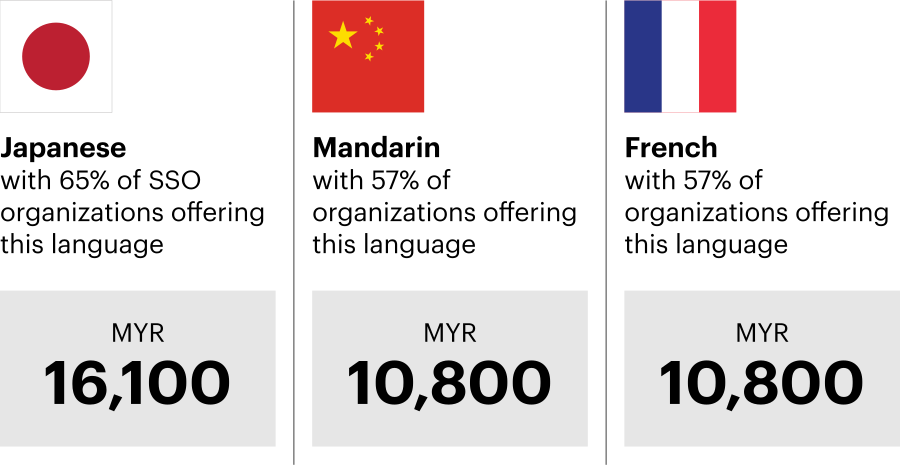
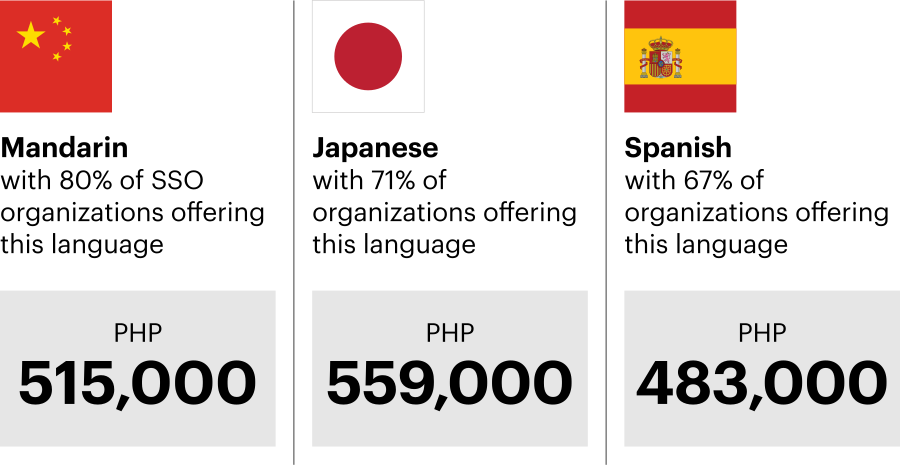
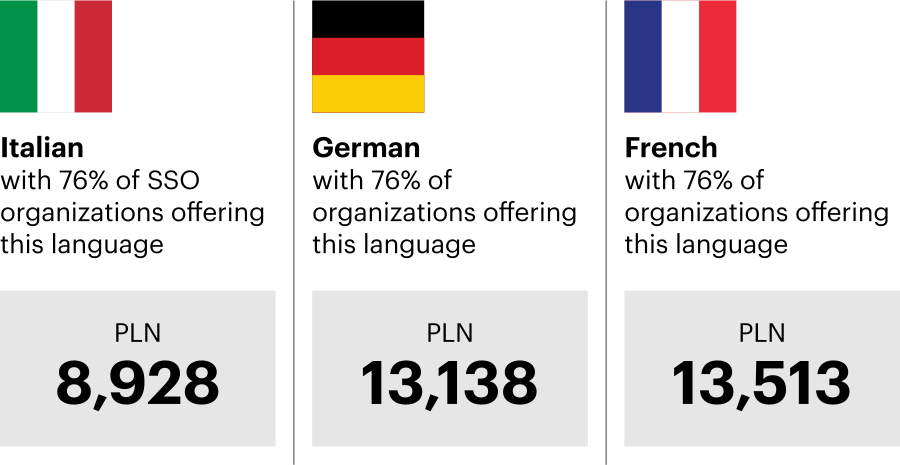
Though there are SSO organizations around the world, the presence of this sector is most notable in India, Malaysia, the Philippines and Poland. Here, we examine the prevalence of foreign language premiums in SSO organizations in each of these four markets, with insights based on our WTW 2024 Foreign Language Premium Survey Report.
India
With a massive workforce offering a vast pool of multilingual talent, India’s SSO sector has long been a preferred destination for businesses wanting to optimize their operations. Among Indian SSO organizations that responded to the survey, 37% offer foreign language premiums to employees. Most (57%) offer formal plans, although a significant portion (43%) provide premiums on an informal or per-case basis.
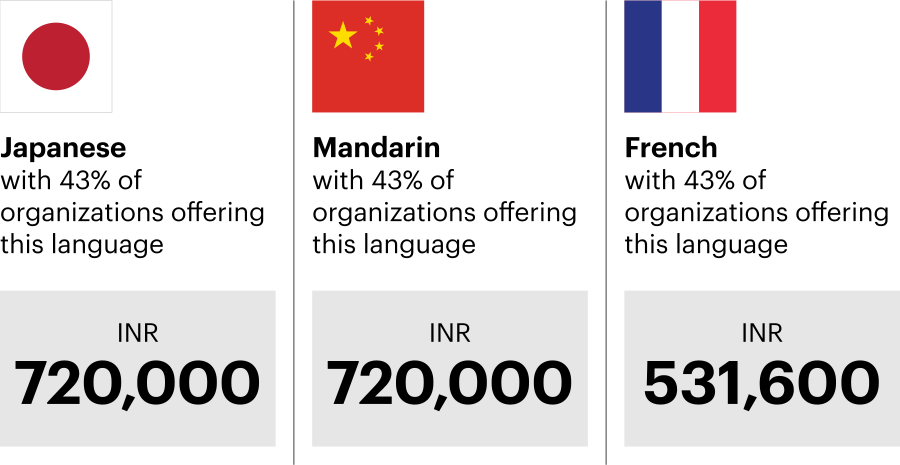
The three highest-paid languages in India are Japanese, Mandarin and French, each of which are offered by 43% of SSO companies with foreign language premiums (Figure 1).