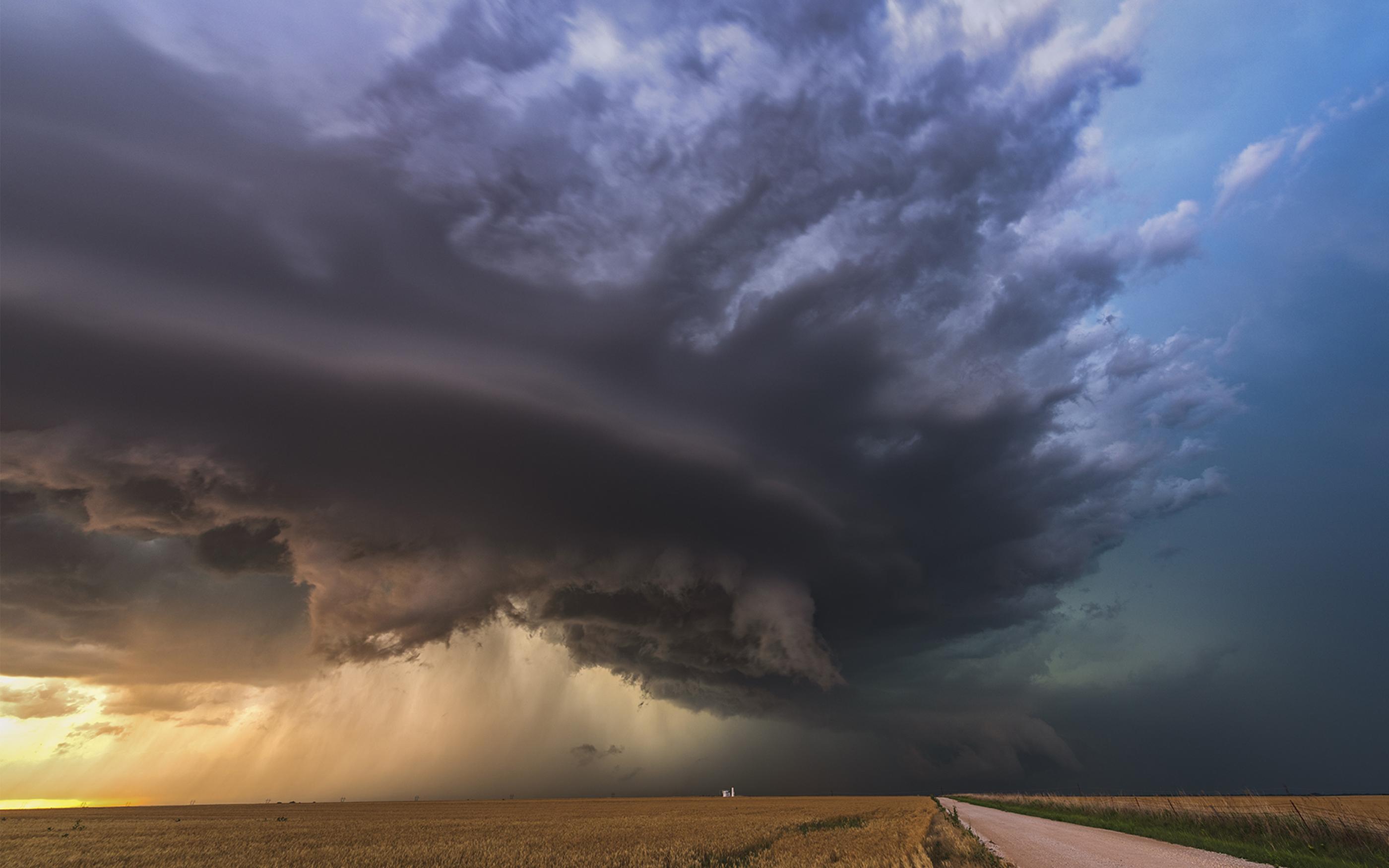
The year had barely begun when the United States was hit by a series of damaging severe convective storms. There were 476 tornadoes reported between January and March, according to preliminary data from the U.S. National Weather Service Storm Prediction Centre. This early activity has made 2023 the year with the most first-quarter tornadoes on record (Table 1).
Table 1. Top 10 years with the highest Jan–March tornado counts
| Rank | Tornado Count | Year |
|---|---|---|
| 1 | *476 | 2023 |
| 2 | 398 | 2017 |
| 3 | 360 | 2008 |
| 4 | 292 | 1999 |
| 5 | 290 | 2012 |
| 6 | 282 | 2022 |
| 7 | 246 | 2007 |
| 8 | 231 | 1976 |
| 9 | 212 | 2020 |
| 10 | 207 | 2006 |
These high numbers were caused by a series of multi-day tornado outbreaks that can in part be attributed to the presence of La Niña (which often provides favorable conditions for springtime convective activity). The most notable outbreak occurred at the end of March, affecting states in the Midwest, Southern, and Eastern U.S. A total of 134 tornadoes were recorded between 7pm UTC on March 31st and 7pm UTC on April 1st, ranking third in the world for the highest number of events reported in a 24-hour period.
It will also be one of the most expensive first quarters on record for insured losses…
It will also be one of the most expensive first quarters on record for insured losses from convective storms, with estimates putting claims in the region of $7-10 billion USD. Primary insurers will likely bear a larger share of this cost than they would have in prior years due to the higher reinsurance attachments and lower aggregate coverage at the January 1st renewals.

Related content
Convective activity continued into the second quarter, with many severe weather outbreaks, including one that delivered record-sized hail and strong winds across Central and Southern states between June 10 and June 19. Insurance claims are still developing, but 2023 is expected to rank high on the list of costliest SCS years.
Losses due to convective storms have been increasing over…past 20 years, and this…start…will undoubtedly increase…insurance industry's concern…
Losses due to convective storms have been increasing over the past 20 years, and this stormy start to the year will undoubtedly increase further the insurance industry's concern about this peril. A large proportion of the increase can be attributed to population growth and urbanization. Climate change may also be playing some role, but the science is not definitive because detecting a trend in localized phenomena such as tornadoes is notoriously difficult, especially when most of the historical record is based primarily on eyewitness and damage reports[1].
Recent research has found that tornado - favorable environments during wintertime have increased across the southern Great Plains and southeastern U.S.[2].
Data from the National Weather Service Storm Prediction Centre also shows a steady increase in December–February U.S. tornado counts since 1990 (Figure 1). However, while a warming world is expected to lead to milder winters that generate the atmospheric instability necessary for convective storms, it is not clear the extent to which this observed trend is due to climate change or other factors such as natural variability and reporting biases.
Primary insurers will likely bear a larger share of this cost than…in prior years due to the higher reinsurance attachments…
There is stronger evidence that the geographic pattern of tornadoes is changing. Since 1979, the number of SCS events affecting "Tornado Alley" in the Great Plains has decreased slightly, while activity has increased in eastern states such as Mississippi, Tennessee, Alabama, Illinois, and Indiana[3]. This shift has pushed storms into areas that have seen rapid population growth over the last few decades, increasing the likelihood of tornadoes causing property damage and fatalities.
Looking further into the future, a recent high- resolution modelling study has found that supercells – storms that produce the strongest tornadoes and are associated with the most severe impacts – are expected to occur more frequently in a warmer world[4]. This prediction includes an increase in early-season supercells (as we saw this year), with an intermediate warming scenario producing upticks in February (7%), March (18%), and April (37%) by the end of the century.
While scientists are still trying to fully understand the connection between tornadoes and climate change, insurers, as well as home and business owners, continue to count the costs. This tension highlights the importance of ensuring that the present-day view of risk is adequately represented in insurance catastrophe models, as well as other decision-making frameworks such as resilience planning.
References
- Verbout, S. M., Brooks, H. E., Leslie, L. M. & Schultz, D. M. Evolution of the U.S. Tornado Database: 1954–2003. Weather and Forecasting 21, 86–93 (2006). Return to article
- Taszarek, M., Allen, J.T., Brooks, H.E., Pilguj, N., & Czernecki, B. Differing Trends in United States and European Severe Thunderstorm Environments in a Warming Climate. Bulletin of the American Meteorological Society 102, (2021). Return to article
- Gensini, V. A. & Brooks, H. E. Spatial trends in United States tornado frequency. npj Climate and Atmospheric Science 1, 1–5 (2018). Return to article
- Ashley, W. S., Haberlie, A. M. & Gensini, V. A. The Future of Supercells in the United States. Bulletin of the American Meteorological Society 104, E1–E21 (2023). Return to article
Download
| Title | File Type | File Size |
|---|---|---|
| Natural Catastrophe Review January - June 2023PDF | 5.5MB |
Author