
The way that employees experience their work and life has been influenced by drastic workplace changes in recent years. WTW’s 2022 Global Benefit Attitudes Survey found many employees in Asia Pacific are facing major changes and challenges, such as mounting financial insecurity and increasing use of technology.
Employees are weighing up what matters most in their careers, putting organisations at risk of retention challenges. Our research shows that 28% of employees across Asia Pacific are actively looking for a new role and considering changing employers, while a further 25% are open to changing jobs if they could.
28%Employees in Asia Pacific looking for a new role
25%Employees open to changing jobs if they could
Pay and bonus remain the leading pull factor for talent across the region, followed by job security and commitment to workplace flexibility. On the other hand, job security is the most important factor for employees to stay with their current employer (Figure 1). Another area of significant importance is a ‘sense of purpose’. Employees want to work for an organisation that aligns with their values, where their voice is heard, and where they know how their work makes a difference.
What are employees looking for?
| Attraction | Retention |
|---|---|
| Pay and bonus | Job security |
| Job security | Pay and bonus |
| Flexible work | Sense of purpose |
| PTO and broader leave | Flexible work |
| Sense of purpose | Relationship with co-workers |
Practicality fuels other priorities, especially when the financial wellbeing of Asia Pacific employees has deteriorated over the past years (Figure 2). Many worry about their financial ability to access private healthcare and save for retirement.
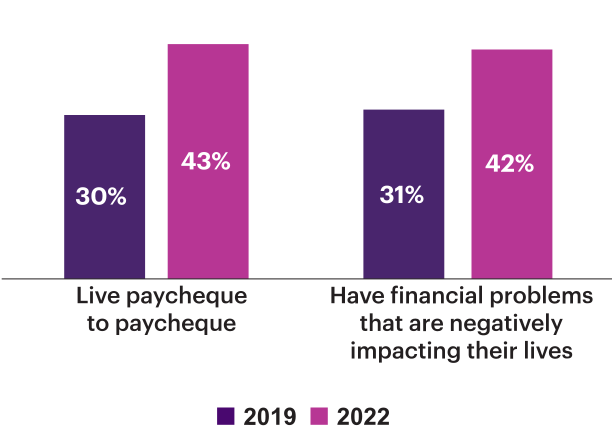
Figure 2. Employees are experiencing increased financial challenges
Employees have also become more reliant on technology, with 38% of employees regularly use financial planning and banking apps and 48% using virtual care for health consultations. Almost six in 10 employees would like their benefits to include online tools to support their health and financial wellbeing (Figure 3).
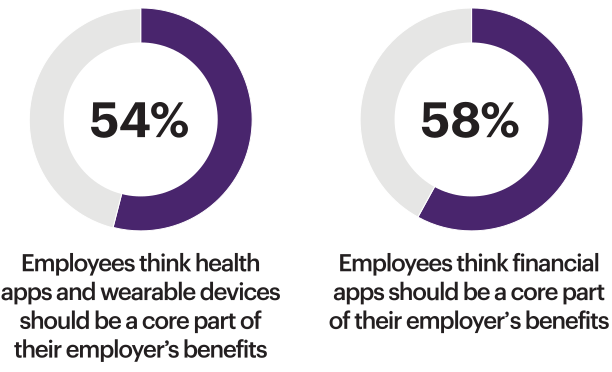
Figure 3. Employees in Asia Pacific believe digital applications should be a core benefit
2022 Global Benefit Attitudes Survey
The growing importance of benefits: How employee attitudes are changing in Asia Pacific.

Employers and HR managers have much to do to ultimately influence positive workplace behaviours, experiences and outcomes. To get started, you can structure a benefit plan and employee-centric work environment with these key considerations:
Sources
1 2022 Global Benefit Attitudes Survey – Asia Pacific
2 2019/2020 Global Benefit Attitudes Survey
Meet our expert

Employers and HR managers have much to do to ultimately influence positive workplace behaviours, experiences and outcomes.