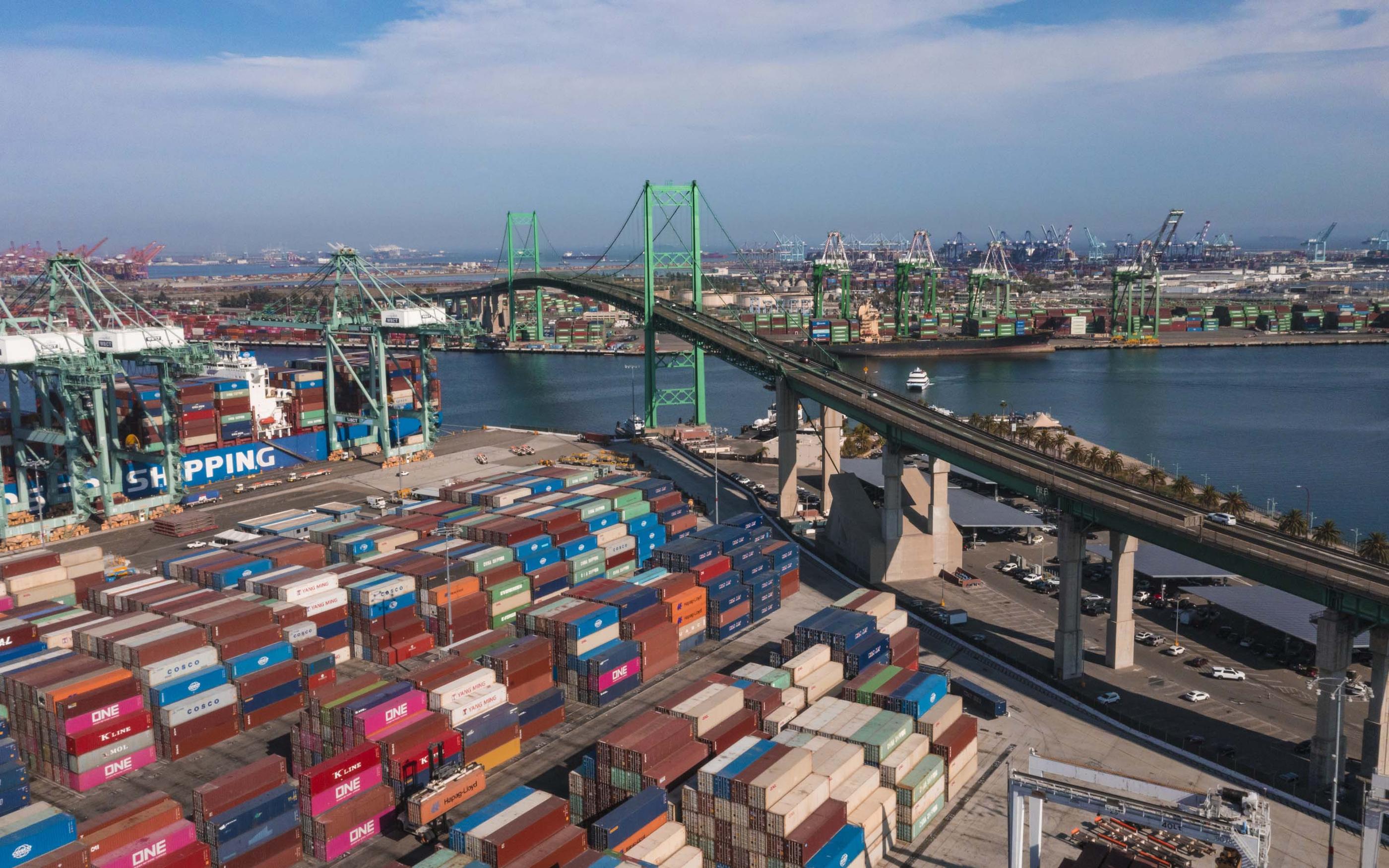

Supply chains are the backbone of many businesses, underpinning day-to-day operations. Yet they’re increasingly vulnerable to disruption that can severely affect organizational resilience, sustainability and reputation and brand.
Increasing trade uncertainty, driven by geopolitical tensions and shifting trade policies, has become a critical concern in supply chain risk management. As geopolitical factors continue to shape the business environment, companies are grappling with the consequences of supply chain disruptions, tariffs and changing regulatory landscapes.
Our 2025 Global Supply Chain Risk Report, which surveyed 1,000 supply chain managers, found that 63% of businesses continue to experience higher-than-expected supply chain losses. Fewer than 8% believe they have complete control over their supply chain risks. But as organizations navigate trade uncertainty, many are taking a more strategic approach to supply chain risk management.
Reports and surveys about supply chain risk and trade uncertainty
Understanding supply chain risks
Internal vs. external factors
Supply chain risks include internal risks, which originate from within your organization and external risks, which can arise from numerous factors beyond your control.
Internal supply chain risks
Internal supply chain risks include operational inefficiencies, inadequate risk management strategies and insufficient governance and oversight. For example, the lack of clear risk management objectives and inadequate supply chain visibility can lead to increased vulnerability.
Our 2025 survey found only about one-third (33.6%) of organizations assigned supply chain risk oversight to a C-suite member, highlighting a potential gap in internal risk management.
To manage internal risks, organizations focus on:
- Enhancing supply chain visibility and risk oversight
- Implementing robust risk management strategies
- Improving operational efficiency
- Creating strong governance, especially around data and cybersecurity
External supply chain risks
External supply chain risks are diverse and can severely impact business operations. Key external risks include:
- Geopolitical factors: Geopolitical tensions and international conflicts can disrupt supply chains, with 19% of businesses ranking them as their top risk in 2025
- Cybersecurity threats: Cyber risks are a pressing concern, with 53% of respondents rating them as moderate to very high risks
- Data security: The importance of data security has surged, with 47% of respondents considering it a critical risk in 2025, up from 23% in 2023
To mitigate external risks, businesses:
- Diversify their supplier base to reduce dependence on single sources
- Develop contingency plans for potential disruptions
- Invest in cybersecurity measures to protect against data breaches
- Implement strong governance over data handling to improve information security
Trade uncertainty and tariffs: Emerging supply chain risks
Trade- and tariff-policy uncertainty are increasing external supply chain risk, presenting significant challenges for businesses that rely on imports. The imposition of tariffs can lead to increased business costs, creating serious supply chain disruptions and requiring the re-evaluation of sourcing strategies.
Recent geopolitical developments, such as the U.S.-China trade dispute, exemplify the cost of these trade risks. The trade policies imposed introduced historically high tariffs and new trade barriers, creating new supply chain disruptions.
Reputational risk: A growing supply chain concern
Reputational risk has emerged as a significant threat, with about two-thirds (66.5%) of respondents naming it as one of their top three risks. This is a substantial increase from the previous survey, where only 41% of respondents considered reputational damage a serious risk. Driving the growing awareness of supply chain disruptions' impact on brand reputation is consumer engagement.
As consumers become more aware of business practices, particularly around transparency, any breakdown in supply chain operations can severely damage customer perceptions and trust, undermining long-term brand value. The increasing focus on reputational risk reflects a broader recognition that supply chain disruptions have far-reaching consequences beyond immediate financial losses.
Managing supply chain risks and trade uncertainty
To adapt to trade policy uncertainty and minimize supply chain risk exposure, businesses adopt several strategies:
- Monitoring trade policy developments to anticipate potential changes in tariffs and trade regulations
- Diversifying supply chains to mitigate the impact of trade disruptions
- Developing flexible sourcing strategies to adapt to changing trade environments
- Assessing the potential impact of tariffs on supply chain costs and operations
- Improving collaboration with suppliers and customers to navigate supply chain disruptions and ensure operational continuity
- Using supply chain mapping tools and other technologies to analyze and visualize supply chain complexities
By understanding and addressing these trade risks, you can build a more resilient supply chain that can withstand trade policy uncertainty and associated supply chain disruptions.
Insurance and mitigation strategies
Organizations are realizing how important insurance coverage is for reducing the financial effects of supply chain disruptions and trade policy uncertainty. Historically, organizations relied on trade credit insurance. But other insurance, such as contingent business interruption (CBI), coverage can also protect against supply chain risks.
Trade credit insurance
Trade credit insurance can protect businesses against the risk of non-payment by customers due to insolvency or failure to pay. This type of insurance can be particularly relevant in uncertain economic times or when dealing with new or unreliable customers. By mitigating the risk of bad debt, trade credit insurance can help you keep cash flow stability and reduce the impact of supply chain disruptions.
Political risk insurance
Political risk insurance can cover businesses against losses resulting from political events such as expropriation, nationalization or political violence. This insurance can be especially important for companies operating in regions with high geopolitical risk or those involved in international trade. By protecting against these risks, you can better navigate complex global supply chains and reduce exposure to trade policy uncertainty.
Contingent business interruption (CBI)
CBI insurance can provide coverage for businesses that experience losses due to supply chain disruptions, even if it occurs at a supplier's location. This type of insurance can be essential for companies that rely heavily on a single supplier or have complex global supply chains.
The future of supply chain risk management is more than just avoiding disruption. It’s about creating a resilient and sustainable business that can find opportunities. By embracing complexity and building supply chain resilience, you can find a competitive edge.