We live in a complex, fast-moving world. Whilst the supply chain disruption that started with the pandemic continues to play out, the crisis in Ukraine and associated price shocks pose a new threat to economic stability.
At the same time, transformative technologies powered by semiconductors are driving rapid change and progress in many areas of life, from electric cars to mobile devices.
- So how is the industry responding to these global trends and challenges?
- What are the biggest opportunities and risks for businesses over the coming years?
To find answers to these questions, we surveyed 250 senior decision makers in a range of semiconductor businesses across the globe.
Survey sample and methodology
Our survey was carried out by our research partner, Coleman Parkes, in March 2022 using phone-to-web methodology.
We received 250 responses from decision makers of risk management in leading semiconductor companies, globally.
Key findings
Top external risk factors reflect major global challenges
We saw a marked regional variation when we asked respondents to name their biggest external risk factor over the next 3-5 years.
Changing consumer demand was the top risk for North American companies (39%), while ESG pressures ranked highly in both Asia-Pacific and North America and was the biggest risk overall at 34%.
Political risk (30%) and export risk (27%) were also to the fore, reflecting global tensions and economic uncertainty.
Top 5 challenges to addressing risks over the next 3 to 5 years
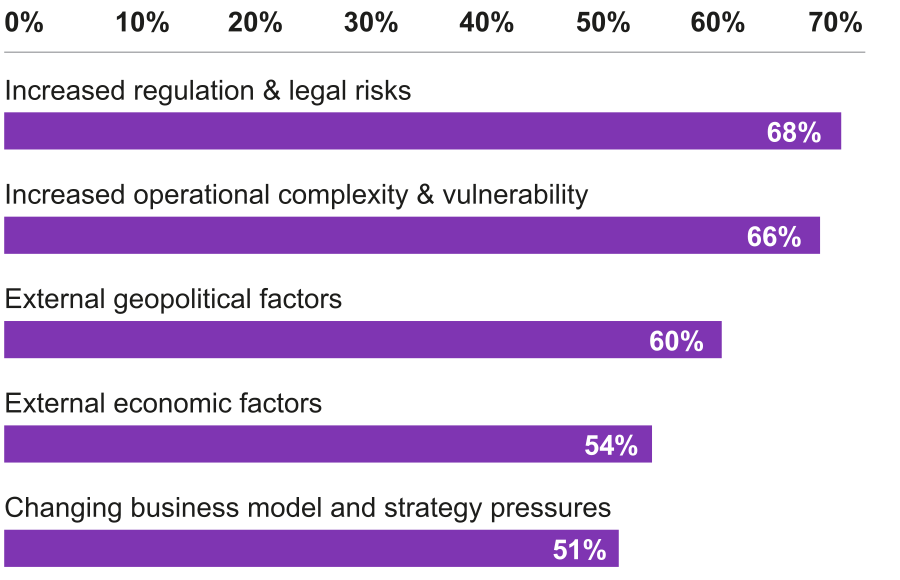
Participants were asked to select from a list of 13 in a multi code question, the greatest challenges to addressing their risks over the next 3 to 5 years.
These concerns also featured among the main barriers to addressing the industry’s risks, which included increasing regulation (68%), external geopolitical factors (60%) and external economic factors (54%).
Loss history is broadly aligned with future risks and challenges
The biggest losses from internal sources over the last two years came from problems with complex and changing end-product requirements (43%), intellectual property infringement (42%) and supply chain and infrastructure (40%), which were all named as risks over the near term.
Top external loss sources included ESG regulator pressures (32%), environmental risks (32%) and property loss due to natural catastrophe (28%).
The cost and availability of inputs (30%) and supply chain and infrastructure risk (27%) were also top loss factors.
Losses higher than expected could be due to cross-cutting or the pandemic
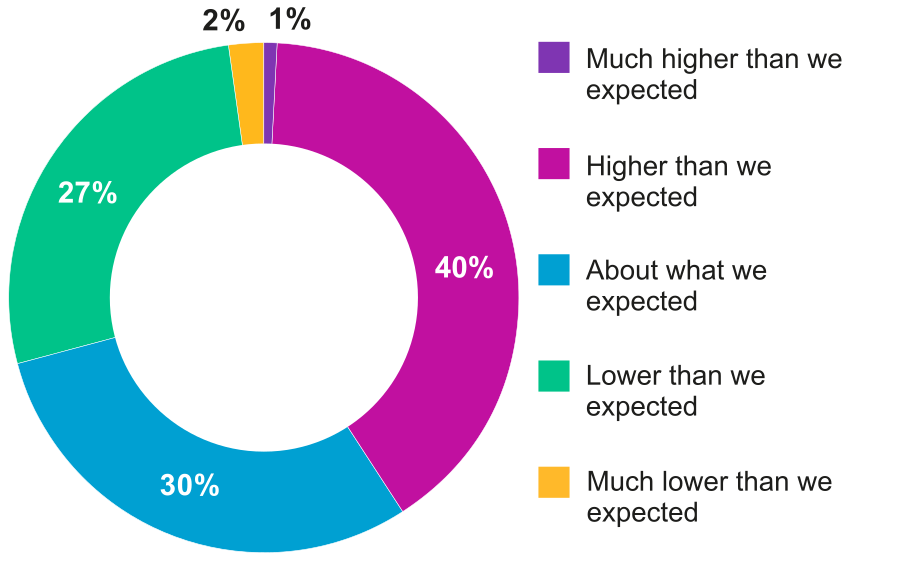
Participants asked to select what describes best, the extent of their business risk-related losses in the last 2 years
Overall 41% of respondents said losses were higher than expected, which is understandable given the cross-cutting impact of the pandemic during this period.
Download your report
To learn more about the survey findings, download your free survey report by completing the short form at the top of this page.
Download Global Semiconductor Survey Report
Contact