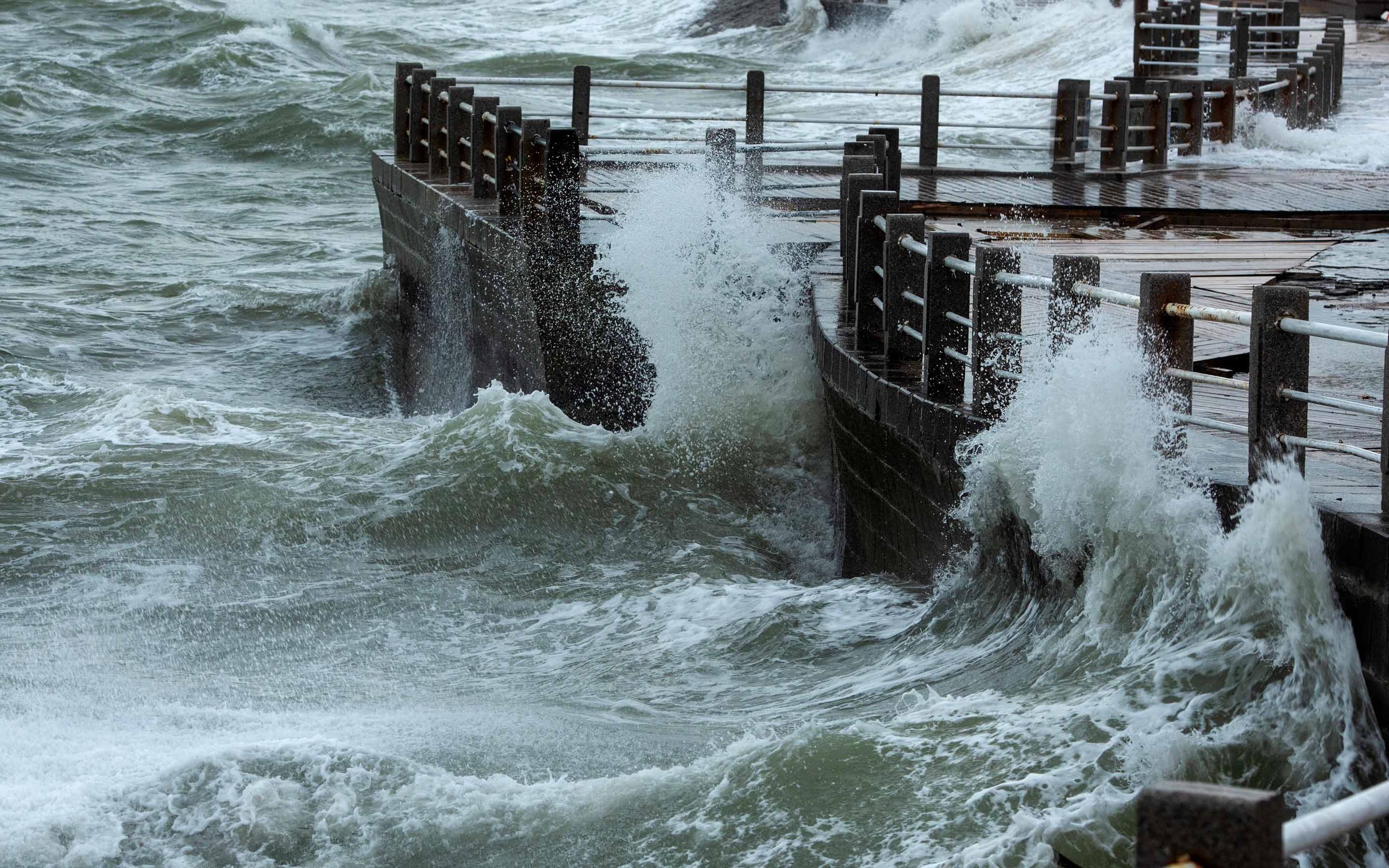
The winter of 2013–2014 is best understood not as a sequence of individual storms, but as a reminder that catastrophe risk is often systemic. Over a matter of weeks, successive Atlantic weather systems crossed the UK, bringing exceptional rainfall to already saturated catchments. Rivers remained high, groundwater levels rose, and communities faced repeated flooding. What mattered was not simply the severity of any one event, but the persistence of the weather pattern and the accumulation of impacts over time. As losses mounted, the insurance industry was confronted with a familiar question: how should a society insure a peril that affects thousands of properties simultaneously and repeatedly?
The consequences were significant. Approximately £450 million of insured losses were recorded, alongside around 18,700 claims, while total economic damages for England and Wales were estimated at around £1.3 billion. The difference between insured and economic losses highlighted a broader truth: flooding is not merely an insurance problem. It is a social, economic and financial challenge that affects households, businesses, infrastructure, lenders and governments alike.
These concerns were not new. The summer floods of 2007 had already demonstrated the scale of potential losses, affecting more than 55,000 homes and businesses and generating insured losses approaching £3 billion. At the time, flood insurance availability depended upon the Statement of Principles, a voluntary agreement between government and insurers. While successful in maintaining access to cover, it was never intended to be permanent and was due to expire in 2013. Policymakers and insurers increasingly recognised that a more durable solution would be required.
A founding partner comes through
Yet while government and industry debated the future of flood insurance, another story was unfolding. In 2006, Willis established the Willis Research Network (WRN) to build long-term partnerships between academia and the insurance industry. Among the founding relationships was a collaboration with the University of Bristol, where Professor Paul Bates and his colleagues were tackling one of the most difficult challenges in flood risk management: how to model floods with sufficient realism, speed and resolution to support practical decision making.
The breakthrough that emerged from Bristol fundamentally changed the way flood risk could be analysed. Advances in hydrodynamic modelling dramatically increased computational efficiency while maintaining physical realism. Suddenly, it became possible to move from broad postcode-level risk assessments towards understanding risk at the level of individual properties.[1] For insurers, reinsurers and risk managers, that represented a step change. Flood modelling evolved from a specialist scientific exercise into an operational capability that could support underwriting, risk selection and catastrophe management. [2]
The Bristol collaboration demonstrated the value of the WRN model. Willis brought practical insurance challenges; university researchers brought scientific innovation. Together they created a pathway through which research could influence real-world risk decisions. The success of that approach extended beyond the university itself, ultimately helping create the research environment from which Fathom later emerged. The result was a new generation of flood analytics capable of supporting risk decisions on a national and global scale.
A problem shared…
At the same time, another WRN partnership was asking a different but equally important question. At Newcastle University, Professor Chris Kilsby and Dr Francesco Serinaldi focused not on how floods should be modelled, but on how flood risk should be interpreted. Their work explored persistence, dependence and clustering in hydrological systems. The central insight was deceptively simple: floods do not occur as neat, independent events. Catchments possess memory. Wet periods tend to remain wet. Flood-rich years are often followed by additional flood-rich periods. Large events can cluster in time and space, creating aggregate losses that exceed expectations derived from traditional statistical assumptions.[3] [4]
For the insurance industry, this mattered enormously. If flood events are correlated through time and geography, then the true challenge is not simply estimating the size of a single extreme event. It is understanding how losses accumulate across multiple events, multiple river basins and multiple years. Serinaldi's work therefore complemented the advances emerging from Bristol. Bates helped answer the question, "Can we model the flood?" Serinaldi helped answer the question, "Are we thinking about flood risk in the right way?" Together, these strands of research improved both the physical and statistical understanding of flood loss.
Against this backdrop, the movement towards a new flood insurance framework accelerated. Defra had already identified affordability as the central challenge for the future of flood insurance. In June 2013, government and the Association of British Insurers agreed the principles of what would become Flood Re. The following winter provided a powerful demonstration of why such intervention was needed. The scale and duration of the 2013–2014 floods reinforced concerns about market affordability and the concentration of flood losses. Flood Re was subsequently established through the Water Act 2014 and launched operationally in 2016 with the objective of maintaining access to affordable flood insurance while facilitating a gradual transition towards more risk-reflective pricing.
By many measures, Flood Re has been successful. Combined with substantial investment in flood resilience and flood-defence infrastructure, it has helped sustain the availability and affordability of flood insurance for hundreds of thousands of households. The immediate crisis that threatened during the early 2010s has been avoided.
Yet the questions that motivated the creation of Flood Re have not disappeared. They have evolved. Climate change is altering the frequency and severity of extreme rainfall. Property exposure in flood-prone locations continues to grow. Questions remain about the practicality of managing repeated losses from the same locations. Meanwhile, Flood Re was always intended to be transitional. The scheme is scheduled to end in 2039, after which the market is expected to transition towards a sustainable risk-reflective model.
The road goes on
The challenge facing the UK today therefore resembles the challenge faced a decade ago, albeit in a different form. The question is no longer whether flood insurance can be maintained in the short term. The question is whether flood risk can remain insurable in the long term. If not, the consequences extend far beyond insurance. Mortgage lending, property values, investment decisions and ultimately financial stability are all connected to the continued availability of affordable and reliable flood cover.
This is where the story comes full circle. The same partnership model that helped improve flood modelling, deepen understanding of loss accumulation and inform risk decisions is now being applied to the next generation of questions. Through the Willis Research Network, researchers, insurers, governments and financial institutions continue to explore how flood risk is changing, how resilience can be strengthened, and what a sustainable future for flood insurability might look like.
The challenge has changed, but the principle remains the same: understanding risk is the first step towards managing it. The future of flood insurance may depend on whether innovation can once again stay ahead of the risk.
Footnotes
- Bates, P.D. et al, A Simple Inertial Formulation of the Shallow Water Equations for Efficient Two-Dimensional Flood Inundation Modelling. Journal of Hydrology (2010). Return to article
- Sampson, C.C. et al, A High-Resolution Global Flood Hazard Model. Water Resources Research (2015) Return to article
- Serinaldi, F. et al. Simulating Daily Rainfall Fields Over Large Areas for Collective Risk Estimation Journal of Hydrology (2014) Return to article
- Serinaldi, et al. Understanding Persistence to Avoid Underestimation of Collective Flood Risk. Water. (2016) Return to article
Author


20 years of the Willis Research Network