

In this episode of Construction Blueprints, host Trent Williams, Head of Broking, Global Construction speaks with Lay See Ong, Digital Infrastructure Industry Leader, Asia about Asia's rapid data center expansion and the infrastructure needed to support AI growth. They discuss power availability, site selection, resource constraints, supply chain risks, and why investors are increasingly focusing on resilience and risk management as critical factors for long-term success in digital infrastructure.
Transcript for this episode
LAY SEE: Data center risk rarely occurs in isolation. A power disruption can quickly become an operational issue. A supply chain delay can impact project schedules or financing assumptions, and ultimately, revenue generation.
SPEAKER: Welcome to the WTW Podcast, Construction Blueprints, where we discuss the latest risk management and insurance trends, as well as issues facing the construction industry. We'll speak with a variety of construction leaders and experts on global topics, who can help provide you a blueprint for building your industry knowledge.
TRENT WILLIAMS: Hello, and welcome to our podcast series. I am Trent Williams, your podcast host, and I'm delighted to be joined by Lay See, the digital infrastructure industry practice leader for WTW in Asia. Lay See, there's been a tremendous amount of excitement around AI, cloud computing, and data centers across Asia. Everywhere we look, new projects are being announced and billions of dollars are being committed. What's driving this momentum?
LAY SEE: Well, I would say the simple answer is demand. AI, cloud adoption, and digital transformation are driving strong demand for computing power and digital infrastructure. What we are seeing today is not just a technology trend. It is a transformation of the underlying infrastructure that supports the digital economy. Governments, hyperscalers, and private capitals are investing heavily across the region.
TRENT WILLIAMS: Just on those regions-- That's great, Lay See, thanks for that. What region stands out for you? Is there any examples you can give?
LAY SEE: For example, China is reportedly planning to invest around $295 billion over the next five years to build a nationwide network of AI data centers and computing hubs. AWS has announced a combined commitments of approximately $9 billion in South Korea and has indicated plans to invest more than $40 billion across 14 APEC economies to expand AI and Cloud Infrastructure.
At the same time, industry estimates suggest APEC data center development pipeline now exceeds 19 gigawatts of data, with a total capital requirements approximately approaching $750 billion. Wow, these numbers tell us just two things. First, the opportunity is enormous. Second, the challenge is no longer about attracting capital. It is whether the industry can deliver the infrastructure needed to support their growth. This is where the conversation becomes very interesting.
TRENT WILLIAMS: Very interesting indeed. I mean, those numbers are extraordinary. And it is interesting because I think most of the people focus on the demand and investment. But are you suggesting that capital is no longer the primary issue.
LAY SEE: Exactly. In the past, investors assess projects based on market demand, expected returns, and financing structures. Today, we are seeing a shift. Capital remains available, but investors are spending more time evaluating whether projects can be delivered successfully and scale over the long term. In fact, I recently spoke with an investors exploring opportunities in the sector. The discussion was less about funding, but more about understanding what makes a location viable over the long term.
TRENT WILLIAMS: Great. Look, I'd like to dig into some of those discussions. I think we hear a lot about funding and lenders requirements, but what are some of the other questions that are coming through at a more granular level?
LAY SEE: Usually, they're asking, is there sufficient power availability, how resilient is the surrounding infrastructure, is the location exposed to natural catastrophes, are there sufficient land and water resources to support future expansion, will regulatory or community considerations affect growth plans. This factor can have a significant impact on investing outcomes.
A project may have secured financing, identify customer demand, and acquired land, but if sufficient power cannot be delivered, if critical equipment is delayed, or if the site cannot support future growth, the investment case can quickly become challenged. This is why many investors today are evaluating not just the facility itself, but the ecosystem surrounding it.
Building capacity is not the challenge. It is about determining where capacity can be built successfully and sustainably. We have reached a point where growth is increasingly being constrained by infrastructure readiness rather than access to the capital.
TRENT WILLIAMS: Yeah, really interesting. I mean, let's talk about some of those constraints that you mentioned there. What are some of the issues that are causing the greatest concern for, I guess, both investors and developers today.
LAY SEE: Power is certainly at the top of the list. In several Asian markets, I've seen developers can secure financing, identify the right site, and obtain customers demand, yet still face challenges around power availability and grid connectivity. We are seeing increased attention on water usage, sustainability requirements, and community acceptance.
What is interesting is that these are no longer a purely engineering or operational considerations. Increasingly, they influence investment decisions, site selections and financing discussions, and long term growth strategies. The challenge is now about building data centers efficiently and sustainably. So, for example, we are seeing operators becoming more innovative in how they approach resource constraints.
Bill Chang, CEO of Singtel's Digital InfraCo and Nxera, has spoken publicly about achieving a PUE below 1.25 at its new DC data center facilities in Singapore, making it one of the most efficient data centers in Southeast Asia. What is interesting is that the conversations is moving from securing more power to using power efficiently. As workloads become increasingly power intensive, efficiency, sustainability, and resource optimization are emerging as key strategic differentiators for data center operators.
TRENT WILLIAMS: It's interesting, isn't it? It's nearly like the thinking's nearly changing on the fly here, isn't it?
LAY SEE: The question is no longer can we build. It's about can we assess and optimize the resources needed to build and operate successfully.
TRENT WILLIAMS: So much more to factor in. So many elements to it all. I mean, supply chain is-- it's topical in the world of insurance, but I mean, in the world of data centers in particular, supply chain disruptions have also been a recurring issue, particularly in the last few years. Is that still influencing project delivery today?
LAY SEE: Absolutely. Modern data centers rely on highly specialized equipment. Think about transformers, switch gears, generators, cooling systems, batteries, semiconductors, and network infrastructure. Many of these products have long manufacturing lead times and global supply chains. Geopolitical tensions, trade restrictions, and manufacturing chokepoints can quickly affect project schedules.
Now what appears to be a procurement challenge can very quickly become a financial problem. So for investors, delays mean delayed revenue generation. For lenders, delay can affect financing assumptions. For owners, delays can impact customer commitments and expansion plans. Hence, we encourage clients to think beyond traditional construction risk and look more closely at supply chain dependency and project resilience.
TRENT WILLIAMS: I mean, it's fascinating. I think the myriad of factors that are coming into play, the benefit in plugging in investors, lenders, owners, developers all into the early thinking, the early planning is just so critical. And look, we've touched on investors a few times throughout our discussion. But how are investors approaching these challenges differently?
LAY SEE: The best investors are increasingly looking beyond assets itself. They are asking what could disrupt project delivery, what could delay revenue generations, what dependencies exist, how resilient is the project during construction and operations. These questions might have been considered separately in the past.
In today's context, investors recognize that many risks are interconnected, or a decision made during site selection can influence construction timelines, power availability, insurance costs, financing requirements, and ultimately long term returns. This is why risk is increasingly becoming an investment consideration rather than simply an operational one. So generally, the investors that are most successful are often those who assess risk early before significant capital is committed.
TRENT WILLIAMS: The early thinking, the early planning, again, playing out there. So look, we've covered power constraints. We've covered site selection, supply chain, we talked about, and the subsequent project delivery challenges. How does Willis help our clients navigate such a complex environment covering so many different aspects?
LAY SEE: One observations we have made is that data center risk rarely occurs in isolation. A power disruption can quickly become an operational issue. Supply chain delay can impact project schedules, financing assumptions, and ultimately revenue generation. Likewise, cyber event can have an operational and reputational consequences. That's why Willis developed its digital infrastructure risk framework.
The framework helps organizations identify, quantify, and manage risk across eight interconnected areas. And they are emerging and strategic risk, physical damage to property and equipment, financial risks impacting operations and reputations, climate or environmental, and third party liability risk, cyber and data related risk, compliance and legal risk, supply chain risk, and operational risk. What's important is that these risk are interconnected. However, as we the environment that we are operating is volatile. What we are seeing today may not be the same tomorrow.
TRENT WILLIAMS: Yeah, they're connected. And that framework, that digital infrastructure 8 point framework, I mean, nothing's more powerful than I guess real life examples. Have you got something you can share around examples where that comes to life for us?
LAY SEE: For example, a site selection decision may influence exposure to NatCat, power resilience, future operating costs, and long term business continuity. Supply chain disruption can affect power delivery, project delivery, financing assumptions, and operational readiness. As risk advisor, we help clients understand this interdependency so that they can make more informed decisions before committing capital. And in the last 12 months, we have seen this approach applies on major data center developments, where our role extended beyond insurance placement to helping stakeholders evaluate project risk resilience considerations and financing requirements.
TRENT WILLIAMS: So it's about helping clients understand risk in a more, I guess, a more connected way.
LAY SEE: Exactly. The objective isn't simply to buy insurance, it's to understand the broader risk landscape, what we have discussed earlier to help improve resilience and support better investment, development, and operational decisions across the digital infrastructure life cycle.
TRENT WILLIAMS: Yeah, makes sense. Fantastic. Look, before we finish, I just an overarching of one message from you that you'd like our listeners to take away.
LAY SEE: I think the key takeaway is that it's not all about capacity. So as digital infrastructure becomes larger, denser, and more connected, interconnected, organizations need to make smarter and reasoned decisions. So the goal is really to help understand the risks that the investors, the developers, owners, and any of the stakeholders within the data digital infrastructure ecosystem are taking on. So you can invest in the right resilience measures and of course, buy the right protection.
TRENT WILLIAMS: Lay See, thank you so much for contributing to this episode, and for sharing your perspective on such an important topic. You've got great deep insights into not just the industry, but the region as well. It's much appreciated. And thank you to everyone who listened. And thank you for joining the Willis podcast. We'll talk to you on the next one.
SPEAKER: Thank you for joining this podcast from Willis, a WTW Company featuring the latest thinking and perspectives on people, capital, climate, and risk in the construction industry. For more information, visit wtwco.com. WTW offers Insurance related services through its appropriately licensed and authorized companies in each country in which WTW operates. For further authorization and regulatory details about our WTW legal entities operating in your country, please refer to our WTW website. It is a regulatory requirement for us to consider our local licensing requirements.
The information given in this podcast is believed to be accurate at the date of publication. This information may have subsequently changed or have been superseded, and should not be relied upon to be accurate or suitable after this date. This podcast offers a general overview of its subject matter. It does not necessarily address every aspect of its subject or every product available in the market, and we disclaimer all liability to the fullest extent permitted by law.
It is not intended to be, and should not be used to replace specific advice relating to individual situations, and we do not offer and this should not be seen as legal, accounting, or tax advice. If you intend to take any action or make any decision on the basis of the content of this podcast, you should first seek specific advice from an appropriate professional. Some of the information in this podcast may be compiled from third-party sources we consider to be reliable. However, we do not guarantee and are not responsible for the accuracy of such. The views expressed are not necessarily those of WTW. Copyright WTW. All rights reserved.
Podcast host
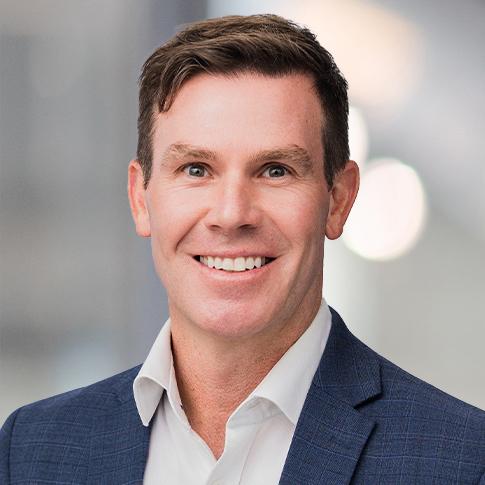
Trent Williams
Head of Broking, Global Construction
In his role, Trent leads our Global Construction Broking efforts and resources across all product lines and coverages. Bringing together a unified and connected Broking community of Construction placement experts. With a career spanning nearly three decades, Trent has invaluable technical expertise and market insights, supporting clients globally. Prior to this, Trent served as the Head of Broking, Pacific for the past 7 years, where he worked closely with the Australian and New Zealand businesses to provide tailored placement options for our regional clients’ unique needs. Trent first joined Willis in 2006 in the Construction Practice after an extensive career in both Australia and the UK.
Trent Williams
Head of Broking, Global Construction
In his role, Trent leads our Global Construction Broking efforts and resources across all product lines and coverages. Bringing together a unified and connected Broking community of Construction placement experts. With a career spanning nearly three decades, Trent has invaluable technical expertise and market insights, supporting clients globally. Prior to this, Trent served as the Head of Broking, Pacific for the past 7 years, where he worked closely with the Australian and New Zealand businesses to provide tailored placement options for our regional clients’ unique needs. Trent first joined Willis in 2006 in the Construction Practice after an extensive career in both Australia and the UK.
Podcast guest

Lay See Ong
Digital Infrastructure Industry Leader, Asia
Lay See Ong is the Asia Digital Infrastructure Industry Leader at WTW and a trusted advisor to organisations shaping the future of digital infrastructure across Asia.
With more than 25 years of experience, she works closely with data centre operators, hyperscalers, telecommunications companies, and investors to navigate complex business, risk, and growth challenges. Passionate about the intersection of technology, infrastructure, and resilience, Lay See helps organisations seize opportunities in an increasingly connected and data-driven world.
Known for building strong partnerships and bringing people together to solve complex problems, she is actively involved in advancing Asia's rapidly evolving digital infrastructure ecosystem.
Lay See Ong
Digital Infrastructure Industry Leader, Asia
Lay See Ong is the Asia Digital Infrastructure Industry Leader at WTW and a trusted advisor to organisations shaping the future of digital infrastructure across Asia.
With more than 25 years of experience, she works closely with data centre operators, hyperscalers, telecommunications companies, and investors to navigate complex business, risk, and growth challenges. Passionate about the intersection of technology, infrastructure, and resilience, Lay See helps organisations seize opportunities in an increasingly connected and data-driven world.
Known for building strong partnerships and bringing people together to solve complex problems, she is actively involved in advancing Asia's rapidly evolving digital infrastructure ecosystem.