Chemical, biological, radiological, and nuclear (CBRN) terrorism is something of a paradoxical threat, statistically rare and seldom effective. Yet, the potential for disruption makes it a priority for disaster management planners.
In addition to causing significant bodily harm to affected persons, a few grams of toxin or the release of an industrial chemical can cause systemic shocks, with even localized incidents necessitating widespread shutdowns and costly clean-ups, whilst also inciting panic and undermining public health and security confidence in the longer term.
Indeed, although more conventional weapons, including firearms and explosives, are more easily obtained and equally capable of producing casualties, the ability of CBRN weapons to amplify fear, disruption, and expense beyond mere casualty tallies and physical damages means they will continue to appeal to terrorists and other hostile actors. Contributing to growing concern over CBRN threats, technological innovations such as artificial intelligence (AI) are viewed as factors that could lower the barriers for hostile groups intent on acquiring these capabilities, making the threat they pose an increasingly salient issue for organizations seeking to protect their interests from terrorist attacks.
CBRN in the terrorism context
There are many CBRN agents that terrorist groups can use to cause harm and incite fear, with each possessing its own distinct properties that dictate their effectiveness, attainability, and practical use as weapons. The most credible threat comes from certain chemical and biological agents, given their relative ease of acquisition and manufacture.
Chemical agents
Chemical agents are synthetic toxins that kill, injure, incapacitate, or damage the senses. They fall into four categories: choking agents; blister agents; nerve agents; and blood agents.[1]
The choking agent chlorine is among the most accessible CBRN agents to hostile actors and has been linked to terrorist plots in the past. Chlorine is dispersed as a gas and irritates the respiratory tract, causing fluid to accumulate in the lungs and effectively drowning the victim. As it has numerous licit industrial uses, its weaponization can be masked by regular activities. Chlorine was used as a chemical weapon in World War I, and more recently by Syrian forces during the country’s civil war, to augment notorious barrel bombs, and by insurgents in Iraq to enhance the impact of truck bombs.[2]
Sulfur mustard is a well-known chemical weapon agent, due to its deployment during World War I. While it has few licit uses, its mass manufacture as a weapon means that legacy stockpiles and inadequate disposal programs contribute to its availability. As a blister agent, sulfur mustard vapor causes burns and blisters upon contact with skin, as well as attacking the eyes and respiratory system.[3] Unlike chlorine, which disperses relatively quickly in open areas, sulfur mustard can remain present on the ground and exposed surfaces for weeks, especially in cold conditions.[4]
Nerve agents, such as sarin, VX, and Novichok, work by disrupting the function of muscles, glands, and the nervous system.[5] They act quickly, with victims being affected within seconds or minutes of exposure, in cases where they are inhaled.[6] While these attributes make them more appealing to terrorists, they are also more difficult to produce and procure, with the requirement to acquire controlled precursor chemicals and complex manufacturing processes making plots to field them by non-state groups unlikely due to the high probability of detection. That said, non-state terrorists have used them before, most notoriously Japan’s Aum Shinrikyo doomsday cult.[7]
Blood agents like hydrogen cyanide cause harm by quickly inhibiting the ability of cells to use oxygen, effectively causing the body to asphyxiate. While theoretically a potent threat, they have proven challenging for even states to turn into practical weapons, mostly because they are most effective in enclosed spaces.[8] In addition, they only pose a hazard for a short duration of hours, with this non-persistent nature meaning disruption and subsequent cleanup durations are low.[9] Due to these characteristics, blood agents are unlikely to be successfully employed by terrorists in highly disruptive mass casualty attacks; however, al-Qaeda reportedly had a mature plot to release hydrogen cyanide in New York foiled in 2003.[10]
Biological agents
Biological agents include bacteria, viruses, and toxins produced by living organisms, including animals, bacteria and fungi. They enter a victim’s body via inhalation, ingestion or absorption through skin, and tend to work more slowly than chemical agents.[11],[12] The distinct characteristics of individual biological agents mean the threats they pose are diverse. Some are highly contagious and therefore suited for attacks that affect many people, while others are far less transmissible but more deadly.
Bacteria can be maliciously employed to cause diseases. Anthrax-causing Bacillus anthracis is a favored biological agent for militaries and terrorists alike, owing to the relative ease with which it can be produced, its robustness, and high mortality rate.[13] Indeed, anthrax has been used in numerous terrorist plots, including a high-profile 2001 case in the U.S., which demonstrated how its properties mean it can be effectively employed in even relatively low-tech plots.[14] While known contemporary terrorist plots involving the use of bacterial agents have focused on causing harm to people — in addition to causing panic — there is also historical precedent for bacteria being maliciously employed to contaminate food.[15]
Biological toxins are essentially naturally produced poisons, many of which have been weaponized. Some are relatively easy to obtain, including castor bean-derived ricin, which has been a part of many recent terrorist plots in Europe, Asia, and the Americas. Ricin is challenging to employ in a way which would cause mass casualties, and is considered a weapon of mass terror, rather than mass destruction.[16] Other biological toxins, like Clostridium botulinum, which causes botulism, could theoretically be used to cause mass casualties due to their extremely high potency.[17] However, weaponizing the toxin is considered technically challenging, making its use by non-state actors prohibitive, and likely restricted to contaminating foodstuffs and water.
The use of viruses, including Ebola, as a weapon has been explored by terrorist organizations, likely due to their high transmission and mortality rates.[18] However, there are no known cases of terrorists achieving any success in doing so, and there is a remote possibility of this occurring.
Radiological weapons
Radiological weapons use conventional means, such as an improvised explosive device (IED), to disperse radioactive material.[19] Known as radiological dispersal devices (RDDs) and commonly referred to as ‘dirty bombs’, the explosive element of these weapons is far more likely to cause death and harm to people than the radioactive component.[20] However, the detonation of an RDD would be massively disruptive, both due to the shutdown and complex cleanup operation it would entail, and the lasting psychological damage it would inflict.[21] Further adding to the appeal these have for terrorist groups, the required radioactive material can be relatively easy to obtain from medical and industrial sources, with the construction of an RDD also being simplistic.
Nuclear weapons
The appeal of nuclear weapons to terrorists is clear, due to their unmatched destructive potential and ramifications arising from widespread radioactive contamination. However, of all the CBRN threats, it is the one which is most out of reach for non-state terrorist groups. The most likely pathway to acquiring a nuclear weapon would be through technology transfer from an ideologically aligned nuclear-armed state. However, there are only nine countries known to possess nuclear arms, therefore making it almost certain that a terror attack would be traced back to its sponsor. Due to this, and the manufacture of nuclear weapons being beyond the capabilities of non-state groups, the probability of a nuclear terror attack is remote.
CBRN terrorism case studies
According to the University of Maryland’s Violent Non-State Actor CBRN Event Database, violent non-state actors conducted 270 successful CBRN attacks between 1990 and 2024.[22] These incidents, in addition to foiled plots, highlight that terrorist groups continue to explore the use of CBRN agents to increase the impact of their attacks.
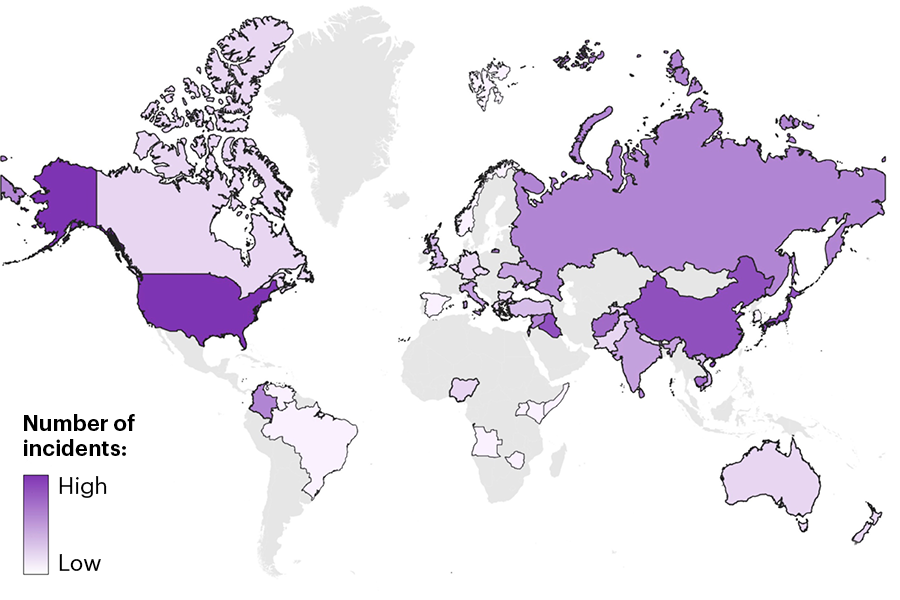
Figure 1: Successful CBRN attacks (1990 – 2024)
Source: University of Maryland
In 1995, Japanese doomsday cult Aum Shinrikyo used sarin to attack Tokyo’s metro system, killing 14 people and injuring over 5,000 more.[23]
Cult members punctured bags containing the nerve agent on five central line trains, with victims almost instantly feeling the effects of the nerve agent.[24] The incident highlighted the importance of preparedness for such outlier incidents, with reviews of response measures taken suggesting that poor crisis response communications led to the contamination of trainlines, stations, and scores of people that could have been avoided.[25] Occurring over 30 years ago, the attack remains the most prominent case of CBRN terrorism, resulting from Aum Shinrikyo’s advanced chemical weapons program that also gave rise to other plots by the group between 1993 and 1995 involving sarin, as well as VX nerve agent, the choking agent phosgene, and the blood agent hydrogen cyanide.[26]
In 2001, letters containing anthrax spores were sent to Senators Tom Daschle and Patrick Leahy, and media offices in the U.S., killing five people and making 17 others fall ill.[27] The incident occurred in the aftermath of the 11 September 2001 attacks, with Islamist rhetoric contained in the letters fueling speculation that al-Qaeda was responsible. However, a microbiologist at the U.S. Army Medical Research Institute of Infectious Diseases became the focus of a prolonged FBI inquiry and, after his suicide in 2008, the Department of Justice closed the case in 2010, attributing the attacks to him. The suspect is believed to have used his lab, equipment, and expertise to cultivate and dry the anthrax into the powder found in the letters.[28]
In addition to the human toll, the incident caused significant disruption. Some 21 U.S. Postal Service facilities were contaminated, and 32,000 potentially exposed people were given precautionary medical treatment. The United States Environmental Protection Agency stated that the cleanup of the Hart Senate Office Building and Brentwood postal facility cost over USD 1 billion, with the postal facility closed for two years.[29] There is limited information relating to the financial cost media companies bear to decontaminate their offices. However, the owners of the building which housed the National Enquirer newspaper are known to have sold the entire building for USD 40,000, rather than manage its cleanup.[30]
In 2007, a spate of bombings in Iraq, many being suicide vehicle-borne improvised explosive devices (SVBIEDs), involved containers of chlorine being detonated by the conventional main explosive charge. The increased effectiveness of these devices is evidenced by reporting of casualties suffering chlorine-related complaints. In one attack involving a truck bomb that killed five people on 20 February 2007, over 140 others required medical treatment due to exposure to the chemical. Similarly, three attacks coordinated on 16 March 2007 saw 350 casualties suffer exposure.[31]
In July 2017, Australian counterterrorism forces arrested two men in Sydney who planned to create an improvised chemical dispersion device and use it in crowded public spaces, including transport hubs. The suspects were known to be in direct communication with the Islamic State in Syria. They had even taken delivery of partially constructed explosive devices to support a further plot they were developing to target a civilian aircraft.[32] The chemical the pair intended to produce was believed to be hydrogen sulfide, which is classified as a blood agent due to its asphyxiating effects.[33]
In August 2017, police reported foiling a plot involving an RDD following the arrest of five suspects in Bandung, West Java. Reports indicate that the suspects intended to process low-grade radioactive Thorium 232 (Th-232) into deadly Uranium 233 (U-233) and combine it with a conventional IED.[34] Although experts cast doubt on the feasibility of creating U-233, the incident nonetheless demonstrated that Indonesian terrorists possessed the intent to build RDDs, heightening concern.
In January 2023, police arrested a man identified as an Iranian in Castrop-Rauxel, North Rhine-Westphalia, over an Islamist-motivated plot involving ricin. An earlier plot involving ricin was also foiled in North Rhine-Westphalia in 2018, when a man in Cologne was arrested and found to have ricin that he had manufactured and bomb components.[35] More recently, in April 2025, the home of a teenager in the eastern state of Saxony was searched, having been suspected of producing ricin. However, the suspect’s intent has not been reported.[36]
In November 2025, anti-terrorism police in Gujarat raided the home of a doctor in Hyderabad, seizing castor pulp, chemicals and equipment used for the production of ricin. Three suspects were arrested in relation to the plot, reportedly linked to Islamic State-Khorasan Province, who intended to contaminate food, specifically temple prasad (offering) and water supplies, across areas including Delhi, Ahmedabad, and Lucknow.[37]
Violent non-state actors conducted 270 successful CBRN attacks between 1990 and 2024
Is CBRN terrorism becoming more likely?
Currently, CBRN terrorism is a low-probability yet high-impact threat. Indeed, CBRN incidents accounted for less than 0.3% of all terrorist incidents during 1970-2018,[38] and recent data indicates that the number of cases has been declining.
Although CBRN incidents remain rare, factors such as increasing geopolitical tensions and emerging technologies are serving to increase concern that terrorists may conduct successful attacks with increased frequency.
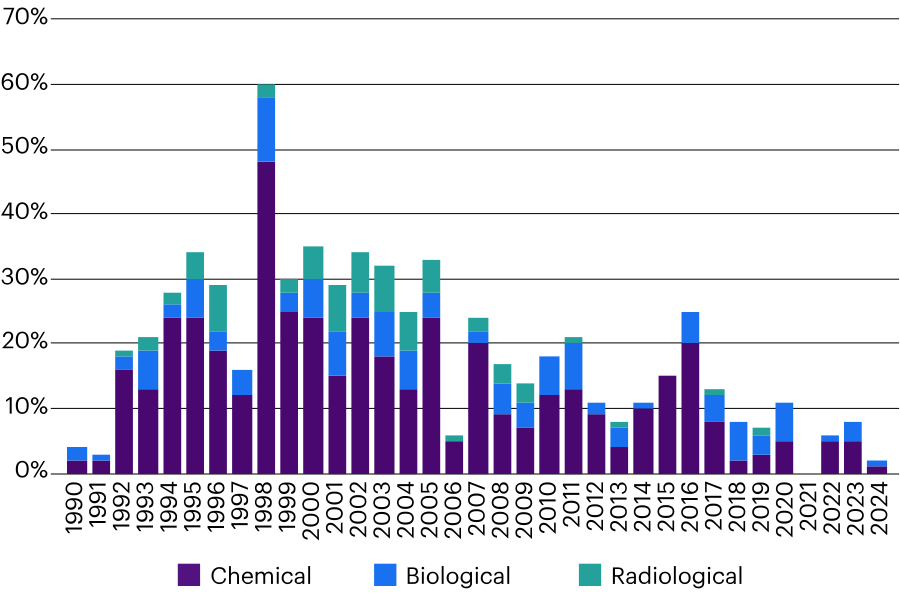
Figure 2: CBRN events by agent type (1990 - 2024)
Source: University of Maryland
Amid currently heightened geopolitical tensions, the number of conflicts the world is experiencing is said to be the highest since World War II, with internationalized intrastate conflicts increasing nearly threefold between 2010 and 2023.[39] Notably, these conflicts are increasingly characterized by external intervention, including direct support to warring parties in civil wars, the use of proxies, and the adoption of hybrid warfare tactics to achieve foreign policy goals.[40] In the context of CBRN risks, support to non-state groups has the potential to increase their capabilities, which could encompass the ability to acquire or develop CBRN weapons or the means to deliver them more effectively.
Furthermore, the trend for states to co-opt individuals and groups to conduct acts of terrorism against opponents on their behalf could conceivably see them employed for acts of CBRN terrorism. Indeed, CBRN agents persist as a favored method for hostile foreign intelligence services conducting assassinations, as seen in the 1979 ricin poisoning of Georgi Markov in London, England at the behest of the Bulgarian Prime Minister by an assassin assisted by the KGB, and the 2018 Novichok nerve agent poisoning of Sergei and Yulia Skripal in Salisbury, England by Russian intelligence officers.[41],[42] It should be noted that even the use of a CBRN agent as part of a close-quarters assassination plot can have wide-ranging consequences, with the Salisbury attack requiring nine separate locations to be decontaminated, at an estimated cost of GBP 12 million, while the incident cost businesses in the area around GBP 115 million.[43],[44]
Meanwhile, the potential for outsiders to be recruited to conduct CBRN-enabled assassinations was highlighted in 2017, when two women were told to spray a man and cover his face with a cloth, as part of a prank at Kuala Lumpur International Airport.[45] The men who instructed the women are believed to have been North Korean agents, and the substance they applied was in fact VX nerve agent, which killed the man who turned out to be the half-brother of North Korean leader Kim Jong Un.[46]
Advances in AI and large language models (LLMs) could also increase the likelihood of terrorists successfully fielding CBRN weapons. Although some barriers will remain, such as the ability to acquire components and chemical precursors, it is claimed that AI and LLMs could help hostile non-state actors learn how to assemble a CBRN attack.[47] Exploitation of encrypted communications could also allow terrorists to share information relating to complex plots and mitigate the risk of detection. At the same time, the dark web can serve as a marketplace for CBRN agents, components and expertise.[48]
The emergence of advanced, easy-to-use, commercially available unmanned aerial vehicles (UAVs) has been increasingly exploited by hostile non-state actors worldwide. In addition, innovations developed as a result of their now-ubiquitous use by both sides in the Ukraine-Russia war have accelerated their evolution into ever-more effective weapons. The nature of UAVs means they are well-suited to delivering lethal CBRN payloads, able to access areas while bypassing traditional physical security apparatus, a capability demonstrated in 2015 when a UAV carrying radioactive material was landed on the roof of the Japanese Prime Minister’s official Tokyo residence by an anti-nuclear activist.[49],[50] UAVs can be used to deliver a host of CBRN weapons in various states, with agricultural systems used for crop spraying providing a ready-made system for targeted dispersal of liquid agents. As UAV-related battlefield developments — such as resistance to jamming — proliferate, the threat they pose will increase further.
3D printing is another technical innovation that can be used to facilitate CBRN plots. There have already been cases of terrorists attempting to design and print components for UAVs to carry CBRN agents,[51] and the technology could be used to share designs for all manner of components that can be digitally shared across the globe.
Conclusion
Despite comprising only a tiny proportion of terrorism events, CBRN threats continue to represent a persistent and high-impact concern worldwide. While more conventional weapons remain more accessible and effective for most terrorist groups, the potential for amplifying operation disruption, as well as causing economic and psychological damage, offered by CBRN weapons means that it is almost certain that terrorists will continue to pursue acquiring them.
Although large-scale CBRN terrorist attacks will likely remain improbable for the foreseeable future, emerging technologies like AI, encrypted communications, and 3D printing mean that the barriers to terrorists seeking to gain CBRN capabilities and deploy them are lowering, with the ability to gain knowledge and produce components remotely, meaning that small-scale production is increasingly within reach of motivated individuals.
CBRN terrorism is a low-probability yet high-impact threat
As historical case studies such as the 2001 anthrax letter attacks have proven, even low-sophistication attacks can cause significant panic and require costly decontamination efforts to make affected areas safe and restore confidence. Organizations must therefore continue to prioritize preparedness, resilience and mitigation to safeguard personnel, operations, and reputation against this evolving class of high consequence threats.
Footnotes
- What is a Chemical Weapon?. Return to article
- Chlorine Gas: An Evolving Hazardous Material Threat and Unconventional Weapon. Return to article
- Sulfur Mustard: Blister Agent. Return to article
- Exposure to large amounts of sulfur mustard:. Return to article
- Russian spy: What are nerve agents and what do they do?. Return to article
- Routes of Exposure. Return to article
- The Sarin Gas Attack in Japan and the Related Forensic Investigation. Return to article
- Chemical weapons: Blood agents. Return to article
- Blood Agents. Return to article
- Al-Qaeda 'planned US cyanide hit'. Return to article
- Biological Agents. Return to article
- Small-scale Terrorist Attacks Using Chemical and Biological Agents: An Assessment Framework and Preliminary Comparisons. Return to article
- Bioterrorism and Anthrax: The Threat. Return to article
- Amerithrax or Anthrax Investigation. Return to article
- The 1984 Rajneeshee Bioterrorism Attack: An Example of Biological Warfare by Violent Non-state Actors. Return to article
- Ricin: Technical Background and Potential Role in Terrorism. Return to article
- Factsheet for health professionals about botulism. Return to article
- NCJRS Virtual Library. Return to article
- Radiological Dispersal Device (RDD). Return to article
- Nuclear Regulatory Commission (NRC): Fact Sheet on Dirty Bombs. Return to article
- NEWS &TERRORISM . Return to article
- Violent Non-State Actor CBRN Event Database Search. Return to article
- 25 Years After the Tokyo Subway Sarin Gas Attacks. Return to article
- Aum Shinrikyo: Once and Future Threat. Return to article
- 2. Recognize the Importance of Partner Communications: Lessons from Tokyo. Return to article
- Aum Shinrikyo. Return to article
- Amerithrax or Anthrax Investigation. Return to article
- AMERITHRAX INVESTIGATIVE SUMMARY. Return to article
- Bacilius anthracis contamination cleanup. Return to article
- Florida anthrax building fumigated. Return to article
- Chlorine Gas: An Evolving Hazardous Material Threat and Unconventional Weapon. Return to article
- Operation Silves: Inside the 2017 Islamic State Sydney Plane Plot. Return to article
- Blood/Systemic Agents (Knockdown Toxidrome). Return to article
- Exclusive: Indonesian militants planned 'dirty bomb' attack - sources. Return to article
- Iranian held in Germany suspected of chemical terror plot. Return to article
- Germany: Teen's home searched over suspected ricin plot. Return to article
- Doctor, two others held in Gujarat over a ‘terror conspiracy’. Return to article
- Terrorism-Related Chemical, Biological, Radiation, and Nuclear Attacks. Return to article
- The Great Fragmentation. Return to article
- Global conflict levels highest since end of Second World War. Return to article
- The case of the poisoned umbrella. Return to article
- 2 Russian Agents Carried Out Skripal Poison Attack, U.K. Says; Arrest Warrants Issued. Return to article
- 5. Deliberate Events. Return to article
- Nerve agent attacks cost companies $151 million in lost business. Return to article
- Killing of North Korean: Suspect thought she was playing a prank. Return to article
- Kim Jong-nam killing: 'VX nerve agent' found on his face. Return to article
- The potential terrorist use of large language models for chemical and biological terrorism. Return to article
- Florida Man Admits Role in International Murder Conspiracy and Sale and Smuggling of Deadly Toxins. Return to article
- Why cheap drones pose a significant chemical terrorism threat. Return to article
- Japan radioactive drone: Tokyo police arrest man. Return to article
- PhD student guilty of making drone to deliver chemical weapon for terrorists. Return to article
Author

Contact

Even low-sophistication attacks can cause significant panic and require costly decontamination efforts to make affected areas safe and restore confidence