

On this episode, Marie sits down with three industry experts to examine contracting regimes across some of the world’s most active carbon capture and storage (CCS) markets. As CCS projects continue to scale globally, developers and operators face complex commercial, legal and operational considerations that can significantly impact project performance and long-term viability. Together, the panel explores how contractual frameworks are evolving across key jurisdictions and what organizations should consider when structuring agreements to allocate risk, secure financing and support successful project delivery.
The discussion covers topics including CCS project development, risk allocation, contract strategy, cross-border regulatory considerations, and lessons learned from emerging carbon capture projects, offering practical insights for developers, operators, investors and industry stakeholders.
Transcript for this episode
INGER HELENE DIRDAL: I think one of the key learnings we have also made in our analysis is that there is a need to make it fit for purpose. So the real opportunity is perhaps to take what works from established industries and adapt it to CCS.
SPEAKER: Welcome to The Risk Circuit, a WTW podcast delivering the latest insights into risk trends and challenges across the natural resources industry. With perspectives from leading voices across all key natural resources sectors, you can make decisions with confidence and clarity.
MARIE REITER: Hello, and welcome to the latest episode of The Risk Circuit podcast. I am Marie Reiter, Head of Global Broking Strategy for Natural Resources here at Willis and Product Lead for Carbon Capture and Storage. Over the next few weeks, we will deep dive into a range of topics affecting developers and operators globally, starting today by looking at contracting regimes across some of the core CCS jurisdictions and exploring how operators can optimize their contractual arrangements for project success.
I'm delighted today to be joined by three very experienced guests who will share their knowledge gained from many years of specialized legal practice. First up, I've got Nick Dingemans, a partner at Stephenson Harwood based in Singapore.
Nick specializes in advising clients on complex cross-border acquisitions, disposals, and joint ventures, and project development with a focus on energy and natural resources, as well as infrastructure and energy transition. His experience spans Europe, the Middle East, and Asia-Pacific, where he has advised clients ranging from governments and multinational corporations to startups and financial institutions. Thanks for joining us, Nick.
NICK DINGEMANS: Thank you for having me and really keen to get involved in this.
MARIE REITER: Thanks, Nick. And next up, I've got James Chapman. James is an energy and infrastructure partner at the global law firm Freshfields, focusing on energy transition matters across Europe and the Middle East. He advises developers and equity and debt investors on a range of transactions, from structuring and contracting through financing and M&A. Great to have you with us, James.
JAMES CHAPMAN: Thanks. Really looking forward to the discussion.
MARIE REITER: Thank you. And last but not least, we've got Inga Helene Dirdal, a senior legal counsel at Northern Lights, the world's first operational cross-border CO2 transport and storage facility. Based in Stavanger, Norway, she advises on CO2 transport and storage agreements and other commercial and contractual arrangements underpinning CCS projects, including risk allocation, finance, and regulatory matters.
Prior to joining Northern Lights, Inga practiced law both in private practice and at Equinor, and she has extensive experience supporting complex infrastructure and energy projects with a background spanning M&A, equity transactions, financing arrangements, corporate governance, sustainability reporting, and commercial contracting.
In her current role, Inga works closely with customers and other stakeholders to develop the commercial and contractual frameworks that enable large-scale CCS projects and the safe and permanent storage of CO2. She's particularly interested in how legal and commercial frameworks can support the development of scalable CSS solutions and accelerate the energy transition. And in very timely fashion, Inga, I hear that you have some really exciting news updates for us from Northern Lights.
INGER HELENE DIRDAL: Yes, thank you very much, Maria. It's great to be here. Yes, today is a big day. Today, Yara is opening Europe's largest industrial carbon capture plant in Sluiskil, the Netherlands. And the captured CO2 will be transported and stored by Northern Lights.
So as we are recording this podcast today, the Norwegian prime minister, together with the Dutch prime minister, will attend the opening of the capture plant. So this is a major milestone for Aurora, for Northern Lights, and the wider CCS industry. It's demonstrating that cross-border CO2, capture, transport, and storage is a reality.
MARIE REITER: That's fantastic news. And Inga, maybe as an opening question, I'll come to you. CCS projects often involve multiple parties across the value chain. How does that make contracting more complex than in a more established energy sector?
INGER HELENE DIRDAL: In CCS, there is a high degree of interdependency across the value chain. If transport, capture and storage are not aligned, the project doesn't work. So the challenge in CCS is not negotiating individual contracts. It's making sure that the entire contractual framework works together.
And the more parties involved, particularly if you look at, for instance, hub-based solutions or CCS projects with shared infrastructure, the more complex the risk allocation becomes. So in more mature sectors, such as oil and gas, LNG or power, many contractual models and risk allocation principles are already established in CCS.
We're still developing those market norms at the same time as the projects are being matured. So in Northern Lights, for instance, a large part of our role is helping our customers to navigate and connect the value chain. And we see that it takes time.
It can be challenging to align CO2 specifications and logistics and operational interfaces across the value chain. And we work closely with our customers to mature their project to build the commercial and contractual framework that makes CCS projects possible. And I think ultimately the successful CCS projects, there is a clear understanding of the risks in the value chain and how they can be mitigated. And that is critical for projects to reach FID.
MARIE REITER: Absolutely agree. And looking across different projects and different jurisdictions, maybe, James, if we come to you for this one, what are the biggest variations you've seen in CCS contractual arrangements? And is the industry gradually converging around a common approach to risk allocation, or are projects still being very much negotiated largely on a case-by-case basis?
JAMES CHAPMAN: It's a really good question, and a lot of the industry is still at a fairly early stage. I draw a big distinction between jurisdictions where it's a highly regulated industry and those where there's much less regulation. So examples of the more highly regulated jurisdictions would be the UK, where you've got a consolidation of the transport and storage into one business model and then the emitter into another business model.
Government support is standardized. Transport and storage arrangements to standardize those grid codes, and there's relatively limited room for negotiation around those fairly standard documents, which is very helpful because it reduces a lot of the coordination issues that we're seeing in other jurisdictions.
But inevitably, with higher regulation, there's less flexibility. And so for some of those earlier projects, it can be harder to get that bespoke risk allocation right. And then at the other end of the spectrum, you've got a lot of the jurisdictions in Asia and Europe where there's fundamentally a merchant model.
And so it's up to the market participants to pull together a value chain with a set of contracts that make sense for everyone, and we're seeing as a broad trend the emitter having taken the majority of that risk. So they're the coordinator. They're having to pull all this together, and they're having to work out how do I flow through the risk through all these contracts.
I think somewhere in the middle of that, you've got a value chain where there is a regulated piece to it, whether that's a network, whether that's a bit of transport infrastructure, whether that's a storage unit, whatever that looks like.
And so there you've got that hybrid model where you've got a little bit of government involvement. There will have been some consultation on the terms of that semi-regulated set of contractual arrangements. But around that, you've got emitters and other value chain participants trying to fit in those bits of the jigsaw around that.
I'm not sure at this stage that you can really say that there's a standardized risk allocation either on that regulated side across multiple jurisdictions or in that more merchant model. Clearly, people are trying to work out what's the set of risk allocations, contractual approaches that make sense.
And you're dealing with people who've got very different approaches to this, is the insurance industry is really well aware that the onshore versus offshore split is a really obvious one, where contracting terms are very different, and it's almost as though you're talking different languages to different people.
And so trying to figure out how you fit those different contexts, the different contexts, the different business models, different regulatory drivers, that will always give you a slightly different approach to risk allocation. So you may well, as you see in other industries like LNG, see a bit of coordination over time to have a more standardized approach. I don't think we're there yet.
MARIE REITER: I totally agree, and it certainly aligns with what we're seeing on the insurance side. And I think there's the added complication in another dimension if we look at Asia, where we increasingly see CSS value chains that span multiple countries. What additional contractual challenges arise when emitters, transport providers and storage operators are operating under different legal and regulatory regimes?
NICK DINGEMANS: Well, the first point is the emitter and what we'd call the host state or the host storage operator in different countries, different regulatory regimes. And you can't-- unless you have some kind of bilateral treaty between the two states. You can't make the liability regimes that you take for granted in Europe and in the UK stretch across those.
So the first point is actually transboundary liability. And there's a whole host of issues that fall into that. And we can get that into that in more detail later. But you start from a very immature regulatory situation. You have countries that are emitters that have no storage space of their own, that must store somewhere else.
So Singapore is the classic example of that. So Singapore looks to Indonesia and Malaysia. Indonesia has a very sophisticated regulatory model. They're very advanced in the way they've developed it. But there's no interconnection back into Singapore in terms of bilateral agreement between the Singapore government and the Indonesian government.
Malaysia is a little bit further behind in its regulatory development. It is developing the law and the regulations and advances are being made. But again, there's no bilateral. And then if you look wider to Asia-Pacific, the obvious countries actually Japan. Japan has some storage space but probably looks to Australia, Indonesia, Malaysia as potential pore spaces, they like to call it, for long-term storage.
And again, no bilateral. You immediately walk into issues like the London protocol, neatly dealt with in Europe for Northern Lights by the effect of fudge that's been put through in terms of Europe IN the UK, but not dealt with in the terms of Japan, and Australia's dealt with it domestically. But the way they've dealt with it is to require a cross-border treaty. Nobody's quite there yet.
MARIE REITER: That's really interesting. And I think certainly complication in those regions with lesser developed regulatory regimes. When we look at adjacent industries such as upstream energy, LNG, offshore infrastructure, what lessons can we learn when structuring CSS contracts? Maybe, James, if I come to you for that one.
JAMES CHAPMAN: Sure. So there are a lot of industries that give very useful starting points for how you would think about pulling together a CSS value chain. Clearly, midstream infrastructure in the oil and gas space, gives a really good indication of how you would run a transport and storage, Certainly a point to point arrangement rather than a network.
The existing European approach to gas networks gives us a very good sense of how you would run the approach to a cross-border CO2 network. So we've got a lot of places to draw upon, good bits of inspiration. I think in some ways the issue is there are so many different business models and business drivers for the different value chain participants that it feels a little bit square peg round hole in some cases because for some folks, you're looking at this as almost the reverse of oil and gas upstream exploration because effectively it's waste management.
It's putting molecules into the ground. And although a lot of the thinking around how do you economically value exploration, wells, and the approach towards a lot of the upstream work that we've seen over the course of the last century. That doesn't necessarily translate quite so well into a more fixed priced industry, which is fundamentally what the CO2 storage approach looks like.
Similarly for emitters, depending on what your business drivers are, you may well feel that actually you would like to have something akin to a power grid or gas grid approach towards pricing and risk allocation. But actually, because it's such a novel technology and the networks are fairly immature, those gas operators are not taking the same approach they would for an existing industrial gas system or natural gas system.
So the issue that I think we are facing, certainly at the moment, is there are really good points of data to draw upon and good analogies and good thinking. And most of the people that I come across in this industry, they are either recovering or still current oil and gas lawyers.
And so there's clearly a lot of that thinking that goes through it. But I think the question really becomes, is all of that fit for purpose? It sounds from India's news today that clearly, you can draw upon a lot of the thinking to pull together a value chain that does work. I think my question is, how sustainable is that across the really wide range of emitters and value chain participants, you're going to have to pull together for this ecosystem to really work.
MARIE REITER: And actually, Igor, if we come to you, how have you seen that play out at Northern Lights? Because you've got a range of different types of emitters across your project.
INGER HELENE DIRDAL: Yes, and I support what you're saying, James. I think I can add perhaps that when we look at LNG, offshore infrastructure, upstream energy. We see in a way also the same need for large investments, long-term commitments and bankable contracts that we also need in the CCS industry. And many of the contractual solutions that we use in CCS today are also adaptions of concepts that have been developed in those industries.
For instance, when we look at capacity commitments and approaches to shipping, logistics and performance regimes, force majeure, there are a lot of similarities. But at the same time, I certainly agree that CCS does have some unique characteristics, and that means that you cannot simply copy the framework from another industry to CSS.
So while the oil and gas industry perhaps have been instrumental in enabling CSS, I think one of the key learnings we have also made in our analysis is that there is a need to make it fit for purpose. So the real opportunities perhaps, to take what works from established industries and adapt it to CSS. For instance, one key point is perhaps to avoid unnecessary gold plating where it does not add value. If you look at technical requirements, for instance, not all of them can be copied from the oil and gas industry.
MARIE REITER: That makes complete sense. And maybe if we move now to looking at governmental policy and the extent to which governments are influencing contractual structures, be that through policy or support mechanisms, or regulatory frameworks. Ingot, how have you seen that in Norway, and I mean, ideally at the EU level more broadly as well?
INGER HELENE DIRDAL: Yeah, I think the simple reality is that most of the first CCS projects would probably not have happened without government support. So government support does not only improve project economics, but it can also fundamentally shape how risks are allocated across the value chain and how contractual frameworks are designed.
And the Longship Project of which Northern Lights is a party to is a good example to establish that first full-scale value chain. It was a new and quite innovative contractual framework that was developed where the Norwegian state entered into separate agreements with the capture and the storage participants rather than relying on contracts directly between the entities densities in the value chain.
And that contractual structure facilitated project development, and it is a good example of how governments can shape the arrangements to support those first of a kind projects. And looking ahead, I think there is real value in governments, regulators, and industry participants sharing lessons learned from the projects that have successfully moved forward with the goal of identifying which support mechanisms that are most efficient for companies to invest and to help projects move forward because ultimately, I think what we see is that the projects that do move forward often are the ones where industry and governments and lenders and insurers are working together to create bankable solutions.
And I think government support, together with that collaborative approach, is likely for-- it's likely to remain critical for CCS to scale.
MARIE REITER: I would absolutely agree that collaboration across projects, insurance, finance, and government I think is absolutely essential, especially in these early stages of the CSS value chains emerging. James, looking at the UK part of that, see the government support mechanism in the UK, you've already alluded to, is very different from elsewhere in the world.
If you could give us your view on how the UK government support mechanism has influenced contracting regimes, and maybe also on whether there are any particular risks that ultimately will probably, for the longer term, require government support to be able to move projects forward because they are just too difficult to transfer or ensure commercially.
JAMES CHAPMAN: So the UK has solved all of the coordination issues that we've been talking about so far by just taking a command and control approach and saying, this is the grid code on a regulated asset base for where you're dealing with the transport and storage network.
Those are the terms on which you'll contract with emitters. And so for emitters, they've taken the renewable style support, which has been banked over a number of years and adapted it to the CO2 storage side of the industry, and because of the long-term experience of market participants, both on the finance side and the construction and project development side, but people have understood that those are fundamentally bankable structures.
And so the UK has taken a very robust approach towards ensuring that it can get these industrial cluster hubs up and running. And we've seen financial close reached on a number of those projects over the course of the last 12, 24 months, which is great news.
And every few months or so, we will see further announcements made for additional emitters joining those joining those networks. We're also starting to see the government taking an approach that starts to allow some more merchant models.
So I think it's interesting that the UK government has recognized that whilst it's got a viable command and control structure for the imposed contractual terms, they do want to create an industry that can long-term be self-sustaining, something more along the European continental shelf approach.
I think it will be interesting to see, notwithstanding financial close having been reached on these projects, whether as the market and the industry develops in the UK, whether you will see changes to those terms. So for the UK renewables support, for example, back in the first auction round, however many years ago that is now, that compared to the terms that are in place now has shown a shift of risk away from government necessarily.
And for some of the risks that are currently covered off, in particular on the transport and storage side. So long-term critical failure of stores, for example, which is very difficult risk for the financial investors on the equity side to take and for the debt side as well. You can see a world in which over time, there is an expectation that a combination of private-sector participants, including, critically, insurers, end up taking on some of those risks.
The rate of change of that, I think, will be mostly influenced by the extent to which you're having the industry develop at a fast rate. If you're only adding one cluster every two to three years, I can't see the government being able to successfully make a move towards significant shift of risk onto the private sector if the ETFs price starts to rise and there's a meaningful reindustrialisation of the UK such that carbon capture is a bigger part of our nation's industry.
And we end up seeing a more modular approach to CSS where you've got smaller and medium-sized facilities, not just these mega projects that are plugging into the networks part of the ecosystem. Then again, I can see a move towards the government shifting that risk away.
But I think it's too early at this stage to say how much of that risk government is meaningfully able to shift without running the risk as it in fact has done on some previous renewables rounds of having a failed auction process.
MARIE REITER: That makes absolute sense. And certainly, from an insurance point of view, it is definitely quantity of wealth of risk that we need to be able to go to make insurance solutions work. So definitely, more projects required. And Nick, when we look at jurisdictions where CCS projects are obviously developing cross jurisdiction, and those jurisdictions have very different regulatory maturity, how is this influencing contract structures and risk allocation, particularly where projects rely on cross border transport and storage?
NICK DINGEMANS: I think the first thing is, unlike Europe, we don't have one. The driver that is the EU, ETFs we have Singapore has a carbon tax. It's just a flat carbon tax, CO2 equivalent, tonne equivalent. And then there's some jurisdictions that have very early-stage carbon tax structures or emissions trading schemes, but nothing like Europe. So we don't have a carbon price.
So outside of Singapore, the drive to decarbonize from that nudge basis isn't there. The other aspect is there is very little, if any, incentivization from governments towards carbon capture and storage. Singapore has looked at a project called S-Hub, which is the Singapore government, through the energy Markets Authority, Shell and Exxon.
But that's all about capture and transportation, with a view to then finding a non-Singaporean storage hub that then runs straight into the transboundary issues I was talking about earlier. And what's really delaying it is that framework that you need to understand is when I transport CO2 from one country to another. What does that do to things like nationally determined contributions?
Now, there's a simple answer. We don't have double counting, but the governments have to agree what happens. I decrease Singapore; I increase, say, Indonesia, and then I decrease Indonesia. Is that double counting or single counting?
Now, we can deal with it contractually and with an A bilateral framework. The other point is liability. So if you have an accidental release to air, now, you can insure against health and safety. Someone dies because of the CO2, et cetera. But what about the carbon emission?
Now, you deal with that in a European and a UK context by-- you have to have an insurance product. For example, you have to also maintain a certain number of allowances that you surrender against the emission. We don't have that in Asia.
We'd have to go to voluntary carbon markets and get a equivalent, or there'd have to be some cross-border or domestic equivalent framework. The other aspect that's not dealt with is ongoing monitoring, verification, and reporting. We fill up our storage space, and the storage operator becomes insolvent. Now, if you're the government of Indonesia, and you're storing Singapore CO2, you want Singapore to have some skin in the game. They have to be liable for something they Indonesian government can't reach across into Singapore and make the original emitter liable.
So that has to be dealt with in the bilateral sense. And we just don't have any of those provisions now. We can see how to do it. We've there's been groups of us in Singapore and wider Asia-Pacific talking about this for a number of years. But it does take a long time for anything to get done at a bilateral, whether it's Singapore, Indonesia, Singapore, Malaysia, or Japan, Australia, et cetera.
So in a way, we're waiting for these government-to-government aspects to be resolved. I think probably the final point is the financial stability, is when the poor state spaces is full, and you've locked it up, who's going to monitor it and make sure it's not going to leak? And how are you paying for that financial stability until such time as someone can say it's safe? It's not-- it's geologically safe. Now, we can walk away from this.
And the answer to how long a period that time is depends on the reservoir you're using and a whole lot of other factors that you don't until you've identified that space. So there's a lot of policy intent in Asia, but we're just not quite there yet.
MARIE REITER: No, absolutely. Do you have a view on time scale of certainly some of those bilateral agreements that would enable that to move forward?
NICK DINGEMANS: Speaking to some of the people that should in both the Singapore and Indonesian governments about six months ago, they said, 18 to 24 months was the view. Now, a lot of things have happened in that time, and I think particularly the change in government in Indonesia with the-- well, now, not so new president. That has delayed a number of things.
I think also the intensity of the cost of living crisis that is effectively happening in Indonesia because of the state being shut in the war with Iran. That is also having an impact. So where you have a financial model that is the storage of a waste product and there's no clear revenue stream in the way that perhaps you get to with the incentivization is in Europe, it makes it more difficult again. So I suspect we are some way off. And I wouldn't want to guess how long.
MARIE REITER: No, that's absolutely fair enough. And as we look forwards in the rest of the CCS industry matures, do you think greater standardization across contracts is inevitable? And if so, what do you expect a best-practice CCS contracting framework to look like in five or 10 years time?
INGER HELENE DIRDAL: I think we will see greater standardization over time, but probably not a single standard contract. But we are more likely to see is convergence around four principles. So the benefits with standardization are clear. It makes negotiations more efficient, reduces transaction costs, improve bankability, and makes it easier for projects to move forward.
And as the industry mature, I do believe that market participants naturally will gravitate towards contractual solutions that have been tested and works. At the same time, CCS projects can differ significantly and too much standardization may ignore project specific risks, could slow down innovation, and make novel projects more difficult to develop.
And there are also contractual areas which are under development. For instance, we've been working with MRV, monitoring, reporting, and verification quite a lot recently. And I think these are first of a kind provisions. And I would expect them to evolve and mature as more projects come online.
So my expectation is that over the next 5 to 10 years, we will see increasing alignment around core contractual principles such as risk allocations, liability frameworks, performance regimes, contractual developments, as I just mentioned. But I think it will be important to maintain flexibility where the projects may differ.
MARIE REITER: That makes absolute sense. Maybe just in closing, if I come to maybe James first, if you could change one aspect of how CCS projects currently approach contracting risk allocation, what would that be? And why?
JAMES CHAPMAN: I'm not sure if I'm allowed to ask for a time machine. But I think that that's what I'd like. I'd like to get to a position where there's meaningful competition, where there's meaningful competition between technology providers for some of the key technology improvements that are required to set up the value chain.
I'd like to get to a position where there's meaningful competition between storage providers. So exactly to all the points that Inga was just saying, you will have that interesting interplay between flexibility where different stores are offering different solutions and different approaches.
But there is competition. There's competition on price. There's competition on performance regimes, all the bits that we've seen Northern Lights engage in the market. And I'd also like to see a point where this is no longer a linear point-to-point set of projects where it is a meaningful ecosystem because as we've seen in, let's say, oil and gas, the moment that it stops being single point of failure along the value chain, and you've got realistic ability to mitigate performance issues because these are really big, complex bits of kit, and they will, from time to time fail. You do need an extra way to get your molecules from A to B.
I think what I'd like to see is effectively that time passing such that there's a broad enough ecosystem instead of players, that you do have a more interesting array of contractual tools at your disposal. But I appreciate asking for a time machine, is a big ask.
MARIE REITER: I mean, I certainly would echo that from an insurance point of view in terms of having the ability to have redundancy in the network that allows a different path if say, a transport part of the network fails to go and be able to use a different transportation path would be immensely helpful from an insurance context. And I think, in closing, if I ask Nick exactly that same question of, what would you wish that you could change? And why?
NICK DINGEMANS: It's a slightly tangential answer. It's a carbon price. I think if we had a carbon price in Asia, like you have a carbon price in Europe, then a lot of the things that we're looking at become a lot easier more quickly because we don't have a consistent carbon price. The motivation to get there differs in different jurisdictions.
And I think if you had a consistent global price, I guess, it's a little bit what James was saying in terms of the LNG model with LNG aggregators, if you can create something that's a little bit more global in terms of price, then the motivation changes.
So I think that if I can't have that, I would have an ASEAN treaty on CCS where all the ASEAN states agree a consistent framework, and then we can just get on with working out the commercial model and hopefully copying what Inga has done or what James has done in the UK. But yeah, we'll get there.
MARIE REITER: I'm sure you will. And I think that is absolutely should be the ambition to go and have, as some agreement on pricing would certainly help moving forward in the region. But all three of you, thank you so much for joining us today and for sharing your views. It's been really interesting to go and hear your different perspectives, particularly focused on the different regions and how the contracting regime differs between those different territories and regulatory regimes. It's been absolutely, phenomenally interesting and thank you so much for your time.
SPEAKER: Thank you for listening. We hope you found this episode insightful. For more information, visit the Insights section of wtwco.com. This podcast is for general discussion and/or information only, is not entirely to be relied upon, and action-based on or in connection with anything contained here should not be taken without first obtaining specific advice from a suitably qualified professional. Thank you.
Podcast host
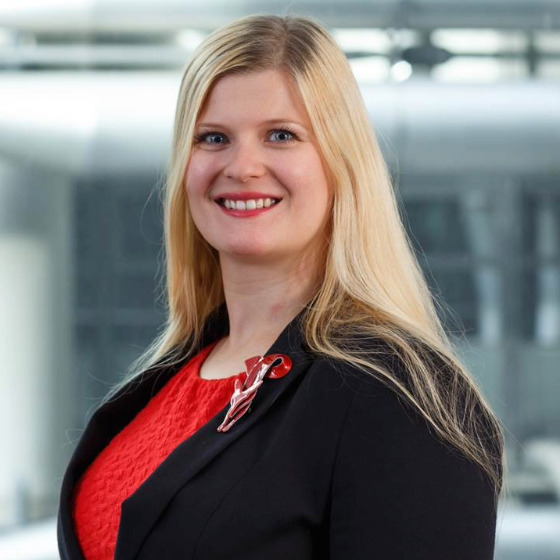
Marie Reiter
Head of Global Broking Strategy Natural Resources
Podcast guests
Inger Helene Dirdal
Senior Legal Counsel, Northern Lights
Nick Dingemans
Partner, Singapore, Stephenson Harwood LLP
James Chapman
Partner, Freshfields LLP