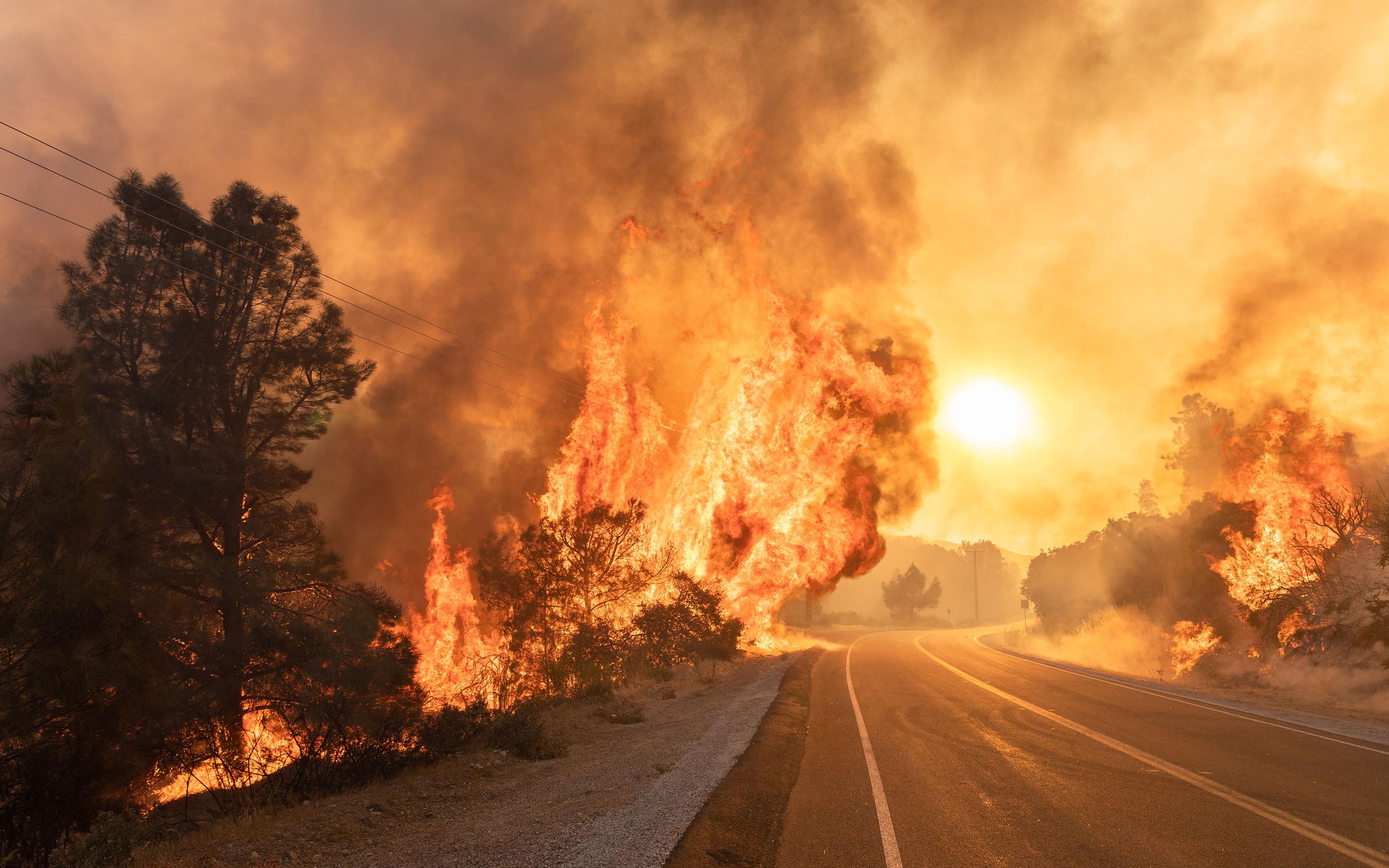
Wildfire, heatwave and extreme weather risks are becoming increasingly relevant business resilience issues for organisations in the UK. While wildfire has often been associated with regions such as North America, Southern Europe and Australia, recent periods of extreme heat, drought and grassland fire have demonstrated that UK organisations are not immune from climate-related disruption.
Recent heatwaves and prolonged dry conditions have contributed to an increase in wildfire incidents across the UK, highlighting how physical climate risks can affect organisations outside traditionally high-risk regions. As temperatures rise and periods of drought become more frequent, businesses may need to consider how these risks could affect their operations, people, assets and supply chains.
For many businesses, the challenge is not only whether a wildfire could directly reach a building but also whether climate-related events could disrupt critical assets, site access, utilities, suppliers, employees and delivery of services. This places wildfire, heatwave and extreme weather risk firmly within mainstream property, operational resilience and business continuity planning. Examples of potential impacts include drought-related pressure on utility assets; transport disruption affecting infrastructure and logistics operators; utility outages affecting manufacturing facilities; and heat-related stress on cooling systems and power infrastructure supporting data centres.
Wildfire risk is rarely driven by a single factor. It is typically the result of prolonged dry weather, drought conditions, high temperatures, low humidity, strong winds and available combustible vegetation. When these factors combine, fire weather exposure can increase significantly, particularly for sites located near grassland, heathland, moorland, woodland, unmanaged neighbouring land, agricultural land, railway embankments or roadside vegetation.
The impacts can extend well beyond direct fire damage. Organisations may experience smoke contamination, road closures, restricted access, evacuation, utility interruption, external plant damage, supplier disruption or constraints on staff attendance. Business interruption can occur even where the insured premises has not suffered physical damage.
A UK organisation may be exposed to the effects of wildfires in Europe, even where their own UK sites are not directly threatened. This could arise through interdependencies within the supply chain, utility networks, transport routes, critical infrastructure or delivery of services, potentially resulting in contingent business interruption and wider operational disruption.
Heatwave risk should be considered alongside wildfire exposure. Prolonged heat can place additional stress on electrical equipment, cooling systems, refrigeration, IT infrastructure, water supplies, temperature-sensitive processes and employee welfare. These impacts may not involve fire, but they can still result in operational disruption, reduced productivity and financial loss.
What drives wildfire and heatwave exposure?
A practical wildfire risk assessment should not focus only on proximity to woodland. Grassland, brush, heathland, moorland, railway corridors, roadside vegetation, unmanaged land and external combustible storage can all influence the risk profile.
Key factors to consider include:
- Vegetation type, including grass, brush, forest, heathland or unmanaged scrub
- Climate, seasonal dryness and drought conditions
- Topography, particularly slopes that can increase fire spread rates
- Prevailing wind direction and potential ember travel
- Adjacent land use and ignition hazards, including railways, roads, agriculture, utilities or waste land
- Proximity of buildings, external plant and critical assets to site boundaries
- Existing fuel management, vegetation control and defensible space arrangements
- Emergency response capability, fire service access and available water supplies
From a risk engineering perspective, the focus should be on the mechanisms of loss: flame spread, radiant heat, ember attack, smoke contamination, utility interruption and restricted emergency access. The assessment should also extend beyond the fence line to consider neighbouring land, boundary conditions, utility corridors, access roads, water supplies and critical suppliers.
How can climate analytics support resilience?
Many organisations are shifting from a reactive approach to a more proactive climate resilience strategy. This is particularly evident in infrastructure and utility sectors, where some UK water companies are already using modelling to better understand exposure to heat stress, drought and regional disruption.
This approach can help businesses identify which sites are most exposed to wildfire, grassland fire, prolonged heat or infrastructure interruption. It can also support more informed investment decisions by answering practical questions:
- What could disrupt our operations?
- Which assets are most vulnerable?
- How resilient are our supply chains?
- Where should we invest to reduce risk most effectively?
The result is a more complete understanding of risk: not only "Can a wildfire occur here?" but "What would happen to our business if it did?"
Climate diagnostics and climate risk scores, covering both current and future exposures, can be integrated with risk engineering platforms, analytics dashboards or internal systems. This enables physical climate risk to be considered alongside property values, business interruption exposure, asset criticality and existing controls.
Some organisations are also developing vegetation fire risk assessments and indices, using factors such as vegetation type, climate and seasonal dryness, topography, prevailing wind exposure, adjacent land use & ignition sources, proximity of assets to boundary, existing fuel management controls and emergency response capability. The latter should also include wildfire detection, monitoring and early warning capabilities.
More specific climate risk scores such as wildfire risk exposure, lightning, fire weather index, water stress and dry spell frequency can also be included within the climate risk factor. These assessments can inform operational area boundary management and vegetation fire management best practices as part of broader health, safety, wellbeing and resilience best practice.
This enables organisations to prioritise action based on exposure, asset criticality, operational impact and the potential financial consequences of disruption.
What actions can your organisation take now?
Many resilience measures are practical, achievable and capable of being embedded into existing facilities, engineering and business continuity processes.
Before periods of elevated wildfire or heatwave risk, organisations should identify exposed sites using climate analytics and risk assessment tools, review external housekeeping and assess boundary conditions. Combustible materials, pallets, waste, vegetation and idle equipment should be controlled around buildings, external plant, substations, generators, pumps, tanks, vents and service penetrations.
Effective vegetation management and maintained firebreaks can be important risk reduction measures. Firebreaks and defensible space reduce the continuity of combustible fuels, limit fire intensity and provide a buffer that supports fire suppression activity. These measures can help reduce the potential for fires originating outside a facility or operational area boundary to spread onto client property and affect buildings, infrastructure and operations.
Organisations should also confirm responsibilities with landlords, neighbours, managing agents, utility providers and fire and rescue services. This is particularly important for rural sites, multi-tenanted locations, shared industrial estates and sites where unmanaged neighbouring land may materially affect exposure.
During periods of elevated fire danger or heatwave warning, site teams should refer to the risk assessment findings and best practices recommendations for sites with high risk, increase inspections of yards, roof areas, gutters, drains, waste areas and vegetation adjacent to buildings. Non-essential hot work should be restricted, permit controls reinforced and emergency contact lists checked. Cooling, electrical and utility systems supporting critical operations should be reviewed, particularly where equipment is vulnerable to prolonged heat.
Business continuity plans should include wildfire and heatwave scenarios, including regional events that may affect several sites, suppliers or transport routes at the same time. Plans should consider utility loss, smoke contamination, site inaccessibility, staff welfare, alternative working arrangements and customer delivery.
How should climate risk fit into risk management?
Wildfire, heatwave and extreme weather resilience sits across property, operations, health and safety, facilities, supply chain, business continuity and enterprise risk management. A connected approach is needed because ignition sources, vegetation, utilities, transport disruption and emergency response arrangements often sit outside the immediate site boundary.
There may also be third-party liability considerations. Fires linked to poorly maintained power infrastructure have resulted in significant losses and regulatory action in other jurisdictions. While UK exposures may differ, organisations should consider whether their own assets, utilities, contractors or maintenance arrangements could contribute to external fire risk or be affected by third-party infrastructure failure.
Wildfire and heat-related risks don’t affect every organisation in the same way. The key is understanding where vulnerabilities exist, how disruption could unfold and which exposures could have the greatest operational or financial impact.
A risk engineering approach can help organisations translate climate-related exposures into practical actions that improve resilience and support more informed discussions with insurers and stakeholders.
Where should organisations focus next?
Wildfire, heatwaves and extreme weather are becoming a more frequent consideration for organisations across the UK. The effects can be felt across operations, infrastructure, people, suppliers and customer delivery, even where there is little or no direct damage to a site.
Understanding current and future wildfire and heatwave exposure is the first step towards building resilience. By combining climate insights with risk engineering expertise, organisations can better understand their vulnerabilities, focus resources on the areas likely to have the greatest impact and improve resilience across their operations.
To discuss your organisation's current and future wildfire risk exposure and resilience priorities, get in touch with our specialists.
Contacts