


Company car benefits remain one of the most visible and debated elements of total rewards worldwide. Long seen as a stable and desirable benefit, company car programs are now under growing pressure from inflation, geopolitical uncertainty, electrification, evolving employee expectations and increasingly stringent regulations.
As a result, organizations around the world are asking more fundamental questions:
- Are company cars still relevant?
- How should company car benefits be structured?
- How can these programs remain affordable, sustainable, fair and competitive in a rapidly changing world?
Answers to these questions lie in rethinking mobility more strategically, and must be supported by data, benchmarking and a broader view of employee mobility needs.
Most employers reviewing their company car policies cite alignment with market best practices and competitiveness as their primary objective. Rising total cost of ownership — driven by vehicle prices, financing costs and maintenance — is the second key driver of policy redesign.
Market best practices likely will become increasingly influenced by expectations around fairness and comparability. With the EU Pay Transparency Directive tightening these expectations, the ability to understand and justify plan differences and applicability has never been more important.
Business requirements, local regulations, infrastructure maturity and talent-market expectations all shape the design of car policies — resulting in a patchwork of practices that pose real challenges for regional and global oversight.
Geopolitical factors add another layer of complexity. Tariffs, trade restrictions and supply chain instability continue to affect vehicle availability, pricing, maintenance costs and, as a result, policies. An increasingly complex and fast-evolving tax landscape also is making it more difficult for organizations to maintain consistent and cost-efficient policies across jurisdictions. As policies diverge, governance at global, regional or event local-entity levels has never been more challenging.
Eligibility differences: A clear indicator of policy diversity
Data from WTW’s 2026 Company Car and Commuting Benefits Survey Report points to a substantial variation in how organizations define eligibility across countries and employee groups. Across the global sample:
- 25% of organizations offer a company car
- 16% offer only a car allowance
- 25% offer both
- 34% offer no car benefit at all
That said, in Slovakia we see 90% of organizations offering car benefits vs. Japan, where just 21% offer these. This shows the extent of how policies can differ depending on the market (Figure 1).
Figure 1. Where organizations are providing a company car and/or car allowance
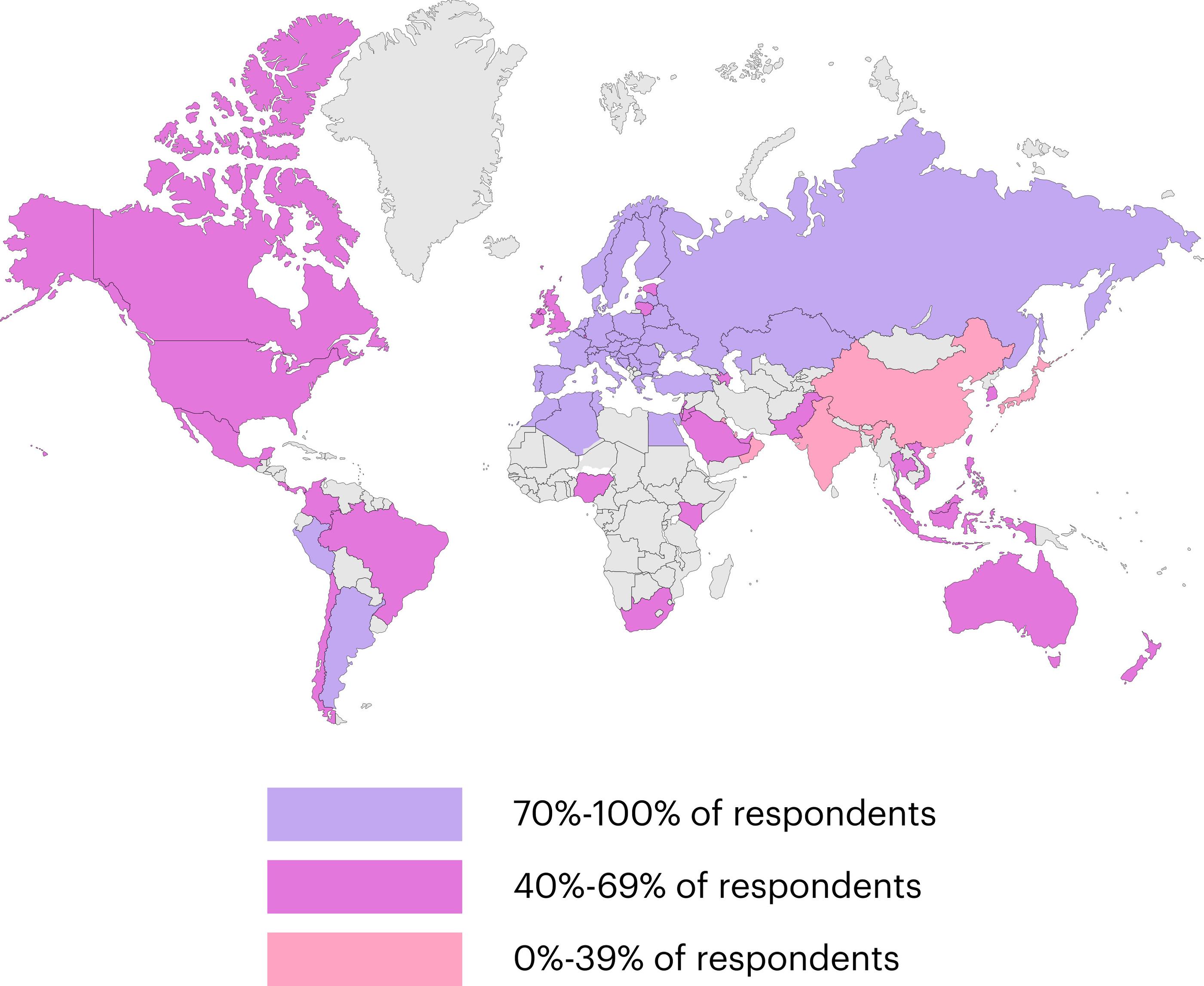
Source: WTW 2026 Company Car and Commuting Benefits Survey Report (formerly called the Company Car Benefits Survey Report).
This year’s data reflects substantial variation in how organizations define car-benefit eligibility.
Eligibility also differs by job level and function, even within the same organization and location. Understanding these differences and having clear eligibility rules in place is paramount from a governance perspective and sets the baseline for control — be it for cost, equity or transparency purposes.
Benefit-type diversity
Another layer of complexity emerges from the car types and vehicle technologies allowed in company policies. The type of car allocated to an employee will have a direct impact on a wide variety of parameters including cost, taxation, employee experience, sustainability and fairness.
Within the same organization, it is typical for car types or car budgets to differ depending on role level and/or role requirements. It’s common for company car allocation to not always be fully policy driven; it also may involve a degree of managerial discretion. This can result in inconsistencies that are difficult to justify and may present challenges when meeting increasing pay transparency and gender pay gap reporting requirements.
Again, governing these aspects of plan design is key for talent attraction and cost purposes, but also more increasingly for maintaining pay equity. The EU Pay Transparency Directive includes benefits such as company cars in the pay definition and, therefore, will require organizations to understand the impact of the company car on gender pay-gap calculations.
Uneven evolution toward sustainability
Electrification is one of the most profound shifts across company car policies around the world. The introduction of more environmentally friendly policies/behaviors is the third-most common objective of policy reviews. Comparing company electric-vehicle penetration in recent years reveals strong overall growth — but also stark differences in pace and maturity across markets.
Between 2025 and 2026, electrification accelerated significantly, especially in Northern and Western Europe. Locations such as Norway, Sweden, the United Kingdom, Belgium, Denmark, the Netherlands, Finland and Austria have emerged as clear leaders (Figure 2).
What the data makes clear is that electrification is no longer a question of “if,” but of “how fast.” Decarbonization has moved from aspiration to expectation, and governments are reinforcing this trend through CO₂-based taxation, vehicle regulations and access restrictions in urban areas.
Mobility alternatives and flexibility: Coexistence of car, allowance and emerging options
Looking beyond company cars, our survey data shows a trend toward multi-option mobility frameworks. Sustainability goals, remote work and urbanization are reinforcing a broader shift — from car policies to holistic mobility strategies. Insights from across regions show that deployment of alternative mobility solutions is growing but remains uneven.
Where alternatives exist, public transport allowances are, by far, the most widely used solution for employees who are ineligible for car benefits. The popularity of public transport allowances is driven by administrative simplicity, predictable costs and scalability — although their effectiveness depends heavily on the quality of local infrastructure (Figure 3).
In parallel, mobility budgets are attracting attention as a flexible alternative to fixed mobility options. These budgets allow employees to allocate a defined budget across multiple options, such as vehicle subscriptions, public transport, shared mobility or cycling.
As employee expectations evolve, flexibility and personalization are becoming increasingly important, with individuals seeking benefits that can adapt to their lifestyles and commuting patterns. On one hand, this shift from ownership to access can enable better cost control and support diverse employee needs across geographies.
On the other hand, from a pay transparency and pay equity perspective, the challenge may be the increasing policy components and applicability scenarios to govern and control. Overall, companies need to think about their ability to justify why employees may receive different mobility solutions — especially if these represent different values.
Company car benefits as a strategic reward lever
It’s clear that company car and mobility benefits are not a static reward; they are a strategic lever that can be used to influence employee behavior and broader objectives. In an environment shaped by uncertainty, regulations and changing expectations, organizations must move toward integrated, robust, forward-looking mobility frameworks.
The future of corporate mobility is not about choosing between cars and alternatives, but about creating balanced ecosystems that combine efficiency, sustainability, fairness and employee choice. Organizations that act now will be better positioned to manage costs, meet regulatory and environmental demands and remain attractive to a modern, global workforce — where access matters more than ownership, and strategy matters more than tradition.
Authors



2026 Company Car and Commuting Benefits Survey Report
Create a cost-effective and competitive car and commuting benefits program that helps attract and retain talent.
Featured content
Benefits assessments for EU Pay Transparency
Ensure your benefits programs stand up to scrutiny, identify potential gender gaps and build a robust roadmap for total rewards.