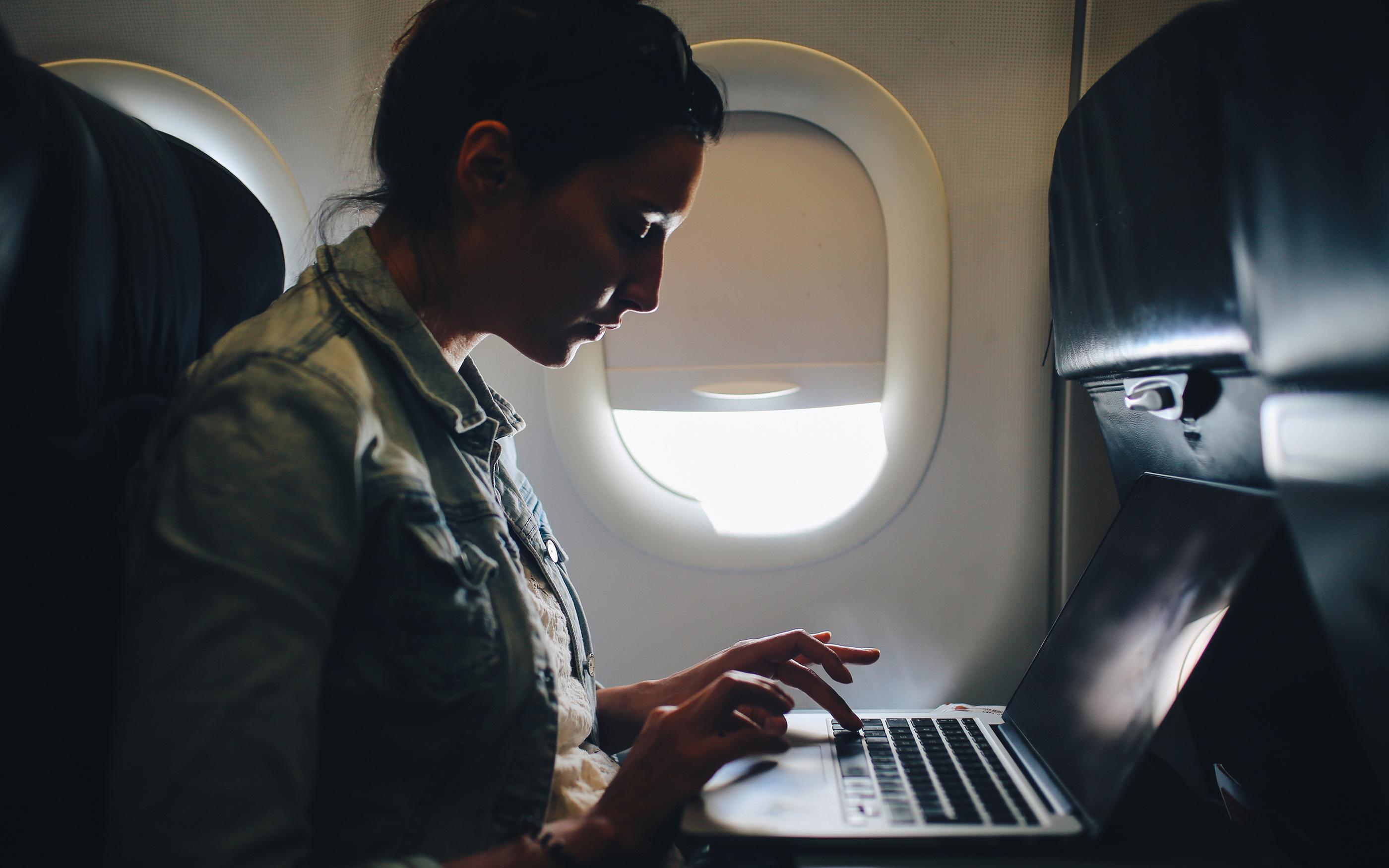
The phones, tablets, laptops, e-cigarettes and portable power banks that many of us carry everyday are powered by lithium-ion batteries. These batteries offer high-energy density, fast charging, minimal maintenance and a reasonable lifespan, making them ideal for modern personal electronics.
Unfortunately, lithium-ion batteries also present the potential for thermal runaway, a self-sustaining chain reaction inside a battery cell that can lead to rapid heating, fire, explosive venting and repeated re-ignition. As a result, they require careful handling, particularly in aviation environments.
- New risks
- New responses
- Battery carriage
- Tightening regulations
- Global rules
- Incidents
- Related capabilities
New risks
Lithium-ion battery fires present a fundamentally different challenge from conventional onboard fires. A normal cabin fire caused, for example, by paper, fabric, an oven fire in the galley or a smoldering cigarette in days gone by, can often be suppressed with standard aircraft fire extinguishers.[1]
A lithium-ion battery experiencing thermal runaway creates a very different type of fire.
A lithium-ion battery experiencing thermal runaway creates a very different type of fire. Standard aircraft fire extinguishers may effectively knock down the visible flames, but they do not stop the internal chemical reaction or dissipate the heat the reaction creates. This means that fires can quickly restart with jetting flames, toxic smoke and even explosive ejection of cell contents.
This is a significant risk on an aircraft and increasingly stringent controls have been put on lithium-ion batteries in aviation environments.
The International Civil Aviation Organization (ICAO),[2] and the International Air Transport Association (IATA)[3] now emphasize that lithium-ion battery events require different controls from traditional onboard fires. National aviation authorities such as the U.S. Federal Aviation Administration (FAA) [4] and the UK’s Civil Aviation Authority (CAA)[5] have also enhanced their regulations and expectations.
New responses
Current FAA guidance states that the key response to a lithium-ion fire on an aircraft is immediate and sustained cooling, usually with large quantities of water or another non-alcoholic liquid, to prevent adjacent cells within the battery from propagating the event.
Airlines have developed new fire procedures in response. When faced with a personal electronics equipment fire, crews follow a two-step process: first, knock down any open flames; second, cool the battery or device continuously to stop propagation to adjacent cells. They are also now equipped with thermal containment bags or boxes and heat-resistant gloves, and many airlines have augmented cabin announcements, with passengers instructed to immediately report overheating, smoke, swelling or dropped devices.
This matters because some incidents now begin not with visible fire but with a device that has been crushed in baggage in the overhead lockers or left charging in the hold. Incidents can also be caused by devices falling into furniture, becoming trapped and then damaged by a seat mechanism as passengers trying to retrieve them. Many airlines now explicitly tell passengers not to move a seat mechanism if a device has fallen into the structure.
The reason regulators prefer batteries to be with the passenger rather than in the overhead bins or in checked baggage is simple: When it happens in an aircraft cabin, a fire can be seen, isolated and ideally brought under control swiftly. A problem in overhead bins will take longer to spot, increasing the risk of spread, and if something goes wrong in the hold, the crew may have no practical way to address it during a flight.[6]
FAA Safety Alert for Operators (SAFO) 25002 encourages operators to review procedures relating to storage areas, especially overhead bins, where a developing incident may be hidden and detection delayed.[7]
What about lithium-ion batteries as cargo?
If passenger-carried batteries are a challenge, the risk posed by batteries carried as cargo is potentially more severe. Standalone lithium-ion batteries shipped as cargo under UN3480[8] have long drawn scrutiny because of the quantity involved and the difficulty of suppressing a cargo fire.
The U.S. Pipeline and Hazardous Materials Safety Administration prohibits the shipping of lithium-ion cells and batteries as cargo on passenger aircraft. When shipped on cargo-only aircraft they must generally be charged to no more than 30% when not packed with or contained within equipment.[9]
IATA likewise highlights that configuration matters:[10] batteries by themselves, batteries packed with equipment, and batteries installed in equipment are treated differently, and anything above certain watt-hour limits must move as cargo under dangerous goods rules.[11]
The history behind those rules is grim. The 2010 crash of UPS Flight 6 in Dubai followed an uncontained main-deck cargo fire; investigators later devoted extensive analysis to lithium-ion battery fire load, cargo container performance and the limitations of freighter fire suppression in such events.[12]
A year later, Asiana Airlines Flight 991 crashed into the sea after an in-flight cargo fire involving dangerous goods, including lithium-ion batteries.[13] In 2012, the U.S. National Transportation Safety Board (NTSB) called for stronger detection and active suppression.[14]
Tightening regulations
The governing baseline has been moving for years, but 2025 and 2026 marked a significant acceleration in the tightening of recommendations and regulations.
On 27 March 2026, the ICAO announced global specifications limiting passengers to two power banks per person. They also prohibited passengers from recharging power banks during flight. The organization said the changes reflected “emerging expertise” around the risks presented by passengers’ lithium-ion batteries.[15] IATA’s implementation guidance separates power banks from the broader category of spare batteries because they present a distinct and growing concern.[16]
IATA’s passenger and operator guidance offers three simple reasons for the focus:
IATA now advises that passengers keep power banks out of overhead lockers, avoid last-minute recharging before boarding, and, ideally, keep batteries at a lower state of charge.[17]
Broad global rules, with airlines adding layers
The international baseline is now clear:
- Spare lithium-ion batteries and power banks belong in carry-on baggage only, not checked baggage
- Battery terminals should be protected against short circuit
- Larger batteries generally require approval
- Power banks are increasingly restricted in number and use on aircraft
FAA PackSafe guidance, for example, reiterates that spare lithium-ion batteries and power banks must travel in the cabin and be removed from a cabin bag if that bag is gate-checked.[18]The U.S. Transportation Security Administration (TSA) is equally unequivocal, stating “Portable chargers or power banks containing a lithium-ion battery must be packed in carry-on bags. Spare lithium batteries, which include both power banks and phone chargers, are prohibited in checked luggage.[19]
The picture for passengers is more convoluted however, because individual airlines add conditions on top of the regulatory baseline. While this is a good thing given that guidelines are the minimum safe level, the additional stipulations create confusion. Some carriers control where power banks must be stored in the cabin, some ban their use in-flight, some during specific phases of flight such as taxing, take-off or landing, some ban carrying more than two and others ban power banks over a certain capacity.
The direction of travel, however, is clear: fewer batteries, less charging, more visibility.
In short, despite the clarity around the international baseline, aviation has not yet reached a single uniform passenger standard, creating a sometimes-awkward mosaic of regulatory minimums and airline-specific policy. The direction of travel, however, is clear: fewer batteries, less charging, more visibility.
Real-world incidents have accelerated change
Recent passenger-aircraft events have made the issue more visible for the public. In January 2025, an Air Busan aircraft caught fire at Busan shortly before departure. Interim investigators said a power bank found near the origin of the fire showed evidence consistent with an insulation breakdown and short circuit; they found no abnormalities in the aircraft’s own electrical systems. All 176 occupants evacuated, but the aircraft was a total loss. South Korea subsequently tightened its rules from 1 March 2025, including changing the requirements for passengers to keep power banks and e-cigarettes with them during the flight rather than placing them in overhead bins. Onboard charging was also restricted.[20]
With the issue under enhanced scrutiny, even the absence of fire can justify operational disruption if a battery is potentially unsafe. In May 2026, a flight from Egypt to the UK was diverted to Italy after a passenger told crew that they had left a power bank charging inside checked luggage in the hold. The aircraft landed without incident, but the decision to divert the flight illustrates how seriously operators now treat inaccessible lithium-ion battery exposure, even with no evidence of a potential problem.[21] Given the cost of diverting an aircraft, the decision will not have been taken lightly.
These are not the only incidents. The FAA has reported more than 500 lithium battery incidents involving smoke, fire or extreme heat over the last two decades.[22] UL Standards & Engagement’s 2024 aviation battery data review found thermal runaway incidents averaging at two per week among the nearly 40 organizations that reported data. Nearly 20% of these incidents caused significant passenger disruption such as a diversion, return to gate, evacuation or unplanned deplaning.[23]
Lithium-ion batteries are no longer a niche, dangerous goods, issue.
For the aviation insurance market, the message is now unambiguous: Lithium-ion batteries are no longer a niche, dangerous goods, issue. They have become a broad operational exposure, spanning hull loss, passenger injury, diversion cost, airport emergency response, cargo claims, and business interruption.
Without drilling too deeply into the technicalities, lithium-ion may be superseded by lithium-polymer and silicon-carbon battery technologies because they are more stable and reduce the risk of thermal runaway even when charged at super-fast speed. These emerging batteries are often lighter and offer enhanced energy density, but they are also more expensive and have a shorter lifespan. What this means is that lithium-ion is likely to be the battery technology of choice in most instances for the near future.
The insured peril may start with a cheap or damaged consumer power bank in a seat pocket, an incorrectly declared battery consignment, an overheated phone crushed in a seat track, or a freight pallet of cells shipped within regulatory limits, but the common theme is that a ubiquitous everyday technology now creates a distributed, systemic aviation risk.
Footnotes
- How to Contain Battery Fires on Planes: What You Need to Know Return to article
- New power bank restrictions will safeguard international aviation Return to article
- Battery Shipping Regulations (BSR) Return to article
- Managing the Risks of Lithium Batteries Carried by Passengers and Crewmembers SAFO 25002, 25/08/25 Return to article
- Changes to rules on the carriage of lithium-ion cells/batteries and power banks Return to article
- How to Contain Battery Fires on Planes: What You Need to Know Return to article
- Managing the Risks of Lithium Batteries Carried by Passengers and Crewmembers SAFO 25002, 25/08/25 Return to article
- A Complete Guide to UN3480 & UN3481 Lithium Ion Battery Shipping Regulations Return to article
- Frequently Asked Questions: Enhanced Safety Provisions for Lithium-ion Batteries by Aircraft IFR Return to article
- Cargo, Dangerous Goods (HAZMAT), Batteries Return to article
- Passengers Travelling with Lithium-ion batteries - Guidance Document (Revised for the 2026 Regulations) Return to article
- United Parcel Service Flight 6, N571UP Return to article
- Crash of a Boeing 747-48EF in the East China Sea: 2 killed Return to article
- NTSB Safety Recommendation, November 28, 2012 Return to article
- New power bank restrictions will safeguard international aviation Return to article
- Changes Regarding Power Banks Return to article
- Passengers Travelling with Lithium-ion Batteries - Guidance Return to article
- PackSafe - Lithium-ion Batteries Return to article
- What can I bring? Power Banks Return to article
- Power bank likely caused S Korea plane fire – investigators Return to article
- EasyJet flight diverts to Rome over power bank in luggage Return to article
- Lithium Battery Air Incidents involving smoke, fire, or extreme heat Return to article
- Lithium-Ion Battery Incidents in Aviation: 2024 Data Review Return to article
Author
.jpg?imgeng=/w_2800)
Contact