

The UK Climate Change Risk Assessment (CCRA) is the Government’s statutory, evidence‑based review of how climate change is affecting the UK today and how it is expected to evolve over the coming decades. It sets out the priority climate risks facing the country and informs national policy, investment decisions, and regulatory expectations around resilience.
WTW contributed to the technical report[1] that will underpin CCRA4, alongside leading academic authors.[2] Our involvement reflects WTW’s role at the interface of climate risk advisory and helping translate complex climate evidence into actionable insights for organisations.
The UK climate is already shifting and organisations need to plan for it
A clear message from the latest CCRA technical report is that the UK climate baseline has already changed, and it will continue to diverge from historical norms. This shift is now visible in observed data: hotter drier summers, warmer wetter winters, more intense rainfall extremes, rising sea levels, and growing evidence of compound hazard events. These changes carry significant implications for corporate resilience, insurance exposures, supply chains, infrastructure performance, and long‑term planning.
Hot, dry summers, such as 2018 and 2022, are projected to occur far more often.
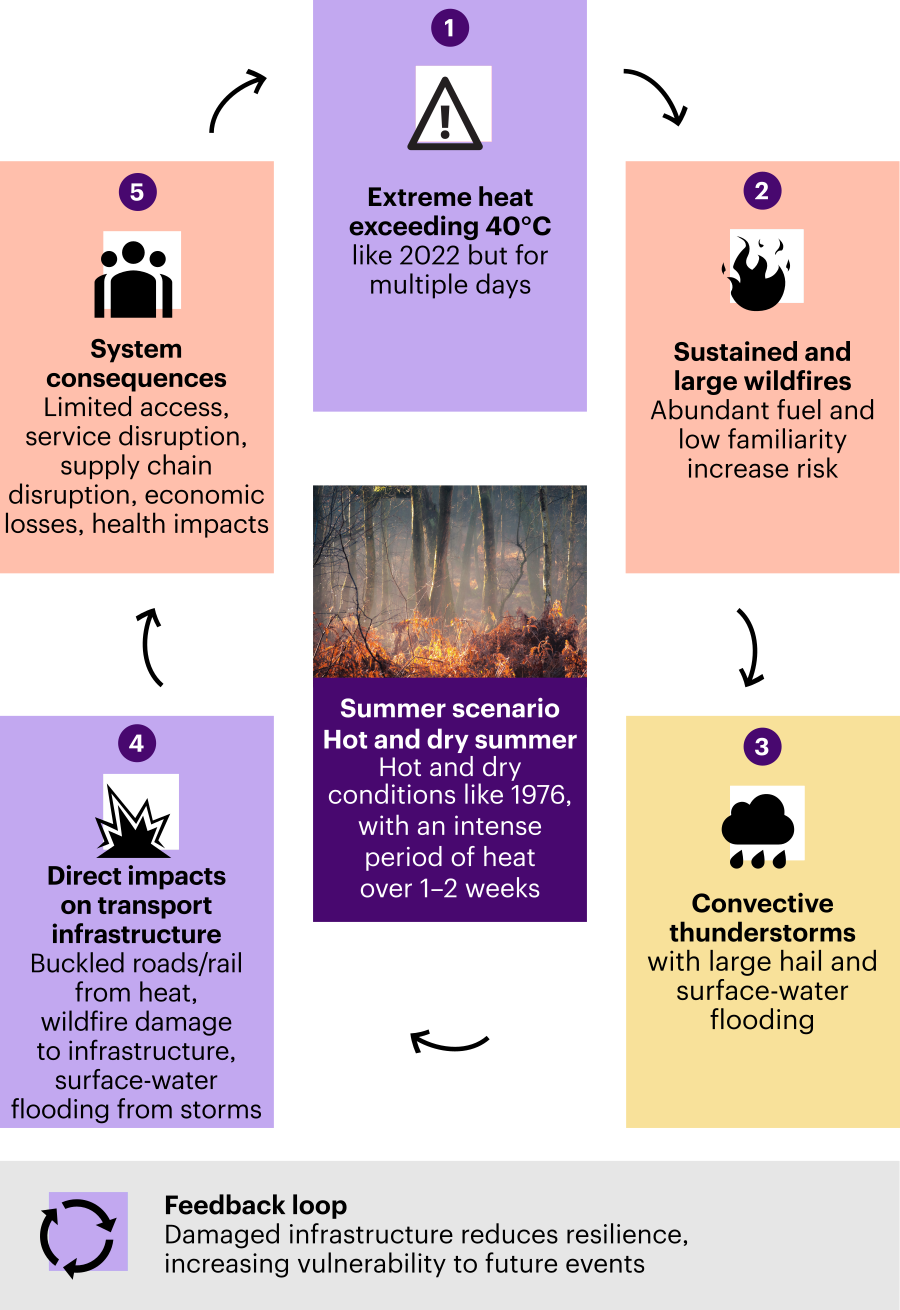
Figure 1 – A plausible compound high-impact hot-dry summer scenario
.svg)
Figure 2 – A plausible compound high-impact wet-windy winter scenario

Related content
The UK’s hottest days are warming twice as fast as average temperatures.
The Fourth UK Climate Change Risk Assessment makes clear that climate change is no longer a future concern, but a present and escalating business risk. More frequent events, along with compounding and cascading hazards, are already reshaping the operating environment for organisations across the UK. These shifts have direct implications for resilience, asset performance, supply chains, insurance, and long-term investment decisions.
Organisations will therefore need to move beyond reliance on historical climate assumptions and adopt more forward-looking, multi-hazard approaches to risk management. Those that act early to strengthen resilience will be better placed to manage disruption, meet stakeholder expectations, and adapt to a changing climate.
Footnotes
- Lowe, J. A., Harrison, M. and Perks, R. J. (2026). CCRA4-IA Technical Report. Return to article
- The authors of this article were contributing authors to the CCRA technical report, Chapter 2: State of the Climate. They led and co wrote the sub chapter (Section 2.3.5) on compound and sequential climate hazards and contributed to the interpretation of multi hazard risk evidence. Readers wishing to explore the underlying analysis are directed to Section 2.3.5 (Compound Hazards, pages 98-102), and related discussion throughout Section 2.3 (UK Climate Hazards, pages 72-103). Return to article
Authors



The Fourth UK Climate Change Risk Assessment makes clear that climate change is no longer a future concern, but a present and escalating business risk.