Willis Global Aviation & Space guests Patrick Richardson and Paul Baker discuss the Middle East Conflict's early impact on the aviation and insurance industries. They examine how the crisis unfolded, the challenges faced by clients, and how insurers responded to the rapidly evolving situation.
Transcript for this episode
PAUL BAKER: Each time that you do look at your phone for a news update, it does seem as though it's changing all the time. It is a fast moving situation. But yeah, we would certainly hope that as things, dare I say, calm down in the region, as you say, then, yeah, we will see some of these restrictions leave us in terms of things like ground time, overnighting. But obviously, most importantly for our clients is that we see that the additional premiums are reduced, if not waived.
SPEAKER: Welcome to Global Marketplace Insights by Willis, a WTW business, a podcast series showing the latest trends from the specialty and regional insurance markets.
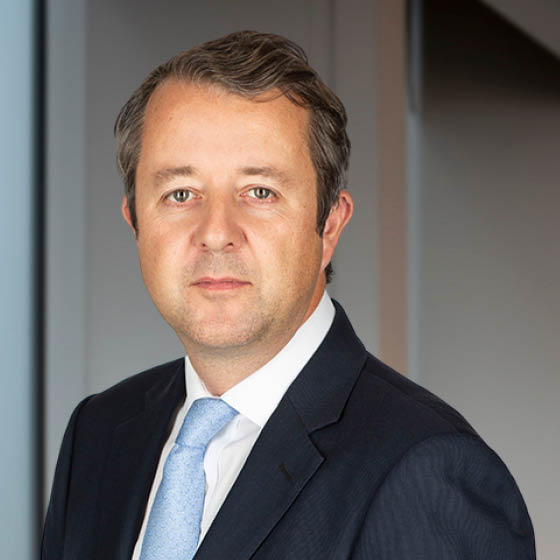
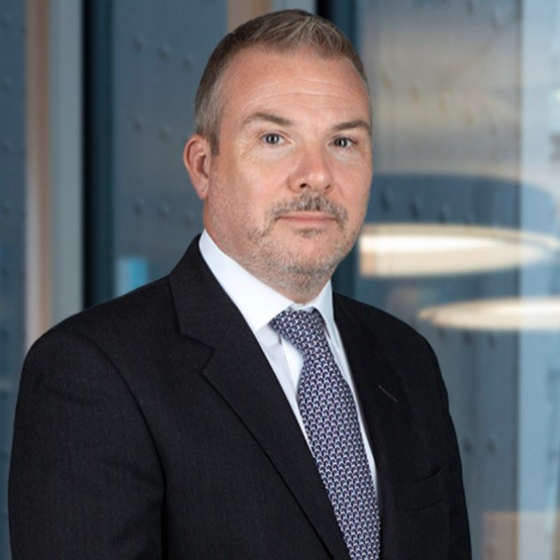
PATRICK RICHARDSON: Hello, and welcome back to the Marketplace Insights podcast series, where we've been discussing the current state of the aviation and space market. I'm Paddy Richardson, I'm Managing Director and Head of Airlines at WTW Global Aviation and Space. And I'm delighted to be joined today by Paul Baker, Managing Director, Global Aviation and Space. Hi, Paul.
PAUL BAKER: Thank you. Good afternoon.
PATRICK RICHARDSON: So it's been a tough couple of weeks, I think, for a lot of people in the industry-- airlines, ourselves to an extent, and the insurers. How has it been for you, Paul? What's been going on?
PAUL BAKER: Yes, I think all of the above. Yeah, tough. I think we do, all of us, have a saying that there's rarely a dull moment in this industry. But I think certainly over the last two or three weeks, that's certainly been very much put into play. I mean, it's been worrying times, an incredibly busy time for all of us and our clients. But I think we're working through it.
PATRICK RICHARDSON: And it takes me back a little bit to Russia-Ukraine, when no one thought something was going to happen. It was all expected to blow over. And it certainly didn't. And that conflict is still going on.
I feel this time that the chances of something happening were a bit higher. People assumed that something was going to happen between the US and Iran and Israel. But clearly, what happened after the first munitions were fired was kind of widespread across the region. What was it for your client specifically? What happened day one, day two across the Middle East?
PAUL BAKER: Well, first and foremost, I think that a number of us-- I think if you keep up with the media, I think there were these rumblings of something happening in the region. But I still remember waking up at that Saturday morning and having that oh wow moment. This is really happening or started to happen.
So that Saturday morning, when it happened, I think the first questions were was to ring around, certainly, for the clients that I look after that operate into the area was frankly a case of, do you have aircraft in the region? And fortunately, the clients that I do look after either didn't have aircraft in the region or the aircraft that they did have, they managed to get out that morning very, very rushed.
And so I think from that perspective, clients I look after, they'd done everything that they could possibly do. But even speaking to them with the intelligence that they've got, I think this was a surprise to them as well. So I think that they reacted as quickly as they could, particularly on that Saturday and for the rest of the weekend. But there was a busy weekend for a lot of us, for sure.
PATRICK RICHARDSON: Yeah, exactly. And so the process that we went through with our clients was essentially trying to understand what exposures they had in terms of aircraft that were in locations affected. Of course, we've got many clients that fly in and out of the Middle East. And a lot of them, perhaps it was not straightforward. But it was just canceling flights and making sure aircraft weren't there. But of course, we've got a lot of clients in the region that couldn't do anything other than ground the aircraft or where they were.
PAUL BAKER: Oh no. And I know I had a call from an insurer that afternoon said, we understand that so-and-so has got an aircraft there. What are they doing? And there is that moment where you say, well, yes, the aircraft is on the ground there. But the airspace is closed.
So even if they wanted to, the aircraft can't come out. At the moment the airspace did open and it was safe to take the aircraft out. They did. But for the clients that I look after are not based in the Middle East but did have that issue of having passengers stranded in the region, both ways of sending nationals from the Middle East back home and also getting their own passengers out, which obviously was a major logistical problem for the airlines.
PATRICK RICHARDSON: And there are coverage implications, of course. The concept of the grip of the peril means that the aircraft that were in that situation across the whole Middle East were covered. Insurers were obviously seeing a very, very different risk landscape, which I think is fair. Of course, there was a lot of difficult days, which continue even now, with a lot of aircraft on the ground and potentially exposed to serious situation to date.
We're not aware of any confirmed reports of serious aircraft damage. But what the insurers didn't do was issue notice. Why didn't they do that?
PAUL BAKER: I think the insurers did take a reasonably proactive stance on that in terms of not issuing notice and working with brokers and with airlines with their client base to ensure that notice wasn't issued. But personally, I don't feel that they would have been right to issue notice. But you could see a situation where they felt that they have to do something here. Or it is a seven-day notice period under the whole war policy and, obviously, the primary AVN 52 aspect of coverage. But obviously, glad that notice wasn't issued and that we, alongside our clients, were able to work with insurers to avoid the issuance of a notice.
PATRICK RICHARDSON: Yeah. And I mean, I completely agree with that. The airlines' primary concern is obviously protecting their people and protecting their assets that they're always going to do. And a huge amount of credit, I think, should go to the airline industry for making themselves available to the insurers to say what was going on the ground, what were their contingency plans that were being put in place, and, of course, what was the security and risk management information that they were getting that would feed into their processes. Very developed and deep in terms of the information they have available to them.
PAUL BAKER: You absolutely can't underestimate the value of that. Our clients were able to talk to their insurers directly about their current situation. And that allowed their insurers to hear, basically, firsthand news on the ground.
And as far as I'm concerned, I think that hopefully gave insurers the comfort that the airlines were, of course, taking this seriously and were putting mitigation in place. So I think it was a real good combined effort from everybody to keep everything on an even keel, which at a time when life was looking quite tense, obviously.
PATRICK RICHARDSON: Yes, indeed. And we moved forward through that first week. What then happened was air spaces were opened in some corridors. Airports were able to reopen some slots for aircraft. And people were able to get people out, get people in, move aircraft, and actually the start of I wouldn't say normal flight conditions but some scheduled flights.
And of course, there's a need for cargo and expatriate people and things like that. So at that point, airlines were starting to operate back into the region to some locations, not all. And some of the airlines based in the region were starting to operate. And that's where we had to reach mutual agreement with the insurers because notice hadn't been issued. But what was the steps that we all took during that period that kept things on an even keel as possible?
PAUL BAKER: So ordinarily, in order to make any changes to the policy, insurers would have to issue a notice to do so of seven days. And that's to review rate of premium and/or geographical limits. I think it was a case that in lieu of an issuance of notice, I think that we and the insurers came to an agreement in terms of additional premium charges that were going to be applied that we obviously then took to our clients.
And it was simply a case of explaining the situation to our airline clients, explaining that there wasn't going to be any restriction in terms of the coverage-- i.e., coverage was in place for performing these flights. But there were going to be an additional premium charge.
And obviously with some additional subjectivity limiting ground time, flights being performed during daylight hours, but probably, most importantly, the fact that flights were being carried out using internationally recognized air corridors so long as they remained open and that it was safe to do so with airlines monitoring NOTAMs. And so I think we worked really well in terms of our airline customers to get that running as smoothly as we possibly could.
PATRICK RICHARDSON: Yeah. And it's, again, a volatile period. And from our perspective, I don't think there was a broad consistency from the insurers in some of those charges being applied.
But that's where our job comes in to ensure that consistency and actually get the appropriate information and for insurers to understand the exposure is different in different locations, for different flights, for different types of aircraft and use that to get the best possible terms, which is what our team have been doing for the past couple of weeks.
PAUL BAKER: Absolutely. As you know, we've had daily, sometimes twice daily, calls on this because it's such a very, very fast moving situation, where as soon-- and we all knew that as soon as there was a situation where airspace opened, we would know that our clients would want to go there, first and foremost, to get their nationals out. We understand that.
And yeah, I think that we worked really hard as, I mean, a number of the team to make sure that our clients were adequately protected and were able to perform these flights. And yeah, having to get coverage put in place at very, very short notice, which I think, to a whole, we did.
PATRICK RICHARDSON: And difficult for the airlines at a time when fuel prices has, obviously, spiked, almost doubled, I think, as at today's pricing to be charged extra. But I think it's fair to say that the risk landscape is different now. And the insurers are providing cover.
They haven't withdrawn cover. They are seeking mutual agreement to different terms and conditions. But they're still providing cover. And it's fully available for passenger and cargo operations almost anywhere in the Middle East.
PAUL BAKER: No, definitely. I've certainly got nowhere where an insurer said, no, I'm not willing to cover that operation. There is a negotiation in terms of the pricing for the covering of that operation but no blanket refusal to offer coverage. So as I say, it's certainly been challenging. Because as we know, when additional premiums get set, that is then subject to agreement of the full panel of insurers who are on that placement, which obviously airlines, we know, want to perform these repatriation flights as quickly as possible once they're able to do so.
But obviously, we're having to work with a vast panel of insurers, where it can be up to 25 to 30 insurers participating on a placement. Each one of them have got to be spoken to explain the situation. And most importantly, they've got to agree that or we've got to get their agreement for those flights.
PATRICK RICHARDSON: And this is continually under review. Clearly, we're pausing for breath right now on the basis we can even spend 10, 15 minutes doing the podcast.
PAUL BAKER: No, definitely.
PATRICK RICHARDSON: So we are pausing for breath. But this situation is ongoing. I wish that we had between us-- or anyone could give us a timeline on what this war will look like over the coming days and weeks. But clearly, this situation, the airline operations, it's going to continually going to be under review.
We're going to be continuing to negotiate for our clients the best possible terms. Because if this does scale down, the risk changes to something more acceptable. And therefore, charges should be reduced or waived. And this is going to be the daily workload going forward for us and our clients.
PAUL BAKER: Oh, yeah. I absolutely couldn't agree more with that. It is a case that each time that you do look at your phone for a news update, it does seem as though it's changing all the time. It is a fast-moving situation. But yeah, we would certainly hope that as things, dare I say, calm down in the region, as you say, then we will see some of these restrictions leave us in terms of things like ground time, overnighting. But obviously, most importantly for our clients is that we see that the additional premiums are reduced, if not waived.
PATRICK RICHARDSON: Absolutely. Well, thanks, Paul, for your time. I think if there's anyone listening that has got more questions about the coverage side of it, about the implications for airlines, or certainly how these charges are being looked at and needs any assistance, the team will always be available as needed. And we just all hope that the situation improves and people and assets are protected and it comes to an end as quickly as possible. But difficult to predict.
PAUL BAKER: No, most definitely. That's the one thing that we can't do in this industry, is predict. But just a message in general to our clients is just we are here to help and support you through what is another challenging time for us.
PATRICK RICHARDSON: Yes, I think back over my career from 9/11 to up to more recent events, like Russia-Ukraine. As you say, things don't stay stable for long in the aviation industry. COVID, SARS outbreaks, any number of them-- and all we can predict is there will be more in the future. But we'll be here to protect our clients and help them through all of those challenges.
PAUL BAKER: Absolutely.
PATRICK RICHARDSON: Great. Well, thanks, Paul, for joining and your contribution to this episode of the Marketplace Insights podcast. And we'll see you again soon. Thank you.
PAUL BAKER: Thank you. Take care.
SPEAKER: Thank you for joining this WTW podcast featuring our latest global market commentary. WTW offers insurance-related services through its appropriately licensed and authorized companies in each country in which WTW operates. For further authorization and regulatory details about our WTW legal entities operating in your country, please refer to our WTW website.
It is a regulatory requirement for us to consider our local licensing requirements. The information given in this podcast is believed to be accurate at the time of publication. This information may have subsequently changed or have been superseded and should not be relied upon to be accurate or suitable after this date.
This podcast offers a general overview of its subject matter. It does not necessarily address every aspect of its subject or every product available in the market. And we disclaimer all liability to the fullest extent permitted by law.
It is not intended to be and should not be used to replace specific advice relating to individual situations. And we do not offer and this should not be seen as legal, accounting, or tax advice. If you do intend to take any action or make any decision on the basis of the content of this podcast, you should first seek specific advice from an appropriate professional.
Some of the information in this podcast may be compiled from third-party sources we consider to be reliable. However, we do not guarantee and are not responsible for the accuracy of such. The views expressed are not necessarily those of WTW.
Disclaimer
Podcast guests
Listen to this episode on:
PODCAST SERIES
Global Insurance Marketplace Insights Q1 2026