In this episode of The Anatomy of Risk, Rachel Phillips, GB Health & Social Care Leader at WTW, joins David Bennett from Willis’s Reputational Risk team to explore how the nonprofit sector can effectively manage reputational risk to mitigate damage and maintain public trust. They also discuss the impact of celebrity endorsers, influencers, and ambassadors whose controversial actions or misalignment with an organisation’s values can pose significant challenges.
Choose your location
Select the location and the language that you prefer
| Location | Languages Available |
|---|---|
| Argentina | |
| Bermuda | |
| Brazil | |
| Canada | |
| Chile | |
| Colombia | |
| Costa Rica | |
| El Salvador | |
| Guatemala | |
| Honduras | |
| Mexico | |
| Nicaragua | |
| Panama | |
| Peru | |
| United States | |
| Venezuela |
| Location | Languages Available |
|---|---|
| Australia | |
| China | |
| Hong Kong (China, SAR) | |
| India | |
| Indonesia | |
| Japan | |
| Korea | |
| Malaysia | |
| New Zealand | |
| Philippines | |
| Singapore | |
| Taiwan | |
| Thailand | |
| Vietnam |
| Location | Languages Available |
|---|---|
| Austria | |
| Belgium | |
| Croatia | |
| Czech Republic | |
| Denmark | |
| Finland | |
| France | |
| Germany | |
| Greece | |
| Hungary | |
| Ireland | |
| Italy | |
| Kazakhstan | |
| Luxembourg | |
| Netherlands | |
| Norway | |
| Poland | |
| Portugal | |
| Romania | |
| Serbia | |
| Slovakia | |
| Spain | |
| Sweden | |
| Switzerland | |
| Turkey | |
| Ukraine | |
| United Kingdom |
| Location | Languages Available |
|---|---|
| Cameroon | |
| Congo | |
| Egypt | |
| Ghana | |
| Ivory Coast | |
| Israel | |
| Jordan | |
| Kenya | |
| Kuwait | |
| Mauritius | |
| Nigeria | |
| Saudi Arabia | |
| Senegal | |
| South Africa | |
| UAE | |
| Uganda |


What can we help you find?
main content, press tab to continue
Podcast
Trust & turbulence: Managing reputational risk in the nonprofit sector
The Anatomy of Risk Podcast Series: Season 1 - Episode 5
December 8, 2025
Practical risk management advice for the health and social care sector
Transcript for this episode
DAVID BENNETT: The opportunity in getting it right would be looking at the types of solutions you can put in place. So have you got good technology that helps you monitor and measure reputation, the reputational risk side of it. Have you got good crisis comms plans in place? And indeed then, have you got some sort of mechanism where you can transfer that risk?
RACHEL PHILLIPS: Welcome to the Anatomy of Risk, podcast series dedicated to exploring the critical intersections of risk management, insurance, and the ever evolving health and social care sector. Our goal is to arm you with the knowledge and tools you need to mitigate risk effectively, ensuring you can focus on what you do best, providing excellent care.
Welcome to the Anatomy of Risk podcast. I am your host, Rachel Phillips, health and social care leader at Willis, a global risk and insurance consultancy, providing data driven, insight led solutions for health and social care providers in the areas of people, risk, and capital.
I have with me today, David Bennett, to discuss our latest reputational risk report for charities and NGOs, and to discuss the area of reputational risk for the sector. David leads the reputation risk management team at Willis. David's, also a member of the Institute of Risk Management, is a regular presenter at industry and trade association events, and is extensively published on issues relating to reputational risk.
Before joining WTW, David also worked for over 15 years with PwC and KPMG. David, welcome. It's really good to have you here.
DAVID BENNETT: Thanks for having me, Rachel.
RACHEL PHILLIPS: The UK Charity and NGO sector is estimated to exceed some 200,000 organisations, generating over £95 billion in total income, contributing approximately £18 billion to the UK economy annually and employing around 1.28 million people. So, David, clearly a vital sector without which asignificant number of vulnerable individuals would lose critical support and instead have to either fend for themselves or turn to welfare, and also add pressure to the NHS, just to name two impacts. So what are the biggest challenges currently faced by charities and NGOs?
DAVID BENNETT: Yeah, very good question, Rachel. And in many ways, the answer is in your question. So what we're seeing right now, charities and NGOs are facing a perfect storm. So we know that aid budgets have been cut around the world. So there is less money from governments and institutions. So they've got to find that support from somewhere else.
And then on the other side, those donations are going down. Or certainly they have to compete very hard for them because as we know in the UK, we've got a cost of living crisis, or certainly a rising cost of living right now. So a supersaturated market with a pie that is shrinking. So those are the challenges primarily these guys face.
RACHEL PHILLIPS: Thank you. And in terms of reputational risk, what's the appetite like in the sector? Is there a balance, do you feel, between risk and reward?
DAVID BENNETT: Yeah, very much so. It's an interesting one. Having spoken to a number of people in the charity space, obviously they are, as we've already said, challenged in terms of trying to find extra donations. And they have to make donations, being able to raise funds as easy as possible. So you can go to many websites of charities and download their starter packs for raising funds.
Now it's in that, that there is some risk from a reputational point of view. Making it easy for somebody to raise funds for your charity equally opens them up for fraud. And if you like, that's at the lower end of the risk from a reputational point of view, somebody doing a sponsored swim or a sponsored bake, you name it, they're all out there. But sometimes, unfortunately, those people who are running those events are taking that money, are fraudulent.
Now, not masses of money, but almost death by a 1,000 cuts. And this is what we're talking around here. It's almost like Brownian motion physics. There are all of these smaller issues bouncing around out there. And it's just when do people reach fatigue, how many times do they have to be defrauded of their donations before they give up?
Equally, what we see across the media, in social media this is highlighted and emphasised more prominently because we have access to more media and to more social platforms. So those events are compounded effectively, being broadcast across the media, and on the socials. So it's an interesting one. You've got to allow people to be able to raise funds for you. But equally, you've got to be aware that in making it easy to raise funds, you're making it easy for people to defraud you.
So there's that side of the story, if you like. The other one is, the really big issue for charities is in actually going about their work. And the biggest damage to most charities here is charities harming the people they are meant to help. A number of examples going back some time that involved abuse of vulnerable and minors led to a massive backlash where they saw donations fall off drastically, in the millions. And equally at that point, there was a threat of the government withdrawing funds for those charities. So those are the two challenges that charities broadly face, that the raising of funds and the harm that could be inflicted might be inflicted on the people they're meant to be helping.
RACHEL PHILLIPS: And interestingly, around the raising of funds, I guess the issue of the ambassadors that they bring on board as well has come up. We've seen incidents relating to that. So of course, that's also part of that picture.
DAVID BENNETT: That's a really good point, Rachel. Yes, so the disgrace of a celebrity endorser in this year's survey has jumped significantly for charities and NGOs as opposed to other years. Now, I'd imagine that's because all of those events highlighted in the media, some very high-profile celebrities.
Again, celebrities are a double-edged sword. They have immense power in promoting and championing charities and their causes. And they do draw in money; they do draw in donations. But equally, if one of those ambassadors or celebrities misspeaks or misbehaves, then that can literally wipe out a charity's donations.
RACHEL PHILLIPS: And I hear a lot around managing reputation. Or what's the difference between managing reputation and managing reputational risk, or are they the same thing?
DAVID BENNETT: No, it's a very good question, Rachel. And actually, we're seeing a transition, if you like, from managing reputation to managing reputational risk. And that's happened largely over the last 18 months. And it falls in line with the rise of ESG. So that whole, now heavily regulated, space around environmental, social, and governance.
And what we've seen is more and more now there's more regulation around that. There's more of a focus on it. And with regulation comes risks of fines and reputational damage. So more and more organisations have looked at this through a slightly different lens. And we're seeing general counsel and finance functions become more heavily involved in the whole management of reputation.
So what is the difference between managing reputation and managing reputational risk? So managing reputation, if you'd like, used to be, and indeed still is, the domain of your PR and your marketing teams. So it's all about promotion and communication, and building a brand. So all the advertising and the comms that you put out there is about building and developing a brand, and it's still very much the domain of those functions, as I said. Whereas what we're seeing now is the general counsel, the finance function, the risk function, looking at reputational risk.
So what are the operational and financial risks attached to reputation outside of the usual suspects that you'd find in your traditional corporate risks of regulation, cyber, and financial irregularity. What we're seeing more now is employee risk, customer risk of abuse, and certainly within the charity space and other industries, the abuse of animals, abuse of vulnerable groups and minors. So those risks now have operational and financial risk implications. So the lens that's been put on reputation now is more of a finance and general counsel function as opposed to just purely marketing and PR.
People talk about the perfect triangle in terms of your event escalation crisis management would be your PR teams, your marketing teams, your risk function, then general counsel and finance. If you've got those three functions operating together, then you've got the perfect answer to both managing reputation but also managing reputational risk.
RACHEL PHILLIPS: The reputation of organisations is so hard fought for. And I guess what we're needing to do is look at managing it as an asset, I mean, as you would your property or your motor vehicle or your people, as you say. So it's turning that lens around, we've got it, we fought for it, we now need to really protect it and make sure we're ready and prepared.
DAVID BENNETT: Absolutely spot on again, Rachel. So we're moving from an intangible to a tangible. And you just need to look at the world's largest organisations today, the likes of ABC and Alibaba. They don't physically have anything. They don't produce a product. They are platforms or software or IP, or AI. So that's where their values hold.
So yeah, it's a major risk for most organisations. And indeed, the survey that we carried out this year, I think of the 500 companies we surveyed overall, a hundred obviously being in the charity and NGO space, something like 30% now had reputational risk in their top three risks. When you go to the top 10 risks, 100% of companies have reputation in their top 10. Further research would show that something like one in 10 companies now suffer a financial loss due to reputational risk. So it's becoming more and more significant.
RACHEL PHILLIPS: And not something that can be ignored. And you talked earlier about ESG, and we hear an awful lot about the importance of ESG. What has been the biggest impact in the rise of ESG?
DAVID BENNETT: From a reputational point of view, we're talking about stakeholder capitalism here. So back in the day, in the good old days, you just had to keep your investors happy. And if your share price went up and their dividends carried on ticking over, everybody was happy. But in this world of stakeholder capitalism, you have so many more people looking at your organisation and have a view on your organisation and are very happy to express those views.
So we're looking, not just at your shareholders, but your employees, regulators, government bodies, academic institutions, and indeed NGOs. NGOs are responsible for holding a lot of organisations to account. Going back to that ESG question, again, the media and the social platforms that allow people to express views that can travel around the world and have a real impact very, very quickly. So that's why it's more and more important now.
A lot more people have a lot more eyes on you. And they all have opinions and they're happy to share them. And if the public doesn't like what they say, you get an immediate backlash. So they talk about the golden 24 hours in terms of expectations from organisations, that you must respond and respond positively in a way that meets the expectations of your consumers and watchers, so to speak.
RACHEL PHILLIPS: And that's interesting because whilst charities and NGOs typically aren't shareholder-driven, they absolutely have a range of stakeholders. So the stakeholder capitalism that you talk about is critical. And I guess we all hold charities and NGOs and the like to a higher standard, almost because of what they do and how they do it. I completely understand that. Presumably, therefore, there are big opportunities for organisations who get reputation right. Can you provide some examples?
DAVID BENNETT: Yes, you're right to say there is a huge opportunity there. In terms of the charity and NGO space where people are getting this right, nothing jumps out at me, if I'm being really honest. And I guess that is one of the problems we see within charities and NGOs is that they are so resource-constrained. So if we compare them, and I'm probably being unfair here, Rachel, comparing them to large corporations.
But it's an important comparison and it highlights the challenges that charities and NGOs face. So those large corporations obviously have lots of funding, lots of resources. So they can put the right infrastructure and governance in place. They can spend on processes and monitoring tools and platforms that can manage, mitigate, and repair reputation. Charities and NGOs are challenged by that.
So do they have big resources to throw at this, do they have big numbers of staff, experienced staff to be able to deal with this. And I suspect no largely because obviously, every penny counts at a charity and NGO. And rightly, most of that has to go to the purpose of the charity, which is funding support for the people they're there to help.
So, yeah, a difficult one. Sounds like I'm knocking NGOs and charities. I'm not really. There are large corporations that are getting this wrong on a daily basis. We've seen a number of incidents over the last couple of years where large corporations have got this wrong. Adidas Kanye West is a very good example of where that relationship went very badly wrong and there was a severe backlash, despite them having systems and processes in place.
Another example would be Anheuser-Busch and the Dylan Mulvaney incident. There's a lot of work to be done. The opportunity in getting it right would be looking at the types of solutions you can put in place. So have you got good technology that helps you monitor and measure reputation, the reputational risk side of it. Have you got good crisis comms plans in place, and indeed then, have you got some of mechanism where you can transfer that risk. So that would be the opportunity I suggest people getting this right. From a stakeholder point of view, it's a strong story that you'd be able to tell to your investors and your stakeholders that you do take reputation seriously and you have the right systems in place to deliver good corporate behaviors.
RACHEL PHILLIPS: So, David, the high-profile scandals where funds were misused or governance failed have damaged trust in charities. I'm sure we could all agree. Can you help us understand the severity and frequency of reputational events?
DAVID BENNETT: So the frequency is probably the place to start. And our research shows, and indeed other people in this space are saying that it's a 1 in 10 event. So in a survey done last year, 10% of the people surveyed said that they had experienced financial losses on the back of a reputational event. So there's your frequency. So it's climbing in numbers.
In terms of the size, well, there's a broad spectrum here. We've got some examples of some big large globals in the sporting manufacturing space or indeed the drinks industry where we've seen losses of up to $1 billion over a number of quarters. And what we're talking there is a loss in sales. Profits obviously would be a much smaller percentage of that.
So if we think about the jeopardy and risk that companies are facing, you might have a partnership with a celebrity endorser, say, where that joint venture is about $100 million in revenue, $30 million in profit. That could make easily up to 50% of a business. And I guess that's what we're saying here. Businesses can be transformed by these joint ventures and these partnerships in a very good way.
So I know one of the earlier questions you spoke about was opportunity. There is an opportunity if you manage reputation properly. But equally on the downside, if that celebrity, your brand ambassador, misbehaves or misspeaks, it could completely wipe out a business. So you really have got to look at balancing that, the opportunity versus the risk.
And again, another one of your questions was a really good one about what's the difference is between managing reputation and managing reputation risk. In many ways, it's wrapped up in that answer. You know what, how do I maximise a brand ambassador to make the most money, but without putting us at too great a risk that if that was to fail, potentially our business could fail as well.
RACHEL PHILLIPS: Quite a balance to get, isn't it? And I saw in the recently published WTW reputation risk report, which obviously you are fundamental to producing, that cyber is the number one reputational risk. Why is that?
DAVID BENNETT: Well, yes, it's geopolitics, what we're seeing in the world today. Heightened tensions around the world. There is friction between East and West. We've got multiple conflicts going on at the moment. And it's in that environment that we find cyber attacks from rogue states start to escalate and proliferate. So that's what we're seeing quite significantly. We have some bad actors, some bad states who are misbehaving, shall we say.
RACHEL PHILLIPS: Sure. And again, there's been another announcement on a company only this week, of course, that suffered an attack. And of course, that just shows you that it's constant and it's something we're constantly aware of.
DAVID BENNETT: From a charity and NGO space, what's really interesting there is, these attacks, these people are not shy where they attack. But equally, they're going to attack systems that are potentially weaker than others. And we do know that some charities are resource-constrained, may not have the best infrastructure to be able to protect themselves as well as, say, a big, large global corporate. But even then, we're seeing these large globals falling victim to these cyber attacks. So it's a really, really tricky one. But yeah, challenges for the charity and NGO space for sure.
RACHEL PHILLIPS: Definitely. And that leanness, as you've referenced, is really one of their key challenges in this space. Aren't most organisations already effectively managing reputational risk? You touched upon that earlier around the difference. Can we assume that they're doing a good job?
DAVID BENNETT: Again, a really good question. And earlier on in the podcast, we talked about the rise of ESG and this whole piece around managing reputation versus managing reputational risk. So that explosion around the focus on ESG brought those other functions into play, so to speak. So you've got the general counsel, you've got the finance functions. And when they put their lens on it and their slightly more critical eye, shall we say, in terms of what they're looking at, they start to realise that perhaps the systems, the processes, and the governance around reputation, from a risk point of view, isn't quite where it should be.
So what we've seen over the last four years since we started doing the report is, I guess three years ago we had slightly rose tinted responses to that survey. And that was very much reflecting in the job types that were responding to the survey. We've got more and more people in the general counsel space in the finance function who are starting to take the survey and coming with a slightly more critical eye, looking at it from a risk perspective as well as just a reputational perspective.
And that's interesting because one of the key takeaways for me is that charities and NGOs, they're already grappling with multiple challenges which limit resources and sometimes caused by the limited resources. And they can't afford the cost that a reputational crisis could inflict. And therefore, to your point, it's really important that they think about reputational risk management in the round in terms of how they manage risk. And that also means developing strong risk management processes, but also making sure it forms a critical part of their crisis preparedness plans. Would you agree?
100%, yeah. And obviously, we are an insurance company and risk transfer is one part of that from a reputational point of view. But reputation is something that happens in real time when an event blows up and you suffer that backlash. But it also is happening almost unseen. Your reputation is constantly evolving and under scrutiny.
So the question is, you don't just need risk transfer, you need to think about what is the technology that we're using to help us manage, mitigate, and repair, something that can act as an extra pair of eyes, give us greater intelligence that, if you like, you can invest in, that, in many ways, could take the role of a number of staff. I'm not saying replace staff, but actually supplement staff. So you've got systems and platforms that can do that for you.
And with the intelligence and insight and AI now available in this space, the job that that would do for you as an organisation is on multiple layers across many, many functions. So it performs multiple roles, I should say. So you have that. You have a bit of consultancy wrapped in there that would be effectively underwritten or funded by the risk transfer piece. And you have a really holistic approach, a complete reputational risk management solution, not just an insurance product. There are solutions out there that provide those three tiers or three planks to a complete reputational risk management solution.
RACHEL PHILLIPS: And that might surprise some of the listeners. But that's probably a good place to leave it, David. It's been a pleasure chatting with you today on the Anatomy of Risk.
DAVID BENNETT: Thanks for having me, Rachel. I've really enjoyed the conversation. Thank you.
RACHEL PHILLIPS: And thank you for listening to this podcast from Willis, a WTW Business.
The information in this podcast is believed to be accurate at the date of publication. This information may have subsequently changed or have been superseded, and should not be relied upon to be accurate or suitable after this date. This podcast offers a general overview of its subject matter. It does not necessarily address every aspect of its subject or every product available in the market. It is not intended to be, and should not be used to replace specific advice relating to individual situations. We do not offer, and they should not be seen as legal, accounting, or tax advice.
If you intend to take action or make any decision on the basis of the content of this publication, you should first seek specific advice from an appropriate professional. Some of the information in this publication may be compiled from third-party sources we consider to be reliable. However, we do not guarantee and are not responsible for the accuracy of such.
The views expressed are not necessarily those of Willis Towers Watson. For further authorisation and regulatory details about our Willis Towers Watson legal entities operating in your country, please refer to our Willis Towers Watson website. It is a regulatory requirement for us to consider our local licensing requirements.

Podcast guest
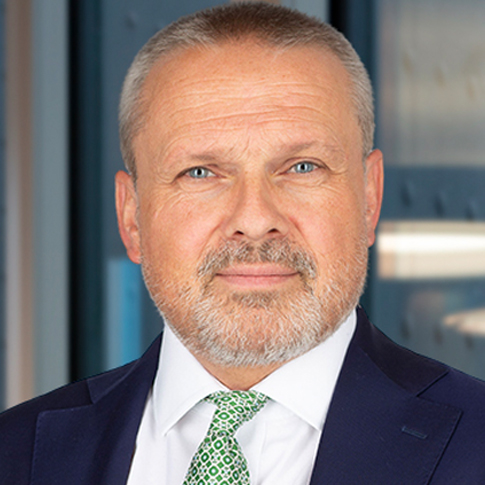
Head of Reputational Risk Management
Direct and Facultative
Direct and Facultative
emailEmailphone+44 20 3124 6086
Related content tags, list of linksPodcastReputational Risk ManagementRisk Management ConsultingHealthcare
