
As part of a company's accounting processes, there are often several complex issues to be considered in relation to their defined benefit (DB) pension accounts. A key area is selecting the appropriate actuarial assumptions to use when placing a value on the company's pension obligations.
To help ensure reporting consistencies across different companies and industries, the accounting standards (e.g. ASC-715, IAS 19 and Section 28 of FRS 102) provide a framework for how companies should determine their DB pension-related assumptions. However, there is often still some variability across companies in the assumptions being adopted, with this typically driven by points such as:
- Differences in the characteristics of DB pension schemes (e.g. scheme duration and the current life expectancy of members)
- Differences in company views made (e.g. where there is a choice of methodology for setting assumptions such as discount rates, inflation and future life expectancy improvements)
Key assumption trends
Discount rate assumptions
The discount rate assumption is used to place a value on the expected benefits payable over the lifetime of a pension scheme. There has been a notable increase in the discount rate assumptions being adopted over the year, driven by the rise in yields on AA-rated Sterling corporate bonds over that period (a similar trend has also occurred with yields on UK Government bonds, "gilts").
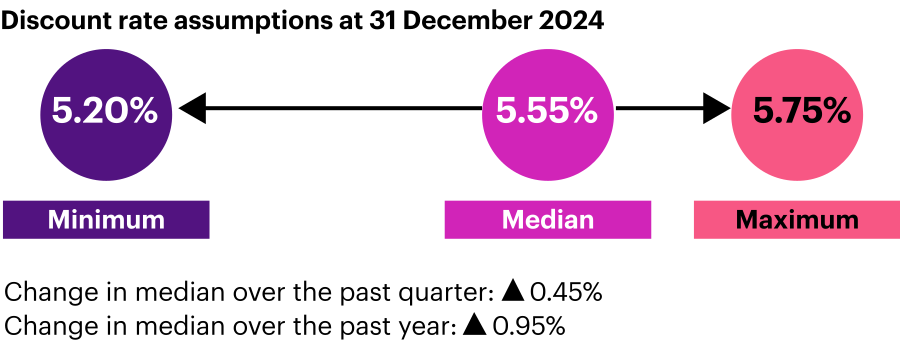
Discount rate assumptions at 31 December 2024
Inflation assumptions
Inflation assumptions are used to estimate how members' benefits might increase in the future. There has been a slight increase in inflation assumptions over the year, with this typically reflecting the change in investors' views of future inflation (as the assumption is typically set with reference to market data).
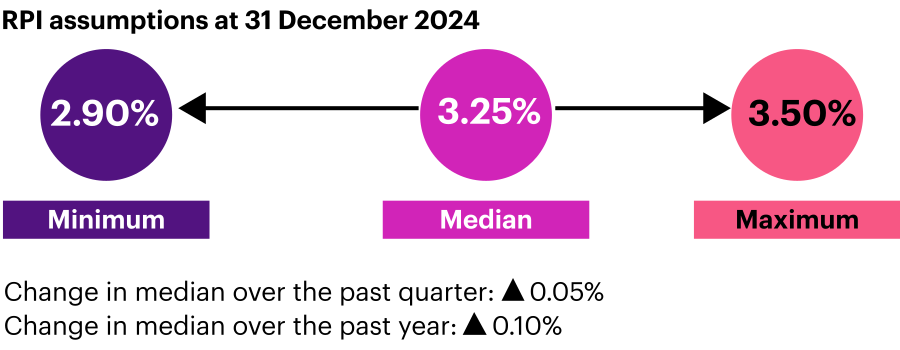
RPI inflation assumptions at 31 December 2024
Life expectancy assumptions
Assumptions around life expectancies estimate how long benefits will be paid to members and their dependants. There has been a slight decrease in life expectancies. This was driven by the majority in our survey adopting the latest CMI 2023 mortality projections model. This model places slightly more weight on the higher mortality seen during the pandemic, slowing down the projected rate of future improvements in life expectancy compared to the previous model, CMI 2022.
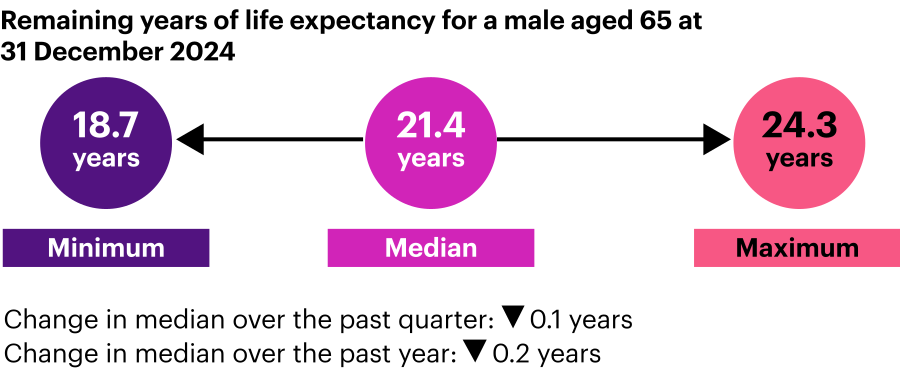
Remaining years of life expectancy for a male aged 65 at 31 December 2024
What does this mean for UK pension scheme disclosures?
Taking the above into account, we would generally expect liability values to have reduced over the year. In terms of the net balance sheet position, however, the extent to which this will have changed will depend on the specific circumstances of schemes (in particular, the investment strategy adopted over the year).
If we can be of any further assistance or you wish to read the full report, please get in touch.
Contacts




Get the latest pensions news
Join the conversation on LinkedIn and keep up to date on industry trends, insights and thought leadership.