

main content, press tab to continue

WTW Pensions and Savings Conference 2025

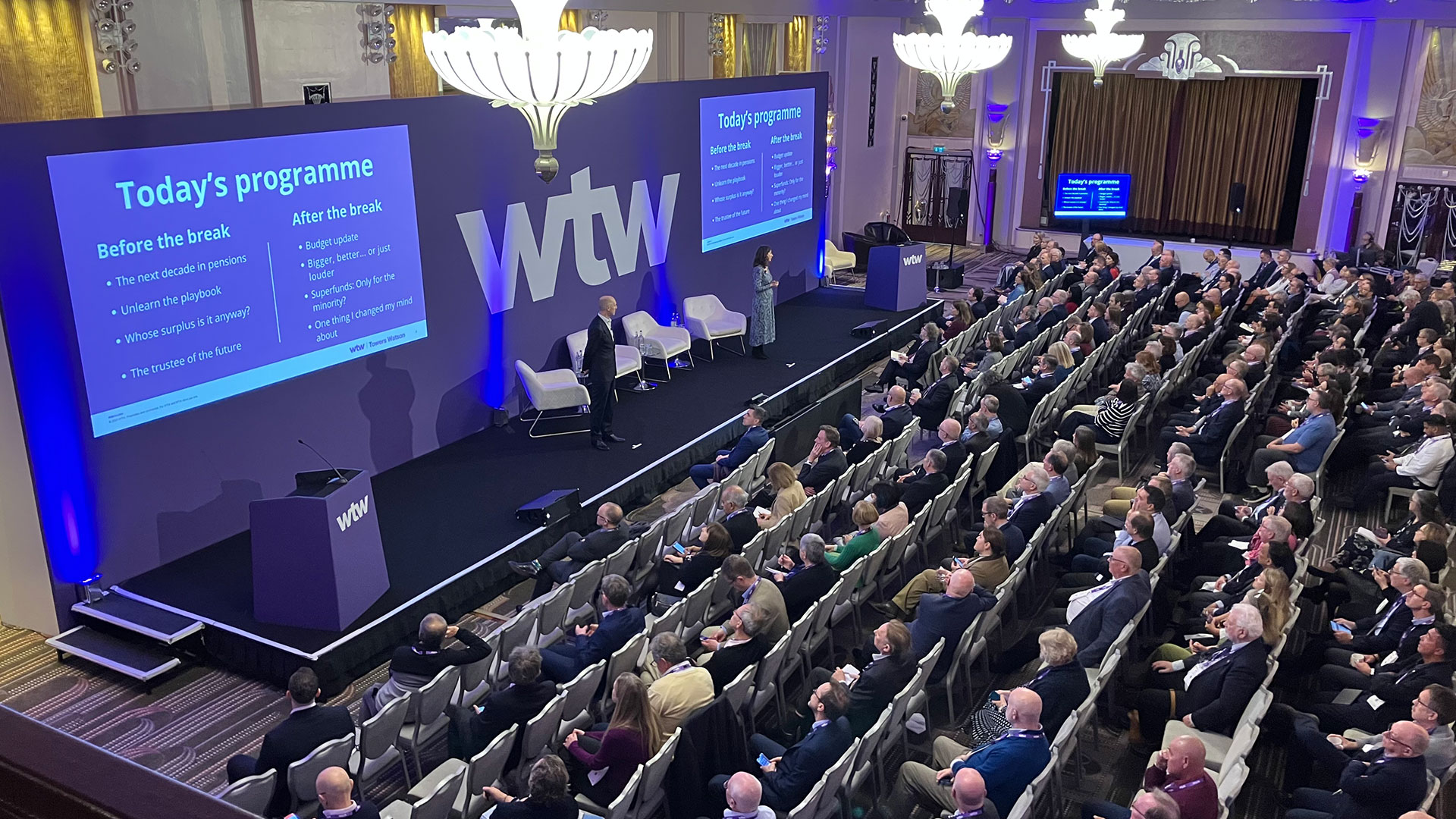
The WTW Pensions and Savings Conference, took place on the afternoon of Wednesday, 26 November, at the iconic Sheraton Grand London Park Lane.

Contact Us

On 26 November 2025, industry leaders, trustees and pension professionals gathered to 'think again' around how we navigate the evolving landscape of UK pensions. The event encouraged challenging assumptions about the future of pension schemes, trusteeship, and member engagement. With a mix of thought-provoking presentations and energised debate, the sessions left no doubt that fresh perspectives are needed for what lies ahead in the industry.

  1. 01

    Budget update: A live update on the latest news

    Glyn Bradley

    Glyn quickly dispelled the pre-Budget rumours before focusing on the actual announcements, summarising four non-pension and four pension headlines. He then explored the new cap on salary sacrifice contributions qualifying for NI relief, using a clear comparison table of current savings versus those lost under the cap, and also examined the change to the cash ISA limit for under-65s.

    Further reading:

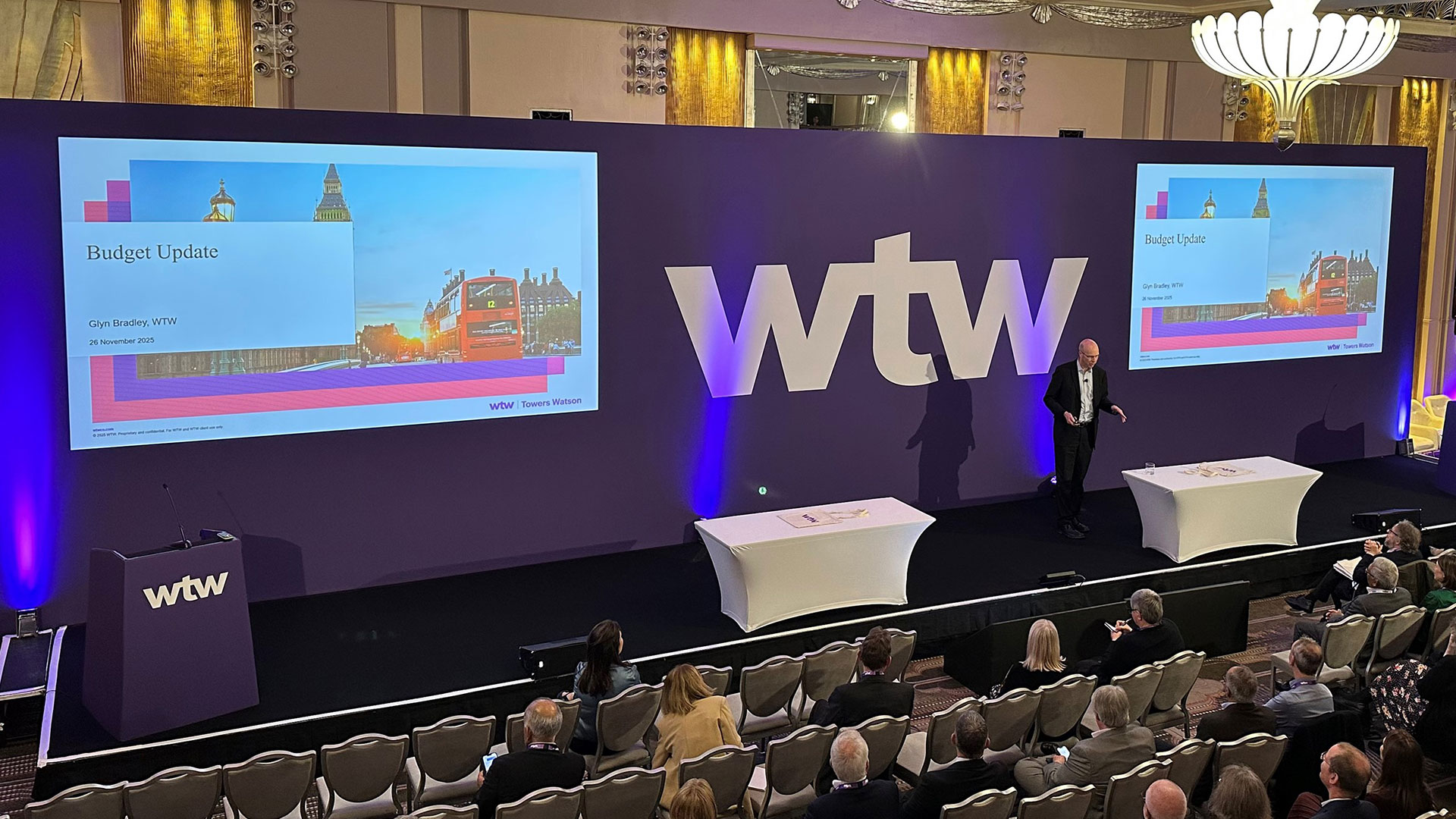
    Glyn Bradley presents Budget Update
    Glyn Bradley presents Budget Update

Shortly after the event, Glyn sat down with Howard Johnson to discuss the key announcements and implications from the Budget.

Pensions Perspectives Podcast: UK Autumn Budget 2025

Join Glyn Bradley, Director, Retirement, and Howard Johnson, Consulting Actuary and podcast host, as they share insights and real-time analysis of the Budget. Stay tuned for the launch of our podcast series in January 2026!

Transcript for this video

HOWARD JOHNSON: Hello, I'm Howard Johnson, your host for today's episode of WTW's Pensions Perspective Podcast. We're recording today after our Pensions and Saving Conference, and I'm here with Glyn Bradley from our research team, who has just actually presented to our guests at the conference about today's Budget, which will be the topic of conversation for us on our episode today. Glyn, welcome.

GLYN BRADLEY: Thank you

HOWARD JOHNSON: Could you tell us a little bit about what you do at WTW?

GLYN BRADLEY: Yeah, I'm Glyn Bradley. I'm an actuary and pensions technical unit, and that means we look at all the regulatory and legal and things, developments, news, and so on, coming out of governments and the world of pensions and budgets. We love a Budget, love a good fiscal event, because what the public see is the speech when the Chancellor stands there and the deputy speaker tells everyone to be quiet.

And you take-- we take some notes in that. It's normally a good time to eat your sandwiches, but not a lot happens. The real excitement for us, if you can call it that, is when the Chancellor sits down. We then wait for all the hundreds and hundreds of pages to go online, and that's the bit what we spend. That's when we spend our afternoons going through all of that, trying to find the bits that are relevant for pension schemes and to try and make sense of that as quickly as we can for everybody and get the information out.

Now, today's a great challenge because at half past three I was on stage with all our clients trying to brief them on what we'd just seen. A little bit easier for us this year with the Office of Budget Responsibility mole publishing their report before the Chancellor had even started. So that gave us a real head start that we don't normally have.

HOWARD JOHNSON: OK. Brilliant. So I'm just pleased that other actuaries enjoy that kind of stuff. I'll stick to my spreadsheets. I guess, first question is, there's been a lot of noise around the Budget. It seems like more than ever in newspapers and online about things that have been trailed and kite flying. What were some of the things that were speculated about beforehand, particularly about pensions?

GLYN BRADLEY: There were so many, and there were suggestions of income tax going up and National Insurance going down. There's speculation every single Budget about tax-free cash. There's always a bit of speculation around tax relief and whether it continues to carry on as it has done. And spoiler alert, it has, and it probably will do for most years because it's very hard to change the tax relief we have.

HOWARD JOHNSON: I think quite a lot of relief from the market that those things haven't changed. Certainly my parents are both fearful of those kind of things coming in. I suppose-- yeah, in terms of what's actually happened then, in terms of the headlines, how did that compare to what was expected?

GLYN BRADLEY: So, as I say, no change in tax-free cash this year. Salary sacrifice has been the one that's been hit in the world of pensions. We haven't got effectively a 2,000 pounds cap on how much pension, how much you can sacrifice your salary for pension contributions and get the full tax advantages out of that. And there are a few other pension headlines as well.

HOWARD JOHNSON: I'm just going to look at your slides here, which are actually from the presentation you did earlier. We'll talk through those. So if we talk through, we'll come back to salary sacrifice and unpack some of that. There's a few other aspects here. I think some we thought might come and some that we perhaps didn't expect. First of all, I think the point about DB surplus being payable directly to scheme members.

GLYN BRADLEY: Yeah, this was news to us. This wasn't one that was, I think, particularly trailed in advance. And schemes that are looking to use surplus are going to be quite interested in this one. What the government said is that from 2027, there will be a way in which schemes can make surplus payments directly to members, providing they're old enough to get a pension, which is quite interesting because if you're trying to distribute a bit of surplus to your members, you might want to give it to everybody. But this is saying, actually, no, you're going to have to be 57 to get that.

HOWARD JOHNSON: Are we thinking that rather than an addition to their pension, I guess the typical way that you'd see a discretionary benefit being given, are we expecting cash payments to be what people are interested in here?

GLYN BRADLEY: Yeah, I think in terms of what schemes can do, they're heavily constrained by HMRC rules as to how they give benefits to members. And if there's a little bit of surplus, and government's interested in this because, of course, it wants schemes to keep going and invest in the economy. And the question then is, well, what's the upside for members of doing that. The surplus payments of some sort are the way to do that.

If you give somebody a little bit of extra pension for life, it's probably a fairly small amount relative to what they're already getting. And of course, it takes many years to come through. If you can give them a lump-sum here and now, there's a very definite impact for those members. And trustees might therefore find it more worthwhile and in members interest to carry on running the scheme on and investing, taking certain investment risks and so on.

We'd have no details at all as of this afternoon as to where that will go, but I'd expect there to be some of HMRC consultation creating a new kind of authorized payment that schemes are allowed to make to back that up.

HOWARD JOHNSON: So April 2027. So we'll keep an eye on that one and keep clients updated. We've then got the PPF. So a bit of a diversion from this mostly one-size-fits-all approach. They're looking at giving pension increases on pre '97 benefits where currently those benefits don't receive any increases. And they're looking at giving them some of indexation. Do you want to talk us through that?

GLYN BRADLEY: Yeah, this debate has been rattling around for a while because the PPF is in such a strong position financially now. They don't need more levees. And the question has come up, what to do with the surplus. Because this was never really nailed down at the outset. What would happen if this day ever came? I guess it always seemed a very long way away. And back in my career, looking back in 2004 when all this kicked off, it did look a very long way away.

The people who went into the PPF, and indeed into the financial assistance scheme, so those are the people, if you like, that would have gone into PPF had it existed at the time and were topped up because their pension schemes had failed, they don't get increases on their pre 1997 benefits. And that's been a big sore point with pensioners about who, in many cases, have lost out.

HOWARD JOHNSON: And for a lot of pensioners, that'll be a significant chunk of their pension, especially those who went in the early noughties.

GLYN BRADLEY: Yeah, absolutely. A lot of these people have retired 20 years ago, and inflation over that time has really eaten away that pension. This is saying we have the surplus to do it. If you would have had increases in your scheme, the PPF will start to pay those increases going forward. I do think there's some big practical problems around that and some pensioners are going to be disappointed.

We know a lot of schemes had a discretion to give increases on their pre-1997 pensions, but there were no guarantees. It looks like they're not going to get increases here because the PPF is trying to compensate for the rights that people had not what would have happened had everything have gone well. Interesting challenge. I think looking back for both the PPF and the past schemes is actually trying to work out which members were entitled to increases and what increases going back, because we're talking about schemes that have wound up or transferred to the PPF a long time ago.

HOWARD JOHNSON: That paperwork still exists, and what some of these members might be able to dig out of their closets if they were sent booklets and the like. I guess, related to that point, this won't be backwards looking, will it? Because I guess there's a question here of people who, if they've only got a pre-'97 pension from the PPF, inflation has been very high in recent years. Their income really has dropped in real terms. But this will only be a forward-looking thing from themselves.

GLYN BRADLEY: My understanding is it's increases going forwards. But no doubt there will be suggestions and pressure to do something more generous.

HOWARD JOHNSON: OK, that's a good news story. And when's that coming in from?

GLYN BRADLEY: 2027.

HOWARD JOHNSON: Yeah, relatively soon. Great. I think just the last one a fairly tricky topic. Inheritance tax treatment, we'll cover that one briefly.

GLYN BRADLEY: Yeah, this is going back to the last Budget, which we haven't really finished dealing with yet. It sounds like dry administration impact, but it is going to affect death benefits for pension scheme members, particularly in DC schemes to a considerable extent that the Chancellor announced that they were going to bring pension schemes into the inheritance tax regime.

And by that, what they're looking at there is to target the unspent pots, because there has been in some quarters, a deliberate strategy of people parking their money into drawdown or not drawing it on it at all, and passing that on inheritance tax-free to the generations. The government's wise on to that. But it has taken a fairly broad approach that brings in a lot of what we might think of as fairly ordinary death benefits for fairly ordinary families.

The proposals have moved around quite a lot over the last year or so. Originally, it put a lot of responsibility on pension schemes to calculate the inheritance tax. That we push backed on that. The HMRC then came forward and put all the responsibility on personal representatives that the people that sort out the members estate, they understandably push back on that.

GLYN BRADLEY: Yeah, a bit of back and to, where we seem to have landed on now is that the inheritance tax will be the main responsibility of the personal representatives. But they looks like today's announcement is they will be given a power to say to the scheme, hold on to half your death benefits until I say so. And if necessary, we want you, the scheme, to pay some of that inheritance tax. Because what the personal representatives are really afraid of is that schemes would just pay everything out to beneficiary without their involvement, which is what we can do today. And those people would spend the money or not pay it back to the personal representatives who are the ones ultimately liable for the inheritance tax bill.
So it's finding a way through. I mean, I wouldn't have tried to put pensions into inheritance tax because of these kind of problems, but that is something the government appears to be really wedded to.

HOWARD JOHNSON: So a bit more of a burden on trustees and their administrators really in the future. And that's coming in 2027 as well.

GLYN BRADLEY: It is. And I think we should also not forget the direct impact on ordinary families. I'm thinking particularly of children of somebody that's died and also unmarried partners. They are not protected and they're not privileged by the inheritance tax system. So you're bringing them into a tax system that treats them as if they were an adult beneficiary, independent of the member.

HOWARD JOHNSON: Yeah. And possibly some frustration from beneficiaries not receiving what's due to them as soon as it might.

GLYN BRADLEY: Yeah. Now, there are some exceptions around death and service. But I think even there, there's going to be some-- we're going to start seeing this in the newspapers from 2027, when we find that somebody wasn't working, they were working, they died, and they're finding now that the family are paying inheritance tax on part of the lump-sum that they would be receiving.

HOWARD JOHNSON: A lot of detail to work through.

GLYN BRADLEY: Yeah, keeps us busy.

HOWARD JOHNSON: Certainly. Let's step back to the salary sacrifice then, and we'll just dig through a bit of the details. I guess the first thing is that students coming from 2029.

GLYN BRADLEY: Yeah, that's a really long lead time for a government measure.

HOWARD JOHNSON: It seems to be, which I guess the-- I assume they received a fair bit of pushback from some of the practicalities around this potentially, or is it just corporates looking to defer costs? I don't know. Why do you think it might be taken so long?

GLYN BRADLEY: I'm not sure. Because if you think about it. They gave us about just over a year's notice to abolish the lifetime allowance system. And in fact, they couldn't actually do it in time. And a lot of the legislation went through afterwards. This is a long time. I think the Chancellor was perhaps stung by the criticism when she raised National Insurance on employers last year, and there wasn't a lot of notice that came in this April.

HOWARD JOHNSON: Yeah.

GLYN BRADLEY: This is several years away. I think it's fair to say that there is a National Insurance rise on employers here, but they are being given time to adapt to that plan for that, take that into account with their workforce planning.
HOWARD JOHNSON: Good news for them. I guess it's at least not coming in next April. I guess, first of all, in terms of salary sacrifice, I think it's worth it. Would you mind just explaining how that works?

GLYN BRADLEY: Of course. So I think we're all familiar with the idea of income tax. You get a tax on your income that includes your wages. It also includes pensions, rental income, all sorts of things. But earnings are taxed differently, by earnings i.e. wages is the starting point. But it is a bit more complicated than that. But think about the wages we receive. That's different than the pension we receive when we retire. It's effectively a payroll tax. A National Insurance is a payroll tax on both the employee and the employer.

So normally, I get paid my wages, I pay income tax, and I pay National Insurance. And I can put some money into my pension, and I automatically will get income tax relief. So they say the pension contribution will come out before my income tax is calculated. But it doesn't come out of my earnings for National Insurance. That's the starting point. That's what's happening say, public sector schemes as the norm.

The employer pays-- no, there's no income tax for the employer to pay. That's my tax. It does have to pay National Insurance on the pay it gives me on my earnings. And it doesn't have to pay National Insurance on the contributions it pays into my scheme. So from an employer point of view, there's a distinct tax advantage, a National Insurance advantage, to be precise, of putting money into my pension rather than paying me.

And that gap-- so we've got a gap there. Employer contributions, no NI. Employee contributions, we've got the NI. So people have seen that gap over time and said, oh, actually, wouldn't it be good for the employee and the employer if we paid this person a little bit less and just up the contributions into their scheme? And indeed, people have seen that. And the savings can be substantial, particularly in the larger private sector organizations where this tends to happen. And that's been increasing for many years.

HOWARD JOHNSON: Most of that saving is on the employer side, isn't it?

GLYN BRADLEY: That's right. Employer rates of National Insurance are higher than the members. In broad terms, members are paying typically 2%, 8% of National Insurance, whereas the employer is generally paying 15% on the money we're talking about.

HOWARD JOHNSON: And that's OK this April, didn't it? Following the previous Budget. So probably yeah, even more of an NI saving as things currently stand.

GLYN BRADLEY: Yeah.

HOWARD JOHNSON: And then how's the capping going to work then?

GLYN BRADLEY: So the capping says, well, you can carry on doing that, that's fine up to a point. And what the Chancellor is saying is, look, if we're talking about the ordinary member here sacrificing a few hundred pounds or indeed up to 2,000 pounds, fine as you were. So there's still quite a tax incentive there left for the member to put more money into the scheme, but also for the employer to be-- I guess it's an incentive for employers to actually encourage people to pay into the scheme. It's one of the few incentives there is for employers to do that.

HOWARD JOHNSON: I guess, the last thing this government would want is to take people who are not on large incomes and reduce the incentive for them to save.

GLYN BRADLEY: But it's saying for the higher earners who are actually not necessarily getting a huge National Insurance benefit themselves because they're only paying 2% on earnings much beyond 50,000 pounds. But that's where the employer is making a lot of savings. And on the 15% on those big high earner contributions, they're saying that excess bit, once you pass the first 2,000, pounds, what we'll do there is we'll basically add that back to your earnings. So you'll still get the income tax relief, but it will start to come through in the National Insurance again.

HOWARD JOHNSON: And in terms of, I guess, breaking it down to groups of members who might see different impacts here, so should we talk through those. So if we talk about, I guess, let's say people at or near the minimum wage, are they affected by this?

GLYN BRADLEY: Well, actually, the way that the minimum wage operates actually prevents sacrifice. So you've got to make sure once you've done your salary sacrifice, that is your wages, they still need to be above the minimum wage. So for a full timer, you need to be earning something in the region say, 24,000 pounds a year in order to be able to give up something like a 5% of your wages and still earn above the minimum wage. So that group are not in salary sacrifice at all.
There's a group above that earning high 20-something a year or 30,000 pounds a year, that kind of area. They will be able to carry on unaffected effectively.

HOWARD JOHNSON: Yeah, they aren't normally pay more than the 2,000 pounds?

GLYN BRADLEY: They wouldn't be normally making that level of contribution, unless they'd individually decided to put up their contributions. The first group to get affected as we move up the income scale particularly, are the people earning towards, but not quite at the higher rate tax threshold. They're getting that 8% National Insurance relief. And their contributions in many cases will exceed 2,000 pounds. They'll get some relief from this but not all of it.

And then the funny thing is, once you then start to get into the higher rate tax earnings level, that member is only paying 2% National Insurance. So they will be capped, but it won't make a huge amount of difference to their take home pay. And even on 5% of six-figure earnings could only be a National Insurance impact of a few pounds a week.

But for the employer, it's a much bigger number. For every 1,000 pounds the employers the employee is sacrificed, that's a direct 150 pounds saving, a 15% saving for the employer.

HOWARD JOHNSON: So for pretty much all employees other than those close to the minimum wage, it's the impact of this is mostly felt by the employer.

GLYN BRADLEY: Yeah, absolutely.

HOWARD JOHNSON: And then in terms of member and the individual saver level, it's mostly people on that middle income of around 40,000, 50,000 pounds who seem to going to feel the.

GLYN BRADLEY: I mean, that's the standard position. The great thing about doing a podcast about National Insurance and all this kind of thing is you can say that's the general position. There's huge amounts of detail that experts listening to this will be shouting at. Before that I've missed out, for example, sacrificing effect student loan repayments, for example. So those people might still be quite keen individually to sacrifice, even though the National Insurance impact on them is not that big.

HOWARD JOHNSON: Yes, because there are other things that salary sacrifice is used for. They don't seem to have been touched.

GLYN BRADLEY: No, it's all the stuff we've read in the government's red book. That's the Budget book and the OBR report is all talking about pension, salary sacrifice. There was a bit of chatter before the Budget about whether sacrificing for bikes or electric cars might be reined in. I've not seen any reference to that yet. It all seems to be about pension contributions.

HOWARD JOHNSON: Yeah, so still some good reasons for people to salary sacrifice for in addition to their pension. And I guess in terms of today's headlines, is there anything that you'd be thinking that, I guess, in sponsoring employers or trustees of pension schemes ought to immediately be doing other than genning-up and make sure they understand what's coming?

GLYN BRADLEY: Well, I think there'll be some reflection on how those two big measures-- the sacrificing measures and the surplus payment measures are going to pan out. I imagine that there's a lot of employment lawyers thinking how, if at all, can we mitigate some of this loss of salary sacrifice advantage for the employers. The government's already aware of that.
There are some remarks in the red book that it doesn't want to allow employers to renegotiate contracts individually to work around this. They have thought about that, but quite how they draw the line on that and make that work, I think, will be very interesting work.

HOWARD JOHNSON: Interesting times ahead. Glyn, any closing comments before we conclude the episode?

GLYN BRADLEY: Yeah, I suppose we should try and on an upbeat note, because we've talked about reduction in National Insurance advantages, and we've talked about some of the inheritance tax extensions as well. But I would just focus on what's still there. We've still got those income tax advantages. We've still got the tax free lump-sum. So still lots of tax advantages towards pension saving for retirement.

HOWARD JOHNSON: Yeah, couldn't agree more. Thank you, Glyn.

GLYN BRADLEY: You're welcome.

HOWARD JOHNSON: And thank you to our listeners for joining today's special episode. And hopefully you can join us for the future recording as well.

Thanks for listening. This podcast is for informational purposes only and does not constitute financial advice. The views expressed by any hosts and guests are their own and may not reflect those of their employers or affiliated organizations. All content is protected by copyright.

Download the Budget Update slides

  1. 02

    The Next Decade in pensions: What we're not seeing

    Luba Nikulina (IFM Investors)


    This opening session set the tone by exploring the macro forces - demographics, AI, climate change, debt and geopolitical shift - that will reshape pensions over the next ten years. Rather than focusing on compliance and regulation, Luba urged attendees to think more expansively and creatively about the future, highlighting the need for strategic foresight and adaptability.
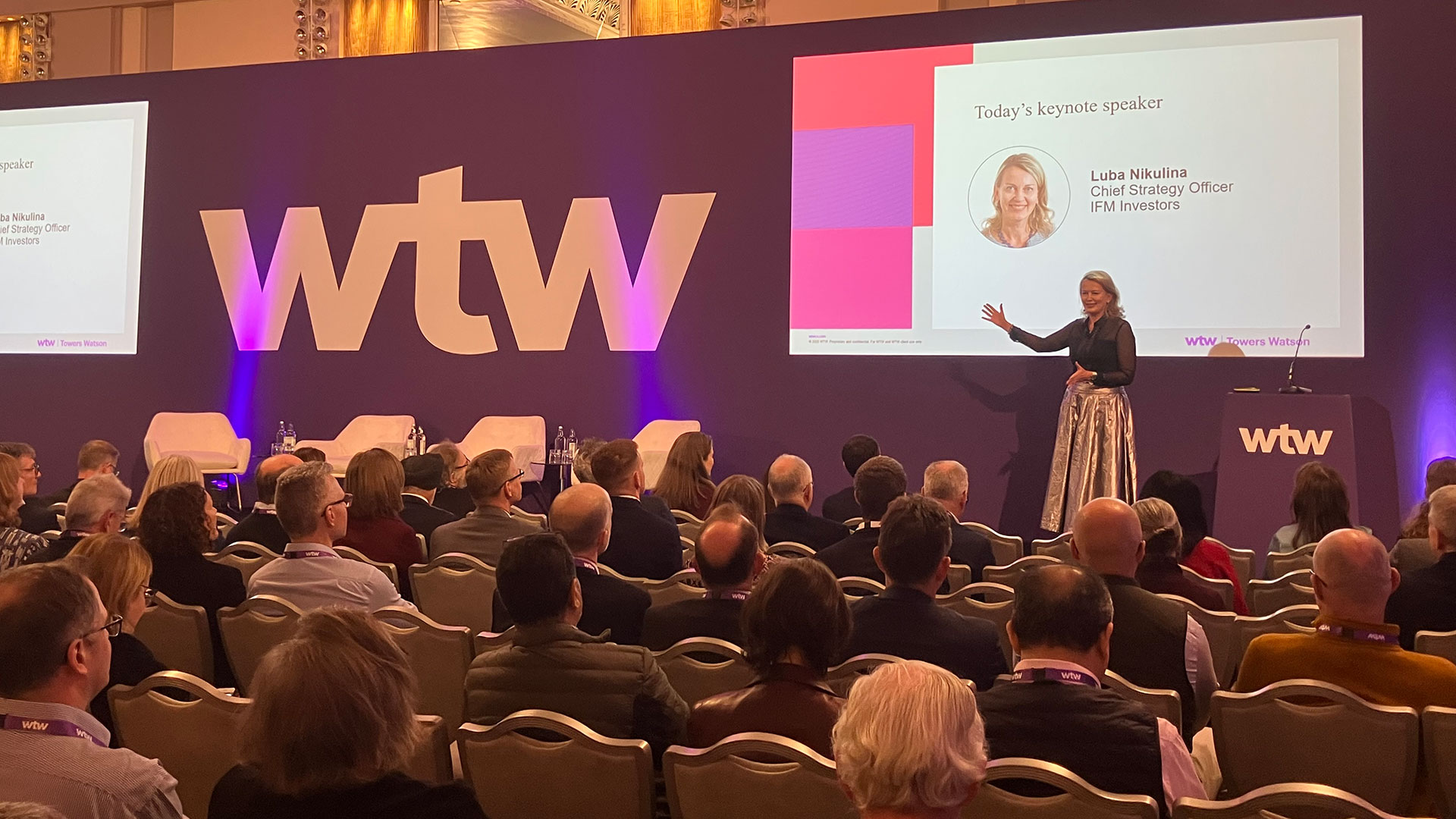
    Luba Nikulina (IFM Investors) presenting The Next Decade in pensions: What we're not seeing
    Luba Nikulina (IFM Investors) presenting The Next Decade in pensions: What we're not seeing
  2. 03

    Unlearning the Playbook: What members really need

    Michelle Dellow, Rob Callard


    With the popularity of social media, there is a rise in misinformation of key pension matters. As a result, there is a risk that pension savers aren't just passively uninformed, but actively misinformed.

    This is a very real issue, and one the FCA is leading the way in cracking down on influencers.

    However, employers and pension scheme trustees can take a very active role in addressing this challenge by considering its pension scheme members engagement needs and the best channels. Michelle and Rob set out why it is a great time to rethink your engagement strategy and consider giving your members access to regulated experts to ensure they navigate the information out there correctly.

    Further reading:
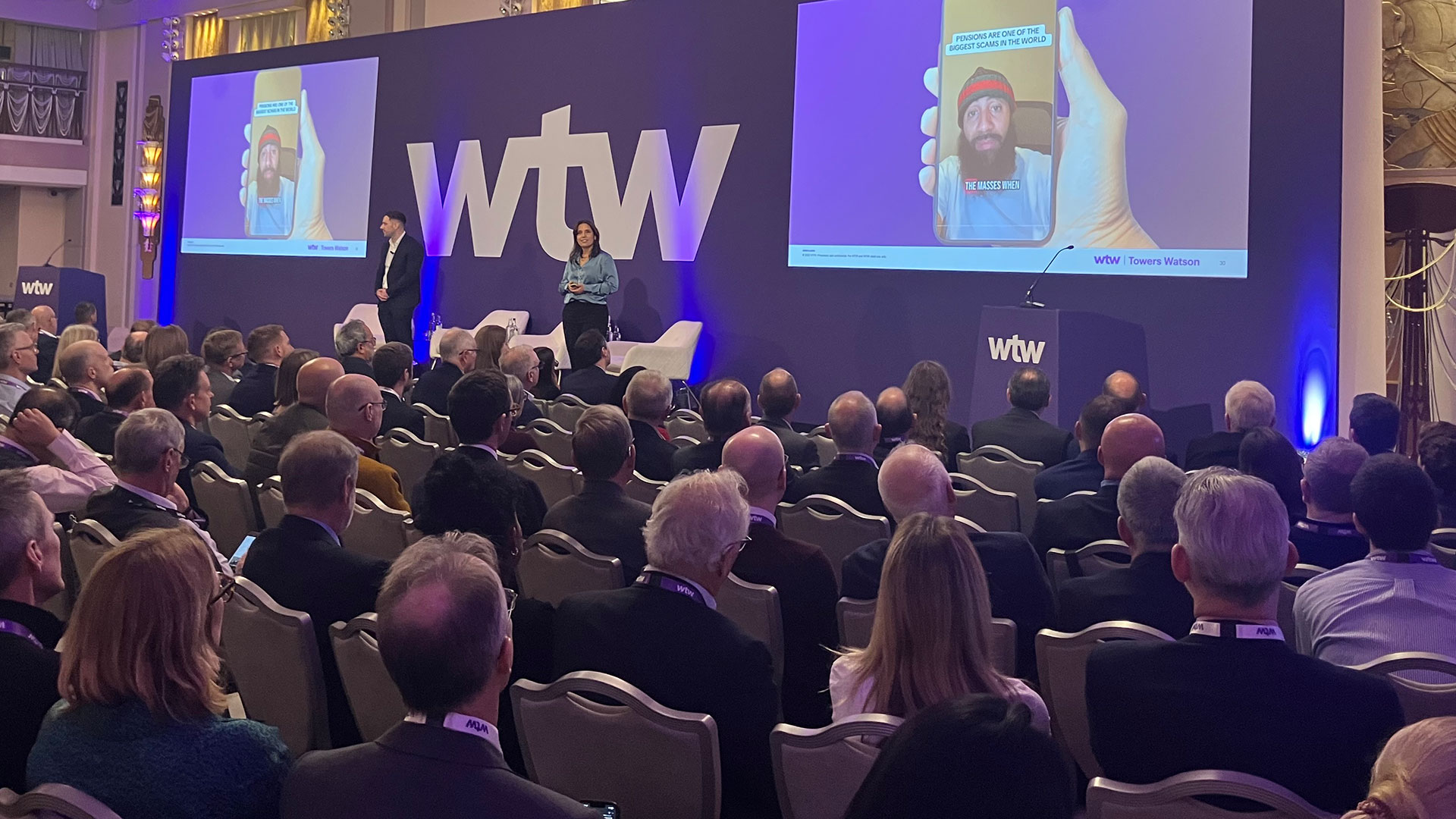
    Michelle Dellow and Rob Callard presentUnlearning the Playbook: What members really need
    Michelle Dellow and Rob Callard present Unlearning the Playbook: What members really need
  3. 04

    Whose Surplus Is It Anyway? One of the hottest debates of the year

    Helen Griffin, Richard Gunton, Tom Muir, John Flynn (Association of Member Nominated Trustees)


    A provocative exploration of surplus ownership in pension schemes. The session raised important questions about who should benefit from surplus funds and why. Rather than offering definitive answers, the session explored the potential range of views and encouraged trustees and stakeholders to reflect on fairness and the scheme's longer-term ambitions.
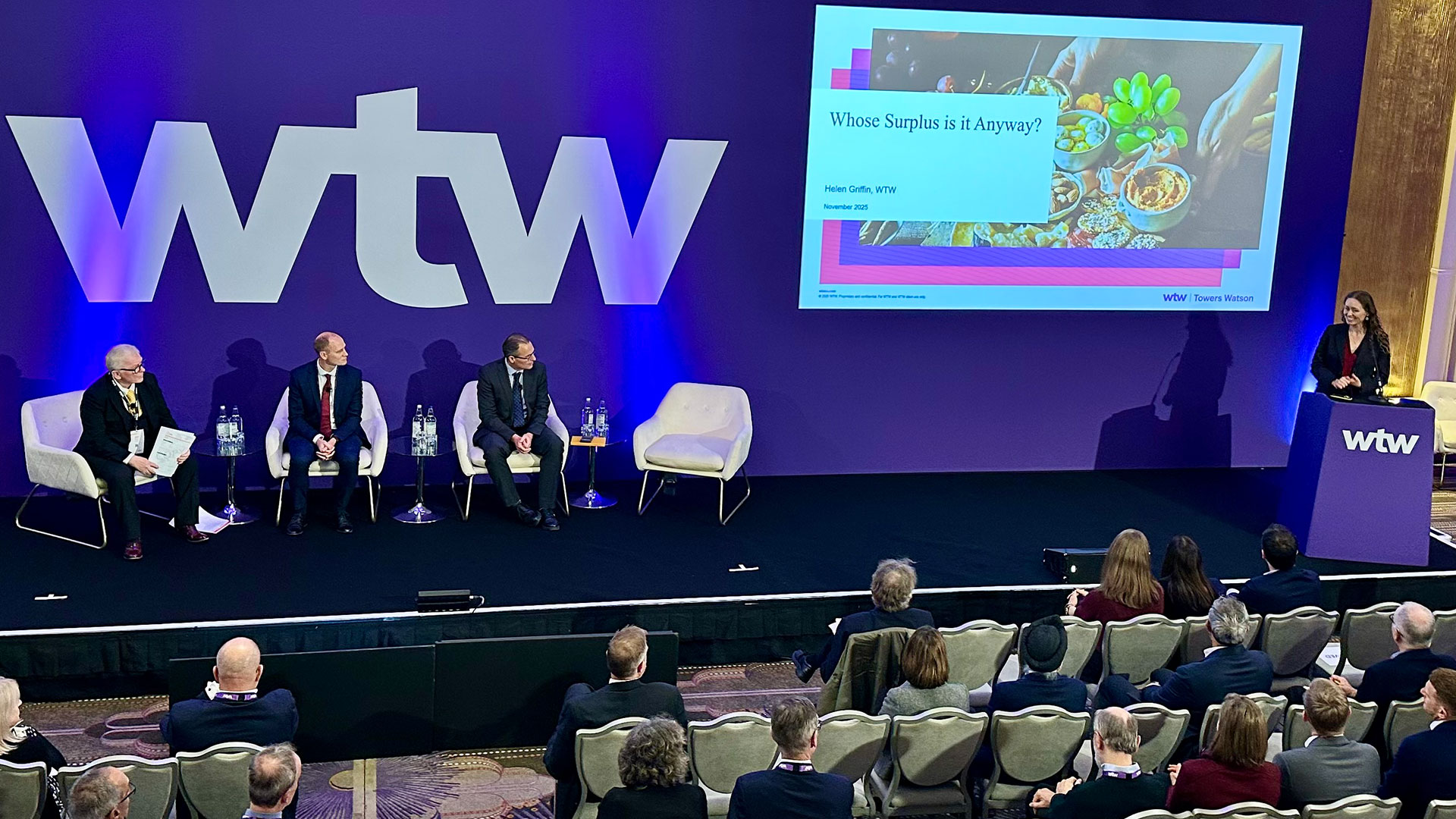
    Helen Griffin, Richard Gunton, Tom Muir and John Flynn discuss Whose Surplus Is It Anyway? One of the hottest debates of the year
    Helen Griffin, Richard Gunton, Tom Muir and John Flynn discuss Whose Surplus Is It Anyway? One of the hottest debates of the year
  4. 05

    The Trustee of the Future: Steward, strategist, or disruptor?

    Martin Bell, Duncan Willsher (Vidett), Kerrie Rowland (GE Aerospace), Nicole Mullock (IGG)


    This session examined how the challenges faced by pension schemes today are impacting the nature of trusteeship. Do schemes simply need trustees to act as stewards, ensuring compliance whilst paying agreed benefits and investing the assets? Should they be strategic leaders, working with sponsors to navigate the changing landscape whilst seeking to improve stakeholder outcomes? Or perhaps they need to disrupt – helping to push for innovation and transformation across the wider pensions landscape? The discussion highlighted the skills and mindset needed for trustees to remain effective and relevant.
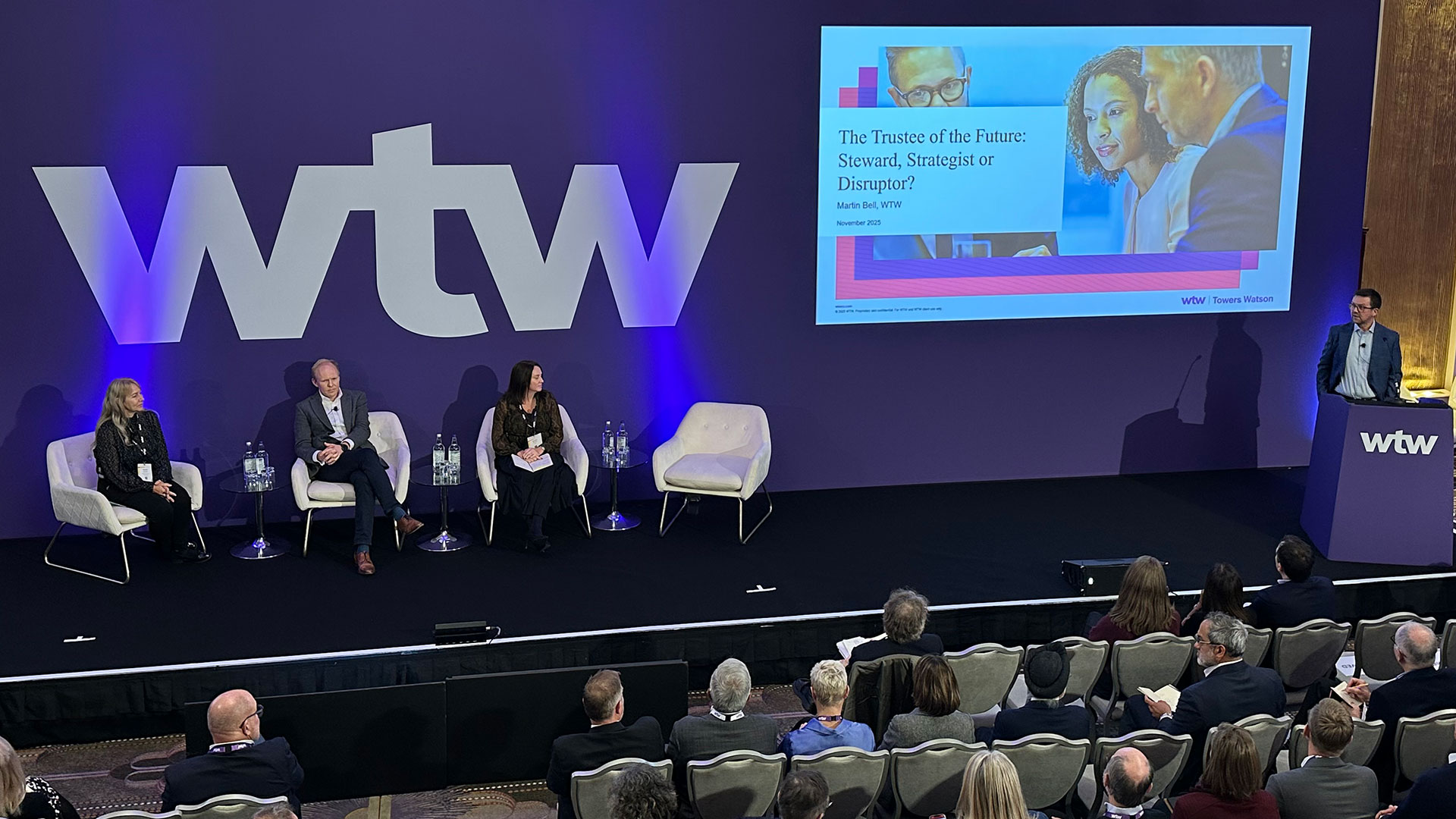
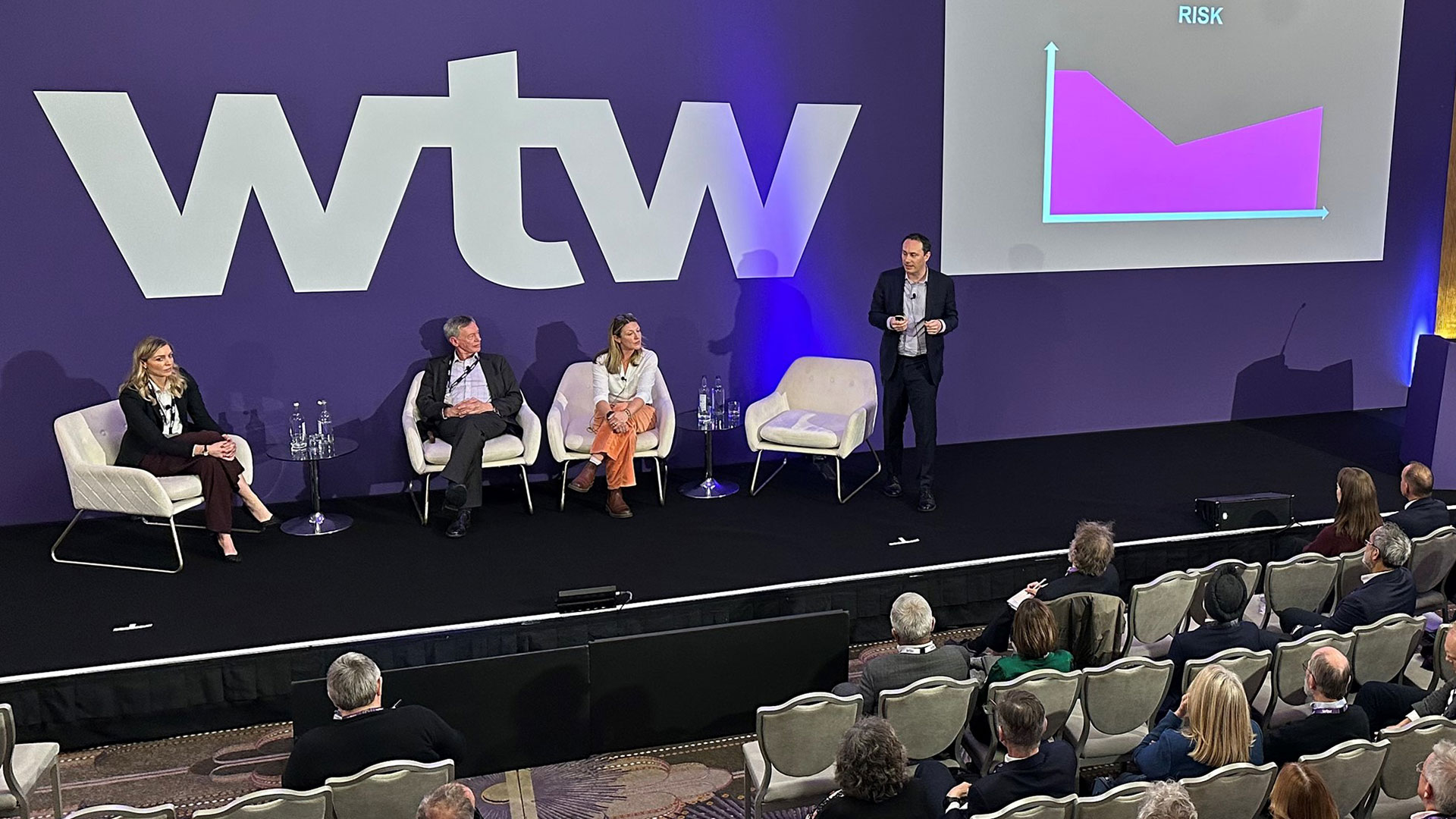
    Martin Bell, Duncan Willsher (Vidett), Kerrie Rowland (GE Aerospace), Nicole Mullock (IGG) discuss The Trustee of the Future: Steward, strategist, or disruptor?
    Martin Bell, Duncan Willsher (Vidett), Kerrie Rowland (GE Aerospace), Nicole Mullock (IGG) discuss The Trustee of the Future: Steward, strategist, or disruptor?
  5. 06

    Bigger, Better….or just louder (aka Ready, Steady, Scale) – exploring DC consolidation

    Edd Collins, Natasha Rogers, Johnny Stoller, Helen Holman, Stuart Arnold


    As the Government increases focus on encouraging consolidation in the DC pensions market, there remains a very clear argument for both large, consolidated, efficient DC schemes and for well run, single employer schemes that can consider the specific needs of their membership.

    Further reading:

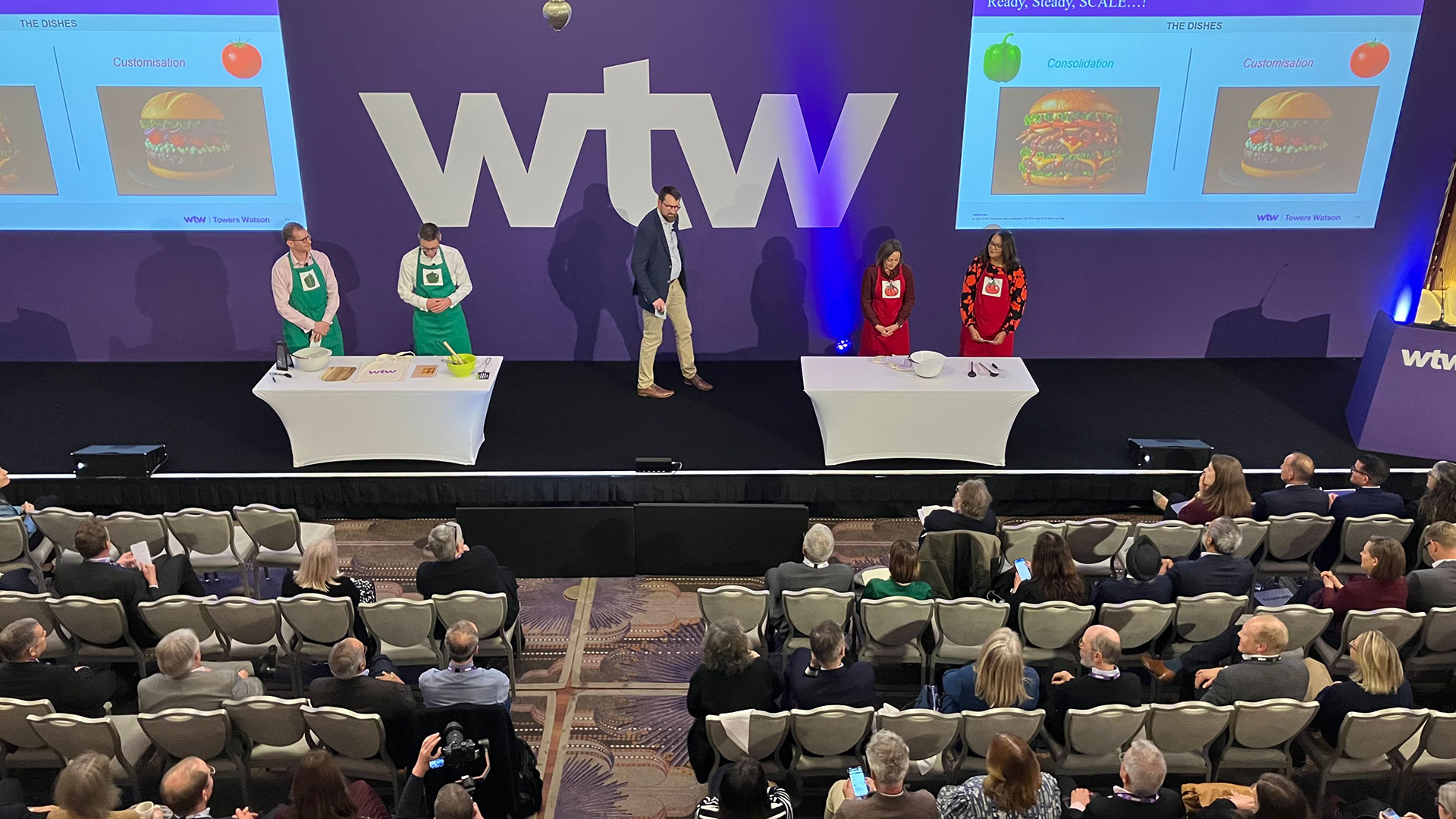
    Edd Collins, Natasha Rodgers, Johnny Stoller, Helen Holman, Stuart Arnold presenting Bigger, Better….or just louder – exploring DC consolidation
    Edd Collins, Natasha Rodgers, Johnny Stoller, Helen Holman and Stuart Arnold presenting Bigger, Better….or just louder – exploring DC consolidation
  6. 07

    Superfunds: Only for the minority? An evolving landscape with leading voices

    Simon True (Clara), John Towner (L&G), Fiona James (The Pensions Regulator), Bina Mistry, Gemma Millington


    This session examined the evolving superfund market through a panel discussion. With superfunds expected to have a permanent regulatory regime by 2028 and new entrants anticipated, we explored how these commercial consolidators can operate alongside the long-established insurance route. We considered whether, under changes to the Pensions Schemes Bill, schemes targeting superfunds remain a distinct group or whether the boundaries with insurance are now blurred and overlap exists, potentially making superfunds a viable option for more schemes. The session highlighted how choice was positive but increasingly complex to navigate as these markets risk competing for similar schemes.
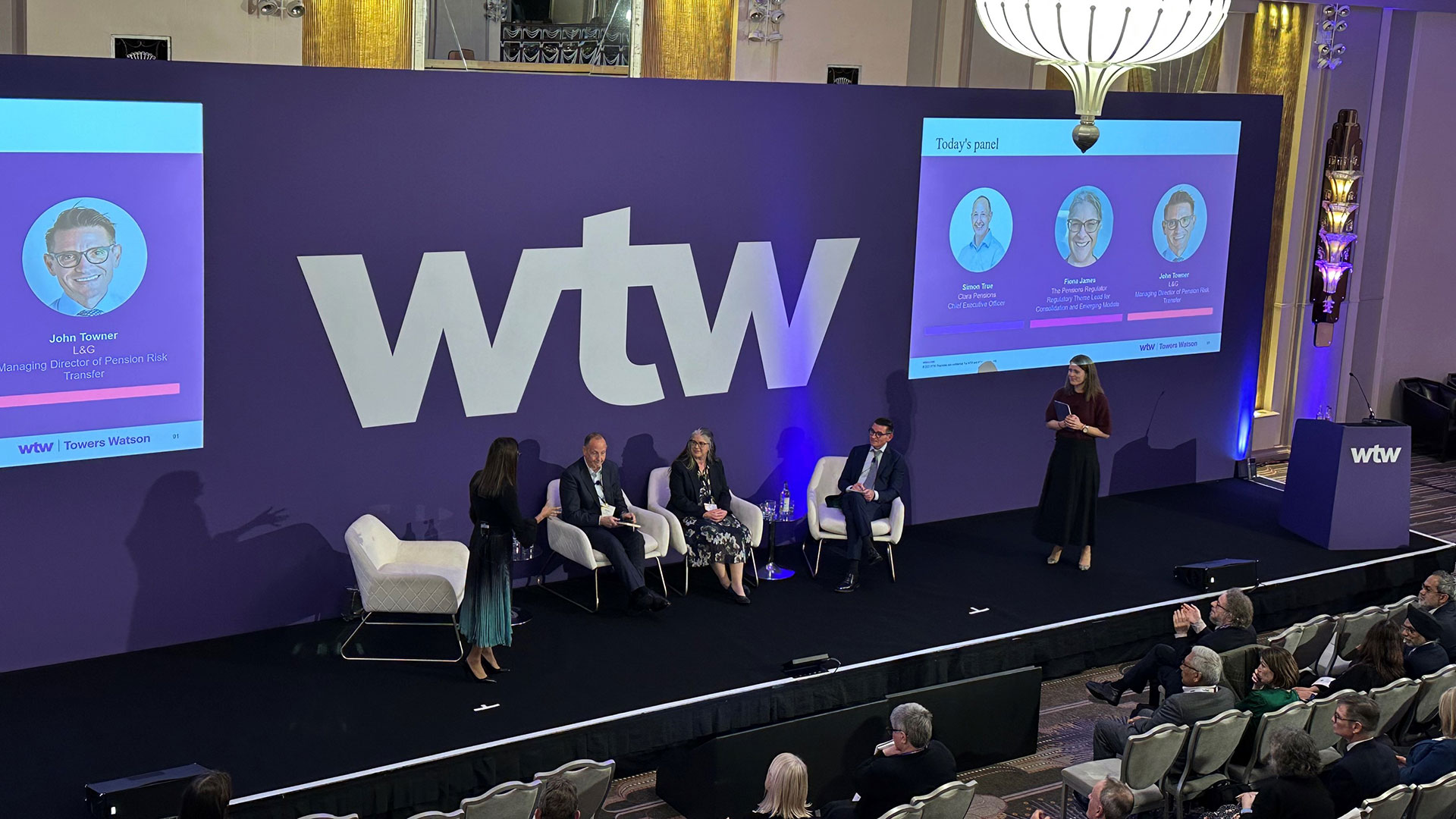
    Simon True (Clara), John Towner (L&G), Fiona James (The Pensions Regulator), Bina Mistry and Gemma Millington discuss Superfunds: Only for the minority? An evolving landscape with leading voices
    Simon True (Clara), John Towner (L&G), Fiona James (The Pensions Regulator), Bina Mistry and Gemma Millington discuss Superfunds: Only for the minority? An evolving landscape with leading voices
  7. 08

    One Thing I Changed My Mind About. Fast-paced closing reflections to leave you inspired

    Adam Boyes, Hannah Brocklesby, Sophie Tennison, Robert Tickell (IBM)


    In a refreshingly honest and personal session, four speakers shared beliefs they had reconsidered over the past year. From governance to member outcomes, each story illustrated the value of reflection and the courage to change one's mind. It was a powerful reminder that growth often begins with questioning our own assumptions.

    Further reading:

    Adam Boyes, Hannah Brocklesby, Sophie Tennison, Robert Tickell (IBM) discuss One Thing I Changed My Mind About. Fast-paced closing reflections to leave you inspired
    Adam Boyes, Hannah Brocklesby, Sophie Tennison, Robert Tickell (IBM) discuss One Thing I Changed My Mind About. Fast-paced closing reflections to leave you inspired
Contact us