



On 21 May 2025, WTW hosted a half-day seminar at the Johnnie Walker in Edinburgh, focusing on sharing experiences with smaller UK defined benefit (DB) pension schemes across actuarial, investment, administration, governance, and legal aspects. We explored practical solutions for small schemes to achieve the best outcomes for their members while managing costs, along with practical hints and tips on navigating a scheme's endgame journey.
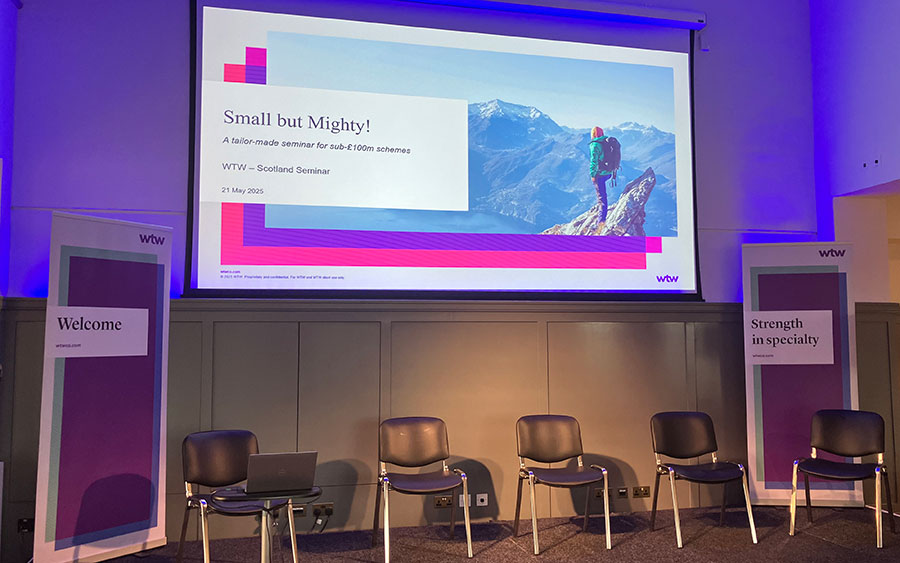
Small But Mighty event: The stage is set.
The room was filled with local Scottish pension professionals, including trustees and corporates, each with unique experiences and circumstances regarding their pension schemes. Representatives from an insurer active in BPA for small schemes and pension lawyers were also present.
It was great to see the enthusiasm from colleagues and attendees. Several commented on the satisfaction of working with smaller pension schemes, often associated with smaller companies, where you deal directly with the business owners, and decisions on the pension scheme have a real impact on the business. In addition, a smaller group of members feels more connected and real.
There was a positive energy in the room, with much optimism. Given improvements in funding levels, many schemes are in a much stronger financial position than historically. Conversations have shifted from managing deficits to managing surpluses, with more insurers interested in taking on smaller schemes and other options like Superfund transactions becoming possible.
Session 1
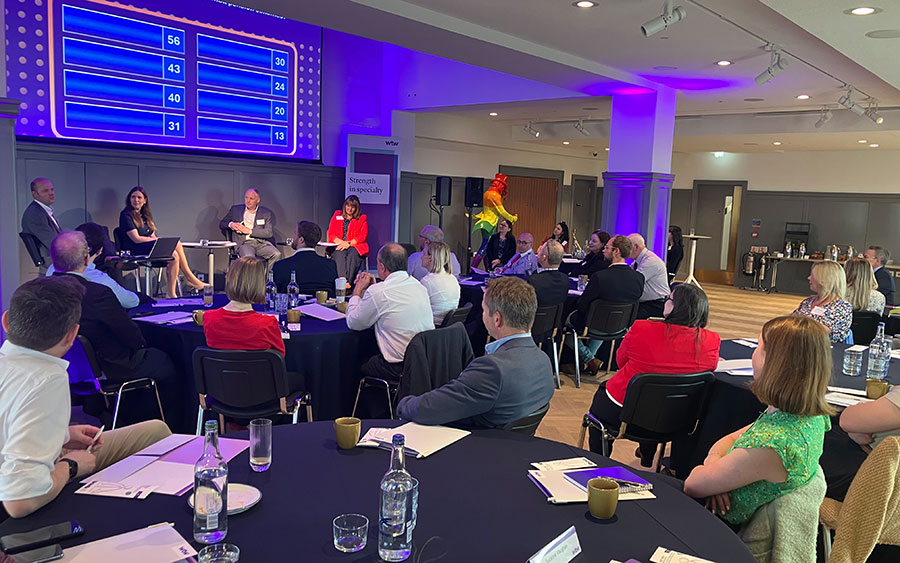
Paul Bernard asking the audience to guess the key priorities for smaller schemes.
The first session of the day covered the key priorities for smaller schemes, facilitated through a "Family Fortunes" format. The panel included Mike Kennedy (Pro Pensions), Amanda Cook (CMS), and Laura Duckering (WTW), and was chaired by Paul Bernard (WTW). We surveyed a hundred clients, and the top 8 answers were:
| Managing expenses | 56 |
|---|---|
| Administration issues | 43 |
| Future regulation and unknown risks | 40 |
| Transaction readiness | 31 |
| Investment volatility | 30 |
| Sponsor covenant/corporate activity | 24 |
| Surplus management | 20 |
| Governance and trustee board structure | 13 |
Session 2
The second session, chaired by Vicky I'Anson (WTW), focused on effective governance. Vicky highlighted the key challenges facing smaller schemes and shared her experiences of what has worked well. Each table was then asked to share their experiences and how they make governance work for their schemes. Areas covered included:
- Decision making effectiveness
- Trustee board effectiveness
- Advisory model
- Operational effectiveness
- Spotlight on administration
- Use of AI
Session 3
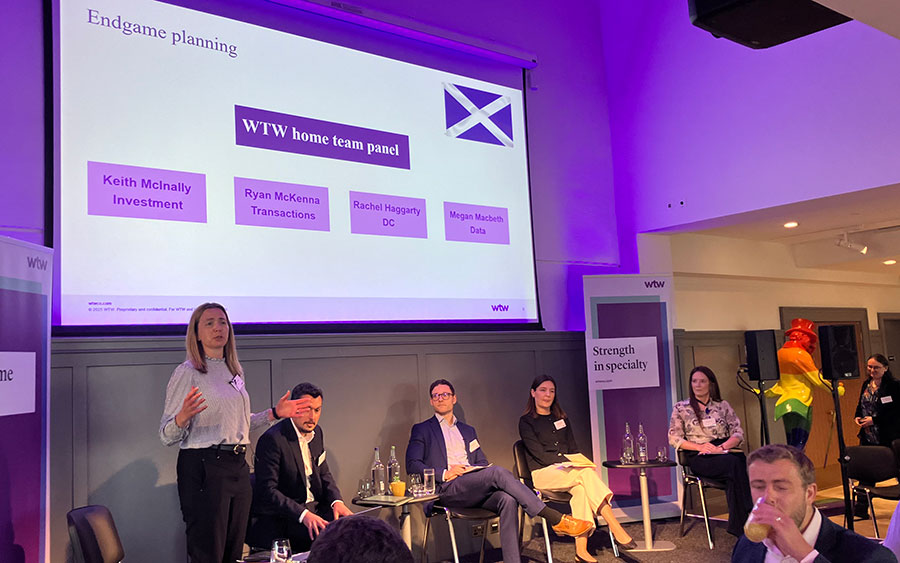
Suzanne Vaughan introducing the final session on endgame.
After a short break, the final session focused on the endgame. The panel included local experts in each key aspect of endgame planning: Megan Macbeth (WTW) – Data Solutions, Ryan McKenna (WTW) - Risk Transfer, Keith McInally (WTW) - Investment, and Rachel Haggarty (WTW) - DC. The session was hosted by Suzanne Vaughan (WTW).
It was clear that a joined-up approach was crucial, with many overlapping areas across key disciplines. There was great optimism, with the panel highlighting the opportunities. Key points included:
Investments
- Increased volatility in investment markets has led many schemes to review investment risks
- Material cost savings may be achievable through simplifying the investment strategy, including the implementation approach (e.g., reducing the number of funds and managers) ahead of buyout
- Investing like an insurer can help reduce risk relative to buyout pricing and make the scheme stand out in a busy market
- Illiquid assets are material for many schemes – make a plan early to investigate options to identify the optimal exit strategy
Defined contribution (DC)
- The number of DC schemes fell below 1,000 for the first time in 2024 as more single-employer trusts consolidate into existing master trusts
- When planning for buyout, it's important to consider a solution for DC and additional voluntary contributions (AVC) benefits early; otherwise, it can cause delays in wind-up
- There are several solutions, and the right option will depend on the scheme's individual complexities, so finding and implementing the right solution can take time to work through
Risk transfer
- The momentum continues for transactions at the smaller end of the insurance market, with last year's volumes totalling around £50bn, with 80% of the nearly 300 transactions being for schemes with less than £100m of assets
- There are more options for smaller schemes than ever before, including Superfund transactions, with Clara-Pensions quoting for schemes under £150m. TPR's latest blog post highlights these as an endgame solution
- It's important to understand the benefits and limitations of using insurers' streamlined templates. Trustees may be expected to amend scheme benefits to be compatible with the template if feasible
Data
- Data improvements are rarely achieved through a single project or standalone initiative. There are various strands to consider and lenses to look through, and doing things in the right order is key
- Piecemeal approaches, which usually happen when reacting to insurer needs or individual member queries, usually cost much more as the opportunity for synergy is lost. So taking a holistic approach pays off, regardless of scheme size or ultimate end goal
- Many data projects seek to tackle 'easy wins' first while leaving complex cases for later, which may seem sensible, but this invites tail risk and, in our experience, is significantly more time-consuming and expensive
- If there are administration issues, targeting buyout shouldn't be a blocker to moving administrators, as it can facilitate work such as data cleansing and benefit specification review, which you need to transact anyway and helps avoid surprises
We would like to thank all attendees for their engagement and sharing insights on the day. If you would like more information on any of the areas covered during the seminar, or have any follow up questions, please contact your WTW consultant, or the contact below.
Contact
Small but Mighty!
These “smaller schemes” are at the heart of UK pension provision – but aren’t always treated that way.