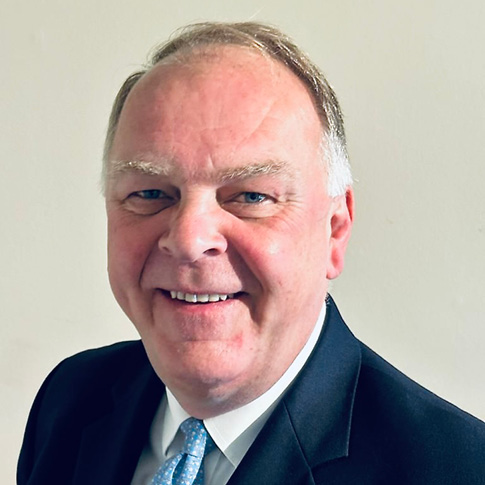
In this episode of the Global Insurance Marketplace Insights podcast, Simon Delchar, Global Head of Placement, and Alastair Swift, Head of Willis Global Specialties & CEO of Willis Limited, provide an overview of the current state of the global insurance market.
Transcript for this episode
ALASTAIR SWIFT: I think we're going to be-- which is great for customers - in a continuation of the market cycle of declining rates. And there are some outliers to that-- US casualties still sits there as an outlier-- but the reality of it is we are in a very aggressive softening market cycle.
SPEAKER: Welcome to Global Marketplace Insights by Willis, a WTW business, a podcast series showing the latest trends from the specialty and regional insurance markets.
SIMON DELCHAR: Hello, and welcome back to the Marketplace Insights Podcast series where we're discussing the current state of the global marketplace. I'm Simon Delchar, Head of Global Placement for Willis. And I'm delighted to be joined today by Alastair Swift, CEO of Global Specialties and Willis UK. So Swifty, it's been a few months since we last did one of these. I guess we've had 1 of July renewals, we've had Monte Carlo, what are your thoughts? What are your observations on where the market is heading at the moment?
ALASTAIR SWIFT: So, Simon, I mean, thank you, firstly. Great to be here again. I mean, you read around it everywhere at the moment, the combined ratios of the insurers are phenomenal. Their results are still exceptional. And there is an abundance of capacity, both from an insurance and reinsurance perspective in pretty much every line and area of the business.
I mean, I think there was a lot of chat in Monte Carlo of underwriting discipline, needing to re-enter the market at the same time as everybody talking about how much capacity they had and how much they wanted to deploy, so I think we're in that stage of the market cycle where every insurer blames every other insurer for declining rates and premium environment.
But at the end of the day, they've still got to write business, they've still got balance sheets that they need to support, they've still bought reinsurance that they need to feed. And so I think we're going to be-- which is great for customers-- in a continuation of the market cycle of declining rates. And there are some outliers to that. US casualties still sits there as an outlier. But the reality of it is we are in a very aggressive softening market cycle.
SIMON DELCHAR: So, yeah, I guess, Swift, nothing's really going wrong either from a loss perspective. I mean, you've got to be a bit of PVT (poltical violence, terrorism) in Middle East, you've got, I guess, some energy losses, but from a cat perspective it's still very benign.
ALASTAIR SWIFT: Yeah, I mean, it's been secondary peril cat almost that has been the thing that's caused a lot of-- I'm going to say an aggregation of losses, but still nothing that should be troubling a reinsurer or insurer's balance sheet. And as you say, I mean, yes, some big risk losses coming out of the Middle East. Some of the refinery losses, some of the PVT losses that have happened seemed like they could be significant.
But I'm going to say market changing events for the insurance and reinsurance market as a whole I think we're going to need to see significant, a significant capital event of some sort. And that doesn't necessarily have to be an insurance loss event. It could be something that happens in the investment market. It could be interest rates or something along those lines. But there's going to have to be a capital event of some description that is going to change the direction of the market at the moment.
And coming out of Monte Carlo, I think the general consensus is property rates will come off again at 1 of January, that will play through into next year's insurance pricing in the same fashion. We've seen a little bit of leveling out on the D&O side of things where some areas, some classes of inner classes within D&O might be starting to experience-- I'm not going to say a hardening, but the softening has declined, the rate of softening has declined.
SIMON DELCHAR: It's hard to call a bottom, though, isn't it?
ALASTAIR SWIFT: It is.
SIMON DELCHAR: And you wouldn't want to try, frankly.
ALASTAIR SWIFT: I don't think we should. And I definitely think certainly for our colleagues and for our clients, don't be the one that tries to predict it. You need to be driving hard at this and taking advantage of it whilst you can, from a buying perspective.
And, look, it could change on you, you could get it wrong at a point in time, but you don't want to try and get ahead of it, because where is that bottom? I don't think any of us quite know.
SIMON DELCHAR: And it comes back to the basic communication with clients, doesn't it? In terms of agreeing on some targets, agreeing on the philosophy of any one client, do they want to really squeeze the pips or do they want to stick with the existing panel? Do they want to broaden coverage? Because that's becoming more and more available.
If we're just selling on price, that's pretty gloomy. I think it would be interesting to see the reinsurance market, as you say. Talk from Monte Carlo is the continued softening whether there's any change in attachment points or any other terms and conditions. I think that's the discipline they're talking about maintaining.
ALASTAIR SWIFT: Yeah. And, I mean, if you were looking at us both, you'd realize we've both been around far too long, probably. But I think given the cycles we've all been through in the past, the pricing reduction is the leader. That's what comes first. Then the next thing is coverage. Then the next thing is probably excess point. And somewhere in there is limit that you can buy.
But all of those things step by step by step will happen and will unfold in this market cycle like in any other. And I do think, certainly for our colleagues, making sure you're really working on that coverage side of things, as you say, is absolutely paramount.
So, there's one thing being able to differentiate on price, but if you can truly get to the point on where you're differentiating on what we can do coverage wise for a client and push those boundaries, that's something that is going to be even more meaningful for them.
We talk about the insurance gap, it widened through the hardened market. It didn't decrease. Now is an opportunity, actually, for us to talk to clients around how you close that. And there are new areas of risk and new products that are out there. I think of some of the stuff we've put together, let's say, from a reputational risk perspective, which when times are tough, clients are going to struggle to think around spending the premium dollars to look at transferring that risk.
Well, maybe now they're not. Maybe now all of a sudden they're going to sit and think, OK, maybe I could buy a broader breadth of coverage to cover some of the risks that I might not have covered previously because I've got the budget, I've got the savings elsewhere.
So I think as much as we look at an individual product and say, look at the breadth, look at the coverage, then also think of the risks that the clients have got and say, OK, are you buying in all of these spaces? The amount of clients that still aren't buying cyber when we're creating significant savings for them across other lines of business that they could be using to actually buy cyber insurance, I don't get.
And certainly as I'm speaking to clients in that space, is one of the things I'm talking to them about is, what didn't you buy because you were restricted from a budget perspective that you would have liked to buy? OK, well, maybe now's the time for us to consider those again.
SIMON DELCHAR: Yeah, I don't think we've done ourselves any favors as an industry just because I think clients are focusing on price because that's ultimately what-- in a competitive situation, I guess, what brokers focus on and markets focus on to win the business. But I think you're right, it's largely been a price market for the last two or three years. And I think coverage needs to come next, and value, actually, rather than price.
ALASTAIR SWIFT: Absolutely right. And, look, there are certain things where maybe there's grey in a policy language at the moment, and maybe now's the time where you create affirmative language within a policy. And I think some of the things the teams have been working on with regard to AI and how we get that affirmatively covered in policies, that to me is really exciting. And that's the type of stuff that will differentiate our proposition from others with our competitors.
SIMON DELCHAR: Yeah. I'm pleased that the market is being a bit more sensible at the moment on AI and AI exclusions. We had that debacle on silent cyber, whenever that was, five, six, seven years ago. I think ultimately does the event that is triggered by AI, is that an insured event? And if that's an insured event, we've got coverage.
If the AI event itself causes something to-- causes a loss to a client, then we can help them with the risk assessments and the quantification and the gap analysis. Because if it's not covered under existing policies, we need to go and find alternative solutions. But as I say, right now it's a pretty sensible marketplace, I think, for that.
ALASTAIR SWIFT: Yeah. As you conclude it and you think of the conclusion of where we are, I think the ongoing state of the market is there. It's there for everybody to see. I think one of the things that, again, people should be considering with their clients is we know through these cycles the next thing that-- or the continuation of M&A activity is going to come through across the insurers and across the brokers, frankly. But when it comes across from the insurers, I think it's vital that we're talking to clients around concentration risks with particular insurers too.
So we shouldn't just be thinking just because somebody has bought somebody else that all of a sudden, they're going to double their capacity on this piece of business or that a client should actually be with the same-- or providing the same orders to the combined insurer. We need to look at that. We really need to take our clients through that journey, make sure the balance sheets of the insurers support that bigger participation on a program. So I think that bit is vital.
The second area I think that we have an opportunity on, and we've seen some recently, so we've seen the complication recently of MGAs (Managing general agents) going insolvent, and what that leads to from the point of view of how you manage claims and premium and legacy issues that are there. And my only ask, I guess, to everybody is think really hard as to which MGAs you are using on programs if you have to use them.
SIMON DELCHAR: And why. What does that MGA bring? Do they bring something that is special and unique and that we can't get from anywhere else? Fantastic. Best client outcome. That's exactly what we want. But if it's capacity that we can just access elsewhere and elsewhere with whom we have a trading relationship and elsewhere where we have direct connectivity in the event of a claim, it's claims that bother me with MGAs. As you say, either insolvency or just the lack of ability to talk to the paper directly.
And I think the analysis that we did was that claims with MGAs typically take six times as long as claims with partner insurers. As you said earlier, it's not as if we need the capacity at the moment. I've spent some time with some markets this week, four markets alone have got $3 billion of capacity. I mean, it's just amazing. And they're looking to use it, looking to deploy it, so. Well, Swifty, thank you for your contribution on this episode of The Marketplace Insights Podcast. Look forward to the next one at the end of the year.
ALASTAIR SWIFT: Thanks, Simon. And, yeah, maybe we'll be saying the same story or maybe it'll be something different. Who knows.
SIMON DELCHAR: Who knows.
SPEAKER: Thank you for joining this WTW podcast featuring our latest global market commentary. WTW offers insurance related services through its appropriately licensed and authorized companies in each country in which WTW operates. For further authorization and regulatory details about our WTW legal entities operating in your country, please refer to our WTW website. It is a regulatory requirement for us to consider our local licensing requirements.
The information given in this podcast is believed to be accurate at the time of publication. This information may have subsequently changed or have been superseded, and should not be relied upon to be accurate or suitable after this date. This podcast offers a general overview of its subject matter. It does not necessarily address every aspect of its subject or every product available in the market. And we disclaimer all liability to the fullest extent permitted by law.
It is not intended to be and should not be used to replace specific advice relating to individual situations, and we do not offer and this should not be seen as legal accounting or tax advice. If you do intend to take any action or make any decision on the basis of the content of this podcast, you should first seek specific advice from an appropriate professional.
Some of the information in this podcast may be compiled from third party sources we consider to be reliable, however, we do not guarantee and are not responsible for the accuracy of such. The views expressed are not necessarily those of WTW. Copyright WTW 2026. All rights reserved.
Podcast host
Podcast guest

Listen to this series on:
PODCAST SERIES
Global Insurance Marketplace Insights Q3 2026