

Cost pressures remain, but the underlying drivers are evolving
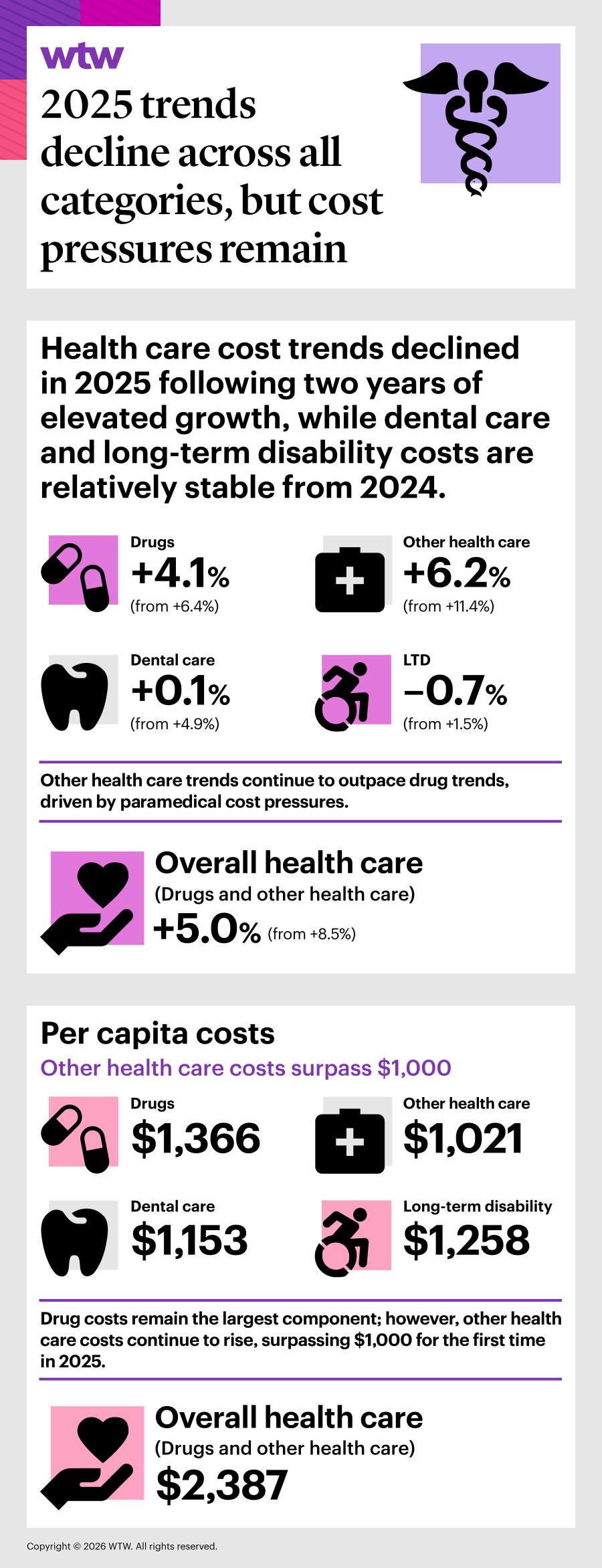
While overall health care trend declined in 2025, underlying cost pressures persist and are increasingly driven by services rather than drugs, particularly in paramedical care.
- Other health care trends continue to exceed drug trends (+6.2% vs. +4.1%)
- Other health care costs surpassed $1,000 per employee for the first time, reaching $1,021
Mental health continues to reshape benefit cost dynamics
Growing demand for mental health support is significantly impacting both trends and costs, reflecting significant efforts from organizations to better support employees and reduced social stigma.
- Mental health practitioner costs are now nearly triple 2021 levels
- Costs for these services are increasing faster than other paramedical categories
Understanding What’s Driving Cost Pressure
Employers should expect continued cost pressures due to specialty drugs, rare diseases, GLP-1 therapies, rising mental health issues and broader paramedical use. As employers continue to report rising benefit costs as a key business issue, they may need to reassess plan design, coverage levels, and cost management strategies accordingly.
The full FBS results provide deeper insights into cost drivers, industry comparisons, and emerging trends, helping organizations benchmark their plans and identify targeted opportunities to better manage benefit costs.
Source: WTW 2026 Financial Benchmarks Survey, Canada
Copyright © 2026 WTW. All rights reserved.
Access the survey results
WTW’s financials benchmarks
Contact us now to participate in the 2026 Financial Benchmarks Survey