


If you are part of management for a North American life insurer, chances are that changing market, regulatory and economic conditions have left you with blocks of business that either are “distressed” or have become non-core. The almost inevitable result is those in-force blocks are a drag on earnings; return on capital; and, in many cases, internal resources.
Advancements in data and analytics have enhanced the ability to understand drivers for such blocks of business. Additionally, healthy interest from in-force business acquirers provides a good option for counteracting a potential downward spiral in those blocks of business, releasing significant financial benefits for your organization.
From our experience across the market, we have identified four key factors that should help you to take advantage of opportunities to optimize your in-force portfolio.
Effective management often requires some cultural change within the business.
Related content
The graph below shows how post-level term lapse rates vary considerably by payment method based on the Society of Actuaries’ 2021 Post-Level Term Lapse and Mortality Experience Report, illustrating the potential value of applying new techniques in in-force optimization — in this case behavioral economics. As demonstrated, the biggest jump in lapse rate occurred among people who moved from auto payment of premiums to receiving a bill.
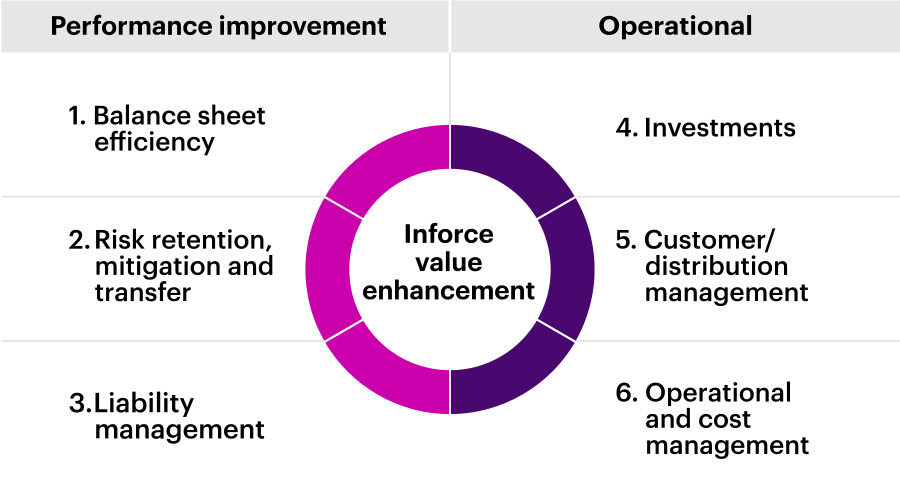
Figure 1 shows some categories of potential in-force value enhancement levers.
While onshore captives are now less commonly used, there still may be opportunities to add value, including improving financing costs.
Opportunities exist
Based on an online poll during a recent WTW webinar, only 22% of respondents said they believe they have a systematic framework in place for in-force management. In addition, just over half said their efforts are organized by line of business.
This suggests to us there are unexplored opportunities within the industry for enhancing in-force management.
Footnote
- Methods of dealing with such situations are outside the scope of this article, but we would be happy to discuss some ideas if you have such questions. Return to article
Authors



The first measure to understand is the original profitability/earnings expected from product pricing.