


This is one part of the Global Investment Outlook series. The other sections are focussed on Prosperity and Inclusive growth.
In order to minimise the potentially devasting physical impacts of climate change, long-term structural changes are required that will influence the value of physical and financial assets, revenues, royalties, tax flows and jobs. The risk of value reductions brought about by the transformation to a low carbon economy is often referred to as “climate transition risk”.
Three strategic considerations for financial institutions
Reducing the financial risk resulting from climate change requires managing climate transition risk and opportunity, using finance as a catalyst, and encouraging market reform.
- Measure climate risks and develop new tools and financial instruments to help price and mitigate risk
- Real world pricing of transition risk will improve investment decisions, reduce the concentration of risk, and increase economic resilience
- New financing solutions can overcome investment barriers and reduce the cost of capital
- Financial innovation includes new financial instruments, portfolio designs or hedging products
- Build markets tailored to low-carbon solutions and create better incentives
- By building climate aligned portfolios, businesses are incentivised to make investments that align with and accelerate the transition
Risk measurement is an essential first step towards opening opportunities to manage climate transition risk
Account for four characteristics when measuring the impact of climate transition risks and opportunities on financial investments, assessing the economic impact at the sovereign country level, or applying strategic risk evaluation tools to help corporates.
Risks materialise at the micro level driven by macro forces
- Measuring transition risk requires a hybrid approach to understand how macro changes will affect the value of individual assets
Risks are often driven by non-linear, structural change
Risks depend on the timing and path of the transition
- Incorporate multiple scenarios to evaluate the largest structural changes and the likely paths that a transition could take given the uncertainties around, and responses to, politics, policy, technology, and consumer and investor behaviour; the most likely transition paths are disorganised.
Risk transfer between stakeholders
- Valuation needs to map how risk flows at a national level, including impact on sovereign balance sheets, financial system stability, consumers, taxpayers, and workers
Read : Risks from disorganised climate transitions
Measurement of transition risk should depend on the nature of the business, industry, and risk
Scenarios should identify the effects of the transition on demand, costs or margins, pricing, investment needs, and the valuation of assets. Then assess how changes in asset value will be affected by policy, contracts, ownership, financing, and tax regimes, which allocate this change in asset value between equity owners, creditors, governments, and consumers. This is called Climate Transition Value at Risk (CVaR).
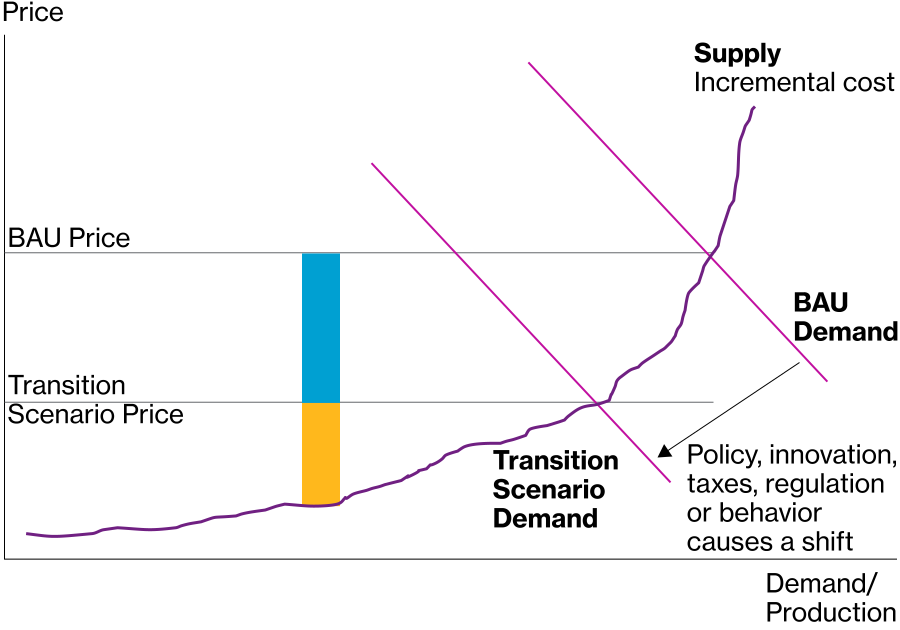
Impact of changes in policy, technology, industry structure, or demand on the commodity and resource industries
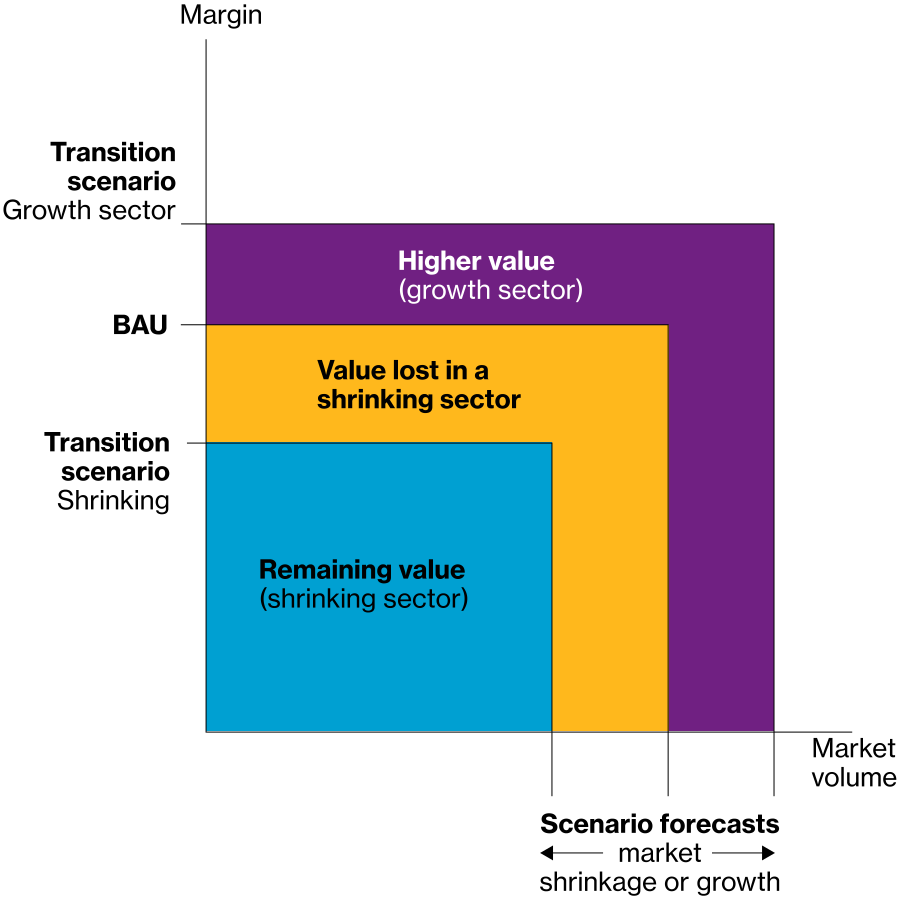
Impact of changes in policy, technology, industry structure, or demand on Manufacturing, marketing, and service industries with direct transition exposure
Service industries with clients exposed to transition risk
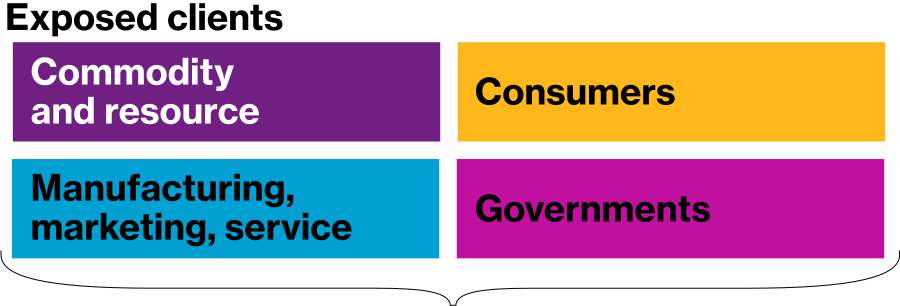
Impact of changes in policy, technology, industry structure, or demand on service industries with clients exposed to transition risk
New tools, hedges, and financial instruments to manage climate risk and improve value
Management of climate transition (and physical) impacts – whether through strategy, investment, diversification, or divestment – will de-risk both investments and companies and improve valuations.
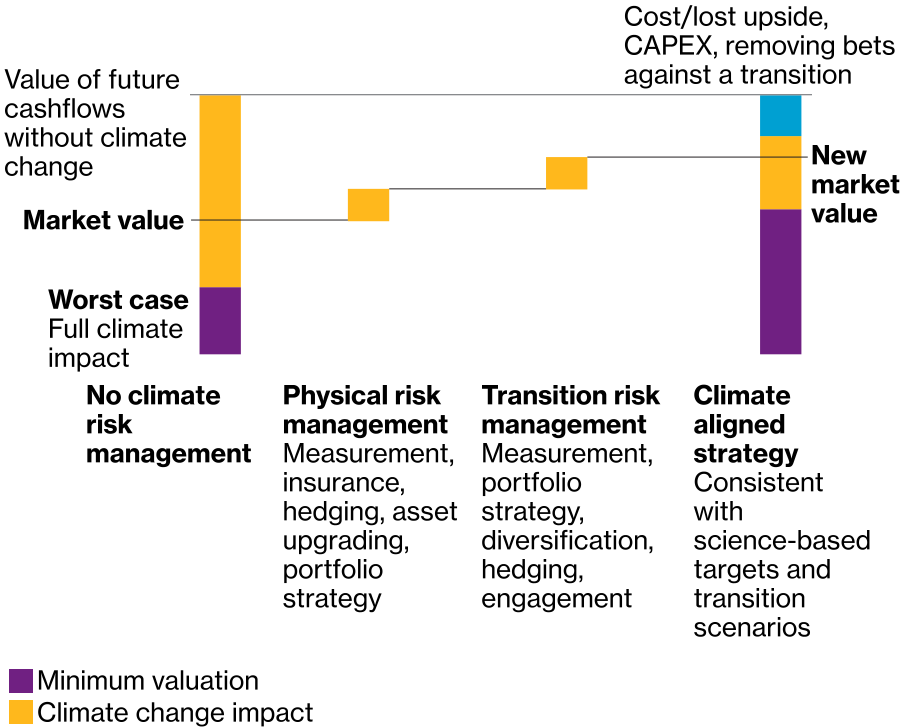
Managing climate uncertainty and risk and increasing asset and portfolio value
An investment approach
The WTW CVaR platform provides an investment approach that can measure climate transition risk for financial portfolios and businesses. It serves as the basis for new tools and investment solutions that will help investors and businesses price transition risk, reduce the concentration of risk, and limit the potential for economic disruption.
| Risk Management Actions | Risk management & measurement | Stewardship | Portfolio analysis & construction |
Investment Solutions/ hedges |
Insurance products |
|---|---|---|---|---|---|
| Avoid new high climate risk investments | ✔ | ||||
| Improve climate risk of existing investments | ✔ | ✔ | ✔ | ||
| Divest high risk investments | ✔ | ✔ | ✔ | ||
| Diversify to manage portfolio/ company level risk |
✔ | ✔ | ✔ | ✔ | |
| Hedge risks that cannot be improved/ divested |
✔ | ✔ | ✔ | ✔ | |
| Insure risks that cannot be otherwise managed | ✔ | ✔ | ✔ | ✔ | ✔ |
Dashboard
Table Of Contents
Related Content
Emissions: food
-2%
The estimated Enterprise Value at Risk for businesses in the food value chain, if the world transitions to a low carbon economy consistent with a global temperature increase of 1.8°C.
Emissions: electrification of transport
-0.4%
The estimated Enterprise Value at Risk for businesses in the automobiles sector, if the world transitions to a low carbon economy consistent with a global temperature increase of 1.8°C.
Emissions: decarbonising industry
-3%
The estimated Enterprise Value at Risk for businesses in the industrials and materials value chains, if the world transitions to a low carbon economy consistent with a global temperature increase of 1.8°C.
Emissions: decarbonising power
-17%
The estimated Enterprise Value at Risk for businesses in the energy and utilities sectors, if the world transitions to a low carbon economy consistent with a global temperature increase of 1.8°C.
Emissions: protecting nature
6 gigatons
The annual carbon emissions that could be reduced if net-zero deforestation was achieved by 2030.1
1 The world is projected to emit 36.4 gigatons of carbon dioxide in 2021.
Emissions: removing carbon
5 gigatons
The volume of carbon dioxide emissions per year that would need to be removed by engineering by 2050 to help achieve a net zero (1.5°C) outcome. 1
1 The world is projected to emit 36.4 gigatons of carbon dioxide in 2021.
Accelerants: politics & policy
36%
The proportion of world GDP now covered by net zero emission policies in law.
Accelerants: innovation
$80 per kWh
The production cost of batteries used in electric vehicles by 2035 to help achieve a net-zero world (currently $140 per kWh).
Accelerants: investment
$2.7 trillion
The additional public-and private-sector subsidies and financing needed now to target a transition to a net zero global economy.
The other two sections of this report are available here: Overview, Prosperity and Inclusion.
Disclaimer
This document was prepared for general information purposes only and should not be considered a substitute for specific professional advice. In particular, its contents are not intended by Willis Towers Watson to be construed as the provision of investment, legal, accounting, tax or other professional advice or recommendations of any kind, or to form the basis of any decision to do or to refrain from doing anything. The information included in this presentation is not based on the particular investment situation or requirements of any specific trust, plan, fiduciary, plan participant or beneficiary, endowment, or any other fund; any examples or illustrations used in this presentation are hypothetical. As such, this document should not be relied upon for investment or other financial decisions and no such decisions should be taken on the basis of its contents without seeking specific advice.