

As the world evolves away from fossil fuel–based energy systems, wind, solar, and battery energy storage systems (BESS) will lead the clean energy transition in the next five years.
BESS will play a critical role in enabling the efficient integration and utilization of renewable energy into evolving systems, supporting the development of low-carbon economies.
According to Willis’ Global Clean Energy Survey, 49% of renewable energy companies are prioritizing battery energy storage systems in the next five years.
The urgency of the transition is driven by the growing need to: reduce greenhouse gas emissions; address the rising frequency and severity of natural disasters linked to climate change; and stabilize energy security. The IEA’s Renewables 2024 report estimates that 5,500 gigawatts of new renewable energy capacity will be built between 2024 and 2030, three times the increase seen between 2017 and 2023. But it is not as simple as just plugging wind or solar projects generators into the grid.
A blackout on the Iberian Peninsula that hit the headlines in 2025 year is a stark reminder of how balancing power supply and demand of has become a critical challenge. While the production of energy from traditional power generation such as coal and gas provides a consistent, dispatchable supply, intermittent generation from solar and wind creates peaks and troughs.
BESS provides the grid with frequency regulation, voltage support and can alleviate grid congestion - increasing grid stability and capacity, and preventing potential grid failures. BESS capacity is estimated at around 95GW in 2024, up 49% over 2023[1], with 1,200GW of BESS deployed globally by 2030.
BESS is the gateway to integrating renewable energy power generation.
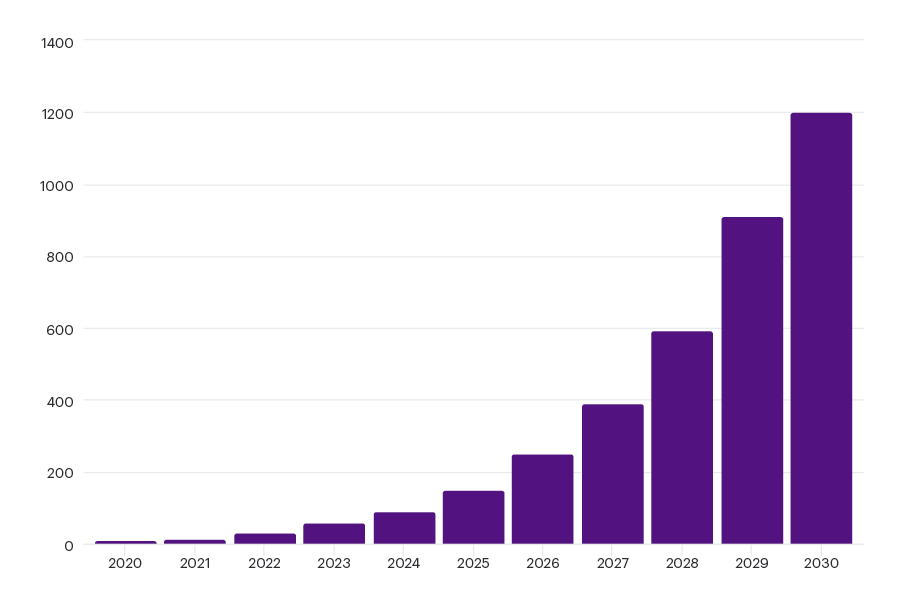
BESS capacity forecast.
Source: Global Data.
Regulation is controlling growth in key regions
Government incentives and regulatory initiatives have played an important role in the expansion of the BESS market. The Inflation Reduction Act (IRA) in the U.S. turbocharged renewable energy and BESS development with tax credits that reduce capex costs of projects up to 30%. But with the Trump administration now at the helm and repealing aspects of the IRA, the future of BESS development is uncertain.
Meanwhile, in China, provincial mandates state any new solar or wind projects must be paired with BESS, which led to the BESS capacity tripling in 2023 alone.
These countries are dominating the number of gigawatts deployed globally.
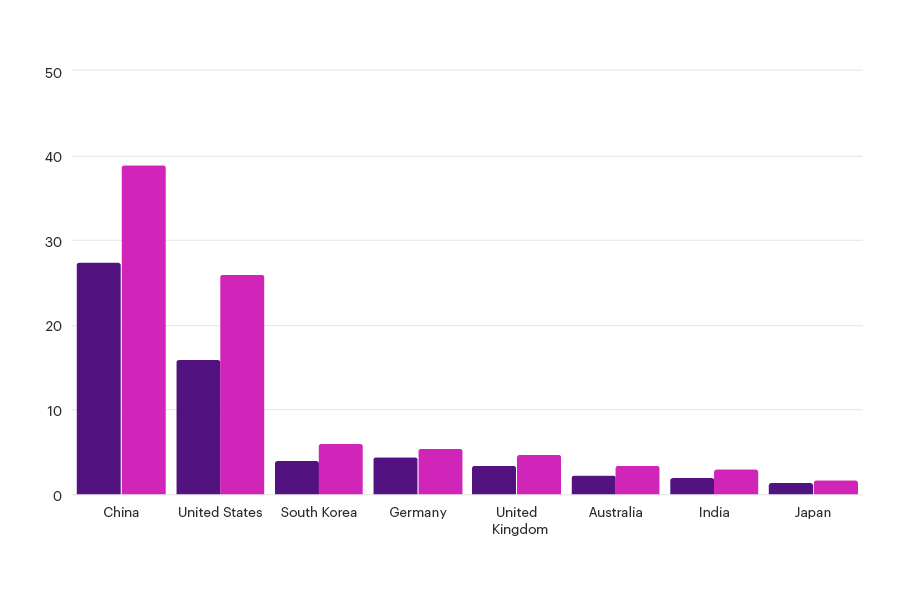
Battery storage capacity by country.
Source: Global Data.
Prices are falling
Another significant driver of the growth in BESS has been the declining costs. All major integrators are seeking to capitalize on the increased demand to expand their market share. This has resulted in pricing reductions from all major BESS system integrators. BloombergNEF (BNEF) finds 40% year-on-year drop in BESS costs with global average turnkey energy storage system prices had fallen 40% from 2023 numbers to $165/kWh in 2024.
Risk profiles are improving
When BESS was in its relative infancy, the technology was initially associated with incidents in South Korea, Australia and the U.S. This had led to a cautious uptake of BESS from developers, investors and insurers. But as the BESS market has continued to mature, robust design standards helped to establish confidence in the technology. The risk profiles for BESS projects have improved, attracting additional insurer capacity, decreasing premium ratings and opening the door to better coverage.
The looming threat of liability exposures
The BESS market is not without its challenges. Thermal runaway has been a long-time concern for developers and insurers alike. Recent events at Moss Landing where a cascading thermal runaway event is thought to have caused $400 million of damage, showed not just the initial property damage but also the potential environmental hazards associated with a thermal runaway event. The local wetlands nearby had unusually high concentrations of toxic metals. Demonstrating the environmental impact BESS can have and also the third-party liability exposures.
The future of the energy storage market
Around 3.4GW of BESS capacity is operational in the U.K., but regulatory reforms approved by energy regulator Ofgem would offer connection to a pipeline of 7.6GW. This oversubscription could mean many projects may not receive connection offers until after 2030, with some possibly waiting until 2035 or beyond.
But other countries are yet to implement similar initiatives, meaning globally, there are over 540 GW of standalone BESS projects are waiting to be connected to the grid. These projects are primarily in the U.S., U.K., Australia, Spain, and Chile, with the U.S. accounting for 64% of the capacity in the queue.
Key takeaways:
- BESS can alleviate grid congestion - increasing grid stability and capacity, and preventing potential grid failures.
- But challenges endure. Potential property damage and environmental hazards associated with a thermal runaway events remain concerns for developers, investors and insurers.
- The outlook is bright. BESS prices are falling as integrators capitalize on the increased demand to expand their market share, risk profiles continue to improve and regulation in key regions is opening the door to growth.
The future of the energy storage market is addressed in this series. Will the BESS market continue to be dominated by lithium-ion technology or see a diversification to alternative technology sources? Will double stacking of containers be the future to maximize megawatts per meter squared? Find out more in our BESS article series.
Footnote
- Global Data. Return to article