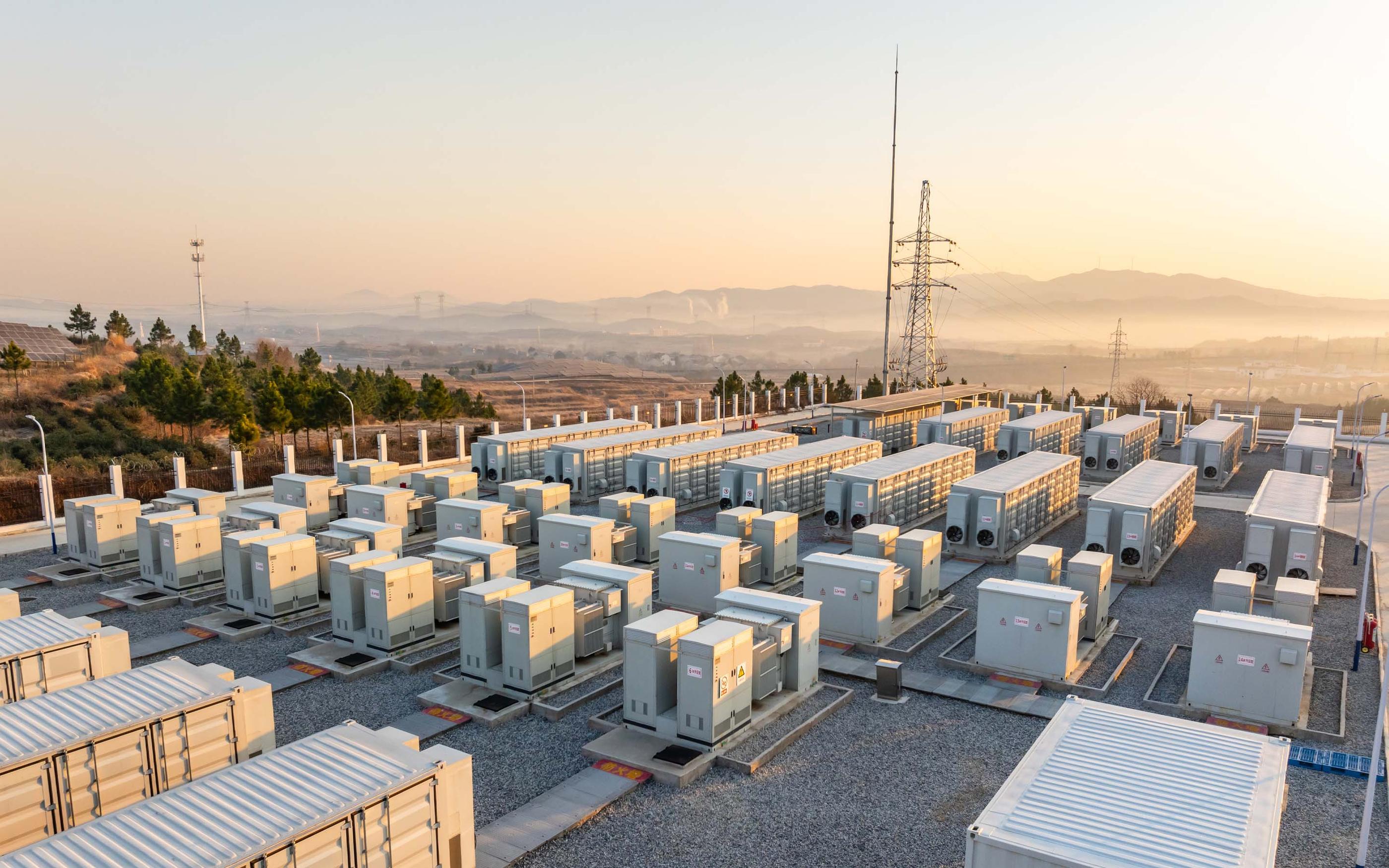
With major sectors electrifying processes and the global electricity share being projected to rise from 20% to over 50% by 2050. Battery energy storage systems (BESS) play a crucial role in balancing supply and demand and providing security to the existing grid infrastructure. But liability exposures need to be understood to operate safely and efficiently.
BESS losses and damages can spiral, fast.
The optimal energy storage technology is impacted by a multitude of factors, including weight, shelf life, density, transportability and overall cost. The variety of BESS technologies include lithium-ion, conventional lead acid, sodium sulphur, zinc-air flow and nickel-cadmium, with the preferred chemistry being lithium-ion due to their high energy density, efficiency, and longer life cycle. Battery chemistry equally plays a vital role in the safety of BESS.
But if a failure occurs, the loss potential can multiply exponentially.
The liability checklist
How BESS facilities can help demonstrate safety and risk control measures to insurers
Following recent BESS fires at Carnegie Road in Liverpool (2020) which took 59 hours to extinguish, and at Moss Landing Energy Storage Facility in California (2025) which resulted in local highways being cleared and residential areas evacuated, there is an increasing focus on the third-party liability risks associated with BESS.
While many of the risk considerations are similar to those considered as part of property damage and business interruption, a nuanced approach must be taken when considering the third-party liability implications.
The major third-party liability risk considerations include:
Measure proximity to surrounding third-party property – as with many liability exposures, a key risk feature is the proximity to surrounding third-party property. Given the major liability concerns related to bodily injury, property damage, and any resulting financial losses caused by fires or smoke, the location of a BESS—whether in a remote area or a densely populated residential, commercial, or industrial zone—will be a crucial factor in determining the terms offered by liability insurers. For example, if a BESS is located in an industrial area, the impacts of 'denial of access' to third parties to their own property (covered under a broader 'property damage' definition) caused by smoke clouds, and the resulting financial losses, could present a significant liability
Like most other technologies, aside from professional indemnity exposures where a special relationship may occur between two parties, pure financial loss is almost always a contractual liability. While a BESS owner or operator may have liabilities to third parties for consequential financial loss, under common law, liability ordinarily applies in the context of negligence (i.e. consequential financial loss would have to be contingent on injury or damage occurring). As the impact of consequential financial loss to third parties could be endless, typically a loss must be “reasonably foreseeable” for liability to be found and for a policy to respond
Comply with safe configuration and spacing – battery fires don’t require oxygen to propagate, can become uncontrollable and burn for days. Therefore, the layout of a BESS is a significant driver of its liability risk exposure. Although there are regulations mandating spacing in certain jurisdictions, typically, spacing of greater than three meters between containers is preferred as it decreases the chance of thermal runway spreading and thus the risk of fire. as heat tends to dissipate less quickly (notwithstanding the role of ventilation) and thermal runaway can spread more easily
- Consider battery chemistry – the toxicity and polluting capability of gases released following a fire are inherent to the chemistry of the battery. The gases released from lithium-ion batteries can be flammable as well as toxic and can explode if the ignition point is reached. Hydrogen fluoride is both toxic and corrosive and can cause respiratory issues, burns and has the possibility to corrode nearby third-party structures if in a high concentration. Similarly, battery fires can release carbon monoxide, hydrogen cyanide and sulphur dioxide – exposure to all of which can cause serious health problems. Although these gases can dissipate quickly, the exposure can be heightened for covered BESS or those located in densely populated areas
Although water is required to cool and extinguish BESS fires, it can react with fluorine compounds from fires forming a runoff of corrosive hydrofluoric acid. Similarly, under other chemistries firefighting water can cause the leaching of heavy metals. Under both scenarios, this runoff can cause pollution and thus environmental legal liabilities relating to third-party damage and clean-up.”Amelia BackhouseAssociate Director, Liability, Willis Natural Resources
- Implement fire detection and suppression measures – the ability to detect and suppress the spread of fires is key in mitigating the third-party liability exposure. Articulating whether there are fire detection and suppression measures in place within containers, sprinklers with a sufficient water supply, SCADA systems and external monitoring systems which can remotely shutdown and isolate the impacted area, are all important risk considerations for both facility owners, operators and insurers
- Evidence testing and manufacturing – articulating that BESS have been tested in accordance with recognized industry methods (e.g. UL9540A) and are manufactured by a renown BESS manufacturer
- Understand contractual liabilities – assessing the contractual relationships with key stakeholders such as the BESS manufacturer, any third-party maintenance contractors, co-generation assets and the grid operator and thus providing clarity around any resulting liabilities
Although water is required to cool and extinguish BESS fires, it can react with fluorine compounds from fires forming a runoff of corrosive hydrofluoric acid. Similarly, under other chemistries firefighting water can cause the leaching of heavy metals. Under both scenarios, this runoff can cause pollution and thus environmental legal liabilities relating to third-party damage and clean-up.
The liability market for BESS is generally buoyant. But as an increasing number of companies diversify their portfolio to include BESS – often with co-generation/hybrid facilities – the liabilities to neighboring third-party properties will become an increasing underwriting focus for liability insurers. Authorities may force temporary closure measures on health and safety grounds and the potential for leakage of toxic and heavy metal contaminants, which are major considerations for liability insurers.”Raj VoraAssociate Director, Liabilities, Global Willis Natural Resources
The liability market for BESS is generally buoyant. But as an increasing number of companies diversify their portfolio to include BESS – often with co-generation/hybrid facilities – the liabilities to neighboring third-party properties will become an increasing underwriting focus for liability insurers. Authorities may force temporary closure measures on health and safety grounds and the potential for leakage of toxic and heavy metal contaminants, which are major considerations for liability insurers.
Harness sector-focused liability broking and risk advisory specialty
Take action to optimize your cover.
Providing insurers with robust data-driven risk information, early engagement with insurers and evidence of adopting best practice risk control protocols will continue to best place buyers when accessing the market.
Importantly, it is also crucial to have a suitable policy wording, such as the WTW BESS lifecycle wording, which caters for each distinct third-party liability exposure of a BESS facility. As many of the required coverages – such as for liability arising out of nuisance, denial of access and/or loss of use – are non-standard under certain market wordings, partnering with a specialist broker who has the experience and expertise to unlock the optimal capacity and develop bespoke policy wordings is key to optimizing a risk transfer strategy.
Contact our team to find out how your business can build a resilient liability risk strategy.