


Across Asia Pacific, AI is reshaping the workplace and changing how employees access and experience their benefits. Employees are broadly open to its potential, while employers are exploring practical applications across benefits communications, analytics, navigation and service delivery.
However, acceptance varies depending on how AI is used, and concerns about job security are closely linked to employee wellbeing. As adoption accelerates, employers need to build the governance, capabilities and workforce confidence required to use AI responsibly and create meaningful value.
More than three-quarters of employees in Asia Pacific (78%) say AI is shaping the work they do, although its current importance varies considerably between markets. Employees in India and China are among the most likely to say AI is important in their daily jobs, much more so than employees in Japan, Singapore and the Philippines. These differences suggest AI adoption across the region is at different stages and may follow a varied path, requiring employers to consider local workforce expectations alongside broader organisational strategies.
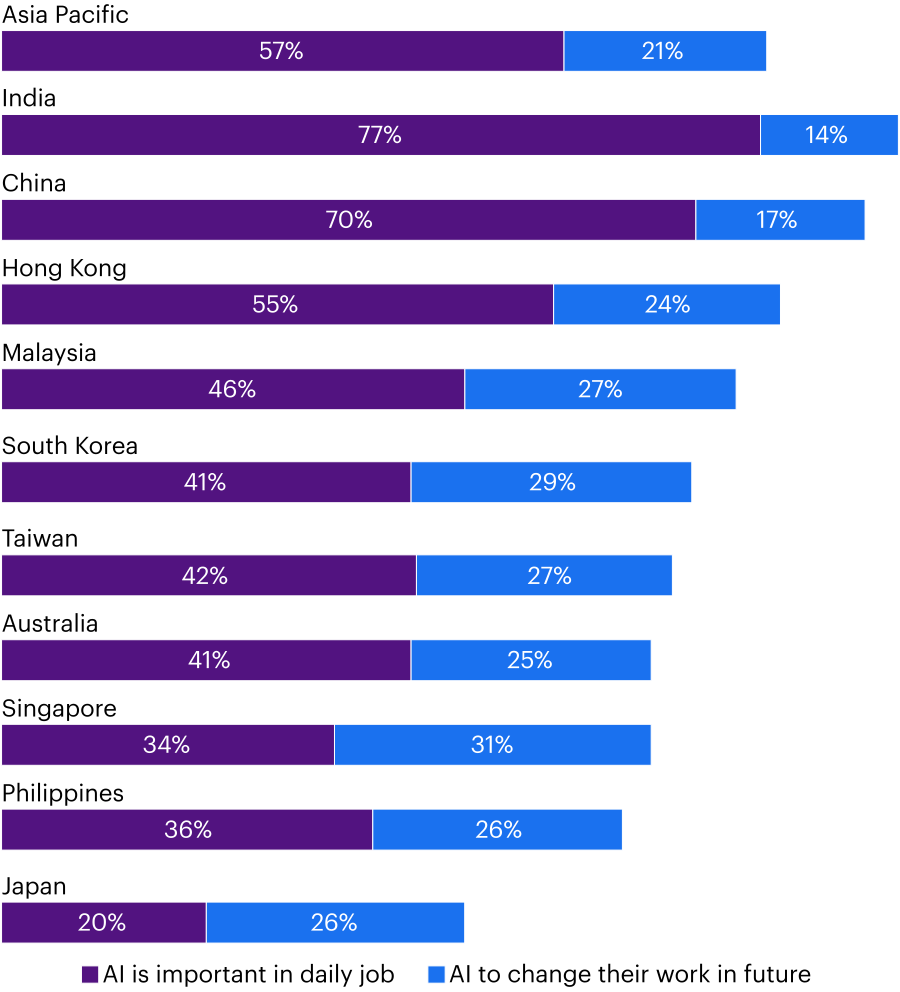
Most employees say AI is changing their work
Source: Global Benefits Attitudes Survey, Asia Pacific
As AI adoption gathers pace, so too are employee concerns about what it could mean for their jobs. Nearly four in 10 are concerned that AI could negatively affect their job security, with entry-level employees and professionals among the most concerned. These concerns are closely linked to retention and wellbeing outcomes. Employees worried about AI's impact are 2.5 times as likely to experience burnout and three times as likely to be a “soft stay” – planning to remain with their employer but feeling stuck and ready to move if a better opportunity appeared.
Employees are generally comfortable with AI taking an active role in benefits and retirement decision-making but are more cautious where healthcare is involved. Trust and transparency will play a critical role in future adoption. As organisations expand AI-enabled services, maintaining appropriate human oversight may be particularly important in healthcare and other sensitive areas.
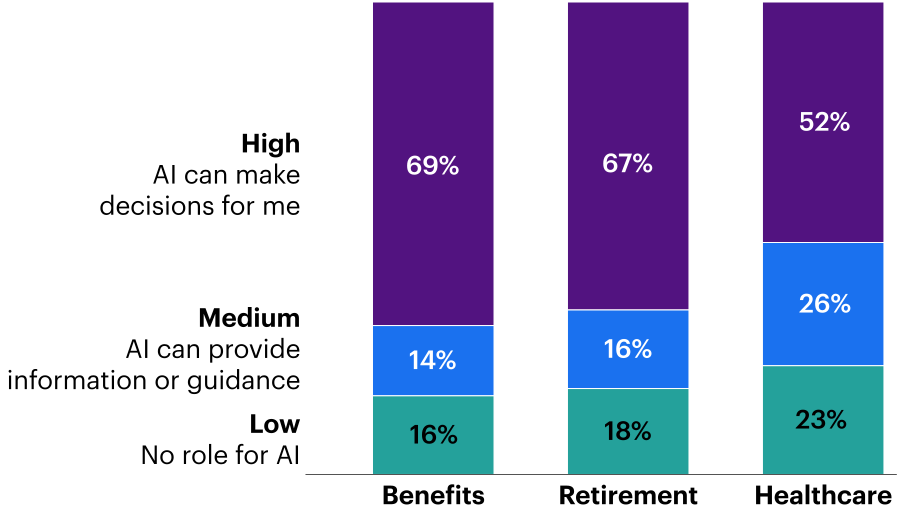
Employees are more comfortable with AI making benefits and retirement decisions than healthcare decisions
Source: 2026 Global Benefits Attitudes Survey, Asia Pacific
Employers are concentrating on practical applications that can improve efficiency, employee access and programme effectiveness. In Asia Pacific, almost half of employers are considering AI-generated dashboards and insights to track participation and outcomes of wellbeing programmes, while a similar number are exploring AI-powered wellbeing nudges. More broadly, current applications across health and benefits remain focused on areas such as communications, administration, analytics and navigation support, allowing organisations to create value while building the foundations for broader adoption.
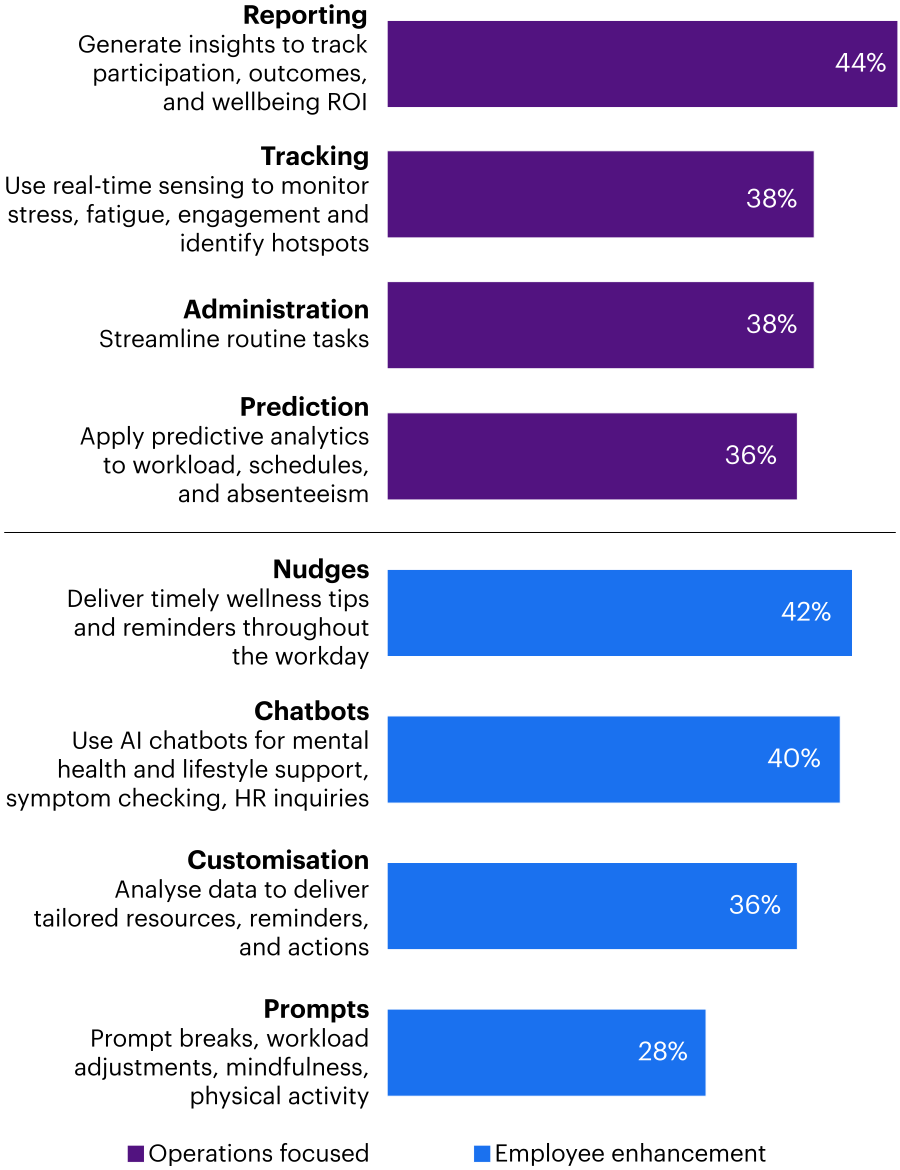
Employers are focusing on practical AI applications in wellbeing programmes
Source: 2026 Wellbeing Diagnostic Survey, Asia Pacific
Expectations are growing for AI’s role in healthcare, but the near-term cost outlook remains mixed, with stronger expectations for savings over the longer term. The use of AI in healthcare programmes is expected to accelerate across Asia Pacific, with the largest investments focused on claims, operational efficiency, member experience and analytics.
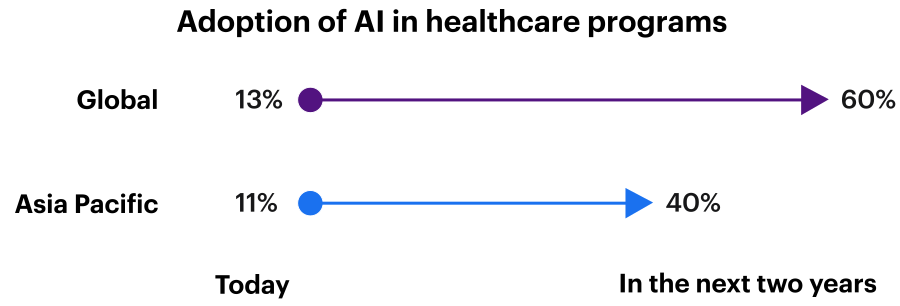
AI use in healthcare is expected to accelerate
Source: 2027 Global Medical Trends, Asia Pacific
Insurers are optimistic that AI will drive meaningful improvements in reducing administrative cost and complexity, addressing inconsistencies in healthcare delivery and improving quality of care. However, a better healthcare experience and improved access to care do not automatically translate into lower costs. Efficiencies and cost benefits may become clearer as adoption matures.
AI has the potential to reshape how benefits and wellbeing programmes are delivered, experienced and managed across Asia Pacific. The key challenge for employers is to implement AI in ways that strengthen employee trust, wellbeing and workforce outcomes.
Organisations that build workforce readiness, establish responsible governance and focus AI investment on meaningful employee and business outcomes are likely to realise the greatest value. As adoption accelerates, employers will need to balance advances in efficiency and personalisation with transparency, appropriate human oversight and a positive workforce experience.
2026 Global Benefits Attitudes Survey, Asia Pacific
2026 Wellbeing Diagnostic Survey, Asia Pacific

Explore Series