

As digital infrastructure becomes increasingly critical to economic activity, how can organizations maintain digital uptime in a world of growing system pressures and interdependencies? In this episode, host Sonal Madhok, Technology Risks Analyst at the Willis Research Network, is joined by Lucy Stanbrough, Head of Emerging Risks Research, to explore how the risk landscape for digital infrastructure is evolving beyond traditional operational concerns. Together, they examine how rising demand for power, water, and computing capacity is creating new pressures across interconnected systems, and why resilience now depends on understanding the relationships between infrastructure, supply chains, energy networks, and wider societal systems.
Drawing on research from the Willis Research Network and collaborations with leading academic institutions, the discussion explores emerging risks, shared dependencies, concentration risk, and the growing challenge of sustaining digital growth in an increasingly resource-constrained world. The episode also examines how organizations can move beyond asset-level risk management toward a more strategic, systems-based approach to resilience, identifying opportunities alongside risks as digital infrastructure becomes more deeply embedded in energy, community, and economic systems.
Transcript for this episode
SONAL MADHOK: The future of AI won't be determined solely by advances in algorithms or computing power. It'll also depend on the resilience of the systems that support them. And the larger question is whether the systems underpinning that growth can evolve just as quickly and sustainably as the technologies they support.
SPEAKER: Welcome to Digital Uptime by Willis, a WTW business. In each episode, we examine the evolving landscape of digital infrastructure and data centers, their interconnected risks and challenges, and the strategies that help businesses redefine risk and keep resilient in our digital first economy.
SONAL MADHOK: Hello, and welcome back to Digital Uptime. My name is Sonal Madhok. I'm a technology risk analyst. And I'm joined by Lucy Stanbrough, who's head of emerging risk. In our first episode, we introduced Willis's eight-point framework for understanding data center risk. And for today, we're focusing on one part of that crucial part, which is on emerging and strategic risk. And this is through the lens of digital uptime.
So, Lucy, you and I both work together in the Willis Research Network at WTW, which means we're constantly bringing together research, client conversations, and what we're seeing across the market. Data centers have actually existed for decades, even prior to this recent boom. But it feels like the conversation has shifted dramatically over the last few years. What do you think feels different about data centers and digital infrastructure risk today? And what do you think is driving that shift?
LUCY STANBROUGH: That's a great question to kick off. I think for me, what feels different is the uptime is really no longer about just keeping a facility running. It's about keeping an entire ecosystem functioning. Data centers have really become critical infrastructure. They're underpinning AI, digital operations, and economic activity. They're a topic that we've been exploring in the Research Network since around 2021, but they've really exploded onto the radar of everyone over the last year. And what we're really seeing is that the conditions supporting that uptime are becoming more and more complex, and in some cases, even more constrained.
SONAL MADHOK: It seems like uptime is shifting from an operational question to something that's much more systemic and broader.
LUCY STANBROUGH: Exactly. And that's why emerging risks really matter here. Because for me, emerging risks are not only those brand new risks, they can also be things that were really familiar that are showing up in New and unfamiliar conditions. And that's really the core with data centers, where data might be limited and where signals were weak, and the consequences were still difficult to quantify, people are still getting their head around it.
And that's why that lens is really useful, because it forces us to ask different questions, not just what could fail today, but also what's changing around the system. What assumptions are becoming weaker, and where could risks connect or really amplify before they might appear on a traditional risk register. In data centers, that matters because uptime depends on choices that are being made across power, across water technology, supply chains and locations, not just the reliability of the facility itself.
SONAL MADHOK: Great points, Lucy, and I think this is where research really brings your points to life. We've been looking closely at how the physical footprint of data centers has been evolving. And particularly, we're looking at power demand, water usage, and the speed of which infrastructure needs to be refreshed. We've seen that electricity demand is rising rapidly, primarily driven through AI and Cloud growth. But our research has also showed us that data center electricity demand could even double by 2026, which is a significant share of national electricity consumption coming from the sector over the next decade.
And so at the same time, we've seen water demand emerging as a system level constraint globally. AI-related water demand could reach around even one trillion litres annually by 2028, which is a super large number. What's important here, though, is where that demand sits. Only about a quarter of water use is direct cooling. And we hear that conversation often about data centers using a lot of water. So we can understand that. We see the majority of this is upstream, and it's tied to electricity generation. And that's what makes this a systemwide issue, not just a facility level one.
And then when we bring it down to the site level, a single large data center can draw millions of gallons of water per day, often in regions already experiencing water stress. So alongside that, infrastructure cycles are accelerating. We've seen servers that are typically replaced every three or five years. And that creates a continuous e-waste stream. And so globally, e-waste has reached around 62 million metric tons in 2022, and it's projected to exceed 80 million by 2030, with less than a quarter formally recycled. And AI really is changing the trajectory here.
Historically, we've seen that data center growth was driven by cloud adoption and digital services. But today we're seeing that demand being driven by these powerful AI models that are coming out larger compute clusters and specialized hardwares to address this demand. In some cases, these individual AI facilities are being planned at a scale that would have seemed extraordinary only a few years ago. So what we're seeing here is not just scale, it's this cumulative pressure across multiple systems.
LUCY STANBROUGH: I completely agree. That's like for me, one of those key points. And it's been really fascinating. This evolution that they're not just sustainability or technical issues anymore. They really directly affecting the conditions required to maintain uptime, which is just really fascinating.
SONAL MADHOK: So I wonder, with everything that's given and so much to think about with AI, what are the questions leaders really should be focusing on?
LUCY STANBROUGH: That's a great question because this really been like a bit of a shift. Historically, uptime has been about failure. What happens when something breaks. But now the bigger question really should be, can the system actually keep up with demand? Because once you ask that, the conversation really shifts, you start asking, is our system actually resilient? What's it going to look like in five or 10 years, especially considering the evolution that we've been on over the last year? And then you get to focus on which emerging dynamics are really starting to challenge the assumptions that we've taken for granted. And what do we need to challenge what happens when reality meets risk makes strategy.
SONAL MADHOK: I think those are key questions for leaders to think about. And we're seeing the scale of what is at stake. So organizations are losing significant value from disruption. And at the same time, the opportunity is precedented. What's interesting about those two things is where they intersect on the risks and opportunities of investing into AI and specifically into digital infrastructure. We've seen already that data centers are being integrated into wider community systems. And sometimes we see this from the context of huge data sets coming in and impacting the community. And usually we see the negative, but there are some positives.
For example, Microsoft has a project in Finland that's expected to supply around 40% of regional district heating. And additionally, at North Denmark's facility, they'll channel their excess heat into district networks serving more than 8,000 homes. In effect, we're seeing data centers shift from being pure energy consumers to maybe even contributors to local energy systems.
LUCY STANBROUGH: Exactly. And that I think is what makes the topic so fascinating and why I was so excited to do this session with you today, because we so often frame these discussions around purely either environmental impacts or resource constraints. But there's also real, genuine opportunities.
Data centers are really sitting at that intersection of energy systems, of digital systems, of economic growth. If they're planned thoughtfully, they can become real contributors to broader infrastructure ecosystems rather than simply just consumers of resources. And that shift. It's no longer just about protecting assets. It's about protecting that system that enables that value and most importantly, ensuring that can scale. So let me ask you a question, this time when you're speaking to researchers, because that's what we do in the Willis Research Network, how much of that systems view comes through?
SONAL MADHOK: And that's something where we always try to discuss with all of our researchers and understand we've seen that it's evolving. Most organizations still focus on things like redundancy or backup systems, operational controls. But increasingly, what we're seeing, both in client conversations and through our research, is recognizing that uptime depends on multiple interconnected systems.
And this is something we've been exploring quite actively with our research partners. For example, through our work with University of Pennsylvania's Wharton Mack Institute. We've looked at how AI is reshaping entire ecosystems, and specifically how value and risk emerge through interdependencies between infrastructure, energy systems, and technology.
Specifically, we examined AI systems sustainability across three linked lenses, which included data centers, the hardware to supply these, and finally, algorithmic optimization. And what that showed very clearly is that energy demand, the hardware choice, and even the model design don't operate in isolation. These areas work with one another and understanding how they work with one another, and what are the risk and opportunities of each one, is what can significantly reduce an organization's sustainability risk.
LUCY STANBROUGH: Now those are huge topics. And we're really lucky that we get to spend our time digging into these. So for people that might be new to this or want to learn more, do you have any examples?
SONAL MADHOK: Yes. One of the points our report highlights is that techniques such as federated learning and optimized model hardware combinations can reduce energy consumption and emissions by up to 100 times or even 1,000 times. And this really demonstrates how efficiency gains emerge from coordinated decisions across the system, rather than any one layer alone.
We're also able to discover at this time that agent-specific usage is much less energy expensive than generalized multipurpose AI systems. So, for example, a generalized AI model that you might use just for everything. Giving it questions on the weather or specific questions about this book you're reading, it's going to take up more energy because it has to span this broader environment of the internet. Whereas if we look at these agent specific tools, they are much more efficient. And so in all this highlights how model design is just as important as the hardware being used to power these AI systems from a sustainability perspective.
LUCY STANBROUGH: Which is really important for people to. Now, we keep expanding research on different topics and areas of uncertainty. So You've been doing some work with Rutgers business school on a deeper dive on this topic. What did that look like? What did you learn?
SONAL MADHOK: The work we did with Rutgers business school looked at similar things from Wharton. The power demand, water usage, except it included the hardware life cycle and e-waste points that I made a little bit earlier. And what it showed is that these pressures are already material. We're seeing measurable strain on energy systems, growing pressure on water availability, and this increasing risk across the full life cycle of data center assets. And like I mentioned, one area where this becomes particularly visible is in e-waste.
So as we know, these hyperscale data centers refresh hardware to five years. And this creates a continuous stream of retired equipment, things such as servers or storage, networking, batteries. And globally, that translates into tens of millions of metric tons of e-waste annually, with only about 20% formally recycled. And what that does as at a global level as it creates both an environmental and liability exposure from these toxic materials to clean up costs, and these risks are often long tail and difficult to ensure.
We hadn't seen a lot on this, so the Rutgers business school executive MBA students were able to really take a deep dive and gave us a good analysis on the US market. And what we see, what's consistent across both pieces of work. So the Wharton and the Rutgers work is that each of these risks can look manageable in isolation.
But when you connect them, we see power demand interacting with grid constraints, we see cooling requirements interacting with water availability and hardware cycles interacting with supply chains. And once you see that bigger picture, you start to also see a very different risk profile emerge. And that's where quantifying interconnected risks becomes valuable. That is something I know you work very closely with, Lucy, in the emerging risk hub. So what are you seeing there?
LUCY STANBROUGH: It's a topic that I could talk about forever, but for data centers I'm going to limit myself to two examples. The first is really around climate and physical risk and using analytics, trying to understand how hazards such as heat and flood and water stress or wider natcat exposures could really affect critical locations over time. Being able to quantify things, to look at those different timescales is really useful for helping you make decisions.
The second for me is around cyber, and for me it's around scenario modeling because scenarios are great ways to put narrative around topics. So using them to look at how technology might fail or cyber events, or how operational disruption could really cascade through both dependent services and value chains is incredibly valuable.
Now, for both of those examples, neither is about predicting the future perfectly. It's about allowing you to really test assumptions, to understand where vulnerabilities may accumulate, and really empower leaders to decide where they're going to make those resilient investments. And that can really make the biggest difference.
SONAL MADHOK: I think it's important to highlight that because the value is not just knowing that these hazards exist, but understanding which locations, assets, or planned investments may become more exposed over time. And that's extremely helpful through the lens of analytics.
LUCY STANBROUGH: And for also then thinking about when those systems can come under pressure. But because those impacts really stay constrained. And that's what I really like about the framework that we've come up with because it allows you to take those deep dives, but also look across. So if you think about a recent example of that, recent heat waves have really forced some large data center operators to shut down facilities due to extreme temperatures. And that then has cascading impacts on services and wider infrastructure.
And that's where that concept of shared fate issue comes in, because the real risk is not just one facility overheating, but it's the overall resilience of the system. You might have to think about several critical locations, depending on either the same grid, water sources, or cooling infrastructure-- whether they're in the same location or in different locations geographically. You have to think about all of those different exposures and have that wider view. So I'm going to ask you another question-- across all of the research that you've done on this topic, what finding has surprised you the most?
SONAL MADHOK: I love this question because there's so much, but if I were to choose one, I would say learning about the concentration. So specifically, what I mean by that was where the concentration of risk were laid out. So before looking at the data, I assumed that these risks were relatively distributed in regards to the water usage and the energy demand and even the e-waste.
But what we found is that a very large proportion of capacity is concentrated in relatively small number of regions. And when you see that, questions around energy infrastructure, water availability, and resilience start to look very different. And so when you hear data center, it's also easy to just think about the building itself. But when you take a value chain perspective, the picture becomes much larger.
Before a server is ever even switched on, there are mines extracting critical materials and minerals. There's semiconductor fabrication facilities, manufacturing chips. There's supply chains that are transporting materials and utilities and providing water and power. But then downstream, there are millions of organizations relying on those services every day, and that dependency is also highly concentrated. So I had mentioned I was surprised in the concentration, just to make that a little bit more tangible. And we can visualize it.
In the US specifically, roughly half of data centers are concentrated in just a handful of our metro areas. So some of those major areas include Phoenix, Dallas, Atlanta. But specifically, Northern Virginia represents the largest global data center market with over 400 data centers. And again, that's largest in the globe. So it's just crazy to think about that. I've been to Northern Virginia. It's insane to think that we're really hosting all of that. And so what that means in a risk level, that means risk around power, water, infrastructure are concentrated rather than distributed.
And so upstream, like I mentioned, there's that layer of the semiconductor and materials chain. I wanted to quickly mention as well, our Willis Research Network-- we also produce this green algorithms report. And that highlighted that the semiconductor manufacturing is already highly resource intensive. And there's projections of global electricity use reaching 237 terawatt hours by 2030. And at the same time, these supply chains for critical materials such as gallium, germanium and graphite are becoming strategically significant.
So you can see how the chain of materials. And then downstream to how we're using the materials that the whole community is sharing can become almost like a competition. We need to be able to access all these things. And also do it in a way where it's still sustainable.
LUCY STANBROUGH: And then on top of that, you've got investors and insurers trying to understand and price all of those risks, particularly as they become more and more interconnected. And that really means not just looking beyond today's exposure, but asking about those future power constraints, future water availability, and potential infrastructure bottlenecks, and how all of those could affect performance and resilience over time. And that's why one of those examples that I mentioned earlier was around those climate analytics because it's not just looking at today's environment, it's looking at the future as well.
And when you bring all of that together, the disruption looks very different. Historically, organizations have often planned around the possibility of a facility experiencing an outage. But increasingly, like you said in the research examples, we're asking about the potential for multiple facilities that might be affected. Whether that's by the same underlying constraint or by a series of different issues. And that is really a very different resilience challenge.
SONAL MADHOK: And at that point, too, it's no longer a site-level issue like we've mentioned. It becomes a system wide uptime event.
LUCY STANBROUGH: Exactly.
SONAL MADHOK: So Lucy, I have a question for you. What does this mean for organizations making decisions today?
LUCY STANBROUGH: Again, I love this question because for me, it's a really interesting one. I see one of the biggest challenges is being translation. Because we're seeing AI growth, we're seeing infrastructure pressure, we're seeing system constraints. But the real question is, what do we do differently? And how do we get all of those stakeholders to communicate not only those different parts of the value chain, but people within the same organization that might be in different roles?
All of them are learning together. All of them need to share information and work together on those forward looking strategies. And that is where translation really becomes important. And that's why we really focus on research because that helps us identify emerging issues, but also then think about ways to compare options, to test assumptions-- what do we prioritize in terms of resilience investments before decisions are really locked in? How can we think about the design stage before we even break ground?
And that is really the value. Being able to ask early enough which choices help us reduce exposure, which dependencies might need more attention? Where will investment have the greatest impact on future uptime? And most importantly, what are those opportunities? We focused so much on the negative aspect of risk. But what are those opportunities to really help us grow? And because every organization has got really limited capital, that really helps focus the question around which interventions will actually be most material for us before we commit that capital?
SONAL MADHOK: And how does that relate to uptime?
LUCY STANBROUGH: It really means asking a few different questions. Think about three of them. It would be where do we build. You mentioned that there's 400 data centers, I think at the time that we found that stat, in Virginia. I'm going to have to go there and go spotting and go counting.
But go ask how resilient are the systems that we depend on, and what constraints could really affect us over time? Don't just think about the world today. If we think about the changes that we've experienced in data centers over the last year, and we think what could happen in the next 10, 20, 30, really think about that longer time scale, because you aren't considering these early enough. You risk building infrastructure that looks robust but actually can't support future demand.
SONAL MADHOK: I think those are great points, Lucy, and I'm so glad we got to spend the time to break this down further, apply the research, connect it back into what is this broader risk landscape and how can we be prepared as leaders for the future. So continuing on with that, as we begin to close here, what is the key takeaway you'd like risk leaders to remember from this conversation?
LUCY STANBROUGH: I think if you just remember four things I would say. Firstly, uptime depends on systems, not just assets. My second one, I would say that the biggest risks are interconnected and evolving. Don't just think about those single aspects of risk. And thirdly, I'd say the better decisions really depend on testing assumptions early and focusing investment where it matters most. And that's where the scenarios and the analytics that I mentioned earlier, can really help translate insight into action. And then finally, I'd say it's that reminder that it's about both risk and opportunity, because the same systems that are under pressure are also enabling huge growth.
SONAL MADHOK: That's a great way to frame it. I'm glad we're able to also lay that out for everyone to hear today. So we've covered a lot of ground as I mentioned, from power and water demand to AI infrastructure resilience and these system interdependencies. I wanted to end on a more personal question, something a little bit fun. After everything you've read and all the research you've explored on this topic, Lucy, what is the one insight that has stayed with you the most?
LUCY STANBROUGH: Because you've already stolen the 400 data centers in Virginia, I've thought about my second favorite one, and it's a number that keeps changing, but it's around the number of chips. I recently read a research paper that described 150-megawatt AI data center as having 125,000 headlined computer chips. And that's before you even count memory, networking, storage, and support chips. And that's just one small part of what data centers need to run.
And when you stop and think about it, it really illustrates the complexity behind the digital services that we take for granted. Now, I'm still trying to find a really good number on the miles of network cables. So if anyone listening has a good statistic, please reach out and share it with me. But what about you? What's the favorite thing that you've learned so far?
SONAL MADHOK: Thanks, Lucy. We'll have to do another research project on the number of miles of network cables. But for me, I think it's the contrast between the physical infrastructure and the economic impact. So I've read online, and I'm sure there's plenty of sources that can add on to this, if not recent ones. But one of them had said that AI has the potential to contribute as much as $15.7 trillion to the global economy by 2030.
And I think that's a number-- we throw around these numbers a lot. But we should realize that value really depends on something surprisingly tangible. We need access to water. We need access to power chips, networks, and the infrastructure that brings all of these things together. And that's the theme, I think, that's running through this entire conversation we're having together. The future of AI won't be determined solely by advances in algorithms or computing power. It will also depend on the resilience of the systems that support them. And the larger question is whether the systems underpinning that growth can evolve just as quickly and sustainably as the technologies they support.
LUCY STANBROUGH: Exactly. Because ultimately, uptime isn't just about technology. It's really about those systems that make technology possible.
SONAL MADHOK: Lucy, thank you so much for your contribution to this episode, for sharing your perspectives on this important topic.
LUCY STANBROUGH: Thanks, Sonal, I really appreciate being invited today. And thanks to everyone who's been listening and joined this week's podcast. We'll probably come back and talk to you on the next one, because I think we've got a lot more things that we want to say. So we look forward to your questions on what you might want us to cover next.
SPEAKER: Thank you for joining this podcast from Willis, a WTW company featuring the latest thinking and perspectives on people, capital, climate and risk in the construction industry. For more information, visit wtwco.com. WTW offers insurance-related services through its appropriately licensed and authorized companies in each country in which WTW operates. For further authorization and regulatory details about our WTW legal entities operating in your country, please refer to our WTW website. It is a regulatory requirement for us to consider our local licensing requirements.
The information given in this podcast is believed to be accurate at the date of publication. This information may have subsequently changed or have been superseded, and should not be relied upon to be accurate or suitable after this date. This podcast offers a general overview of its subject matter. It does not necessarily address every aspect of its subject or every product available in the market, and we disclaimer all liability to the fullest extent permitted by law.
It is not intended to be, and should not be used to replace specific advice relating to individual situations, and we do not offer and this should not be seen as legal, accounting, or tax advice. If you intend to take any action or make any decision on the basis of the content of this podcast, you should first seek specific advice from an appropriate professional.
Some of the information in this podcast may be compiled from third party sources we consider to be reliable. However, we do not guarantee and are not responsible for the accuracy of such. The views expressed are not necessarily those of WTW. Copyright WTW.
Podcast host
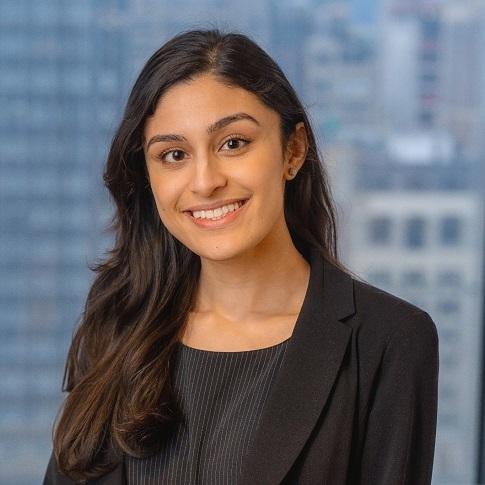
Sonal Madhok
Technology and Future Liability Analyst
Willis Research Network
Sonal focuses on emerging technologies, artificial intelligence, digital infrastructure, and future sources of liability. She is responsible for developing research initiatives and building collaborations between WTW, universities, and industry partners to help translate leading research into practical insights for clients and colleagues. Sonal joined WTW in 2022 in a Property and Casualty Broking role before transitioning to the Willis Research Network.
Prior to joining WTW, Sonal served as a research assistant in technology- and healthcare-focused research labs at Rutgers University, supporting projects that applied data science and artificial intelligence to real-world challenges.
Sonal has a Bachelor of Science in Computer Science from Rutgers University in New Brunswick, New Jersey.
Sonal Madhok
Technology and Future Liability Analyst
Willis Research Network
Sonal focuses on emerging technologies, artificial intelligence, digital infrastructure, and future sources of liability. She is responsible for developing research initiatives and building collaborations between WTW, universities, and industry partners to help translate leading research into practical insights for clients and colleagues. Sonal joined WTW in 2022 in a Property and Casualty Broking role before transitioning to the Willis Research Network.
Prior to joining WTW, Sonal served as a research assistant in technology- and healthcare-focused research labs at Rutgers University, supporting projects that applied data science and artificial intelligence to real-world challenges.
Sonal has a Bachelor of Science in Computer Science from Rutgers University in New Brunswick, New Jersey.
Podcast guest

Lucy Stanbrough
Head of Emerging Risk
Willis Research Network
Lucy Stanbrough
Head of Emerging Risk
Willis Research Network