

In this episode, Alan McShane is joined by Babak Eftekharnejad to discuss the importance of risk engineering in a successful hybridization strategy.
As the energy transition accelerates, renewable projects are moving from single technology deployments to hybridized systems that blend solar, wind, and battery energy storage (BESS). During the episode they explore how thoughtful harmonization — of technology, contracts, governance, and financing — is now mission critical.
Transcript for this episode
BABAK NEJAD: You need to make sure you recruit the asset management teams or operational team early on within the construction. So the construction team would consult with them on every project variation or every milestone on the project. So when it comes to the handover, asset management teams are familiar with the project. And during development, they've got power to influence the design.
SPEAKER 1: Welcome to the Risk Circuit, a WTW podcast delivering the latest insights into risk trends and challenges across the natural resources industry. With perspectives from leading voices across all key natural resources sectors, you can make decisions with confidence and clarity.
ALAN MCSHANE: Good day, everybody. My name is Alan McShane. And I'm the Global Head of Natural Resources at Global Engineering Natural Resources at Willis. And I'll be your host on this podcast today. At a recent global renewables conference in Marrakesh, we had an opportunity to discuss risks around harmonization of the sector in terms of the trend we're seeing regarding the combination of technologies from BESS added to solar and wind and even solar, wind, and BESS together.
We had a great discussion, but recognized that there were a lot more topics to cover in that space. And today's podcast would like to expand on that discussion a little bit and bring more topics to the fore from the Moroccan discussion.
I'm joined today by Babak Nejad, who's a natural resources senior engineer and renewables. Welcome, Babak.
BABAK NEJAD: Hi, Alan. Good to see you again.
ALAN MCSHANE: Great to have you here. So before we delve into the conversation, I think it's worth having a few minutes just to frame the topics we want to cover in the hybridized space. There's lots of different aspects when you look at the sector and a lot of issues that need to be covered.
One of the key areas that is important to understand a lot better is the interface of the technologies. You've got very strong wind and solar sectors with lots of practices and codes and standards, and they're quite different to each other.
And then you're bringing BESS in as well, which has got its own set of standards and codes and practices. So the ability for those three technologies to play nicely together is really important to understand. And the ability to manage that interface is really important. So we want to cover that off in a bit more detail.
The other area that's really important is the skills capabilities within the sector. I think, certainly, during the conversation we had at Marrakesh, there was definitely an agreement that there was a potential skills gap that needed to be filled. And there are several ways that, that can be done. And I think there's some interesting comments we can have on that space.
And then, obviously, moving into the standards and certifications that I mentioned more specifically around the way in which the different technologies interface as an area where we should really spend a bit more time on. But that will probably fall out of the conversations that we're having in the basic interface technology piece.
And then finally, we feel there's an opportunity here to really highlight the differences that we can see on projects that are greenfield into operations and projects that are upgrades of existing projects. Because one of the key areas that we're seeing development is the addition of BESS technology to wind and solar, existing operations, not just a brand new project coming from a greenfield site.
So being able to talk about that and how you would adapt and modify the approach I think is really important there as well. So with that, I'd like to start off with that first topic, which is really around interface technologies.
And of interesting, Babak, from your perspective where you see the key challenges in the sector. And I'm being very key here not to use risks at this point because it's more about understanding the challenges, because I do believe there's lots of knowledge in the sector that's probably just harnessing that technology and having that knowledge to address these challenges. And how risk engineering specifically can help both project sponsors and the insurance sector appreciate and be comfortable with those issues going forward.
BABAK NEJAD: Yeah, Alan, thanks. Yeah, that was a very good intro. And yeah, you nailed it. So we shouldn't really call it risk, it's more of a challenge because we're already seeing those challenges are addressed elsewhere, whether in the renewable itself or in a similar comparable industry like a power generation or oil and gas.
But let's start with the challenges. So I'm going to be using challenge going forward more than a risk. So the first one you correctly mentioned is an interface, because so far, we have seen most of these greenfield or renewable energy projects are standalone.
So they've been delivered rather successfully in different setups. So whether it's the operation construction or it's construction and then sold to a different owner upon the operation. So there are various shapes or form.
But what we are seeing increasingly these days is hybrid projects where you've got the BESS/solar or wind/BESS/solar, or maybe in future, hydrogen or solar. So old are becoming mainstream, particularly in areas where you can deploy the utility scale solar like Australia, US, you would typically deploy a BESS next to it to maximize the revenue.
So the biggest challenge here I would say is the interface risk. So those projects are built in very remote area. There are different disciplines. There are different contractors involved. One might be very competent in delivering the solar projects, the other on wind, the other on battery.
So there is a huge challenge to coordinate all in one go on the same projects on the same umbrella. So having a very good PMC or project management office during the construction would certainly add value here.
And also these projects typically share a substation. So you would see BESS, solar, or wind in the same projects going through the same grid point. So that creates a huge interface challenge to manage because each has got a different power regulations, the reactive power requirement for wind or solar might be different to BESS vice versa. So these challenges needs to be appropriately managed through good project management disciplines.
The other thing we see is skills. As I touched on briefly, we may have a contractor, very competent in delivering wind, one may be very competent in delivering solar, and the other one BESS. So we don't, maybe yet in future, we may have companies can deliver all in one go. So we may see quite a lot of contracting here.
So it's very difficult, particularly on some markets to have a contractor which is experienced enough to deliver wind, BESS, solar at one go under the same project umbrella. So there is a skill shortage at the minute, which will be addressed in future as the projects will become mainstream.
The other one is the technological challenge. So obviously, all these disciplines, they've got their own control systems, they've got their own SCADA monitoring systems. So there is no one size fits all at the minute. So there is always a risk of projects having to deal with different interfaces in terms of SCADA and control, which makes the operations a bit challenging.
And as the projects get larger, it is prudent to have one single interface we can manage maybe BESS/solar or BESS/wind or maybe all three of them in one go. And what is also important, particularly when it comes to the batteries integrated into these projects, is the battery life.
Because we normally see the batteries delivered and manufactured based on the set number of the charging and discharge cycle, typically once per day. But then when it gets integrated next to the solar or wind, that charging cycle may be disrupted. And that would have an adverse effect on the battery integrity, which obviously, opens up the whole sorts of problem, including the warranty and the battery life expectancy and cost to the project.
So if you set your business model based on the set level of augmentations over 20 years, you may need to replace a battery more frequently. And you may not be able to even claim it at the back of warranty. So these things needs to be considered really.
ALAN MCSHANE: Can I just ask you about that because I think it's really interesting what you said so far, because what I'm hearing is there's still a lot of siloed mentality. I think currently given the historical positioning of the sector.
And a lot of these things are about trying to harmonize and bring them all under one roof. And the PMC, on a project level, can certainly do that because they can manage the individual contractors to make sure that the wind or the solar contractor is providing what they need to maximize and optimize the design and the build of that asset.
And the same goes for the BESS bit where they're interfacing, they're laying the law down as to what is required for those two elements to work nicely together. The interesting bit about it is that you talked earlier about the battery storage, because a lot of this goes really at the battery life-- sorry, a lot of this goes back really to the project sponsor because it's all about looking at the project as a unit rather than looking at your wind and solar and BESS.
It's I'm wanting to produce a renewables power output company operation. And it's about making sure that when you're actually building the scope for these projects is to make sure that a lot of that harmonization is built into that initial scoping as such.
And that's more challenging, obviously, when we look at the last piece we were talking about or the difference between the greenfield sites and the upgrade sites, because greenfield sites, essentially, you've got a blank sheet of paper that you can build it as you need to in order to optimize the harmonization. It's more complicated and more challenging slightly in an upgrade project when you're adding best to an existing solar or wind operation.
So linking it and it's all interlinked here because linking in the skills piece, do you think that the project sponsors have the requisite knowledge, experience, and appreciation of these interface risks to really give the project definition the right focus?
BABAK NEJAD: Well, there is no yes or no on this question. I mean, it very much depends on who is the project sponsor, who is a developer. So we're typically seeing utility companies delivering a large solar or wind and battery storage these days in a hybrid setup.
So they are very experienced in terms of managing, laying, executing and delivering the project because they have delivered gas plants before. They have maybe involved in offshore wind with lots of different interfaces. So they've got quite a good setup of project management, interface management to manage all those risks and then see it as a single project rather than the individual entities in silos.
We also got the medium range developers, which don't have that set of skills, because normally, they are a smaller company, so they can't. So they may have a very limited project management office, may not have a dedicated interface manager on the project. So it depends.
ALAN MCSHANE: When they have to have to have. They've certainly got to have a PMC if they're doing the hybrid. But I think maybe what we're saying there is that the utilities have got a historical experience in managing these types-- whereas the mid to smaller developers may rely more heavily on the skills of the PMC to give them direction and scope.
BABAK NEJAD: Exactly. And owners, engineers in that setup, which is OK. But sometimes it makes it challenging, particularly if the projects get larger, the interfaces becomes more difficult. So maybe in one location, we've got a very challenging grid requirements.
And when you want to combine BESS, solar, and wind through the same connection point, that creates a huge interface challenge which needs to be properly managed. So having a PMC in-house and/or having a interface risk manager embedded in the project would certainly help to address these issues.
ALAN MCSHANE: So here's a question. Here's another question on that point, because it's quite interesting, because when you're looking at the challenges around the hybridization, you've got two sets of challenges. You've got the construction challenges and making sure everything works nicely.
But then you've got the longer term operational challenges, as we said, about how do you design the project in order to give you longevity in your assets, such as things like the battery life? Because that's all about how you manage the battery life and how that interfaces with the dispatchable power and such.
And also we haven't talked about this other commercial issues as well. So here's the thing. If you've got a utility company who's got that experience and knowledge, they can look both short-term and long-term, because ultimately, they're going to be running these plants and they're going to have that desire to make sure that there's sustainability within the project.
If you're in a smaller or the lower term project developers, where you're relying very much more on than a PMC, the PMC is going to be more focused just on the construction side, and therefore they're going to maybe have less knowledge or less drive or focus on the longevity of the project from an operational perspective.
BABAK NEJAD: Yes, that's true. And it's not only problem with hybridization or hybridized project. We've seen it across the renewable space very frequently, where the construction teams or the people involved in the construction, they don't necessarily have a view of operation for 20 or 25 years.
But there are solutions with that. So particularly if you are a large utility or you are a developer, you have previously developed and operate projects, you often have a process to feedback less and less during your construction. That's very important. And that's a loop I often see missing when I talk to the different developer.
They've got a large portfolio, but they don't necessarily have a process to capture lesson learned. The other thing you need to make sure is you need to make sure you recruit the asset management team, the operational team early on, maybe halfway within the construction.
So the construction team would consult with them on every project variation or every milestone on the project. So when it comes to the handover, asset management teams are familiar with the project. And secondly, during the constructions or during development, I've got power to influence the design and configuration just to make it worthy for the operational time. So it's more like a team management or lesson learned management than anything else.
ALAN MCSHANE: I think that's a really good point you make about hiring in the ops team as early as possible, so you've got that operational voice within the project management. But see, it also comes down to you know what you know and you don't know what you don't know.
So if the PMC doesn't the benefit of that, then is there still a gap potentially where that could be missed? And the reason why I'm saying that is because I feel that there's an opportunity, especially for risk engineering to really help fill that vacuum, potentially at least in initial stages, to challenge the project owners that they've actually got the right balance of skills within their PMC or their project scoping teams.
BABAK NEJAD: Well, definitely. So it depends where at what stage the risk engineers would get involved. Obviously, during the construction, we tend to be involved once the notice to proceed is issued to monitor the construction activity and several stages during the construction.
The key steps, the enabling work when it comes to delivering the major equipment when the commissioning finish and prehandover So we tend to involve in various stages. But as you said, being involved early on during the development stage or prefeed would help us to provide a view from a totally different angle.
So with the view of operation for 20 years. But hey, we are here from very beginning until the asset is decommissioned because you always need the insurance and the risk engineers are living and breathing with the project through the whole life cycle.
So I think we are very best placed industry to provide a longer view of how asset needs to be operated and things need to be considered early on during the design. So I'm fully agree with you. I mean, that's one particular area we can add value, particularly for those developers where they don't have large PMC office or they don't have established asset management team.
So they need someone to make sure that all the requirement following the handover is taken into account, because we are there to also praise operational policy. So it's our interest to ensure that the projects are fit for purpose and they can operate comfortably for 20 to 25 years.
ALAN MCSHANE: And that's where the risk comes in as well. It's not just about providing that insight for the future, but it's also, as you were talking, that feedback loop, isn't it? See, this is what's happened in the past. These are the areas where you can improve or you can increase your project resilience by doing these certain things because this is what happened and wasn't as successful as it could have been.
I mean, to your point about things like you went back earlier about the control systems and stuff, we've had this conversation a few times where we talked about why you've got control system for the wind, your control system for the battery or the solar or whatever it is.
But in reality, there should be one control system because therefore it optimizes everything out and makes a project more resilient longer term. But the challenge or the concern I have at this point in time is, that's maybe where we want to be, but we're not there yet.
And how do we get from where we are now to where we think and where we believe the industry should be in say 5 to 10 years time? Because there's that transition period that can actually create a lot of issues? So do you think that, as a result of that, we're going to see more just solar/BESS, wind/BESS to begin with? Because that's easier to manage than wind/solar/BESS together? Because that's going to be another layer of additional complexity.
BABAK NEJAD: Yeah, I think between medium- to short-term future, we're definitely going to see solar/BESS becoming more common. So it would be fair to conclude that where we have a utility scale solar, let's say anything above 80 megawatts AC would have a BESS next to it.
We see it more in places like Australia, US, maybe South Africa, places where you can build huge utility scale solar. We may also see wind/BESS or wind/BESS/solar in parts of Europe like Portugal and Spain in future.
ALAN MCSHANE: It seems to me, and I think it seems reasonable to expect there's going to be like a step-wise process, unless you've got a major utility which they may be able to cope with it having the three different element technology elements together. You are you going to get more two technology elements, basically wind and solar, BESS because that's probably easier in the short-term to manage that complexity increase rather than having the three.
BABAK NEJAD: And we also see a generation trends in places like Spain and Portugal, where existing wind farms are not having solar farm built next to it and sharing the same grid point of connection. So that will provide a more predictable, cleaner power in terms of noise and reactivities to grid.
So we also started seeing that in parts of Europe. But what is important is so, so far we have had BESS or battery storage systems around one or two hours of storage facility next to the solar or maybe less. But I think we started seeing 12 plus hours battery storage now being built by large utilities. So certainly, in places like Middle East, we've seen that plans are already in place to build a huge battery storage systems. So I think that would become norm. And that's a game changer if you can build a 12 hours plus,
ALAN MCSHANE: Because that means you've got regular dispatchable power.
BABAK NEJAD: Exactly. Yeah.
ALAN MCSHANE: More stability in the grid as well.
BABAK NEJAD: Yeah, you're right. You nailed it. So you can operate as a dispatchable renewable power generator and maybe replacing the peaking plant. That's an idea. And that's already happening. We've seen it in Middle East and particularly in Saudi with the huge investments in renewable energy.
ALAN MCSHANE: That's interesting. I'd like to just change tack a little bit because one of the things that we've talked about or touched on today is the skills. And there's two areas of the skills sector that we should be thinking about here is just general gap in the potential, having sufficient engineers, technicians, and operators across the board to manage the increase in demand for projects and for operations.
But there's also another piece as well about, you mentioned earlier on the fact that you've got very well-experienced engineers in renewables-- sorry, on solar, on wind, on BESS. But what you need is an engineer who can cover everything. So what do you see are the challenges there? And what do you think some of the solutions are around being able to address that skills challenge?
BABAK NEJAD: Yeah, so I mean, as you said, we've got a skill shortage here. We've got shortage of qualified electricians in places like Australia or UK. So we may have a good solar installer, but now we are losing expertise in construction of wind turbines because of lots of changes in the wind sector, lots of people made redundant. They may not stay in the sector.
So the OEMs rely on the external or local contractors with not sufficient skills. For instance, some BESS, we don't have a experienced BESS engineers. So we could use a power system engineers, but they are running very thin on power system modeling for the grid upgrades. So they no longer have capacity to come to the BESS space. So they already engage elsewhere or they are fully committed to the much larger projects and they don't want to leave the project.
So there is no enough capacity or opportunity to train the BESS engineer who is able to support the construction, who is able to support operations. So these are main challenges. And by virtue, you can't have, at least in the short-term future, you can't have engineering capability which can serve wind, BESS, solar at the same time.
They are not very complicated technology, but with the pace they are deployed, the skills that couldn't really catch up. I mean, there are lots of more complicated technologies out there-- gas, steam. So they are far more complex than renewable projects.
But those technology being around for 50s or half a centuries or even more. So there was adequate time for the skill set to be developed around it. But for renewables, we don't have that. And that will be a challenge for the years to come, at least for the five or 10 years until we reach a plateau and we deliver a few significant projects in different geographies. So where we can have a pool of people who have got experience with all these three technologies in one single setup.
ALAN MCSHANE: So it's interesting you say that because I think it's having that long-term view as well, isn't it? Because if you've got, like as we were talking earlier on in this discussion around the large utility companies having that operational long-term view, then they could also build that into their understanding of how the project should be managed.
So one of the things that we talked about in Morocco was some of apprentice or training scheme that you bring people in and you train them up through the project so that they're available to help with the project and the project commissioning, but also available longer term.
So this idea of having a hybrid renewables engineer who has got a capability on wind and solar and BESS is then possible if there's some good forward planning, I would think. What do you think about that as a solution?
BABAK NEJAD: Yes, I mean, that could be. But again, that takes time. So they need to deliver one single project or a meaningful project utility scale to become fully. But yeah, but I mean, as you said, that's a solution. I think that's only viable solution at the minute.
ALAN MCSHANE: Because otherwise, you're stuck with the fact that you might have to have three engineers when one would do. And you might obviously not buy all those engineers in as an employee, you might then subcontract it because you only want half an engineer for wind, a third of an engineer for BESS and so forth. And then it becomes disjointed.
BABAK NEJAD: Which is OK. But funnily enough, in risk engineering space, particularly in powergen, we've got quite a lot of people competent in all three stages because we tend to see quite a lot of projects from different geographies.
ALAN MCSHANE: So actually, in some ways, the insurance sector is actually quite a good template for project companies and long-term sponsors or projects to look to where, if you do a bit of investment up front, you can actually build out that skill set by planning ahead and building for the long-term.
BABAK NEJAD: Yeah, exactly, because we see quite a lot and we see things going wrong and we see how others are doing the business, what has done in a good way and what has done in a bad way, pros and cons.
And every time we see a new project or we talk a developer, we can turn a mirror and say, this is how you look like relative to others. Because one of the good thing with the insurance, you exposed quite a lot to various elements, so that broaden your horizon. So yeah, I think that's the only viable solution in my opinion, as you just nailed it. So having an expertise from different industries and then try to merge it into the one.
ALAN MCSHANE: So another area, I think, is what we talked about, we mentioned at the top of the conversation was about standards and certifications. So I think you said, I mentioned during the Moroccan debate about the fact that you have-- well, you have specific certifications for wind and solar and BESS and stuff. How do you see that harmonizing over the longer term?
BABAK NEJAD: I think it will get harmonized. At the minute, wind has got its own certification, IEC for turbine and also for the projects and project specific calculations. Solar, again, it's got its own standards, UL and IEEE for the solar farms. And BESS is normally mandated under UL standards and it will be IEEE and IEC standards for BESS later the next year.
However, there is no overarching standard which can ensure these projects can work spotless in tandem with each other. The good thing with offshore wind, offshore wind is also very similar into hybrid projects because you've got different interfaces, particularly during construction.
So you've got a concept such as project certification, which would assess all the different elements of the projects to make sure they are all certified, to make sure they are compatible, constructed in a prudent manner, and all the QA/QC in place.
I think since there are three different disciplines will be employed next to each other in future, I think there is a gap for overarching certification or a standard which will be addressed, I think, in years to come. As the projects get larger, there would be a requirement such as a project certification.
Someone would see a whole project as a single entity and ensure that each major element of it, whether it's wind or BESS, solar or BESS, or all three of them, are compatible in terms of the grade interface, in terms of the construction setup, in terms of the operations. So whoever is going to procure these projects or operate it have a certain assurance that's been looked at. It's based on the certain standard that's been set.
ALAN MCSHANE: So who's who in your mind is going to lead that charge? Because it's not a simple thing. And there's lots of things to consider. So how do you think that's going to evolve? Because it has to be an entity within the sector who's going to move that position forward.
BABAK NEJAD: So it hinges quite a lot on the project developer and the certification agencies, because it would require a couple of developers, big developers in that space coming together who've got experience in delivering three different projects previously and with a certification entity into a room.
And they discuss the challenges and come up with the guideline. So once each guideline is there and it's peer reviewed by certain people across industry, including OEMs, other developers and some expert in the field, then that would become standard.
So that then that would be a project owner responsibility to ensure for every single project, they would apply for the project certificate. So they get someone with no vested interest to zoom out of the projects and see whether all these key components can work in tandem and there is any challenges needs to be addressed.
ALAN MCSHANE: So essentially, what you're saying is that the main project sponsors will front run any of this development. And then the regulatory standards agencies will piggyback on the back of that knowledge and understanding.
BABAK NEJAD: Exactly. That's how has been in other spaces.
ALAN MCSHANE: Yeah, that's interesting because it's like chicken and egg, isn't it? You want the standards, but how do you arrive at them at the end of the day? And you want the best minds to come up with the standards. And you want people who know and understand the projects. So that knowledge is built into the standards in the first instance.
So I think what you're saying makes a lot of sense, but I think it's also the way you probably want it to be done as well, because you start trying to build projects through consensus. It doesn't always work. You need to have a very clear understanding of what you need. And there may be different requirements in different parts of the world, because obviously, the grid requirements may be different and the basic regional requirements can be different as well.
BABAK NEJAD: Exactly.
ALAN MCSHANE: Excellent. And the only other thing we've talked about but we haven't fully developed is the challenges around the differences between dealing with a greenfield project and an upgrade project. So what's the differences in the challenge?
So there's obviously going to be certain aspects of what we've talked about today are going to be absolutely front and center for both elements. But there's some that may be more important or more critical for a greenfield project relative to upgrade project.
BABAK NEJAD: Yeah, so with the upgrade projects, you already got the grid connection points. So it's just quite a matter of whether you can export extra power. If not, whether the grid infrastructure needs to be upgraded or whether you can get a license.
So there would be a less burden on the planning. So it depends on what you are going to build and how you're going to upgrade it. You may not necessarily need to reapply for the planning permissions, but again, it's different location by locations.
So you already got the existing lease for the land, for instance. It's quite easy to extend it. But with the greenfield project, so obviously, it's a clean sheet. You need to put everything from day one. So there are quite, by virtue, you need big project teams. It depends on the size of projects, PMC.
And if you are building hybrid projects, you probably need to have a good interface management on that. So you would probably need to design the grid connection points. You need to design the substations. So you may not have the grid available on that location. Soon, you may need to even think about building the grid infrastructure and divest it later to the grid owner.
So these matters. So power upgrade is obviously cheaper and quicker to the renewable revenues. Obviously, greenfield projects where you've got a clean sheet of paper, it's more like a long-term view, if that makes sense.
ALAN MCSHANE: OK, so where do you see in this? Because the one point that comes to my mind when I'm thinking about this is the differences in technology and technology maturity and its position within the sector.
So what you've got is if you've got an in-field facility, you've got the ability to bring newer technology of all parts of the project. Whereas if you're looking at upgrading, you've got a technology that's already established and it may well be still the principal technology, but it might be starting to become a bit dated, and then you're going to be bringing in a newer technology on the battery side specifically. Do you see there's some issues there? Or do you think there's not really an issue with that?
BABAK NEJAD: I mean, we're already seeing that. So we're seeing the 15, 18 years old wind farm being upgraded with the best facilities. So it's doable and it's being done. The only challenge is the interface. Would they go through the same grid connection point? How the grid is managing the reactive power and the turbine, is it going to affect the battery storage you're going to put next to it?
I don't think it's massively constrained by technology because there is always a solution and we are seeing being deployed. It might be more of a challenge or you are limited to the few supply or few choices. And by virtue, that would affect financial impact on the upgrade. But I think it's still doable. And it's a challenge can be addressed one way or another.
ALAN MCSHANE: Excellent. Well, I mean, this has been a really interesting conversation and I hope the listeners will also see it as such. I think I'd like to draw a close to the podcast today. Thanks, Babak, for your time and your insights. It's been really interesting. And I do hope the listeners think that there's some value in what we've been discussing, because I've certainly found very interesting. And I hope to see you soon in another podcast.
BABAK NEJAD: Thank you. Bye.
ALAN MCSHANE: Bye.
SPEAKER 1: Thank you for listening. We hope you found this episode insightful. For more information, visit the Insights section of wtwco.com. This podcast is for general discussion and/or information only, is not entirely to be relied upon. And action based on or in connection with anything contained here should not be taken without first obtaining specific advice from a suitably qualified professional. Thank you.
Podcast host
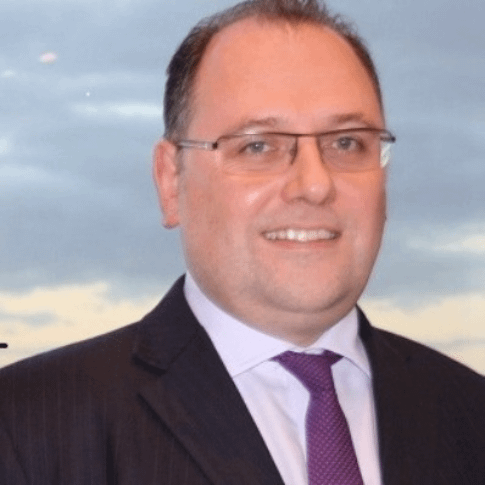
Alan McShane
Global Head of Risk Engineering, Natural Resources
Alan McShane
Global Head of Risk Engineering, Natural Resources