

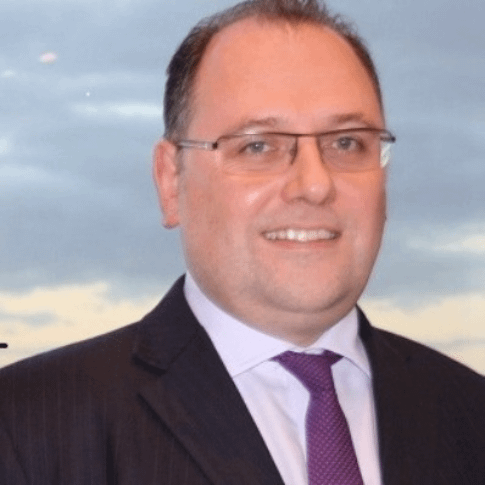
In this episode Alan McShane is joined by Bryan Allcock, Roger Hughes and Gonzalo Figeuroa to explore how power and utilities companies can use risk engineering to build resilience when equipment lead times stretch to five years. We also explore what this means for different regions including Europe, North America and Latin America.
Transcript for this episode
ROGER HUGHES: I know that the lead times are increasing, but I'm not particularly seeing them changing their philosophy other than passing the risk on to the insurance industry.
ANNOUNCER: Welcome to the Risk Circuit, a WTW podcast delivering the latest insights into risk trends and challenges across the natural resources industry, with perspectives from leading voices across all key natural resources sectors, you can make decisions with confidence and clarity.
ALAN MCSHANE: Good day everybody. My name is Alan McShane, and I'm the Global Head of Risk Engineering for Natural Resources. And I'm your host today on this podcast. In natural resources, we have engineering experts in many fields aligned with our key industry pillars, such as oil and gas and petrochemical, power, metals and mining and renewables. Today, we will be focusing on conventional power sector, and I have three experts in the field to discuss key issues in the sector.
I'm joined with Bryan Allcock, who's our senior engineer residing in North America. Hi, Bryan
BRYAN ALLCOCK: Hello, Good morning.
ALAN MCSHANE: I've also got Gonzalo Figueroa, who's our senior engineer based in Latin America in Colombia. Good morning, Gonzalo
GONZALO FIGUEROA: Hello. Good morning.
ALAN MCSHANE: And I've got Roger Hughes, a senior engineer based in London. Good afternoon, Roger
ROGER HUGHES: Good afternoon.
ALAN MCSHANE: So today's topic, I'd like to focus on changes in equipment lead times. This is an important and crucial piece of information to understand recovery times, following loss events, which has an impact on developing of loss estimates and policy limits for clients. And it's also a very area-- it's an area where there's lots of dynamic activity going on just now with the increases in electrification around the world, but also the AI drive and the drive to build power for the AI data centers and such.
So all that comes into the mix. So I'll go to you-- come to you Bryan, first. I mean, what do you see are the key factors currently that are driving the lead time on equipment?
BRYAN ALLCOCK: Thanks for the introduction, Alan. I think what you've covered across there is pretty broad scope. I think to understand the lead times of the equipment, we first need to understand what direction is the electricity market moving to, particularly what I see here in North America. My feeling is we're going to see quite further demand for the exponential growth in load sensors to cover that mix, that gap, if you like, in production. I think we're going to see in the supply business in North America reliance on the restarts of older equipment, perhaps obsolescence, nuclear power plant and maybe into coal.
Now, what I'm seeing regarding the equipment is that where we've got the use and connection system, use of what's called embedded generation. So that's how your emerging technologies, they all want to source to the nearest POI, which is called point of interconnection. Now, what I'm seeing is already that increased capacity through this renewable production is causing a negative impact at the POI. They increased what's called prospective fault currents that we're seeing and the x over r ratios elevating the DC fault-- the asymmetric DC fault potential.
Predominantly, what I'm seeing in the US is that yeah, we have the bigger equipment, the transformers, the steam turbines, gas turbines failing. But I don't necessarily see in the US the lead times being such an adverse concern. Well, North America tends to have a very good service by the OEMs regionally, and also very good support in engineering services, generally by the generation company.
So they tend to be able to manage those losses better here in the US by having certain workarounds and fitting out transformers, for example. What I'm seeing is rather than those bigger items, which are obviously long lead and expensive items elsewhere in the world, I'm seeing the smaller equipment, which can sometimes become more of a concern.
What I'm saying about the physically smaller but higher voltage, for example. SF6 breakers, for example, we're seeing a few failures of newer gas insulated breakers from PVTs and CVTs that are failing on the lower voltage networks that are having some disruption on the protection schemes because of maybe six months to be placed. I tend to feel it's the more of the lesser equipment that is causing BI issue than the bigger equipment, which the larger companies tend to be able to have a workaround.
ALAN MCSHANE: That's great, Bryan. Thanks for that. So I'd like to ask the same question to Gonzalo. What's your experience, especially in Latin America?
GONZALO FIGUEROA: In the power sector, so the major equipments we got such as large power transformer, turbine generator, especially in Latin America, is taking longer than the other places like Europe or North America, USA and Canada because the service here in Latin America is not so expedited like in the other part.
Normally, this equipment requires more extended times because the engineering that requires in order to manufacturing process sometimes the factory testing requirements and also the import or importing in the countries, in the Latin American countries, sometimes the delay in the imports all require more time and is increasing these times for that one.
Yeah, is the international logistic also for handling custom clearance. That is a bigger impact in the overall-- let's see in the overall time.
ALAN MCSHANE: Just on that point, Gonzalo, when you're saying that the import times are the delays in importing, does that mean there's not many manufacturing facilities of these big components in Latin America currently?
GONZALO FIGUEROA: No. Basically, there is no bigger, let's say, manufacturers. There are some in power transformers in Brazil or Argentina, but not for turbine or steam turbine or sometimes a major equipment also for the power sector. Yeah, there is some problem with that and there are some clearances. Lets say easy clearance in some free zones in certain parts of the countries. Yeah, but there is limited places for that.
ALAN MCSHANE: That's great. Thanks. And Roger, what's your experience so far?
ROGER HUGHES: Well, with regard to lead times, they've definitely increased over the last two years. I feel now that it's not unreasonable for some components to be on a three-year lead time. We've seen quotes from OEMs for three-year lead time to be on site for a gas turbine, for example.
So the main driver for that appears to be the shortage of heavy engineering that can produce the amount of forgings that are required for large frame gas turbines. The current manufacturers of forgings in Italy, and there may be a small amount in Germany. They're focusing a lot on aircraft aero engine-sized forgings because smaller for a start, there's higher volume, less risk involved for them to make them and that are a faster-demand, higher-demand product. So they're able to sell more gas turbine-sized aero engine sizes than the heavier frame machines.
So for me, the main driver for gas turbine increased lead times is the forging manufacturers.
ALAN MCSHANE: It's interesting because we've all got three different perspectives depending on what part of the world that you're operating in, which is not unsurprising. Let's focus for a minute on, say, turbines as at work because we could go through all different and we'll try to cover off all the subjects.
But just picking up on your point, you mentioned, Roger, about the forgings being a barrier to-- or a bottleneck in the supply of turbine, especially the heavy duty ones. And I'd like to push this back to Bryan in a sense, and say you're not seeing that same issue in North America, and if so, why not. Is it because you've got an oversupply of forging operations in North America or not?
BRYAN ALLCOCK: Gas turbines. I mean, we've had one or two gas turbine failures recently, losses in our power book. And I would say that the lead times for return to service have not been-- I would not necessarily been unreasonable. I think maybe here in the US is we're seeing more of an acceptance for third-party spares. But there is in feed into the maintenance of plant and equipment, which are tending to use-- not tending to use, but perhaps going in the way for the different cultures, different exotic materials using gas turbines, et cetera, which is leading into an increased supply in the market through third-party spares.
ALAN MCSHANE: Did that extend to new replacement rotors, if somebody had to replace the rotor for a turbine?
BRYAN ALLCOCK: Well, every 100,000 hours, if you're looking at doing a rotary validation, they're going to plan well ahead. So they're going to be in the manufacturing window to be able to guarantee and to negotiate with their supplier the time-- the parts to arrive just in time. So if you're looking at-- unless it's a catastrophic failure and you've not planned ahead for the replacement parts, clearly that could have an impact.
Generally speaking, the claims that I've been exposed to in 2025 into the new year have been handled in, I would say, in a prudent amount of time.
ALAN MCSHANE: All right. So it seems to me as if, Roger, you were saying very much about the forgings in Italy and forgemasters in Italy and Germany are the key bottleneck there, because they're focusing more on the aeroderivative machines rather than the heavy-duty machines. And obviously therefore, there's a lack of maybe of manufacturing availability.
So, Bryan, are we saying that there is a lot of availability for those machines in the US, or is there something else at play here?
BRYAN ALLCOCK: As I said, in my exposure to the markets in the last year or so, and the losses that we've experienced, I'm trying to think of is there anything that's been really extended due to the lack of available parts. I mean, perhaps we've not had the exposure, we've had a catastrophic failure. And they've not had any-- been able to reach out to the manufacturer sooner to be able to get the parts in advance.
But generally speaking, what I'm seeing and our exposure here to claims in North America has been pretty-- the return to service, as I was mentioning, has been not unreasonable. A major OEM across the board are increasing manufacturing capabilities.
ALAN MCSHANE: Do you think that could be something--
ROGER HUGHES: You see? I think perhaps, Alan, it's a good point you raised there. I think we have had this-- we had this discussion last week in Houston with the team and everybody's wants to be pitching for this novel, exotic H frame technology.
In the US for Willis, our biggest exposure is gas turbines. And I've been to various power international conferences, various vendors and providers working through from the reliability of aeroderivative machines and into which is all about thermal barrier coatings on the power turbine, lead times into their contracts doesn't seem to be of a concern.
ALAN MCSHANE: OK. Well, we'll come back to that saying I'm just interested in bringing Gonzalo back in the conversation around the turbines. So when you're talking about one of the key factors in Latin America is the delay in imports. Is that because of increased regulatory or duty custom issues, or is it down to the fact that trying to access manufacturing capacity overseas?
GONZALO FIGUEROA: Well, I think that is what the custom regulation normally in the Latin American countries is a big issue. And also, there is not so many manufacturers in Latin America for bigger equipments. So all of them need to be imported from the US or Europe. That is the problem. Let's say that takes the time in order to get a importation.
And I say before there is some free zone, where the project is located. In that way, is easier because there is not the way that the equipment need to go to all the custom process that sometimes take one two or three months more.
ALAN MCSHANE: Two to three months more. OK. And so here's a question. I'll come back to you, Gonzalo, first on this. Is a way of companies getting around this situation, especially in Latin America. What are companies doing to mitigate this potential situation? Are they looking for retrofitted equipment as a strategic spares? What are the buying into a pool like a mutual of key equipment that you can do with OEMs? What are you seeing is the key areas where clients are actually trying to mitigate this extended lead time development?
GONZALO FIGUEROA: Yes. One of the points that the company is doing is well, when there is a big company where the portfolio of the power plants is bigger. So it's easier because they have, let's say, like a more way to handle that because that is a big company. Yeah. Also, the long-term service agreement when they have with the OEM manufacturers on the turbines is easier because sometimes there is in the contract, in the LTSA, let's say, an agreement in order to have major spares for the bigger equipment.
ALAN MCSHANE: Yeah.
GONZALO FIGUEROA: Also, since the owner of the power has, let's say, this LTSA that means that the manufacturer gives some priority in order to provide the turbines or the generator or the transformer, because that helps the client. Let's say, it's OK. We have the LTSA with that company. We are providing a better service, yeah, in order to continue with that.
ALAN MCSHANE: They're finding that to be the most effective way of them mitigating the lead times?
GONZALO FIGUEROA: Yes, that's correct. Also, because sometimes the companies work-- the bigger company works better with, let's say, with the government, with the customs. In order to expedite that, let's say, free the equipment from the imports process and government-- so government connections can be quite key in that situation.
ALAN MCSHANE: Roger, what's your thoughts from your perspective on where clients are trying to mitigate in the best and the methods they're using to mitigate these lead times?
ROGER HUGHES: I haven't seen clients change their philosophy. They're not suddenly going out and buying spare gas turbine rotors to have sitting available, even though it might be prudent to do so. I think they're just passing the risk because until they have a loss, they don't really-- we can suggest to them what the lead time might be, but until they have the loss, they do know because they talk amongst themselves.
The owners of power stations and the engineers of power stations meet and have regular catch ups, and they know that the lead times are increasing. But I'm not particularly seeing them changing their philosophy other than passing the risk on to the insurance industry.
ALAN MCSHANE: OK. That's interesting. Well, you're saying you're seeing an increase a bit controversial here. That messaging seems to be coming from OEMs, correct? It's not coming from our loss experience, is it?
ROGER HUGHES: Yeah, it's coming from the OEMs. I mean, fortunately, we haven't had a big GT [INAUDIBLE] fail for a while, so we haven't seen a client have the experience of having to get a new gas turbine rotor ASAP. So we don't know-- historically, you're right. Historically, we haven't really seen losses go much over 12 months. But the feeling or it's implied now by the OEMs that lead time will be longer.
ALAN MCSHANE: Could this be a bit the OEMs are front running some of the costs because obviously, if they communicate that they've got a shortage of supply, for example, does this not then create an opportunity for them to increase their pricing, so to speak, or maybe even make sure the orders come in quicker because there might be-- they might be looking at dynamics where they want to invest in new manufacturing facilities, but they obviously need the orders there to justify that investment because they've been bunts once before, where they front run a lot of potential investment and it didn't happen.
So do you think that now what they're trying to do is message to the industry that they need to start placing orders now so they can get their order books filled so they can then start justifying investment in their own manufacturing equipment?
BRYAN ALLCOCK: I think Roger's just alluded to it there. They operate as regularly attend user group meetings, forums, et cetera, where I'm sat around the table with the plant management team, try to get some intelligence from that. But they're often as-- they're talking about what's hurting them quite openly in these forums. But they're planning ahead to be able to stop that.
If you're looking at, as I said before, about revalidation or a major or a minor outage on a steam turbine, you're planning ahead to get into that window of manufacture for the parts that you require. It's not like what Roger and I were used to, where we had a large company that had the luxury of having a lot of preservation in spares. They don't tend to have that. They're just reacting to whatever failure.
And the way they're thinking about. It's not if it's when these failures are going to occur and they're planning ahead for it.
ALAN MCSHANE: Yeah, that's all very well when you're talking about the OEMs here rather than the clients. Or are you still referring to the clients?
BRYAN ALLCOCK: Oh, the client. Well, I'm talking about the client, because we got--
ALAN MCSHANE: I'm glad you said that because what I'm trying to do is that that's absolutely-- that's a prudent way of working. Because obviously, they're planning ahead. But we're also looking at the situations where they have a failure and it's sudden unforeseen, and they've got to then make the change.
So what I'm trying-- what I'm trying to get at here, there has been a number of different manufacturing indications from the various OEMs that they're going to be increasing their capacities to meet the demand. I just feel that some of this is, to Roger's point, they're saying they're going to be two or three years or something like that now for a major component, like a turbine. But the losses haven't come through that would reflect that yet.
So it's front running that type of scenario, maybe to obviously make the industry aware that they see a potential shortage down the line. But at the same time is also maybe an opportunity for them to help to build and boost their order book as well?
BRYAN ALLCOCK: The manufacturers in the business to make money. If they see a distressed customer, you're an easy target. I've got an example. Particularly, I talked about the smaller equipment that I'm seeing the pull through into in lead times and business interruption, particularly on the electrical stuff with some switchgear failures. We're seeing notably, is that we're talking about a new solution for the protection system because of this POI business with the bears and the solar systems that's coming through to the 250 kV transmission system.
The new quote, I mean, is three times the original quote at twice the price. And that's not because of a failure. It's the manufacturers obviously seeing an opportunity. And I think it's going to be elsewhere. I think we've seen this in the infancy. I think we're going to see another other knock-on effects elsewhere due to this. As I said before, increased connection system, use of renewable and emerging technologies for the protection schemes of the switch.
And you're going to see it more. It's not because of having failures. They're having to remodel their protection scheme.
ALAN MCSHANE: Yeah, sure. Maybe we can move on from the turbines now and talk maybe about some of the other components made transformers as an opportunity. What are we seeing in the transformer space within the various regions in terms of availability of equipment. And I think this will vary depending on the size of the transformer.
Gonzalo, what are you seeing for transformers within Latin America in terms of lead time on the components?
GONZALO FIGUEROA: It's a challenging year in Latin America because there is a limited local manufacturing capacity that I say there is a Brazil and Argentina that I know. As some business, I see that-- or I have seen that many power stations is looking on-- our clients is looking for Chinese transformers because they are, let's say, there is a faster supplier for that.
So sometimes they are looking not always for the whole power station, sometimes for the new ones, because they have the project. Let's say, it's a new project. There is a schedule for that. And when they see that purchasing or acquiring a power transformer in the United States or Europe sometimes stays longer. So they look for the Chinese, that is, the delivery. Yeah.
ALAN MCSHANE: When you do that, are they getting quality coming through? So because obviously, the historical viewpoint in the Chinese manufacturing is yes, you can get it quickly, but you don't always get the quality. How are you seeing that change? Because we've seen certainly in other sectors that the quality has improved significantly over the years. What have you seen from clients picking up Chinese transformers for new projects? Is the quality better or the same as the past?
GONZALO FIGUEROA: Well, I have asked that question in some power station and what I have seen listening is that in the China, the quality of the product is what do you want. Is it you pay cheaper, you get the bad quality, but you pay more got the better quality. Also, it's like you need to-- or sometimes when there is a production, they send engineers also in order, let's say, supervise or sometimes hire a company-- external company in order to follow that production, to make sure that the quality the one that they are paying for that. Yeah.
ALAN MCSHANE: OK. That's great. So the same question goes to Roger. In terms of transformers, what are you seeing in your area?
ROGER HUGHES: From the major European OEMs still manufacturing transformers in Europe, we're seeing a definite increase in lead times. For a large transformer, you could be looking at the potential of three years. A medium sized one, so now would be two years. Certain clients will not buy a large transformer from China. They'll perhaps buy a 140 MVA transformer from China. There's a reluctance to buy a 500 MVA transformer, say, from China, because the value of the asset that is a higher risk.
ALAN MCSHANE: Interesting. I mean, what I heard recently, some clients, what they do, because obviously what they're trying to do is mitigate BI impact of a loss. And what they'll do is they might want to go to a preferred transformer vendor. But the lead time is quite significant. And what they do is they go to the Chinese manufacturer, get them to build one, which comes in a lot quicker. They then install it, but they still buy transformer from the preferred vendor, which takes so many extra months to come through. And then they switch them out, and then they use the Chinese transformer as a strategic spare at the end.
Have you seen that in any of your clients?
ROGER HUGHES: Yeah, we've seen that. Although, when they bought the preferred manufacturer, they didn't install it. They just kept the preferred manufacturers transformer as a spare. So yeah, we have seen that happen.
ALAN MCSHANE: That's interesting. So they just leave it there. And then obviously, if it starts to fail or doesn't-- so you've then got the backup because I think the cost benefit is they're sometimes able to because of the savings they make on the insurance and stuff, they're to be able to buy the two components and thereby virtually get the best of both worlds.
Bryan, what are you seeing in North America when it comes to transformers?
BRYAN ALLCOCK: Well, I tend to do, and it's no different than anybody else in the team, is that when we close out with a client at the time of the survey, we feed back to the team what we're seeing as our observations. And I've got a couple of losses from Texas quite recently. One was a large loss on a new construction site, where it was the transformer was damaged in transportation.
ALAN MCSHANE: The options that are available to companies when they're trying to mitigate losses, do you see any or all of those types of examples being utilized in Latin America?
GONZALO FIGUEROA: One of the things that I have seen in Latin America. And I see in a couple of clients, is that they are requesting to the manufacturer to have or to produce or build a commodity-type transformer that fit for several plants. Let's say, I know there is a one in Colombia that they have a couple of plants, I guess have three power plants, different voltage, different serial rates for the voltage, and different power. But they have one transformer that equal for all of these three power plants.
Yeah. So this is-- let's see. It's something in order to reduce or mitigate the BI in case of one of them failures. So they can transport the transformer for one side to the other side easier. Let's say, in a couple of weeks.
ALAN MCSHANE: That's an interesting. That's another version, isn't it? Because instead of going to a vendor and saying, look, an OEM saying, look, I've got a number of services. I want a generalized transformer that I can utilize that can identify all these. I suppose, there's a limit to that type of strategy. But I suppose if you know your various services, you're able to come up with that.
Roger, going back to what Bryan was saying about the different contingency plans, do you see something similar in your area, whether it be the Middle East or Europe?
ROGER HUGHES: There has been, without doubt, there has been transformers in the UK manufactured with multi-tap ability to be connected to a different generator, transformers to different high-voltage taps, and did different LV taps. And those transformers must still exist, but it's not advertised like North America.
I remember 20 years ago hiring a transformer in North America, bringing it across the Atlantic and putting it into a transformer berth in Holland, and that market in America, possibly because they've got a lot more electrical equipment that's redundant or replaced. Land is cheap and they can store large transformers. That rental market in North America has existed for many years, whereas in the UK and Europe, the rental of large transformers, it's limited.
ALAN MCSHANE: You're actually saying that you could actually rent a transformer from the US and have it in some other facility and the company who-- would just pay rent to the owner of that transformer until such time as they were able to replace it with their own, or would they then just replace the rental transformer with the purchase transformer. Is that how it would work?
ROGER HUGHES: It's just to limit the BI. So you rent a transformer whilst you're getting your own transformer repaired or a new one manufactured.
ALAN MCSHANE: It'd be classed as short term then I take it.
ROGER HUGHES: Yeah, maybe 12-months rent while the transformer gets manufactured. But you have to be careful because the American transformers at 60 Hertz and we're at 50 Hertz. So you have to make sure that the transformer is about 20% larger than what you need, so you don't overflow it. But in principle, it can be done.
ALAN MCSHANE: That's interesting. All right. So we've talked about transformers and generators. I'd like to talk about switchgear because Bryan mentioned a while ago about some of the smaller equipment. But it can be equally as challenging to get access to. And from my personal experience, I had a client recently who was building a new facility and had a new substation, and they had gas insulated switchgear, and they said it took them 24 months to procure this equipment, which seemed extremely long time.
And that might have been-- it might have been an outlier. And it wasn't a power generator. It was a manufacturing facility that was using those switchgear. So it might be different in that space. But I'm interested what happened. Roger, your experience about switchgear within your area, it would seem.
ROGER HUGHES: The lead times are definitely increasing. The main driver for that has been the explosion of renewables which need MV switchgear and then subsequently HV switchgear to connect to the HV connection. So the lead times have definitely increased.
Well, once upon a time, you might get a manufactured bushing for a transformer or six months, but now the standard response is 12-months lead time on a bushing. A bushing is very similar to switchgear bushings and the lead times have increased.
ALAN MCSHANE: Why is that? Is it just pure demand?
ROGER HUGHES: Yeah, demand. And also, we've lost a few manufacturers. There isn't as wide a choice as the previously used to be. Manufacturers have amalgamated, the OEMs buy up other OEMs, and essentially you lose a slight bit of competition because that manufacturer is not independent anymore.
ALAN MCSHANE: That merger and acquisition on suppliers, it's not to reduce manufacturing capacity, is it?
ROGER HUGHES: No, it's not to reduce manufacturing--
ALAN MCSHANE: Get leverage.
ROGER HUGHES: Yes, to get leverage. And also the fact that if you look at the period, say, between 2010 to 2020 round about that the business was fairly steady, there was still new power plants getting built. Then you get to 2015 and a lot of the new builds are stopping. So the manufacturers, traditional markets were drying up. And then we had COVID and everything slowed down then.
So the manufacturers of switchgear and transformers in that period were finding it extremely tough.
ALAN MCSHANE: I mean, it's interesting, isn't it, because you normally would think of when you see a shortage supply, more manufacturers would come into the-- would come into the space to take over and take advantage of the increased cost, increase revenue. So you're not seeing any new manufacturers coming in.
And the second question, the follow-up question to that is are you seeing the current manufacturers increase their capacities?
ROGER HUGHES: I didn't think I was going to say was, to set up a transformer manufacturing shop, you've got to have a large facility and then you've got to find the technical people left who can design a transformer, build a transformer, educate others on how to do it, and maintain a high-enough quality that people want to buy your transformer and then test it. And those people that they don't exist.
BRYAN ALLCOCK: Yeah, think that's where-- we've not spoken about that. We spoke about all the equipment and where that's The real and I see that in North America. And I think that's going to become more of a concern is succession management, succession planning.
ROGER HUGHES: Yeah.
BRYAN ALLCOCK: Because we're seeing gaps in the organograms that are getting more and more difficult to fill. And we're living on the luxury in the power industry that we used to call the ESPI, sorry, ESI, Electrical Supply Industry. It was significantly overengineered. And that's what we're living on. We're living on that legacy from years ago, but they're still managing our clients to fulfill, particularly in North America. I see it, but when you go out to the Islands, less or so is they're doing their schedule maintenance, test and inspection.
They tend to do that here in North America. But if you go to the Central America, Caribbean, it becomes lesser and lesser, and that's where it starts to fall down, because that overcapacity, that overengineering of the infrastructure will eventually break down and it is succession management.
ALAN MCSHANE: That's a good point. You mentioned about the fact that you and Roger alluded to it as well, that we don't have the skills or the quality of the engineers or the availability of the engineers and the technicians to do this work in the various regions that we once-- maybe once did, because a large percentage of the manufacturing is being exported to China over the years. And therefore gradually, gradually that capability has disappeared.
So do you think now that there's a need for the suppliers, whether it be switchgear, transformers, turbines, whatever, to start building more like apprenticeships within their own organizations. And maybe it's even something governments need to encourage within these organizations to try and build that capability back. Bryan, I'll give that to you.
BRYAN ALLCOCK: That's a great point. And it's something I always pitch-- the wrapping-up session in the closing-- our exit meeting with these, I say about continuous training and bringing in apprenticeships and new people. They tend to feel it's not their initiative, it's somebody else that should virtually fund because it's a cost at the end of the day.
I remember when I was training, it was a long time ago, it was 30,000 pounds to train me over four years. And companies don't want to take on that cost, that fixed cost. And I think it's got to come down to that a federally here in North America or under some low local jurisdiction, that's going to say the companies need to start taking on apprenticeships again.
ALAN MCSHANE: It's been a great conversation, and I think I'd like to wrap up the conversation as it currently stands. I think it's definitely being very insightful from my point of view, listening to all your thoughts and ideas, and it's quite evident that there is differences regionally across the world.
Sometimes we try to look at the exam question as is a homogeneous one. It's relevant. It's the same answer across the globe. And clearly, it isn't. And we should always keep a view on that. But I'd like to, at this point, thank Bryan, Gonzalo and Roger for the discussion and the thoughts today. And hopefully, we can get together in the near future and extend this conversation into more detailed topics.
With that, I'd like to thank everybody and hope you can join us in the next podcast in the future. Thanks very much.
ANNOUNCER: Thank you for listening. We hope you found this episode insightful. For more information, visit the insights section of wtwco.com. This podcast is for general discussion and/or information only is not entirely to be relied upon. An action based on or in connection with anything contained here should not be taken without first obtaining specific advice from a suitably qualified professional. Thank you.
Podcast host
Podcast guests
Service