
The race for AI and digital talent
The demand for AI talent has surged as companies explore how AI can provide a business edge, making it crucial for companies to develop robust strategies to attract, motivate and retain this talent. This surge is driven by the rapid evolution of the digital landscape, the need for organizations to stay competitive, and the critical role AI plays in driving innovation and efficiency.
According to the 2024-2025 WTW Global Artificial Intelligence and Digital Talent (AIDT) Compensation and Trends Report, the most difficult talent to attract and retain are in AI, machine learning and cybersecurity. Other scarce job disciplines are cloud computing, data science, business intelligence, augmented reality and autonomous vehicles.
What does digital talent value from their employers?
In considering the best ways to build an organization’s digital talent pool, it is important to recognize what they value in a workplace. This is especially important in industries outside the tech industry that may have a different workplace culture.
As an attraction driver, the AIDT report shows that digital talent value remote work/working from home even more than cash compensation. Employee expectations around work models continue to shift in the post-COVID era, and this finding highlights the value placed on flexibility. Other factors vary by region, suggesting a tailored approach is necessary. For retention, key drivers include challenging work, the ability to have an impact and the reputation of the organization.
Most important factors in attracting and retaining digital talent
| APAC | ||
|---|---|---|
| Rank | Attracting | Retaining |
| 1 | Remote working/working from home policy | Interesting/challenging/varied work |
| 2 | Cash compensation | Remote working/working from home policy |
| 3 | Reputation of the organization as a great place to work | Cash compensation |
| LATAM | ||
| Rank | Attracting | Retaining |
| 1 | Remote working/working from home policy | Remote working/working from home policy |
| 2 | Cash compensation | Interesting/challenging/varied work |
| 3 | Attractiveness of organization’s products or services | Ability to have a real impact on the organization's performance |
| EMEA | ||
| Rank | Attracting | Retaining |
| 1 | Remote working/working from home policy | Interesting/challenging/varied work |
| 2 | Cash compensation | Ability to have a real impact on the organization's performance |
| 3 | Interesting/challenging/varied work | Remote working/working from home policy |
| NA | ||
| Rank | Attracting | Retaining |
| 1 | Remote working/working from home policy | Ability to have a real impact on the organization's performance |
| 2 | Reputation of the organization as a great place to work | Interesting/challenging/varied work |
| 3 | Cash compensation | Remote working/working from home policy |
Acquiring AI and digital talent through M&A
M&A is a common strategy for acquiring talent. By acquiring companies with established AI and digital teams, companies can plug the talent gaps needed to accelerate their digital transformation and innovation efforts.
However, companies acquiring AI talent through M&A will need a special focus on talent assets to ensure the value of the deal stays intact. Based on our experience, we suggest some approaches that can be layered and combined to achieve the best talent retention and engagement outcomes.
- Identify the critical AI and digital talent. The standard approach is to look at job titles, but we can go further. The WTW M&A Talent Retention Study shows that 91% of acquirers sought information from the seller’s leadership. This is effective when the acquired leadership team will continue to be responsible for the business’s performance after acquisition, giving them an aligned incentive with their new owner to retain the most important people.
The other option is to use a skills-based approach, utilizing tools like WTW’s SkillsVue to identify the most in-demand skills in the market and match those to the gaps in the acquirer’s organization. It is becoming more common to request a detailed breakdown of employee skills and credentials from the seller to perform these analyses during due diligence.
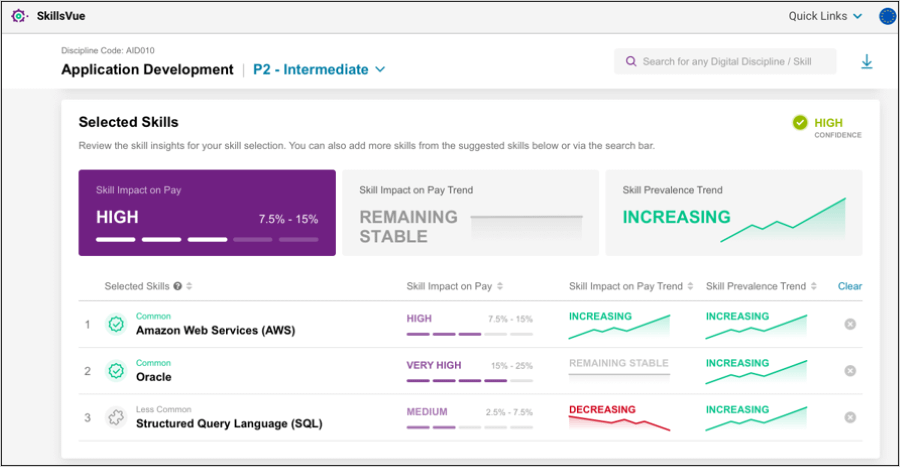
Screenshot of SkillsVue software interface, showing skill insights
- Examine the recent history of hiring and attrition, paying close attention to the open roles, roles filled and the reasons why talent left. As shown above and depending on the region, AI talent is motivated to stay by doing interesting work and seeing its positive impact on the business. Gaining a better understanding of the hiring and attrition trends will allow a more proactive approach to identifying and closing gaps.
- Benchmark rewards and review recent history of reward changes, using specialist data like the WTW Artificial Intelligence and Digital Talent Compensation Survey. Consider whether rewards will need to be enhanced to retain talent and reflect that in the valuation model. The most common enhancements are:
- Higher cash compensation through a skills premium that places them in higher compensation bands than other employees at the same career level
- Enhanced learning and development opportunities such as working on strategic corporate projects to develop new ways of using AI
- Retention bonuses
On retention bonuses, we find the tech industry attracts ~50% higher retention bonus amounts than general industry for roles below CEO level, partially reflecting the importance of AI and digital talent in this industry.
Typical retention payments are higher in IT and Telecom companies
| CEO | Other C-suite | Other senior leadership | Remaining salaried population | |
|---|---|---|---|---|
| Total retention value as a % of salary | ||||
| All respondents | 100% | 75% | 50% | 30% |
| IT and Telecom | 100% | 100% | 78% | 50% |
| Annualized retention value as a % of salary | ||||
| All respondents | 50% | 43% | 30% | 25% |
| IT and Telecom | 75% | 50% | 50% | 25% |
- Develop a focused change management and communication plan to be executed from the time of deal announcement forward. In addition to setting and managing stakeholder expectations and communicating any actions that will be taken as a result of the items above, it is important to address the strategic picture from a talent viewpoint. The two most important things in the acquiring company’s control are:
- Explaining the future direction of the company and performance expectations, and why this will help AI talent develop their skills and contribute to the success of the company.
- Being open and positive about the cultural similarities and differences identified. E.g. State how you bring new capital to be deployed into promising projects and that you need them to help understand the opportunities and risks to make quick decisions.
AI and digital talent are among the most sought after human capital globally. When acquiring such talent through acquisition, it is possible to dramatically increase the chance of success by digging deeper into the talent that have the most valuable skills and what motivates them to join, perform and remain at an organization.
Authors



17th Merger Integration Management Forum
Best practices for integrations, divestments and the deal cycle