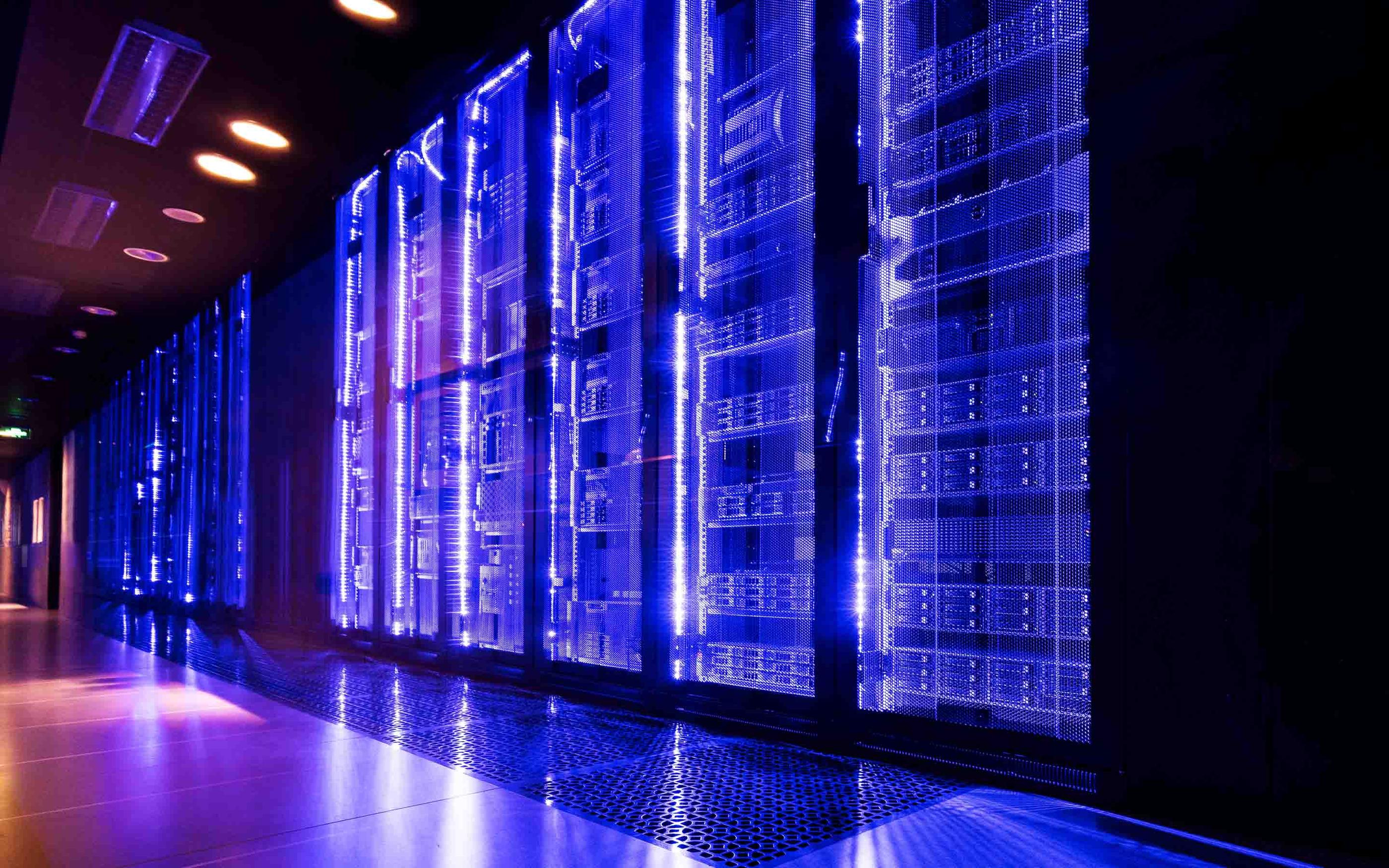
Demand for data centers is booming. According to the IEA, AI will be the most significant driver of the increase, with electricity demand from AI-optimized data centers projected to more than quadruple by 2030 [1].
In January 2025, Nvidia announced the launch of Project DIGITS - a personal AI supercomputer [2]. Debuting the world’s smallest AI supercomputer has put Grace Blackwell [3] on every desk and at every AI developer’s fingertips. Blackwell configurations will require 60kW to 120kW, but fewer than 5% of the world’s data centers are capable of supporting even 50kW [4]. Previous technology required c.20kW, meaning the power demands of newer and more advanced processors can reach six times as high. The power demand continues to climb with each technical update.
To keep pace with racing demand, technology giants such as Google, Meta and Amazon are building their own data facilities [5], while announcements in the U.K. and Europe indicate that governments are also investing in AI infrastructure. But the exponential growth of data centers is adding additional pressures to already stressed grids.
Policies are opening the floodgates to AI
The U.K.’s AI Action Plan [6], alongside the European Commission’s AI Continent Action Plan [7], are designed to accelerate AI development across the region. A key pillar to these plans is the construction of large-scale AI data and computing infrastructure. This network of ‘AI factories’ and ‘AI gigafactories’ will be equipped with state-of-the-art AI chips.
Electricity consumption by data centers is set to double by 2030
Electricity consumption by data centers is set to double by 2030, while energy required for AI chip production soared by more than 350% worldwide between 2023 and 2024 [1]. According to the European Commission’s AI Continent Action Plan, these facilities will “lead the next wave of frontier AI models and maintain the EU’s strategic autonomy in critical industrial sectors and science, requiring public and private investments” [8].
The European Commission also revealed that private investment in gigafactories will be further stimulated through investment service InvestAI, which will mobilize €20 billion of investment for up to five AI gigafactories across the EU [9].
In the U.S. alone, S&P Global Ratings estimates incremental power demand from data centers could be 150–250 terawatt hours (TWh) between 2024 and 2030 [10]. Demand is outstripping supply and will require about 50 gigawatts of new generation capacity through 2030 -necessitating about $60 billion of investment in generation and $15 billion in transmission [10]. Under the Trump administration, the U.S. is making moves to update current regulation to allow a combined cycle gas turbine facility to be built in a shorter time frame with less regulatory red tape, to meet surging power demand.
Twists and turns in the big data race: Supply chain is a major barrier
At a time when many of the big funds started to soften their environmental, social and governance (ESG) requirements, gas turbines and thermal power were pinned as a critical component of the power supply chain in 2024. But several original equipment manufacturers (OEMs) have publicly announced challenges in supply chain resilience for gas turbines.
- Production of alloys for gas turbines was halted during the COVID-19 pandemic as the pursuit of clean energy technologies cemented its position as a priority for governments, policymakers and businesses
- After clean energy plans battle cost inefficiencies, a widespread lack of infrastructure and geopolitical volatility, the need for gas turbines and thermal power has resurfaced. But access to high efficiency nickel-based and titanium-based alloys remains limited
- The ongoing impact of the Russia-Ukraine war, alongside ongoing tariff action and geopolitical volatility, have intensified the strain on the availability of rare earths. But the agreement on developing Ukraine's mineral resources, heavily promoted by U.S. President Donald Trump, was signed by Ukraine's First Deputy Prime Minister, Yulia Svyrydenko in Washington in April 2025 [11], with ongoing discussion on how to make minerals fund operational by year-end
In 2025, OEMs are now charging a reservation fee of up to $7 million per month per turbine for H class rotors to reserve them from the production line [12].
The path forward: Problem solving the data center power demand

Due to future power demand for data centers, technology companies are buying up and reserving a large percentage of future high efficiency gas turbine production. Manufacturers are in discussions with companies with AI-intensive operations to collaborate on solutions, including smaller turbines. Smaller scale turbines are able to provide dedicated power on a modular basis with much shorter timescales than the larger OEMs.
For independent power generation, territories such as Qatar and Abu Dhabi are changing their process for tendering for new power projects. Currently, engineering, construction and procurement (EPC) contractors are subject to a request for proposal (RFP) process, meaning they are not guaranteed to win the contract and reserving equipment for the premium of $7 million per month from OEMs doesn’t make business sense. More recently, offtakers are purchasing and reserving turbines and then tendering for the EPC contractors to build with the turbines provided.
The potential of small modular reactors
Small modular reactors (SMRs) are gaining traction, but the plans and projects remain under review and are not due to go live until 2029 at the earliest. Currently no design has been approved in the U.S., even at a federal level, and regulations need to mature before the earliest projects go live in 2029.
SMRs in the early stages of project design will encounter gaps in insurance as projects evolve.”Kate FowlerGlobal Head of Nuclear, Willis
The U.K. is also engaging in discussions and planning for SMRs to go live from 2030 [13]. A U.K. government team are carrying out a competition to see which technology will receive their financial backing, but a major player has recently withdrawn, leaving three companies in the running for two investment decisions.
Nuclear projects are bound by tight regulatory standards that create unique challenges compared to other natural resources sectors. Kate Fowler, Global Head of Nuclear, Willis, explains: “SMRs in the early stages of project design will encounter gaps in insurance as projects evolve, with professional liability in design and surety solutions for decommissioning the prime white spaces for insurance market innovation.”
In the construction and operational phases of a project, the amount of cover is mandated by regulators and nuclear project owners will need to purchase this level of insurance cover, irrespective of the scale or value of the project. For smaller players – particularly in the in-demand technology sector – the potential to lean into large and well-capitalized businesses is a core way to open the door to nuclear power.
According to Forbes, “the companies that need this new quantum of power are the world’s largest technology firms, with market capitalization values of $1 trillion or more [14].” Technology giants that are at the coalface of the demand for data centers are well-capitalized to invest in SMR technologies, but collaboration between regulators, insurers and sector players will be needed to move the dial on nuclear power.
Across different countries, with different regulations and projects being designed with different technologies, the need for standardization is clear. To move the dial on nuclear energy as a commercially viable option to accelerate power generation, policies and conventions need to bring global differences into alignment.
We’re left with a paradigm. According to Forbes, “DeepSeek is the opening act in the final solution, which is delivering the same AI capabilities at a fraction of the cost”[14] but as demand continues to increase, the availability of data centers at a lower cost will continue to drive competition rather than stifle it. And the need for power will continue to grow. The direction of travel will take twists and turns, but one thing is clear, the global grid needs investment to grow in parallel.
Contact us to find out more about the future of data centers and how power companies can prepare for change.
Footnotes
- AI is set to drive surging electricity demand from data centres while offering the potential to transform how the energy sector works Return to article
- NVIDIA Puts Grace Blackwell on Every Desk and at Every AI Developer’s Fingertips Return to article
- Grace Blackwell is digital architecture that enables enterprises and researchers to prototype, fine-tune and test models. Return to article
- Nvidia’s Grace Hopper Runs at 700 W, Blackwell Will Be 1 KW. How Is the Power Supply Industry Enabling Data Centers to Run These Advanced AI Processors? Return to article
- Microsoft, Google, AWS: Who’s Building the Next Mega Data Center? Return to article
- AI Opportunities Action Plan Return to article
- Shaping Europe’s leadership in artificial intelligence with the AI continent action plan Return to article
- EU Commission releases an ambitious AI Continent Action Plan Return to article
- Global energy grids strained by surge in AI data centres and chip production Return to article
- Data Centers: Surging Demand Will Benefit And Test The U.S. Power Sector Return to article
- US and Ukraine sign long-awaited natural resources deal Return to article
- WTW Return to article
- Clean Power 2030 Action Plan: A new era of clean electricity – main report Return to article
- Has DeepSeek Popped The “Mini Nuke” Bubble For AI Power? Return to article
Power and utilities contact
Due to future power demand for data centers, technology companies are buying up and reserving a large percentage of future high efficiency gas turbine production